
Furore
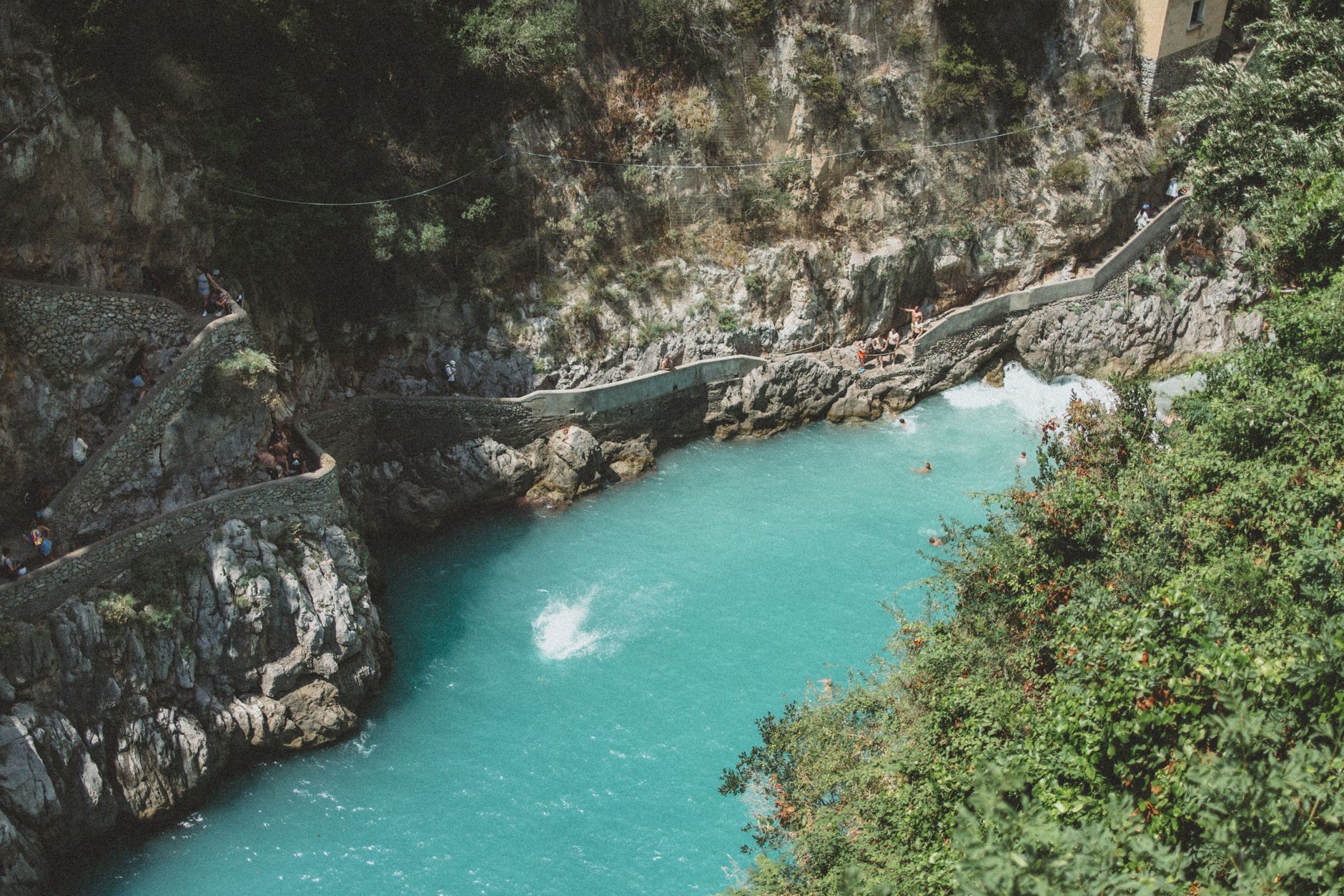
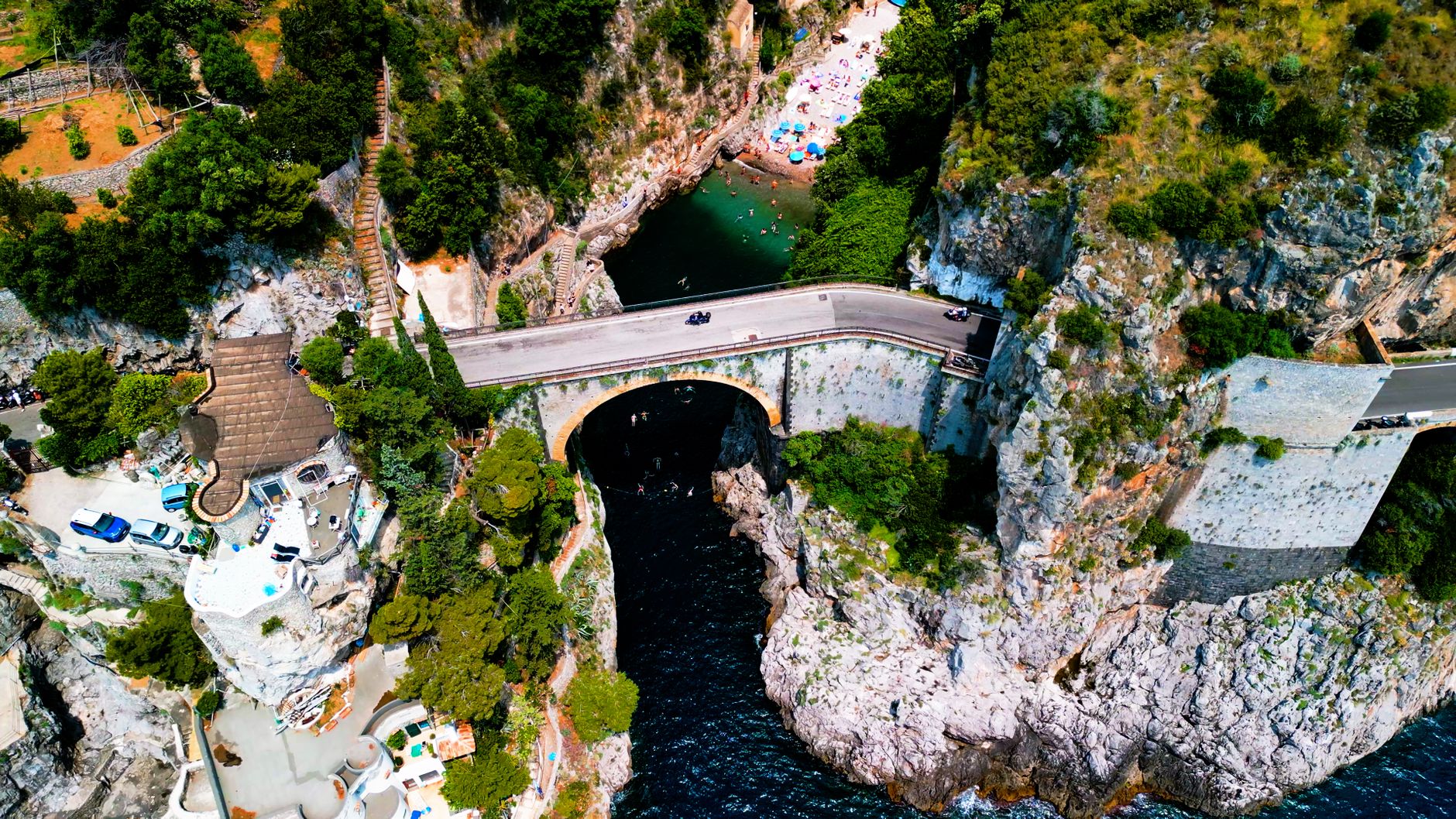
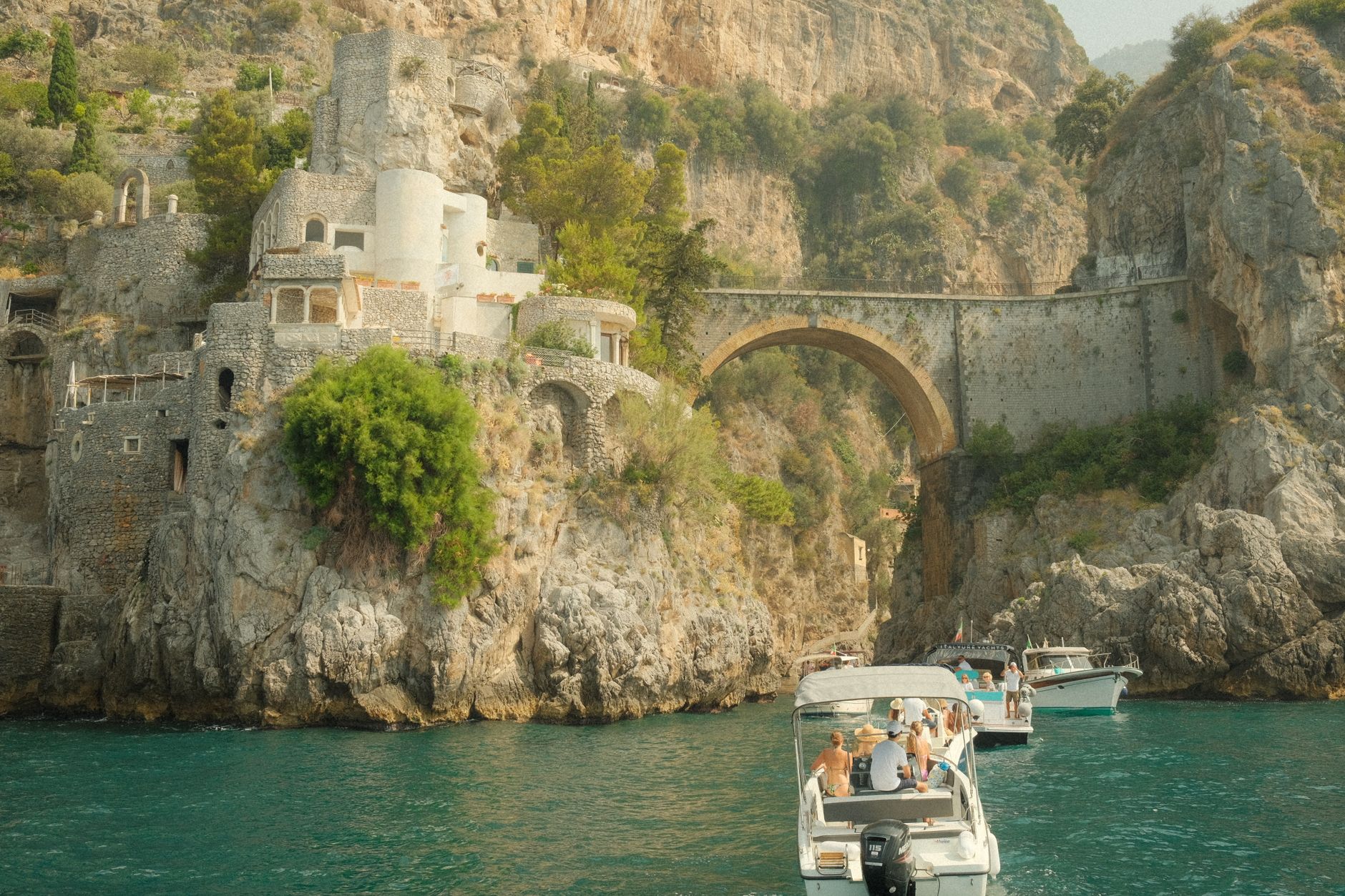
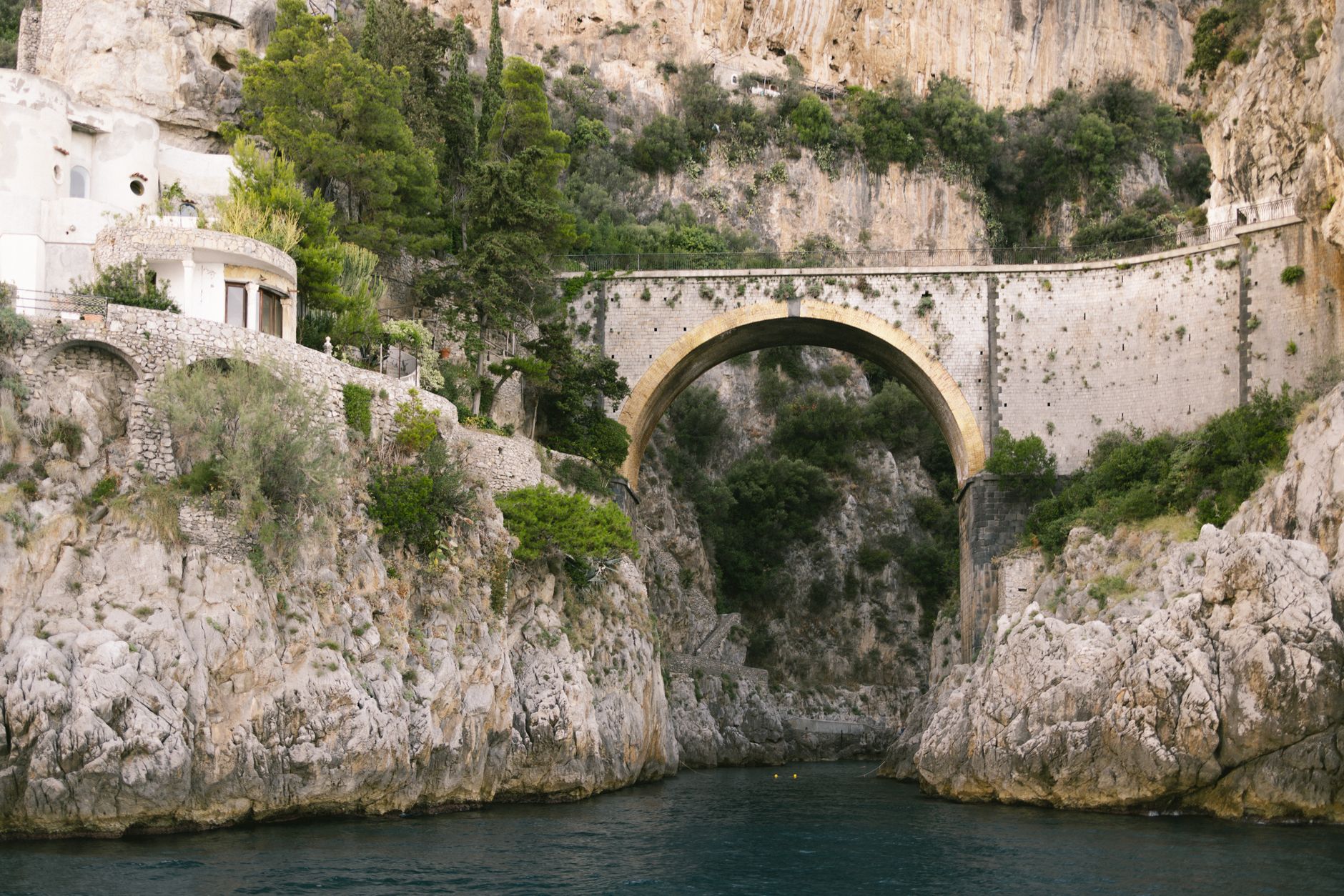
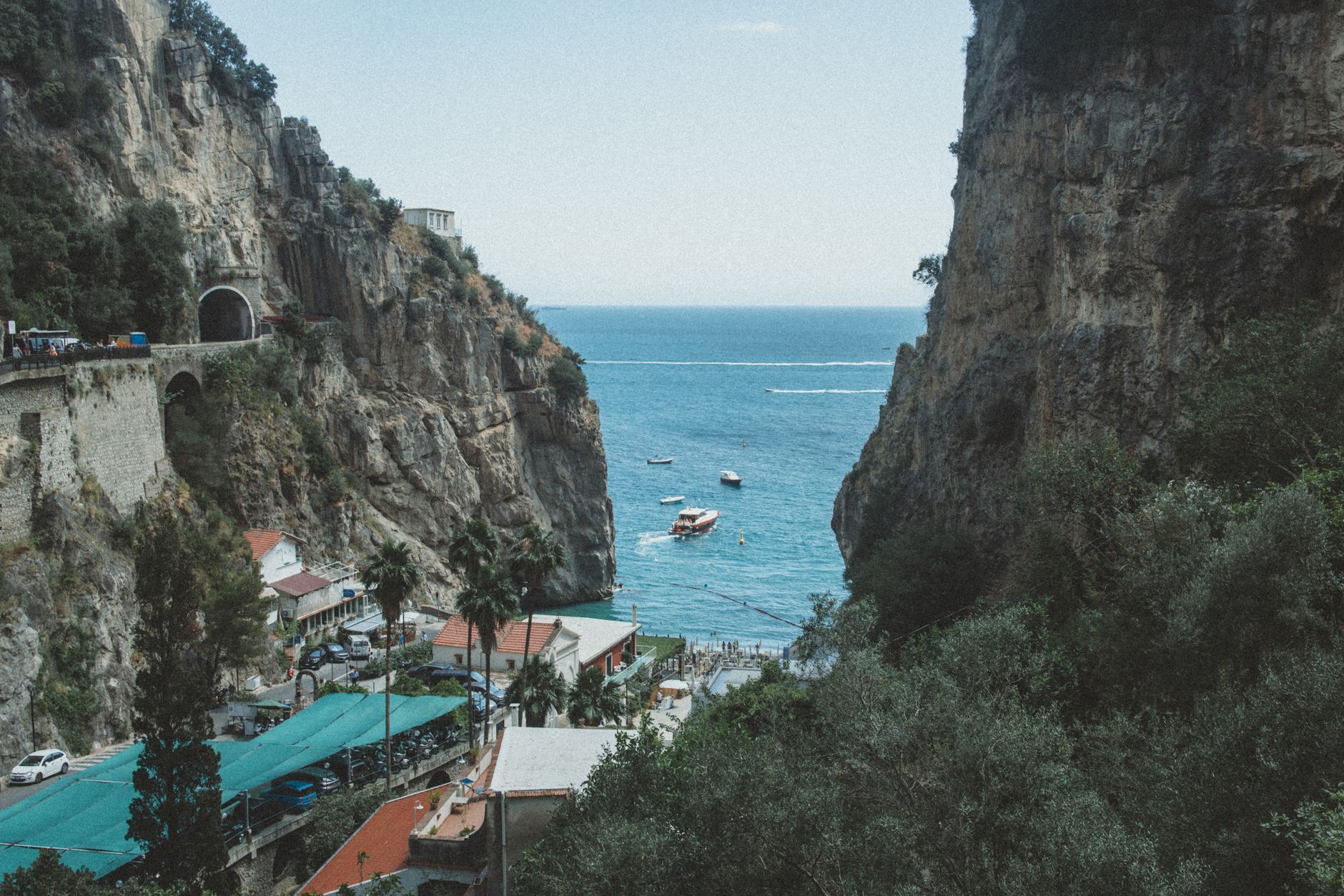
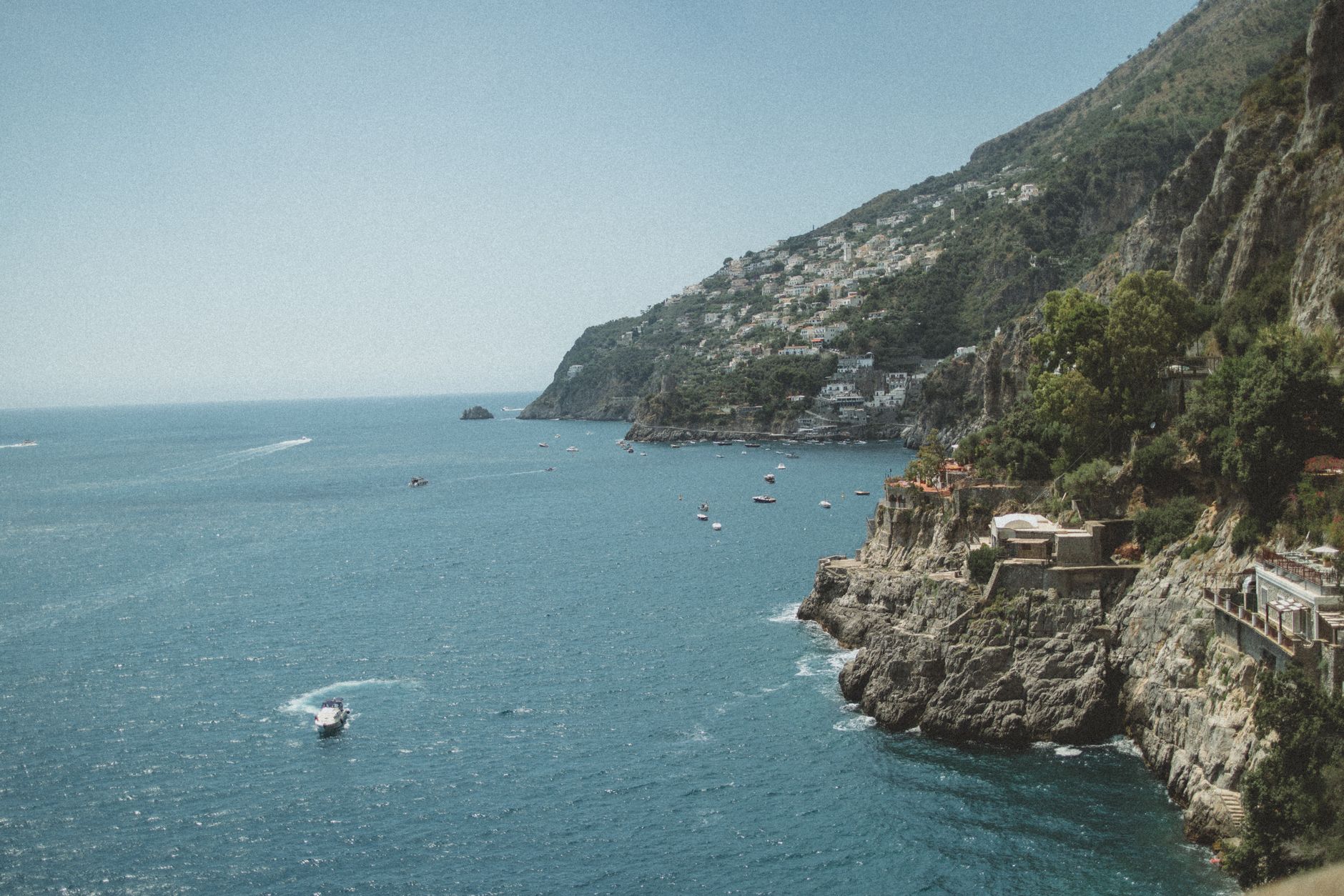
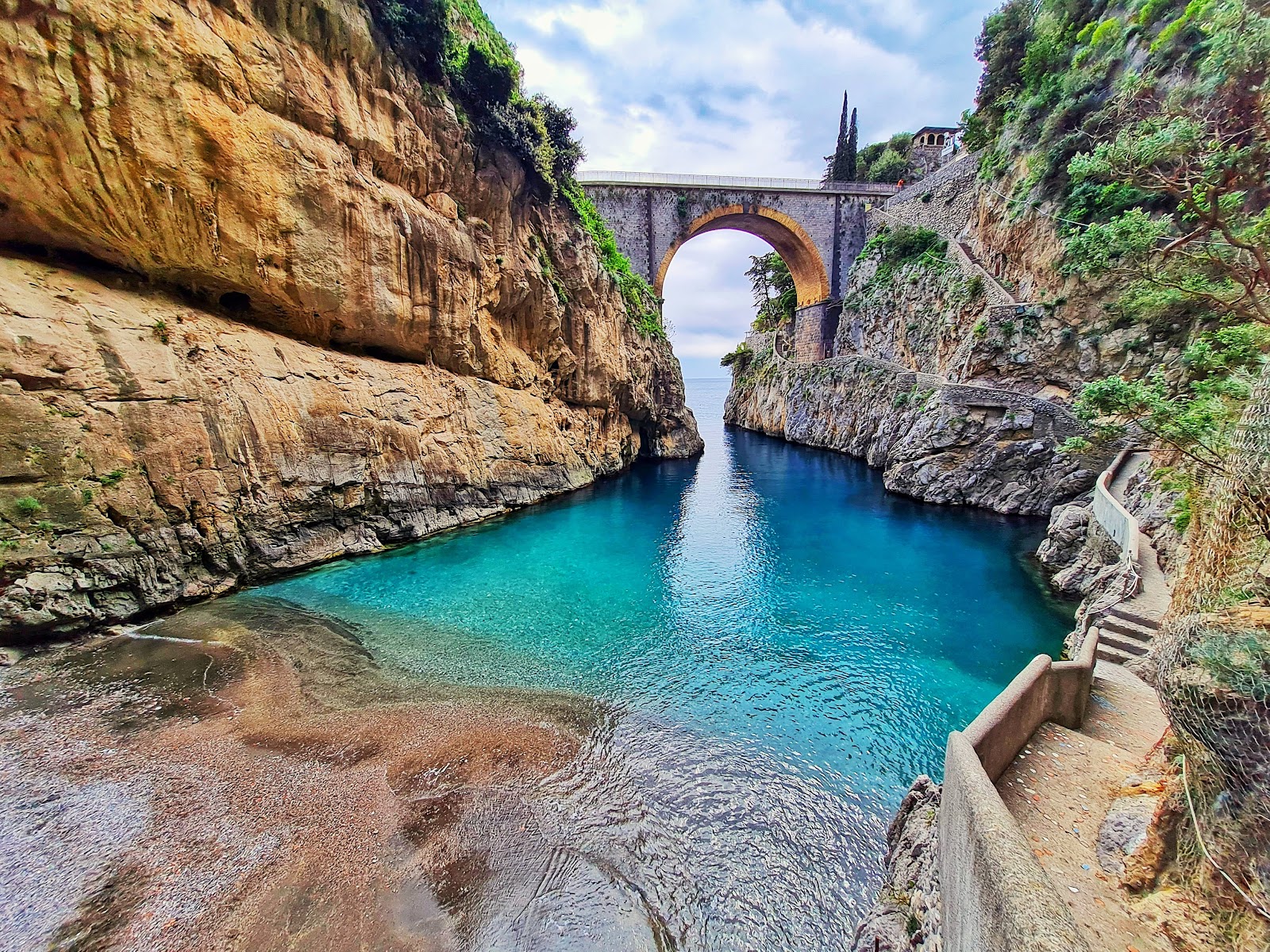
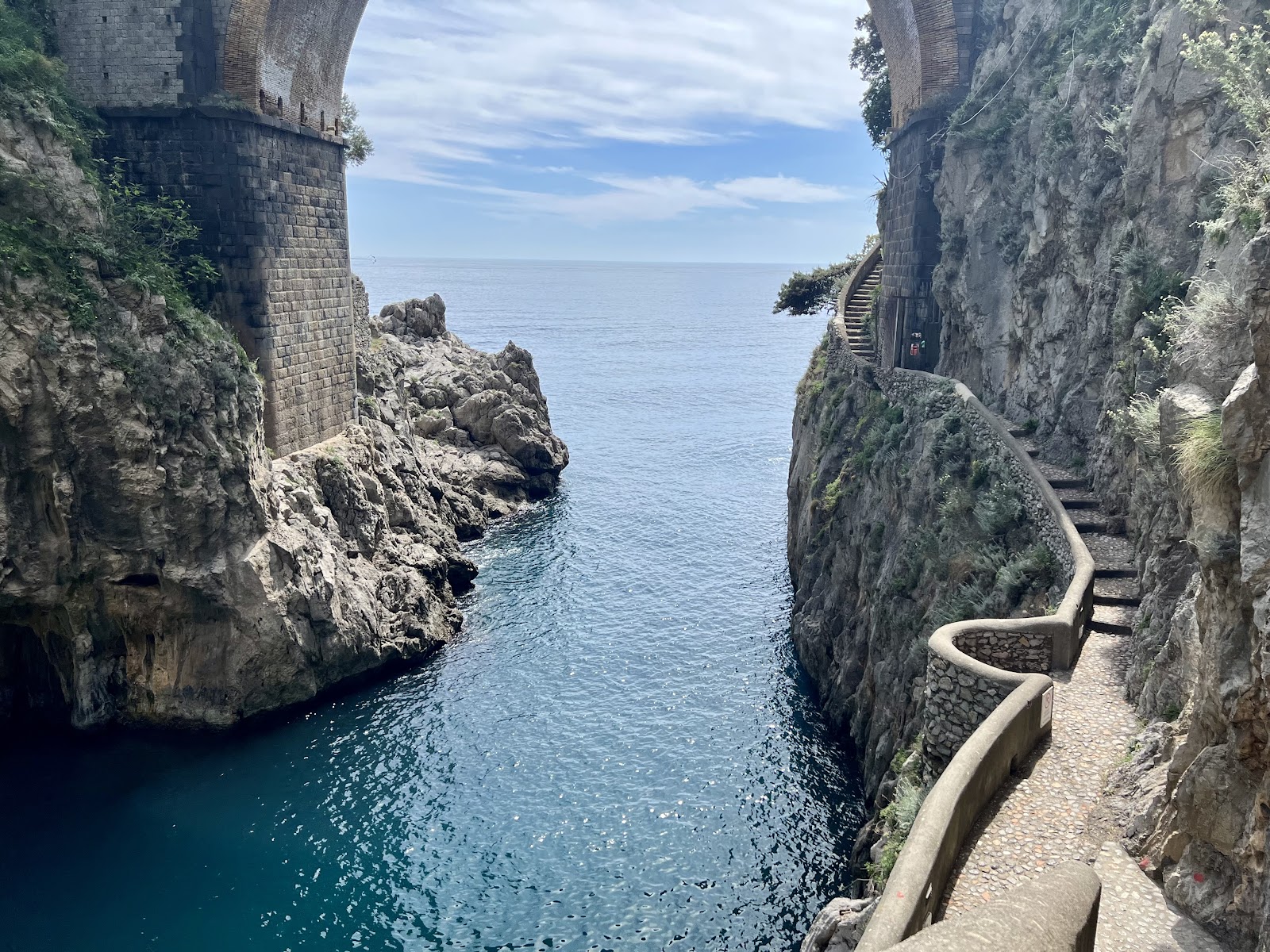
Furore is a town with no town square — no central piazza, no obvious gathering point, just a scatter of stone cottages pressed into the cliffs of the Lattari mountains above a narrow fjord. The Schiato stream cut that inlet over millennia, grinding through limestone until it opened a crack barely wide enough for a pebble beach, twenty-five metres long, shadowed by walls of rock and joined overhead by a bridge carrying the coastal road.
From that bridge, two hundred concrete steps descend to the water. Most of the cars that pass never stop. The ones that do tend to come back.
💛 What travellers fall for
People who return tend to mention the murals — over 120 paintings and sculptures spread across house walls throughout the village, started in 1980 and added to ever since by Italian and international artists. You can spend an hour just walking the lanes reading the walls. The Ecomuseum, housed in a former paper-drying room, is easy to miss and worth not missing.
Experiences you don't want to miss


Deals in Furore
Book directly at the provider
How Furore came to be
The name comes from the Latin Terra Furoris — Land of Fury — a reference to the violence of the sea against the rocks in a storm. Roman families fleeing the Vandals are said to have founded it, retreating into the Lattari mountains for shelter. Through the medieval period Furore sat within the orbit of the Maritime Republic of Amalfi, classified as an extramenia hamlet, meaning it lay outside the city walls. It eventually became an independent municipality.
The Schiato stream that carved the fjord also powered the local economy for centuries: paper mills and grain mills lined its banks, fed by water descending from the mountains. The spandituro, a room once used for drying sheets of finished paper, still stands in the fjord village and now houses the Ecomuseum. The oldest recorded family here, the Summonte, produced Pietro Summonte, a member of the Pontaniana Academy who wrote what is considered the first historical-artistic guide to Naples.
Who and what shaped it
People who shaped it
Landmark buildings
See Furore in motion
Plan your visit
On the map
When to go
May sits in a sweet spot — temperatures between 15 and 23°C, long days, and the coastal road still navigable without gridlock. August is the warmest month, reliably above 30°C, and the steps to the beach will be shared with a crowd. In winter the waves can throw spray as high as the balconies, and many businesses close, but the fjord in a storm is its own kind of spectacle.
Right now
↡ Attractions



Background & history adapted from Wikipedia (CC BY-SA) · specs from Wikidata (CC0) · weather from Open-Meteo · map data © OpenStreetMap contributors · photos from Wikimedia Commons / Unsplash with per-image credit. No third-party reviews or social posts reproduced.