
Fundació Pilar i Joan Miró a Mallorca
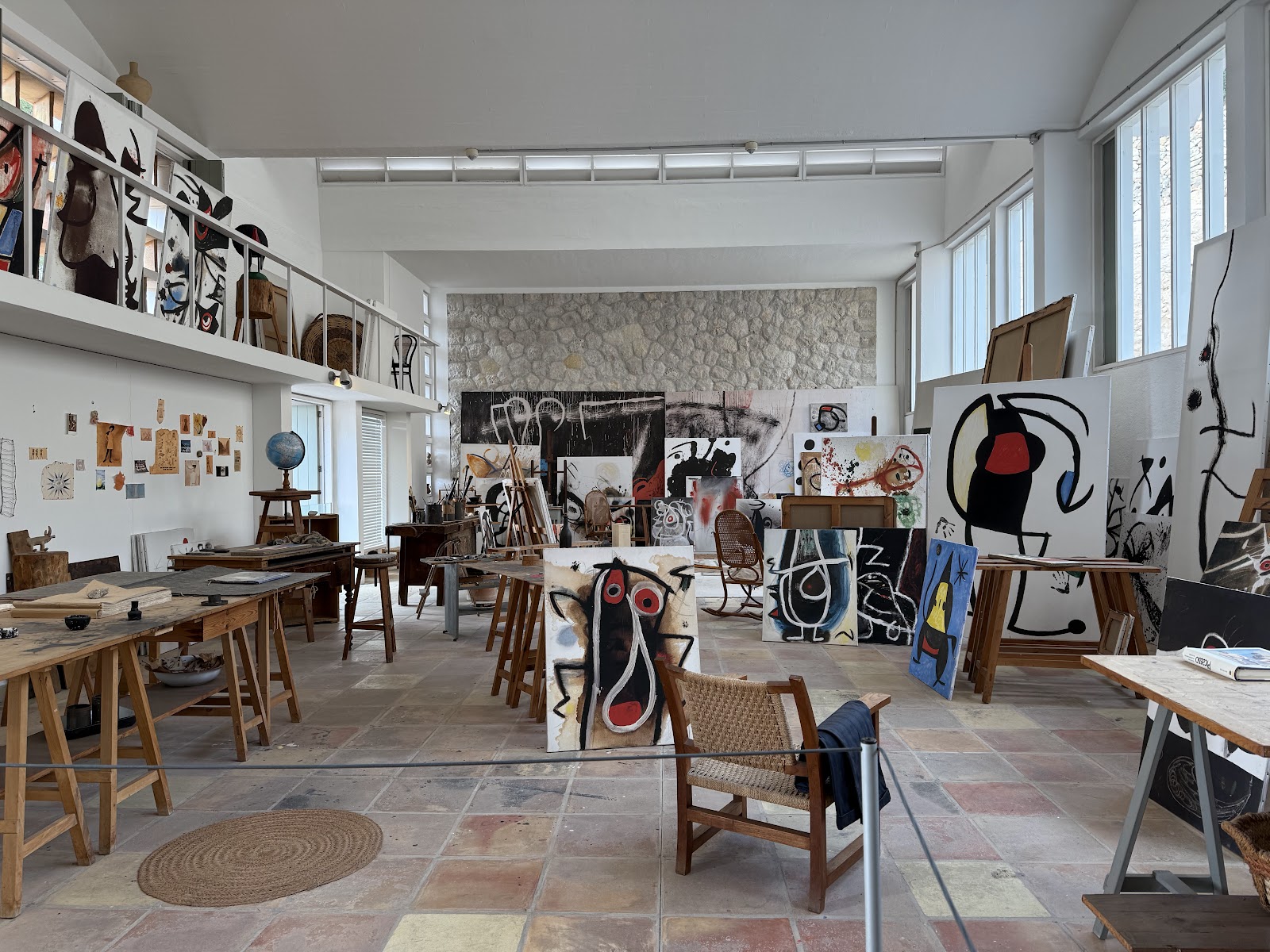
Joan Miró spent the last 27 years of his life working in Cala Major, a quiet district west of Palma's centre, and the foundation that bears his and his wife Pilar Juncosa's name grew directly from that presence. On 7 March 1981, two years before his death, he formally offered the city his studios, the surrounding land, and thousands of works — paintings, sculptures, drawings, graphic pieces — to keep it all together and accessible.
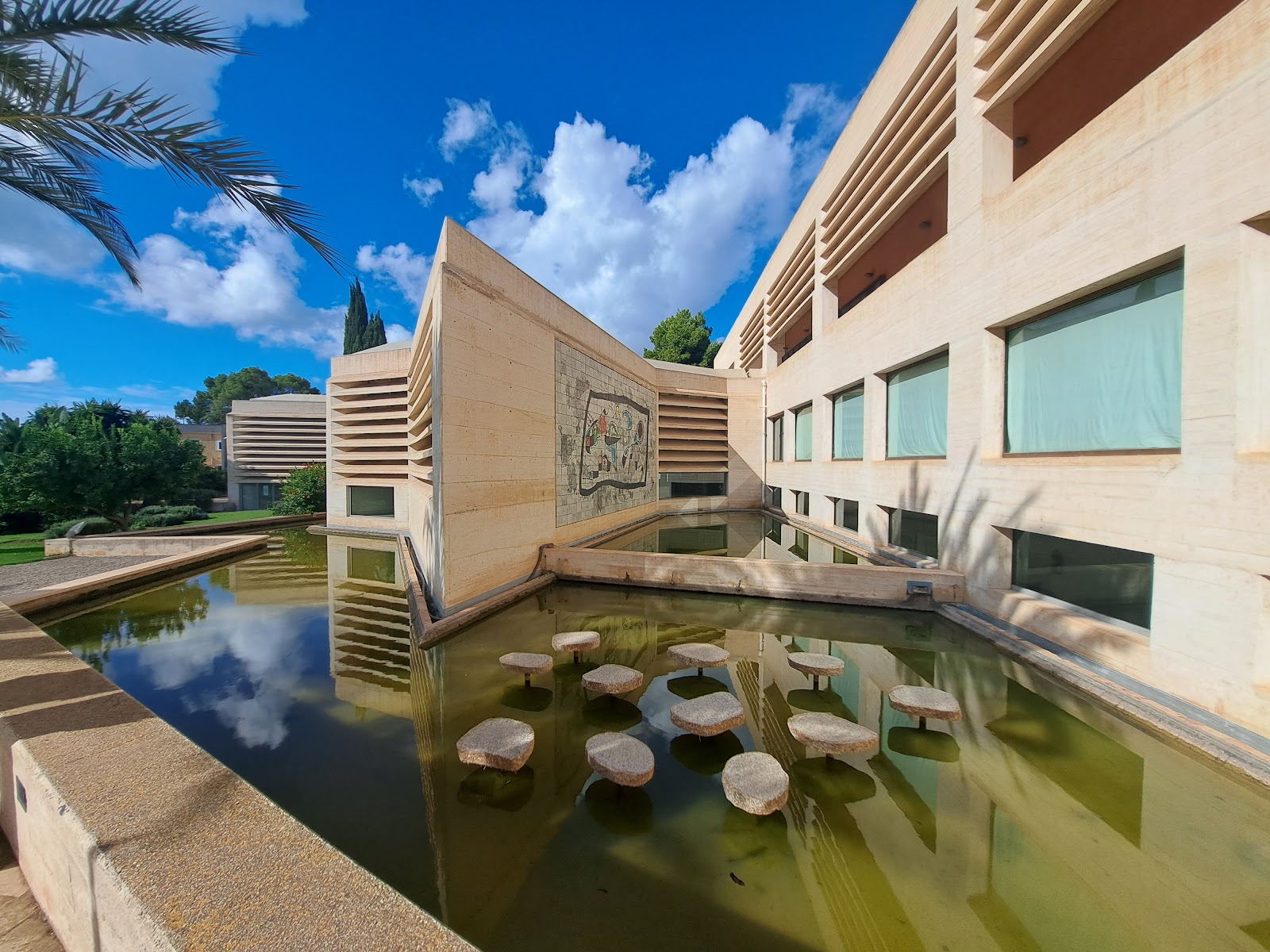
What you find today is not a single building but a compound: Rafael Moneo's purpose-built exhibition hall, the light-flooded Sert workshop, and Son Boter, an 18th-century Mallorcan farmhouse whose walls still carry Miró's own charcoal graffiti. Around 6,000 works live here.

💛 What travellers fall for
People who come back tend to linger longest in Son Boter rather than the Moneo galleries — the charcoal marks on the raw stone walls stop you in a way that framed canvases sometimes don't. The sculpture garden, with its café and sightlines onto Moneo's facade, is worth the last half-hour you might otherwise spend rushing through a final room.
The story behind Fundació Pilar i Joan Miró a Mallorca
Miró first came to Mallorca through his wife's family and settled permanently in Cala Major in 1956. That same year he commissioned his friend, the Catalan-American architect Josep Lluís Sert, to build him a north-lit studio large enough to work on several canvases at once. Three years later he acquired Son Boter, an 18th-century farmhouse next door, for his largest-scale work.
In 1981, Miró reached a private agreement with Palma City Council to donate the entire site and a substantial body of work. The arrangement stayed out of public view until 1992, when the foundation was formally established. To fund a proper exhibition building, Pilar Juncosa donated land and 42 works were auctioned at Sotheby's; with those proceeds, Rafael Moneo — who would win the Pritzker Prize in 1996 — designed the headquarters that opened on 19 December 1992, nine years after Miró's death.
Good to know
Bus lines 1, 4, or 47 from Plaça Espanya all get you here; line 47 drops you at the door. Plan two hours. Tickets (€7.50, reduced €4) must be bought at least 45 minutes before closing — card only, no cash. The foundation is closed on Mondays.
Where is Fundació Pilar i Joan Miró a Mallorca?
Location
- In Palma de Mallorca
- 39.5583, 2.6147
- Open in Google Maps
Rating
4.4 ★ · 3,126 Google reviews
More tickets & tours for Fundació Pilar i Joan Miró a Mallorca
Book directly at the provider
What travellers say about Fundació Pilar i Joan Miró a Mallorca
I really enjoyed my visit. Unfortunately Miro's house was closed, hence 4 stars, but it was still well worth the visit for the exhibition, Miro's studio, the garden, shop and the cafe where I had a coffee and delicious tartas for €5.50. the ambience is so peaceful, the films provided a real insight into the artist I was unaware of and the grounds were so peaceful. There were good views across the bay also. I will come back. There is free parking across from the museum. I came in April and didn't book. It was quiet.
It is wonderful to see the studio where Miro worked for a long time. It helps to understand how he created his work of art. There is also a huge exhibition in a great building. Gift shop and coffe-bar is also miroistic.
The museum presents a modest selection of Miró’s works across different media, alongside contemporary pieces influenced by him. Visiting during the island’s off-peak season meant fewer visitors, and Son Boter (Miró’s house) was closed. The highlight is unquestionably Miró’s studio, preserved almost exactly as it was in the 1980s. Overall, the exhibitions are average, but the operations team would benefit from better training. During my visit, the staff member in Miró’s studio took a loud phone call lasting over half an hour and did not activate the projection room, which felt disrespectful to this core site of Miró’s creative life. The souvenir selection is also limited, likely due to copyright restrictions held by the Fundació Joan Miró in Barcelona, resulting in few compelling reproductions.
It's cool. Would have expected some more originals, but a part was closed due to renovations. Still impressive architecture and place.
Fantastic museum presenting Miros work and his former studio. Really impressive architecture.
More of Palma de Mallorca
Discover where to stay, what to do and the best deals for your trip.
Explore Palma de Mallorca →More attractions in Palma de Mallorca
All of Palma de Mallorca →

Background adapted from Wikipedia (CC BY-SA) · map data © OpenStreetMap contributors · ratings & place photos via Google · other photos with per-image credit. Ticket links may earn us a commission at no extra cost to you.