
Fréjus
Fréjus is the kind of place that stops you mid-stride. You turn a corner in the old town and find yourself facing a Roman amphitheatre — 113 metres long, first century, still intact enough to host concerts — with laundry strung from a window somewhere above it. Julius Caesar founded this as Forum Julii around 49 BCE, a naval base that briefly became the second largest Roman port after Ostia. The layers never quite separated here.
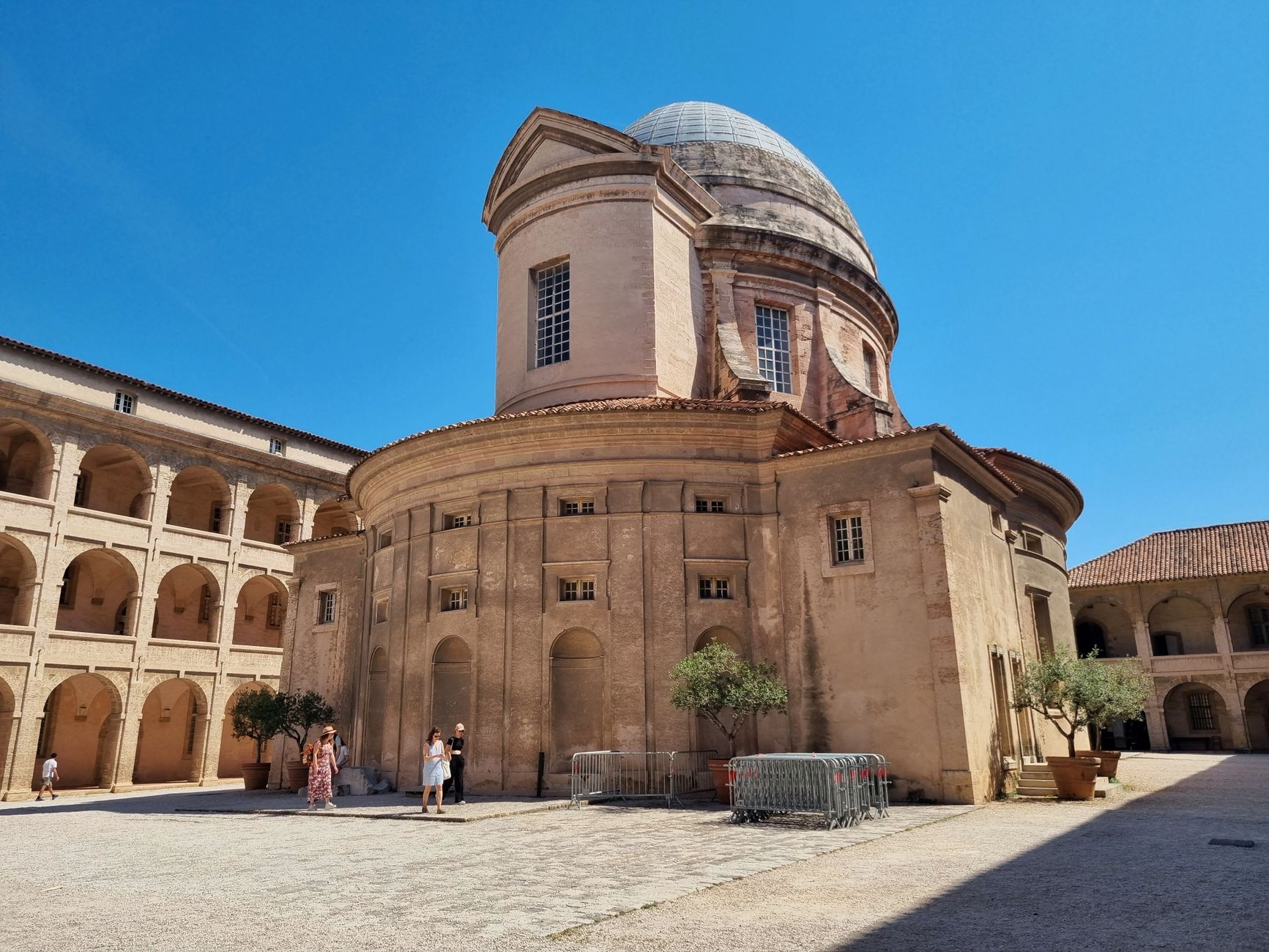
The cathedral baptistery, built in the 5th century and rediscovered by an architect in 1925, is considered the oldest Christian structure in Provence. A cloister ceiling carries painted wooden panels from the 14th and 15th centuries — angels, devils, acrobats, monsters — though only 500 of the original 1,200 frames survive. Fréjus doesn't curate itself for you. It just sits there, dense with time.
💛 What travellers fall for
People who come back tend to mention the Wednesday and Saturday markets, and the way the old episcopal quarter — cathedral, baptistery, cloister, all within a few steps of each other — is quiet enough on a weekday morning to actually look at things. The Lantern of Augustus, the old harbour lighthouse, is easy to walk past without noticing. Don't.
Experiences you don't want to miss


Deals in Fréjus
Book directly at the provider

How Fréjus came to be
Caesar founded Forum Julii around 49 BCE as a military port on the Var coast. By 29–27 BCE, Octavian was settling veterans of the 8th Legion here, and by 22 BCE Augustus had made it the capital of a new province, Narbonensis. At its height it was Rome's second naval port after Ostia — then Nero fell, the fleet dispersed, and the slow decline began. The harbour silted up over centuries. By 1800, a city of 6,000 had shrunk to 2,000.
The town's medieval identity was shaped by its bishops: Saint Leontius in the 5th century laid the foundations of the cathedral, and Jacques Dueze — later Pope John XXII — served as bishop here before his election in 1316. Napoleon landed at Fréjus on 9 October 1799, returning from Egypt. In 1959, the Malpasset Dam on the Reyran River ruptured, killing over 400 people — a rupture still present in local memory.
Who and what shaped it
People who shaped it
Landmark buildings
See Fréjus in motion
Plan your visit
On the map
When to go
Fréjus has a hot-summer Mediterranean climate: dry, sunny summers that run long into September, and mild winters with occasional sharp rain. Spring and early autumn are the most comfortable seasons for walking the Roman sites and the old town on foot.
Right now
Background & history adapted from Wikipedia (CC BY-SA) · specs from Wikidata (CC0) · weather from Open-Meteo · map data © OpenStreetMap contributors · photos from Wikimedia Commons / Unsplash with per-image credit. No third-party reviews or social posts reproduced.