
Formentera (Sant Francesc Xavier)

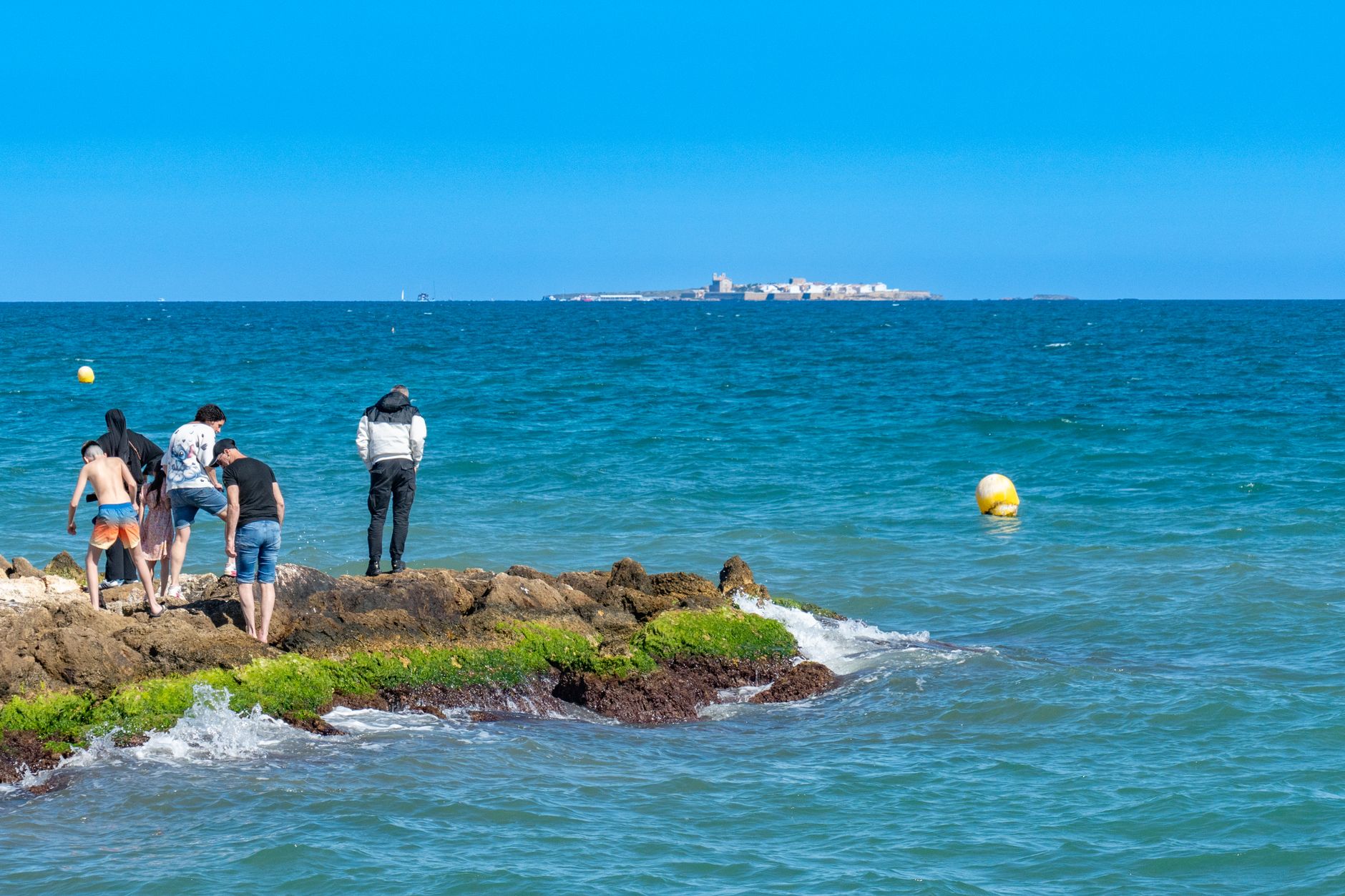
Sant Francesc Xavier sits at the quiet centre of Formentera — a whitewashed village of around 3,000 people that grew, slowly and deliberately, around a single fortified church. That church, finished in 1737, still anchors the main square opposite the Island Council, its iron-lined door fitted with a spy hole once used to watch for raiders. The cannons that sat on its roof until 1860 are gone, but the building's blunt, unadorned walls carry the logic of a place that had to defend itself before it could become a home.
This is where island life actually happens: the market, the administrative offices, the Ethnographic Museum on Jaume I Street. It earns its status as capital not through size but through function.
💛 What travellers fall for
People who keep coming back tend to arrive on foot or by bike from La Savina — the 20-minute ride from the port sets the pace before you've even reached the square. They'll tell you the Ethnographic Museum on Jaume I is worth the free entry and the Tuesday-to-Saturday window, and that the church interior, a single barrel-vaulted nave with shallow side chapels, reads differently once you know the cannons were up top.
Experiences you don't want to miss


Deals in Formentera (Sant Francesc Xavier)
Book directly at the provider
How Formentera (Sant Francesc Xavier) came to be
For roughly three and a half centuries, Formentera sat empty. After the medieval population abandoned the island — by the 14th century it had become too exposed and too dangerous — it remained largely uninhabited until the early 1700s. The resettlement began when a man named Marc Ferrer was granted land in the island's interior and permission to populate it; what he found there were a few huts, some corrals, and a chapel.
Construction of the fortified church of Sant Francesc Xavier ran from 1726 to 1737, and the village — known locally as 'sa Raval', meaning 'the outskirts' — grew slowly around it. By 1797, nineteen homes stood in its shelter. The name stuck, and that cluster became the capital it still is today. Older still is Sa Tanca Vella, a chapel dating to 1369, commissioned by the Bishop of Tarragona and now classified as an Asset of Cultural Interest since 1993.
Who and what shaped it
People who shaped it
Landmark buildings
See Formentera (Sant Francesc Xavier) in motion
Plan your visit
On the map
When to go
Summers are hot and very dry, with little shade in the village square — mornings are the time to visit the church or museum. Winters are mild but can feel exposed on this flat island, with daytime highs around 15–17°C; spring, when the sea begins to warm and the crowds have not yet arrived, is when the island shows itself most clearly.
Right now
Background & history adapted from Wikipedia (CC BY-SA) · specs from Wikidata (CC0) · weather from Open-Meteo · map data © OpenStreetMap contributors · photos from Wikimedia Commons / Unsplash with per-image credit. No third-party reviews or social posts reproduced.