
Forggensee
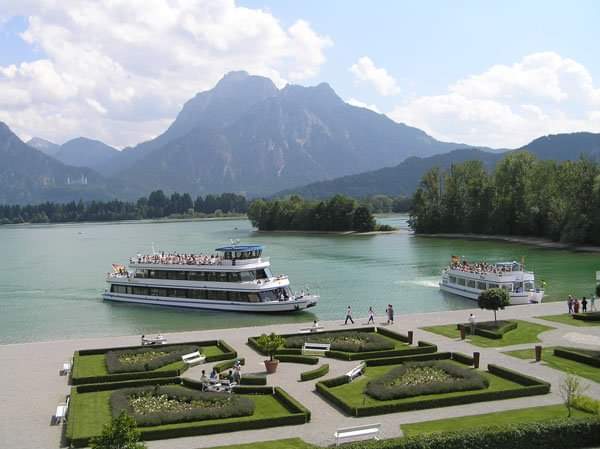
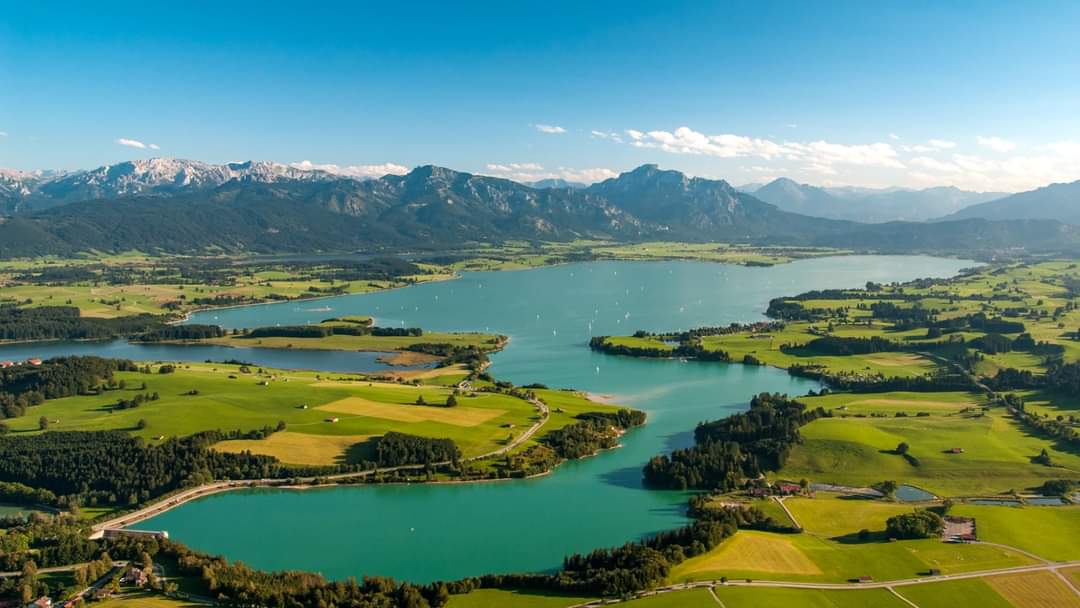
Forggensee earns its colour honestly: the light sandy limestone subsoil beneath the water turns it a shade somewhere between deep blue and pale turquoise, depending on the hour and the cloud cover. At 15.2 square kilometres it is the largest reservoir in Germany by area, yet it sits so close to Füssen — five minutes by car, or a leisurely bike ride — that it functions almost as the town's front garden.
What makes it strange, in the best way, is what lies underneath. The lake didn't exist before 1954. Where the water now sits, there were once hamlets, farms, and a stretch of the Roman road Via Claudia Augusta. The name itself belongs to Forggen, one of the villages that was flooded to make this place.
💛 What travellers fall for
People who return tend to time it deliberately: summer for the sailing and the boat trips aboard MS Füssen or the smaller MS Allgäu, winter for the uncanny experience of walking the drained basin. In winter you can look for material pits left by Roman road builders along the old Via Claudia Augusta route — the north shore stays warmest for swimming in season, and the Füssen end runs cold from Lech snowmelt.
The story behind Forggensee
Construction of the Roßhaupten Dam began in early 1951, led by Bayerische Wasserkraftwerke (BAWAG), a company founded in 1940 to harness power from the Lech and its neighbouring rivers. The dam's purpose was practical: control spring flooding from snowmelt and generate electricity. The lake reached its full level for the first time in spring 1954.
The human cost was considerable. Thirty-two residential buildings housing 256 people across the villages of Brunnen, Deutenhausen, and Forggen were submerged; 32 families from the Lower Weidachsiedlung were fully relocated. Residents negotiated the 1952 Schwangau Agreement with BAWAG, securing new farms or houses nearby. The lake takes its name from the hamlet of Forggen, which now lies at its bottom. The dam was renovated by Uniper — at a cost of approximately 30 million euros — and the lake was reflooded in 2019.
Good to know
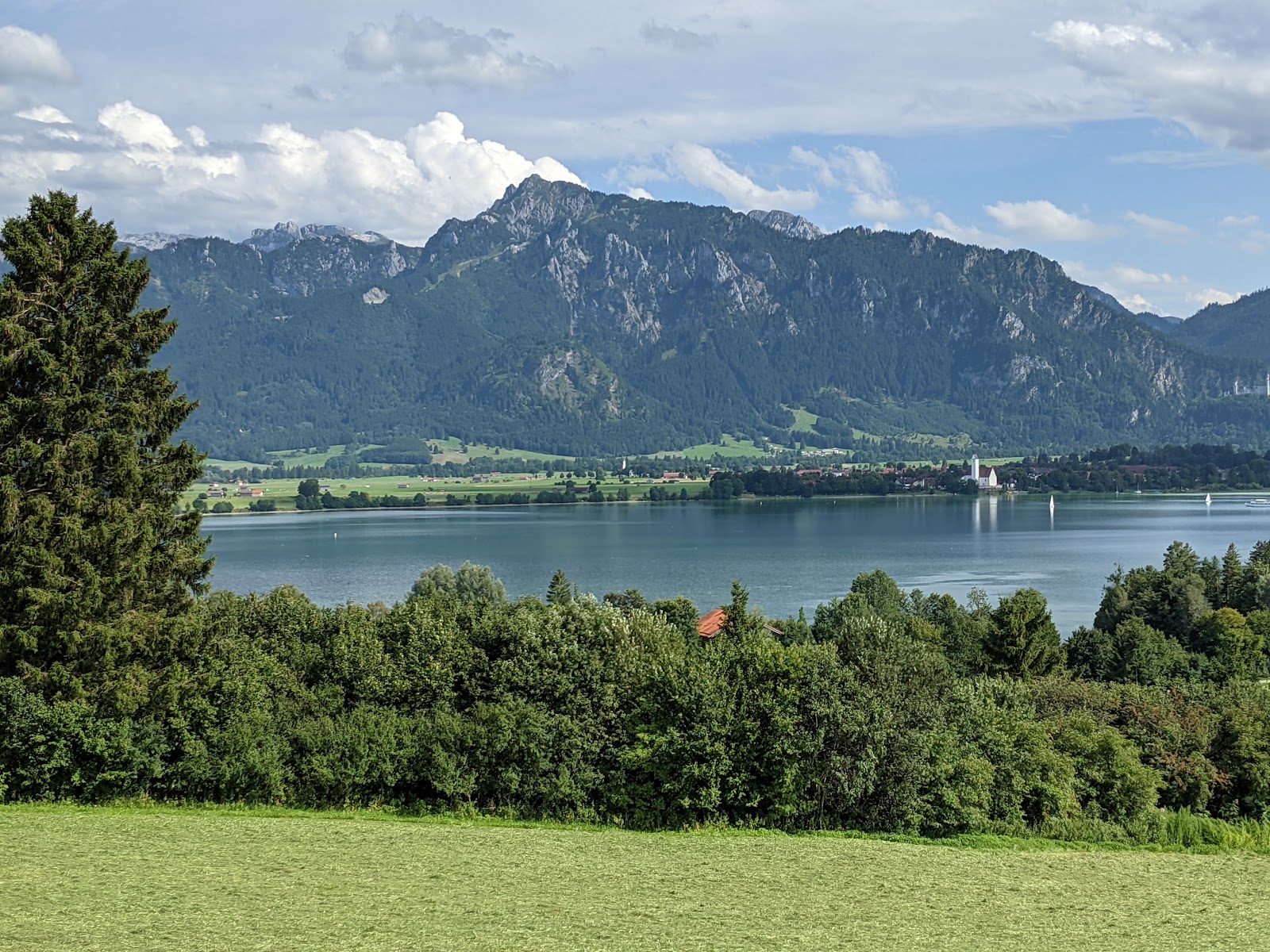
The lake is full June through mid-October; arrive outside that window and you'll find a mostly empty basin, which is its own kind of visit. Boat trips run June 1 to October 15. From Füssen, a bike or local bus gets you here without a car. Trains to Füssen run roughly hourly and take about two hours from Munich.
Summer days from June through September are mild, with August averaging around 22°C at the high end and July offering the longest sunshine hours — close to nine and a half hours daily. Water temperature rarely exceeds 20°C even at its warmest, so swimming is refreshing rather than warm. Winter drains the lake and brings low light but a genuinely unusual landscape.
Where is Forggensee?
More tickets & tours for Forggensee
Book directly at the provider
What travellers say about Forggensee
It’s really nice, clean and calm. There is a camper place exactly next to the lake!
An amazing place for a day trip with your family or friends. The color of the water, mountains and sky makes it close to heaven. Easy to reach, not very far from Munich. It’s actually close to the boarder of Austria. If you go there, hopfensee and Lechfall is also recommended to visit. Hopfensee: specially for the sunset. Overall, it’s one of the most beautiful view I have ever seen in Bavaria till now.
Beautiful lake and clear water. I really like it. The view is amazing. Its best to visit in summer.
Every year in October the lake is drained and the water from Lake Forggensee is back by June 1st at the latest. The lake reaches its full water level around June 15th, so that you can only see, enjoy and experience it as a full reservoir for four to five months of the year.
Gorgeous lake in south Bavaria with beautiful mountain views in the back and clean waters! Indeed a great place to enjoy a relaxing walk!
More of Füssen
Discover where to stay, what to do and the best deals for your trip.
Explore Füssen →More attractions in Füssen
All of Füssen →
Background adapted from Wikipedia (CC BY-SA) · map data © OpenStreetMap contributors · ratings & place photos via Google · other photos with per-image credit. Ticket links may earn us a commission at no extra cost to you.