
Font-Romeu-Odeillo-Via

At 1,800 metres on the Cerdagne plateau, Font-Romeu-Odeillo-Via sits under more than 3,000 hours of sunshine a year — which is why a giant mirror the size of a building faces south from the village of Odeillo, concentrating the sun's energy until it burns hotter than the surface of the moon. That furnace, 48 metres high and operational since 1969, is as good a symbol as any for what this place is: high, bright, and quietly serious about science and sport.
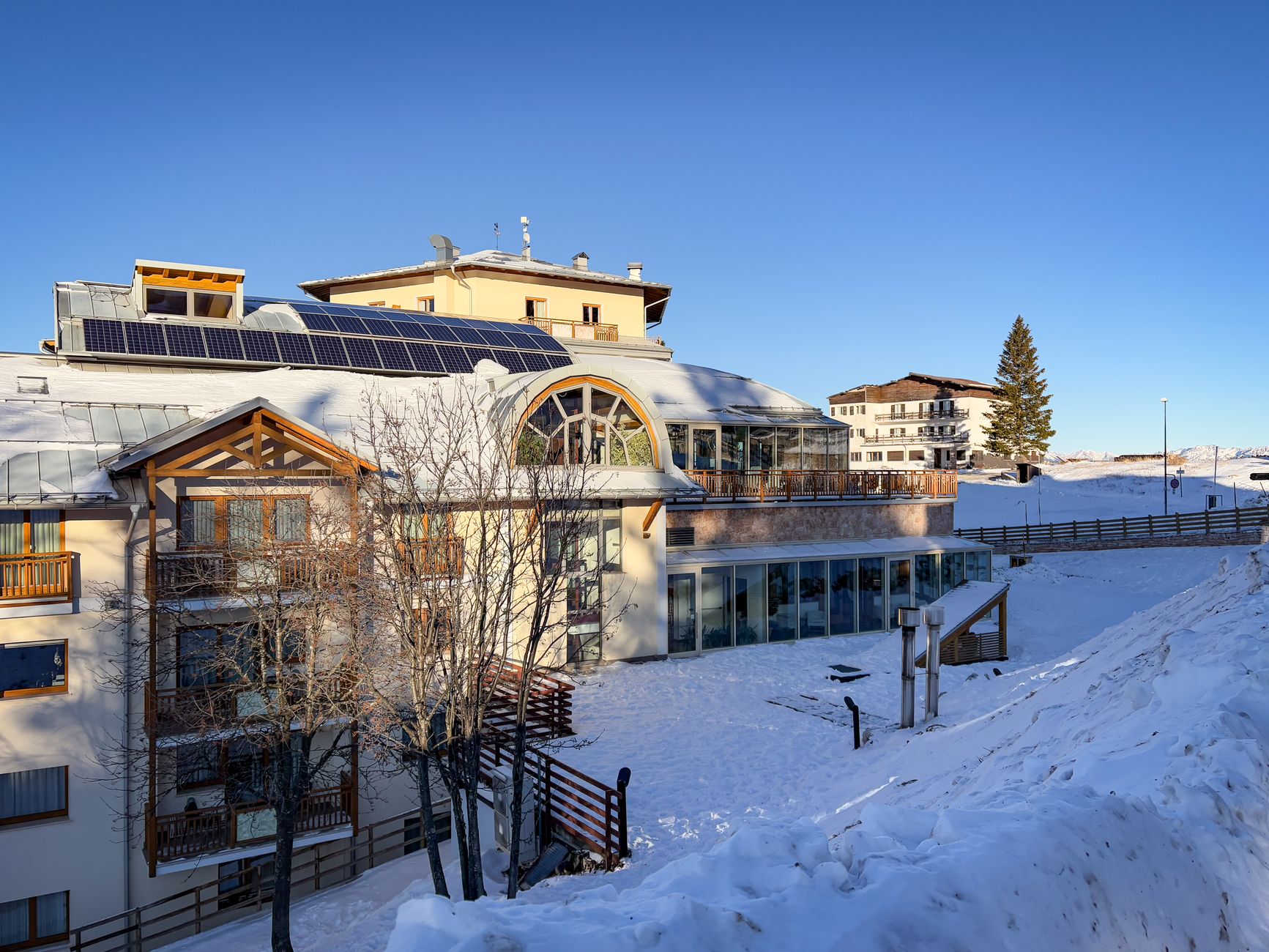
The town is three communes fused into one — Font-Romeu, Odeillo, Via — each with its own character. Pilgrims have been coming since the 13th century; Olympic athletes have been training here since 1968. The ski resort, oldest in the Pyrenees, opened in 1920. The Catalan identity runs through all of it.
💛 What travellers fall for
People who come back tend to arrive on the Train Jaune — the yellow narrow-gauge railway that stays running when the roads close — and ride it just for the views across the Cerdagne. They also make time for the Hermitage chapel, less for religion than for the worn stone basin where pilgrims have bathed for centuries. The station is in Via, 2.5 km from town; the summer shuttle saves the walk.
Experiences you don't want to miss



Deals in Font-Romeu-Odeillo-Via
Book directly at the provider

How Font-Romeu-Odeillo-Via came to be
In 1035, Wifred II, Count of Cerdanya, gave the village of Odeillo to the Abbey of Saint-Martin-du-Canigou — an act that tied this high plateau to Catalan ecclesiastical life for centuries. A chapel on the Font-Romeu territory is first mentioned in 1525, and by 1693 a hermitage had been built to shelter pilgrims arriving to venerate a 13th-century statue of the Virgin Mary. The route still crosses the Camino de Santiago.
Odeillo and Via became separate communes in 1790 and merged in 1822. The modern era arrived in the winter of 1920, when a ski programme launched what would become the oldest ski resort in the Pyrenees. Then, between 1962 and 1968, physicist Félix Trombe oversaw the construction of the Odeillo Solar Furnace — the largest in the world — which began operating in 1969 and shifted the town's identity from pilgrimage stop to research site.
Who and what shaped it
People who shaped it
Landmark buildings
See Font-Romeu-Odeillo-Via in motion
Plan your visit
On the map
When to go
The plateau earns its reputation: 325 sunny days a year and over 3,000 hours of sunshine make this one of the sunniest ski resorts in France. Winters are cold and snow-reliable at altitude; summers are warm by day but noticeably cooler than the valleys, which makes the plateau a relief in July and August.
Right now
Background & history adapted from Wikipedia (CC BY-SA) · specs from Wikidata (CC0) · weather from Open-Meteo · map data © OpenStreetMap contributors · photos from Wikimedia Commons / Unsplash with per-image credit. No third-party reviews or social posts reproduced.