
Flushing
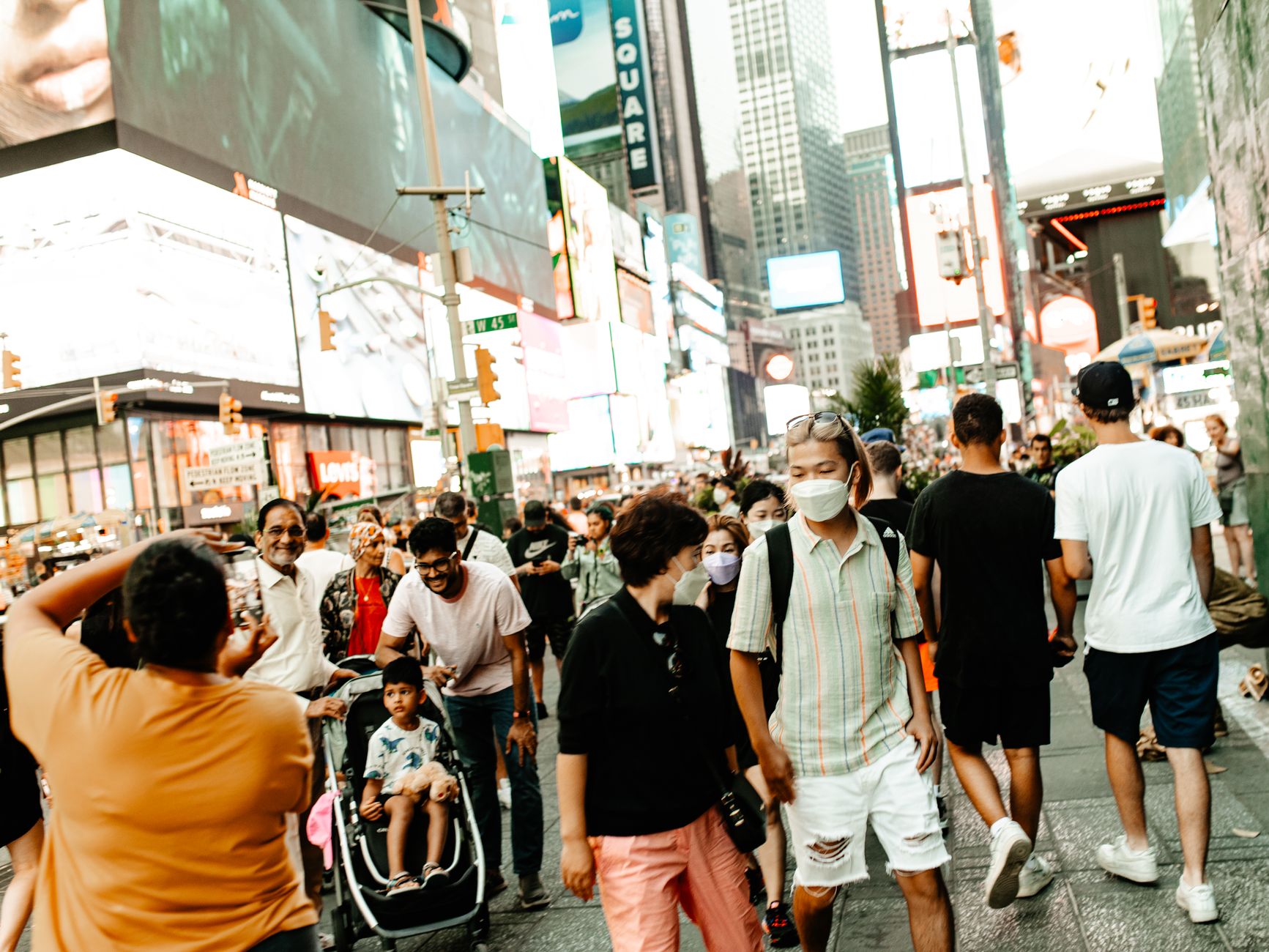
The 7 train drops you at Main Street and Roosevelt Avenue, and within a block you're reading menus in four languages, passing bakeries selling pineapple buns and scallion pancakes side by side, and stepping around crates of produce you won't find anywhere else in the city. Flushing is Queens at its most concentrated — a place where post-1965 immigration reshaped an already old town into something genuinely its own.
But the older layers are still here if you look. The Bowne House, built in 1661, sits quietly on a residential street, and the Friends Meeting House nearby has held Quaker services without interruption since 1694. Flushing has been arguing for tolerance and absorbing the world for nearly four centuries.
💛 What travellers fall for
People who come back tend to have a dumpling spot they won't negotiate on and a route through the food court at New World Mall they've refined over visits. They also know to walk north from Main Street to find the Bowne House and Kingsland Homestead before the afternoon crowds thicken. The Flushing Library — the busiest branch in the highest-circulation library system in the country — is worth a look just for the fact of it.
Deals in Flushing
Book directly at the provider

How Flushing came to be
Dutch settlers founded the town in 1645, naming it after Vlissingen, a port city in the Netherlands. Twelve years later, in 1657, residents drafted the Flushing Remonstrance — a direct challenge to Governor Peter Stuyvesant's persecution of Quakers — one of the earliest formal arguments for religious freedom in what would become the United States. John Bowne held illegal Quaker meetings in his home and was imprisoned for it; his house still stands.
Flushing became one of the original five towns of Queens County in 1683, was dissolved into the New York City borough system in 1898, and was fundamentally remade again after 1965, when the end of restrictive immigration quotas brought waves of residents from China, Taiwan, Korea, India, and across South Asia. The extension of the IRT Flushing Line to Main Street in 1928 had already set the commercial spine in place; the decades after 1965 filled it with the neighborhood you walk through today.
Who and what shaped it
People who shaped it
Landmark buildings
See Flushing in motion
Plan your visit
On the map
When to go
Summers are hot and humid, with temperatures regularly in the high 80s Fahrenheit — the open-air food stalls and market streets are more comfortable in the morning. Spring and autumn are the most pleasant seasons for walking; winters are cold and occasionally snowy, though the indoor food courts and markets make a January visit entirely workable.
Right now
Background & history adapted from Wikipedia (CC BY-SA) · specs from Wikidata (CC0) · weather from Open-Meteo · map data © OpenStreetMap contributors · photos from Wikimedia Commons / Unsplash with per-image credit. No third-party reviews or social posts reproduced.