
Firostefani
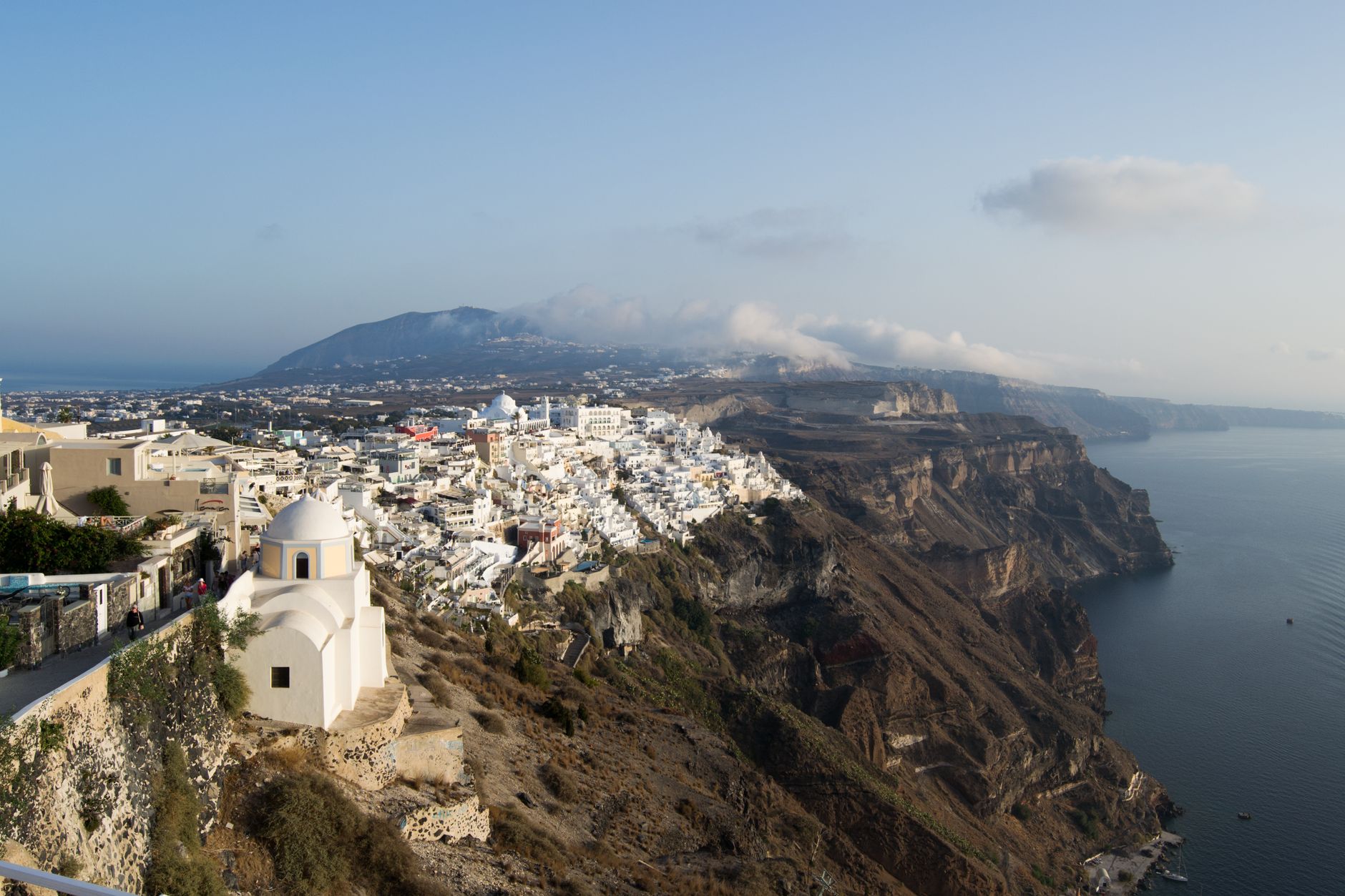
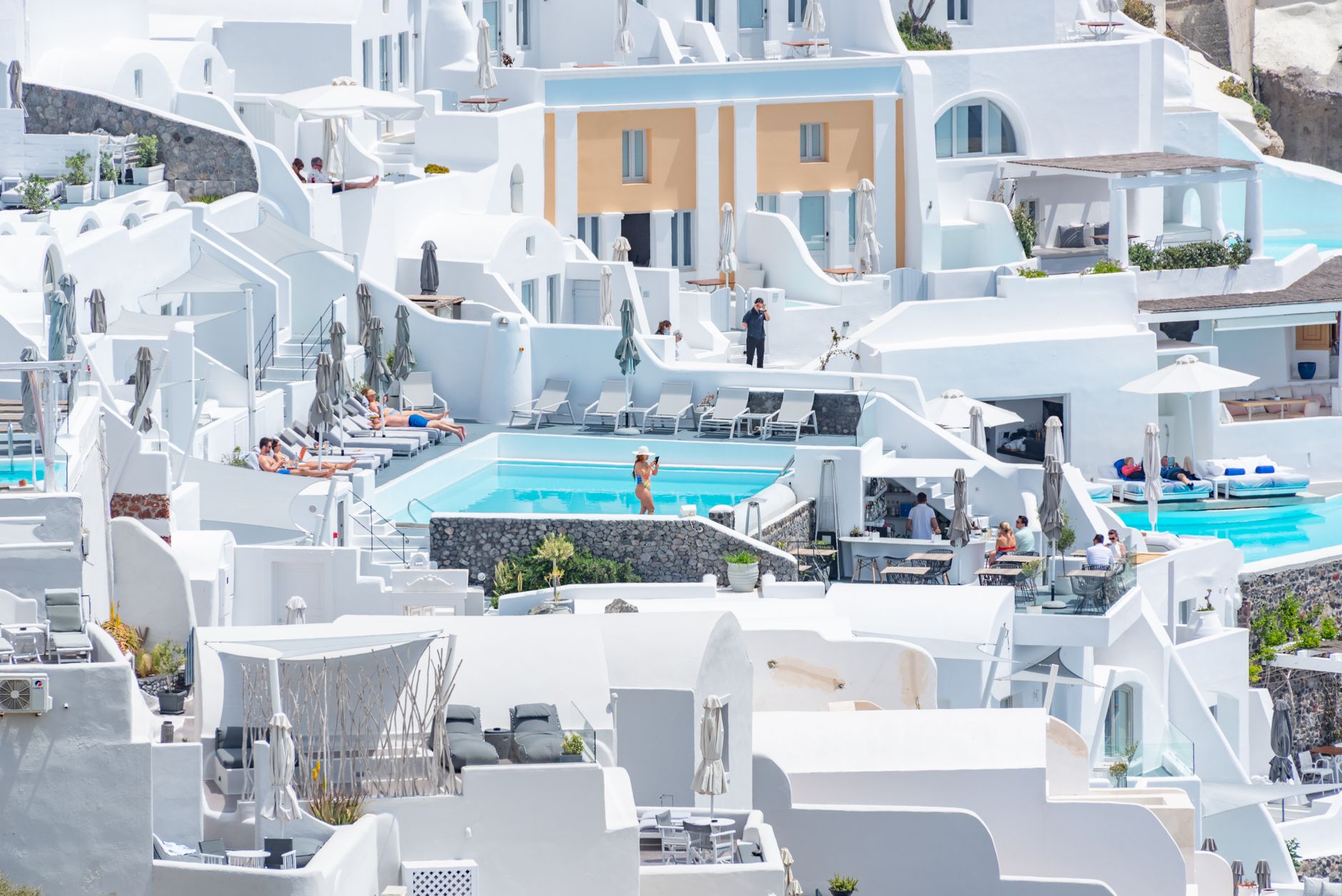
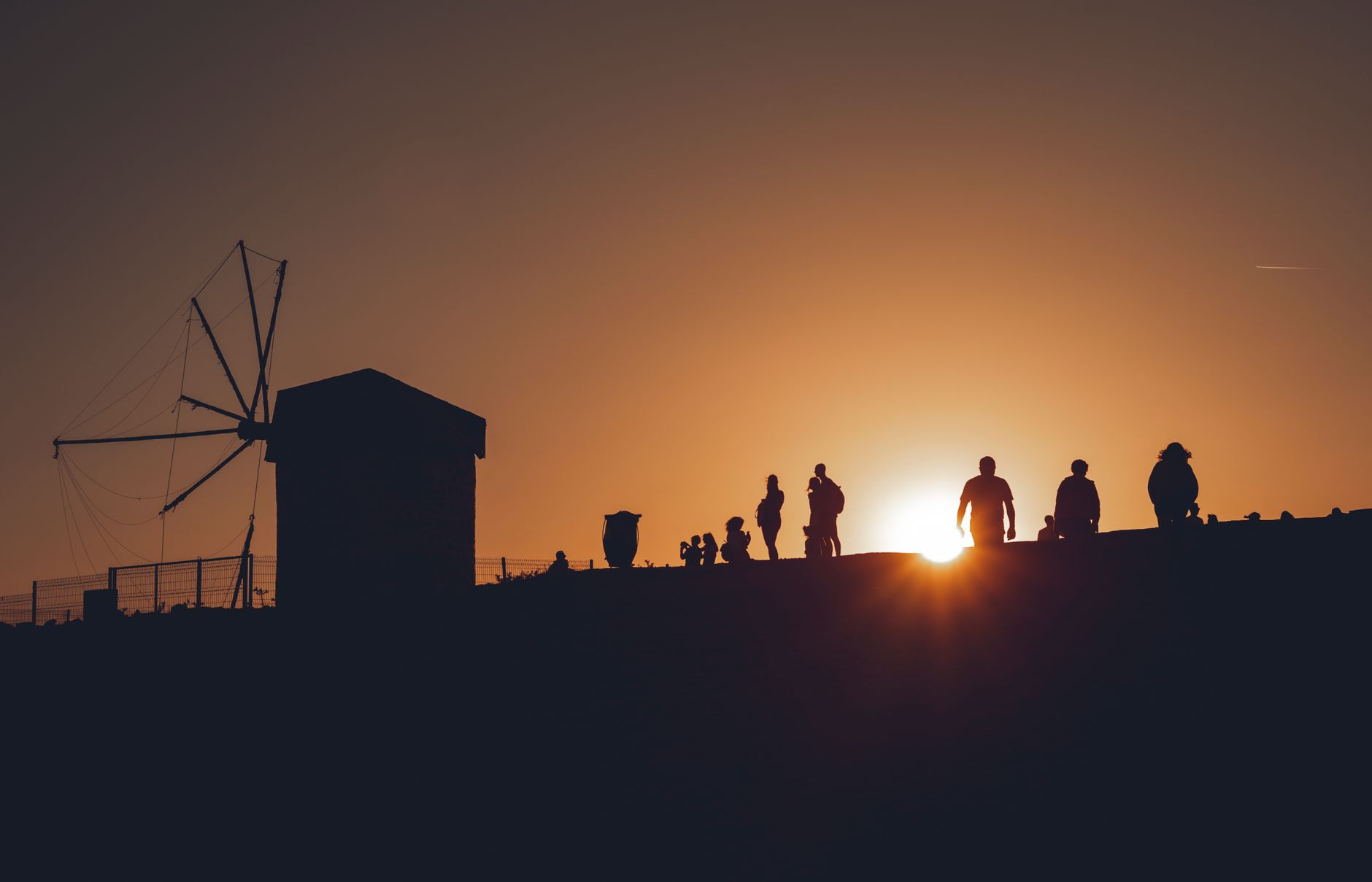
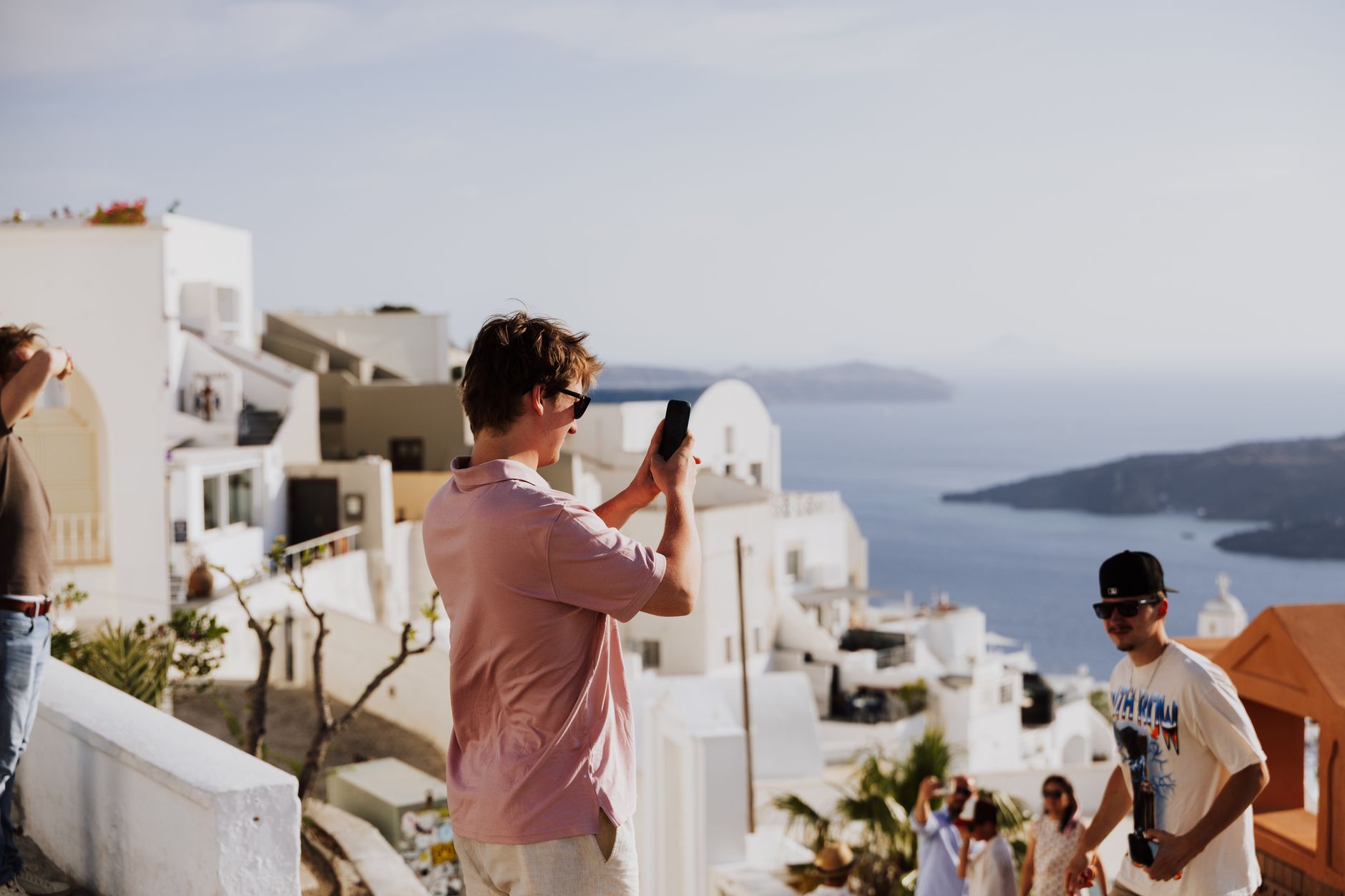
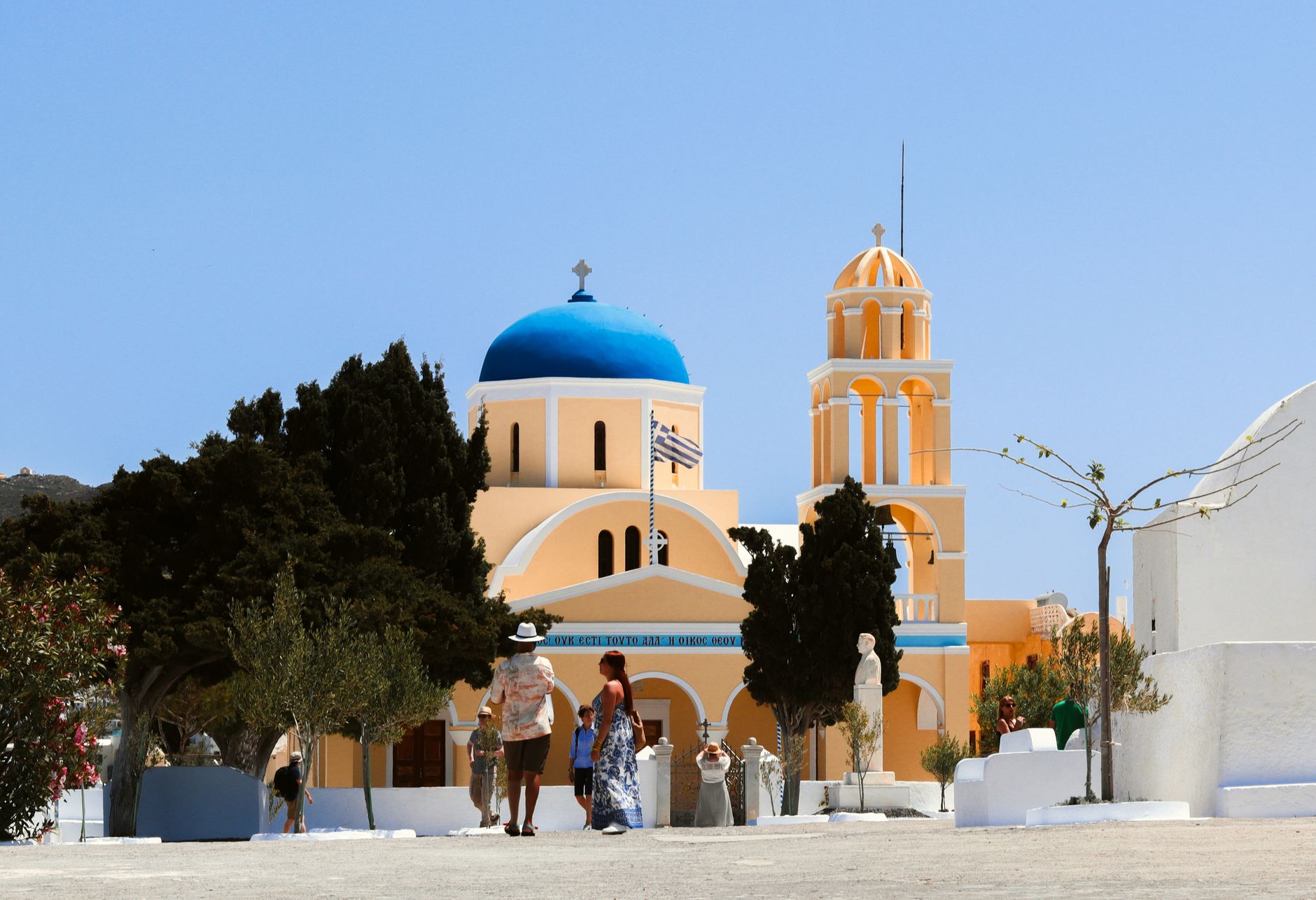
One kilometre north of Fira's crowds, Firostefani sits on the same caldera rim but at a noticeably different pitch. The path here is quieter, the terraces fewer and more spread out, and the views across the submerged volcano are essentially identical — which is the whole point. What draws people specifically to Firostefani is the Catholic Church of the Dormition, whose three-tiered bell tower beside whitewashed domes has become the most reproduced image on the island.
Firostefani grew out of Fira's northern edge slowly enough that the boundary between them is still a matter of debate. Today it functions as its own small place: a central square beside the main road, blue-domed chapels on side streets, and a caldera-edge walk that connects south to Fira and north all the way to Oia.
💛 What travellers fall for
People who come back tend to stay on this stretch rather than in Fira proper. The walk south into town takes twelve minutes and feels like a commute you don't mind. Early mornings on the caldera path — before the tour groups reach the bell tower — are when the light does its best work and the trail is almost empty.
Deals in Firostefani
Book directly at the provider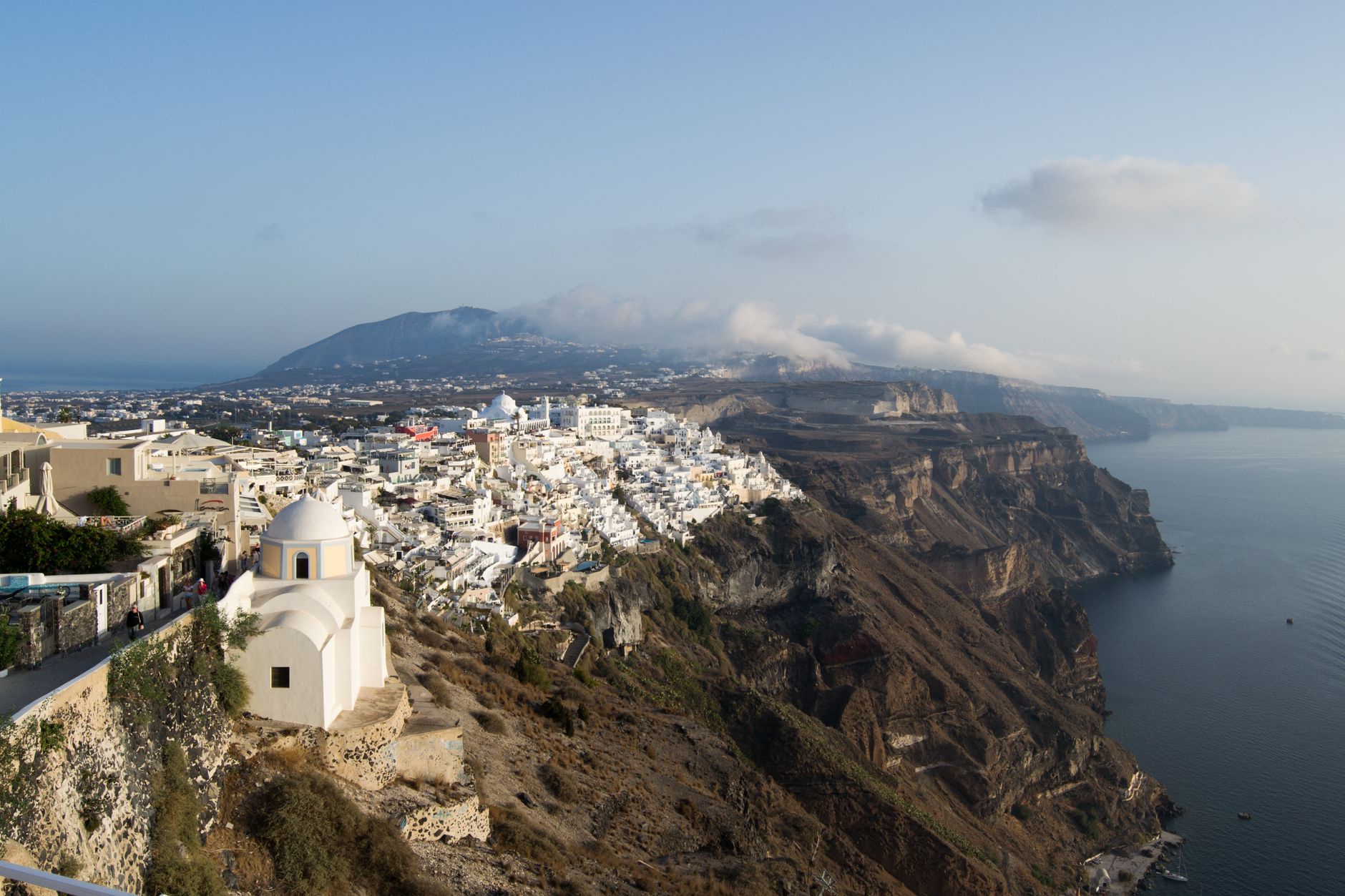
How Firostefani came to be
Firostefani was long considered simply the northern fringe of Fira rather than a settlement in its own right, and no founding date for the village itself has been recorded. The clearest fixed point in its history is the Monastery of Agios Nikolaos, established in 1651 by the Gyzis family. Dedicated to Agios Panteleimonas, Zoodohos Pigi, and Agios Nikolaos, it now holds a small folklore and ecclesiastical museum with Byzantine icons that predate the island's catastrophic 1956 earthquake.
The Catholic Church of the Dormition — the building everyone photographs — reflects the island's long Venetian and Latin Catholic presence on Santorini, layered over an Orthodox Greek foundation. Its feast day, the Dormition of the Virgin Mary, falls on 15 August.
Who and what shaped it
Landmark buildings
See Firostefani in motion
Plan your visit
On the map
When to go
Summers run warm and dry, with July and August reaching around 28°C and thirteen hours of daylight — the caldera path is exposed, so early morning or late afternoon walks are more comfortable. Spring is the more temperate option: April sits around 19°C with eight hours of sun, May closer to 22°C, and the island is far less crowded.
Right now
Background & history adapted from Wikipedia (CC BY-SA) · specs from Wikidata (CC0) · weather from Open-Meteo · map data © OpenStreetMap contributors · photos from Wikimedia Commons / Unsplash with per-image credit. No third-party reviews or social posts reproduced.