
Fécamp
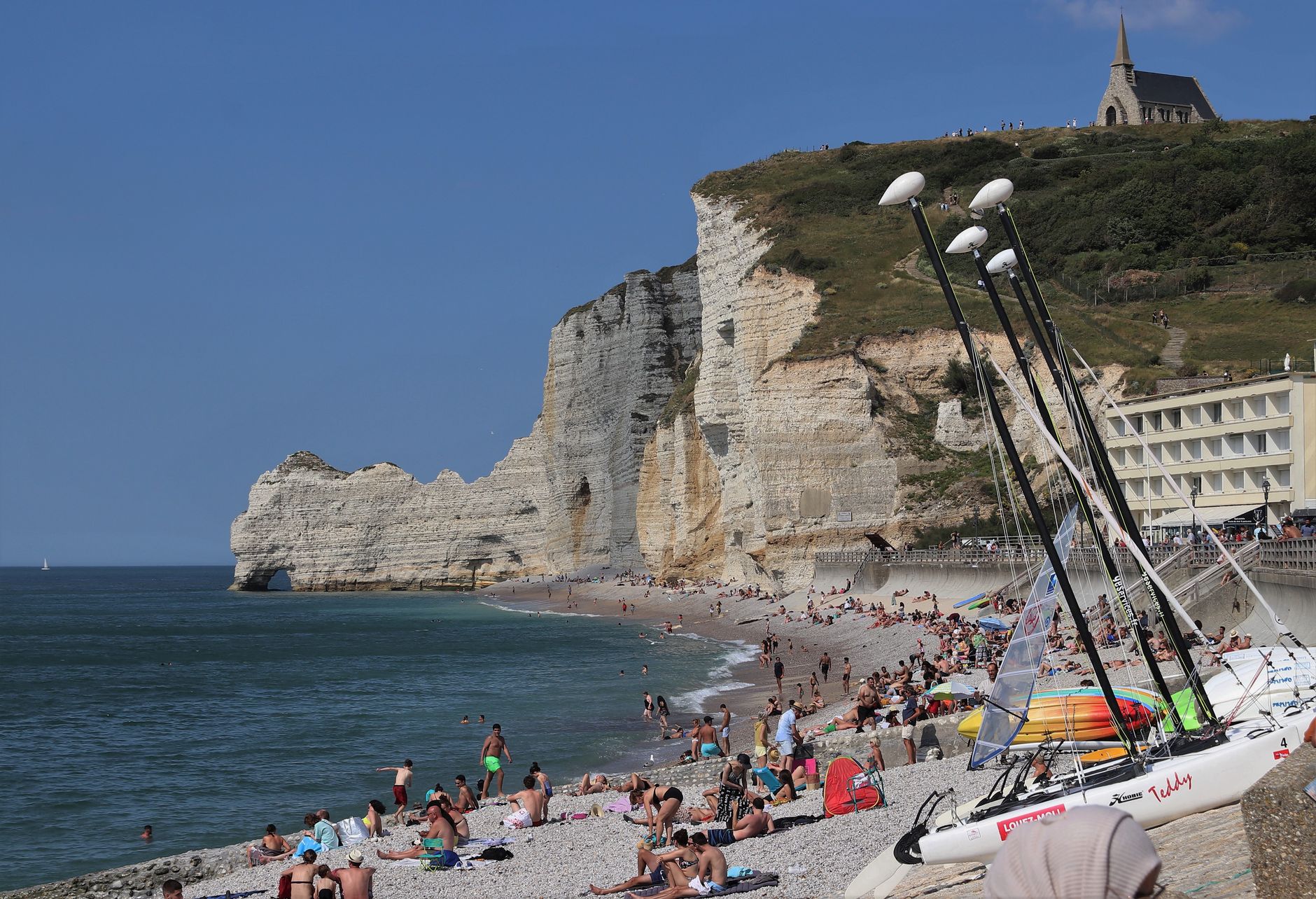
Fécamp sits on the Normandy coast where the chalk cliffs finally relent and let a port through. It has been, at various points in its life, a seat of ducal power, a cod-fishing capital, and the unlikely birthplace of one of the world's most recognisable liqueurs. The abbey church alone — 127 metres of cream Caen stone raised between 1175 and 1220, with a lantern tower you can read a clock by from 1667 — would justify the trip.
What catches you off guard is how much remains in use and in conversation with itself. The Palais Bénédictine still distills on site. The sailors' chapel on Cap Fagnet still fills with ex-votos. The fish factory on the port is now a museum with a rooftop that takes in the whole harbour.
💛 What travellers fall for
People who come back tend to time a visit around the Palais Bénédictine when the distillery tour is running — the smell of the 27 plants and spices alone is worth it. They also mention the walk up to Cap Fagnet at dusk, 105 metres above the water, where the chapel sits among the ex-votos left by fishermen's families across centuries.
Experiences you don't want to miss



Deals in Fécamp
Book directly at the provider
How Fécamp came to be
The place begins, in recorded terms, with a Merovingian count named Waningus founding a convent around 658. Then, in 932, William Longsword of Normandy raised a castle here — initially timber, later rebuilt in stone by Richard II — and for nearly three centuries Fécamp served as a residence of the Norman dukes. Richard I was born here in 933; Richard II died here in 1027. The port grew alongside the court, feeding a shipbuilding and fishing trade that would define the town long after the dukes moved on.
The English burned the town in 1410 and held it until 1449. The abbey, classified on France's first list of Historic Monuments in 1840, outlasted all of it. A separate thread runs through the Palais Bénédictine: a monk named Dom Bernardo Vincelli reportedly created a herbal elixir at the abbey in 1510; Alexandre Le Grand, a local wine merchant, rediscovered the recipe in 1863 and began producing it commercially, commissioning architect Camille Albert to build the extravagant neo-Gothic, neo-Renaissance palace that still stands at 110 Rue Alexandre Le Grand.
Who and what shaped it
People who shaped it
Landmark buildings
See Fécamp in motion
Plan your visit
On the map
When to go
July is the sweet spot — the driest month, with around 240 hours of sunshine and temperatures peaking near 20°C. The rest of the year is classic Norman coast: long, cold, windy winters and a year-round tendency toward cloud, with January highs rarely clearing 8°C.
Right now
Background & history adapted from Wikipedia (CC BY-SA) · specs from Wikidata (CC0) · weather from Open-Meteo · map data © OpenStreetMap contributors · photos from Wikimedia Commons / Unsplash with per-image credit. No third-party reviews or social posts reproduced.