
European Parliament Strasbourg
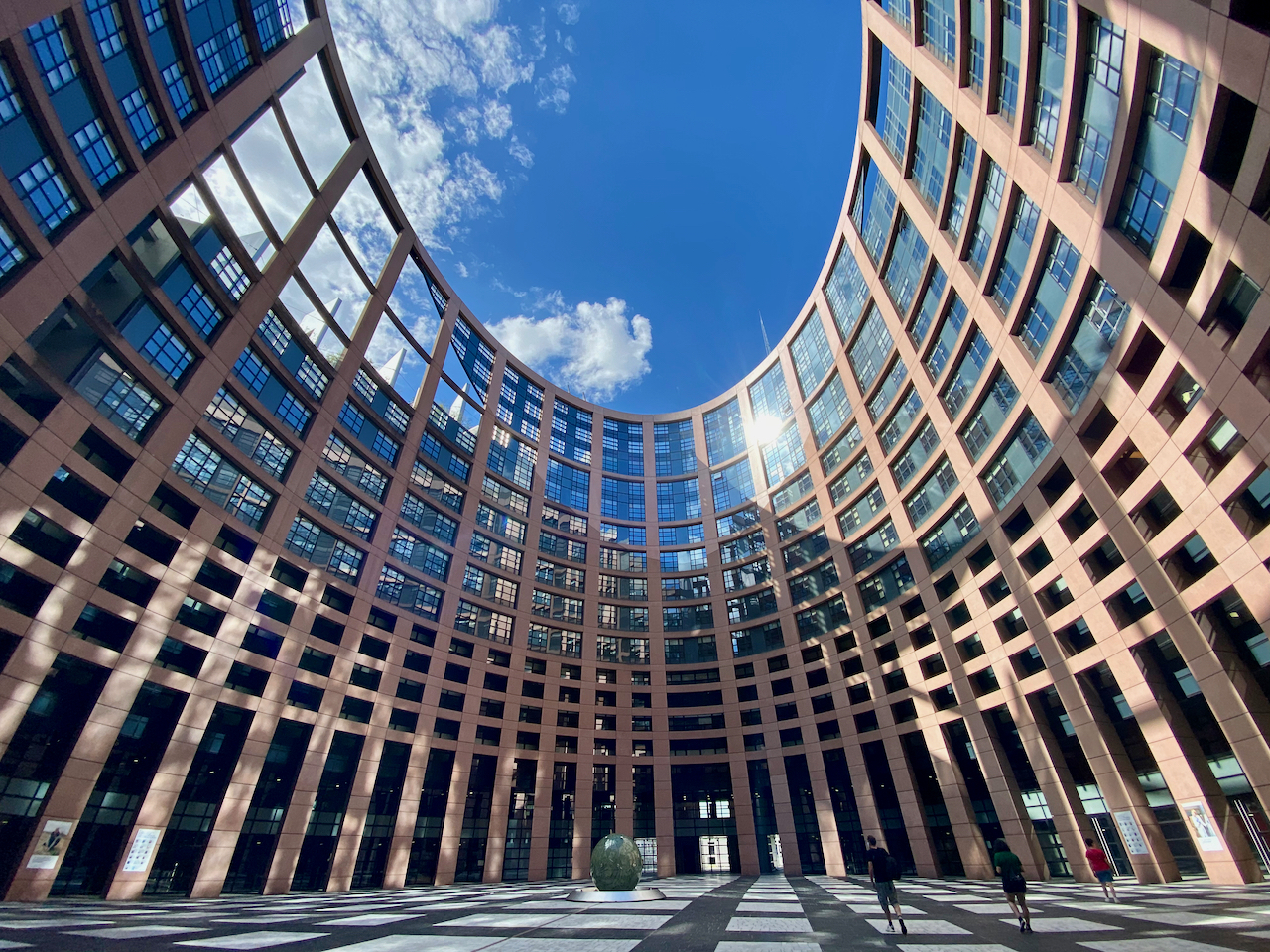
The Louise Weiss Building announces itself before you reach the door — a 60-metre glass and sandstone tower, one side deliberately left open, rising above the junction of the Ill and the Marne-Rhine Canal. This is where the European Parliament sits twelve times a year, and where every vote on EU legislation must legally take place. The hemicycle inside seats 785 Members of the European Parliament and 680 visitors, making it the largest chamber of any European institution.
Entry is free, a valid ID gets you in, and the Parlamentarium Simone Veil — an interactive exhibition on how the Parliament actually works — is included in every visit. Guided tours run in all 24 official EU languages.

💛 What travellers fall for
People who come back tend to time it for a plenary week — Monday afternoon through Thursday noon — when the hemicycle fills and the debates are live. Sitting in the public gallery with 680 other visitors, watching legislation move in real time, is a different thing entirely from the quieter self-guided tour available on Saturdays.
The story behind European Parliament Strasbourg
Strasbourg's role as a seat of European institutions began in 1949, when the Council of Europe chose the city — a place that had changed hands between France and Germany four times in seventy years — as a deliberate statement about post-war reconciliation. The European Parliamentary Assembly first met here on 19 March 1958, later renaming itself the European Parliament in 1962.
For decades the Parliament moved between Strasbourg and Luxembourg without a permanent home. The Louise Weiss Building, designed by Architecture Studio and approved at an international contest in 1991, changed that. Construction began in May 1995, and French President Jacques Chirac and Parliament President Nicole Fontaine inaugurated it on 14 December 1999. The tower's open face — often said to gesture eastward toward countries then outside the EU — actually faces west, a detail that has quietly complicated the symbolism ever since.

Good to know
Take tram line E to 'Parlement Européen' — it drops you at the door. Bring a physical ID (national card or passport); phones won't substitute. Visits run about 60 minutes and are always free. The building closes on certain days, so check the plenary calendar before you go.
Where is European Parliament Strasbourg?
More tickets & tours for European Parliament Strasbourg
Book directly at the provider
What travellers say about European Parliament Strasbourg
Visiting the European Parliament in Strasbourg was one of the highlights of my trip. It is fascinating to stand in a place where decisions affecting hundreds of millions of Europeans are discussed and made. What surprised me most was how easy it is to visit. There were no long lines or crowds, which allowed me to explore everything at a relaxed pace. The visit is very well organized, with interactive exhibits that clearly explain how the Parliament works, how European laws are created, and how representatives from different countries cooperate. The architecture is impressive, and seeing the Hemicycle in person is an unforgettable experience. There is also an excellent café inside where you can enjoy a coffee or a light meal before or after your visit. If you're planning a trip to Strasbourg, I would especially recommend visiting in April, May, or September, when the weather is pleasant and the city is less crowded than during the peak summer season. Whether you're interested in politics, history, architecture, or simply discovering unique places, the European Parliament is absolutely worth adding to your itinerary.
A fascinating place to visit - the self guided tour is very informative and lets you see some of the key areas of the building. I left with a lot more knowledge than when I arrived! The interactive audio guide inside is great too.
Definitely worth visiting, the entry is free and also a free audio guide available when visiting the plenary hall. You need to have your passport with you, driving license is not accepted.
Beautiful building, really enjoyed touring it and seating in the actual hall where all the decisions are made.
Visiting the European Parliament in Strasbourg is a truly enlightening experience that highlights the best of European democracy and unity. Been there for my second time as a teacher for Euroscola sessions. The Louise Weiss building is an architectural masterpiece, blending modern aesthetics with a sense of historical significance that is visible from every angle. Stepping inside the Hemicycle is breathtaking, as you get to see exactly where the crucial plenary sessions and transnational debates take place. I was particularly impressed by the high-tech multimedia guides, which made the complex legislative process easy to understand in 24 different languages. The staff is exceptionally professional and welcoming, ensuring that the entire visit is both safe and highly educational for all ages.
More of Strasbourg
Discover where to stay, what to do and the best deals for your trip.
Explore Strasbourg →More attractions in Strasbourg
All of Strasbourg →

Background adapted from Wikipedia (CC BY-SA) · map data © OpenStreetMap contributors · ratings & place photos via Google · other photos with per-image credit. Ticket links may earn us a commission at no extra cost to you.