
Étretat
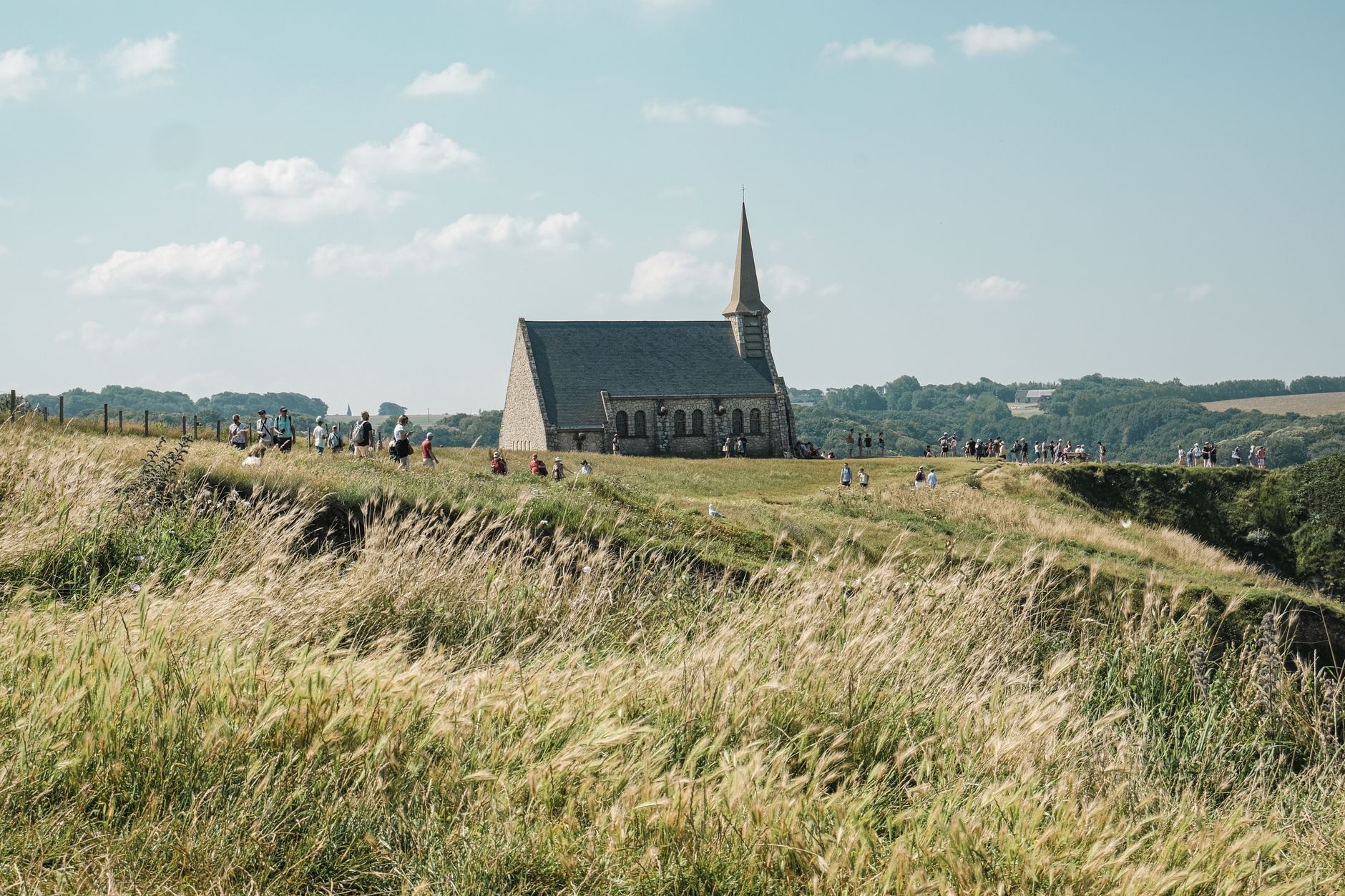
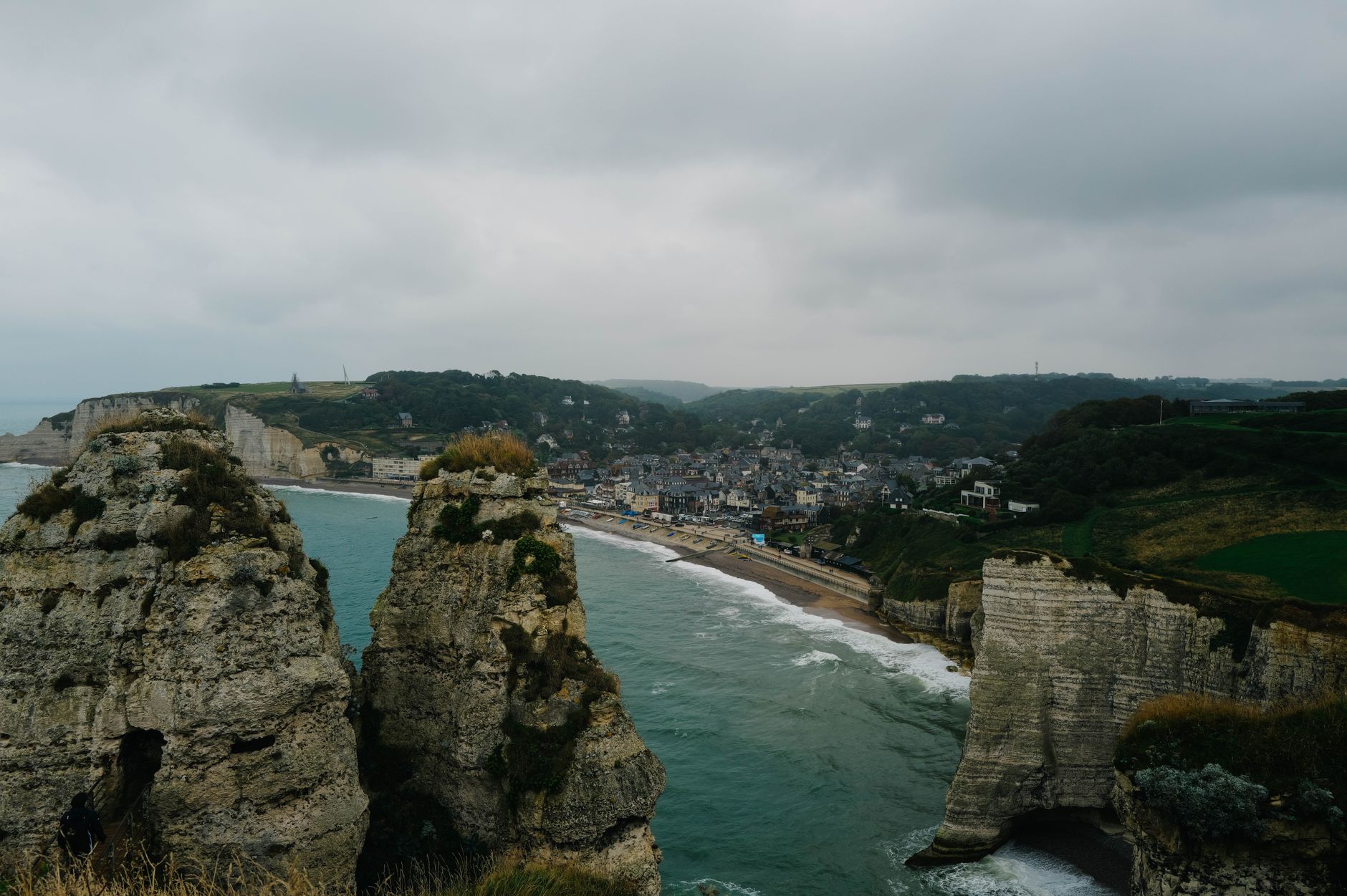
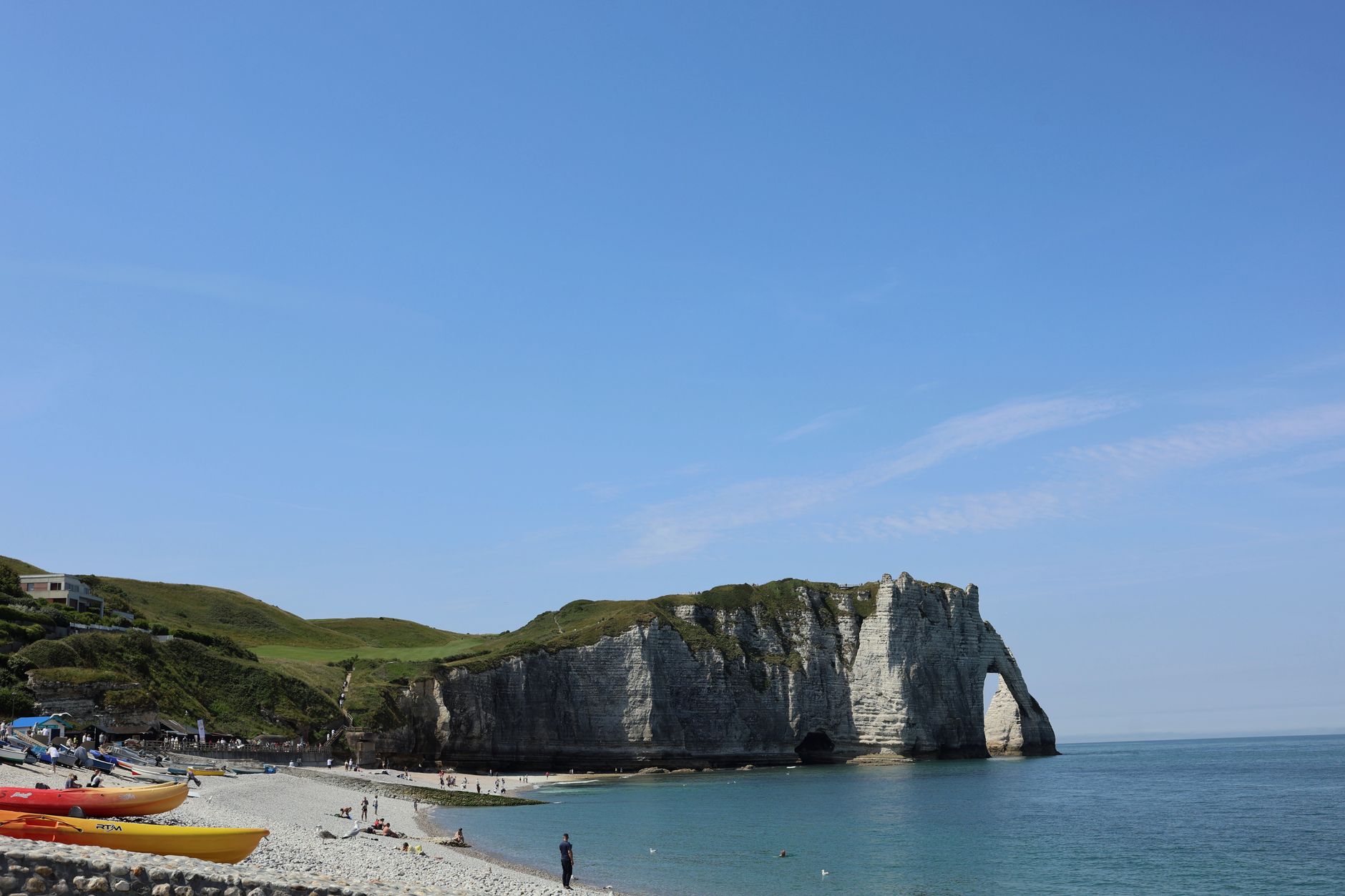
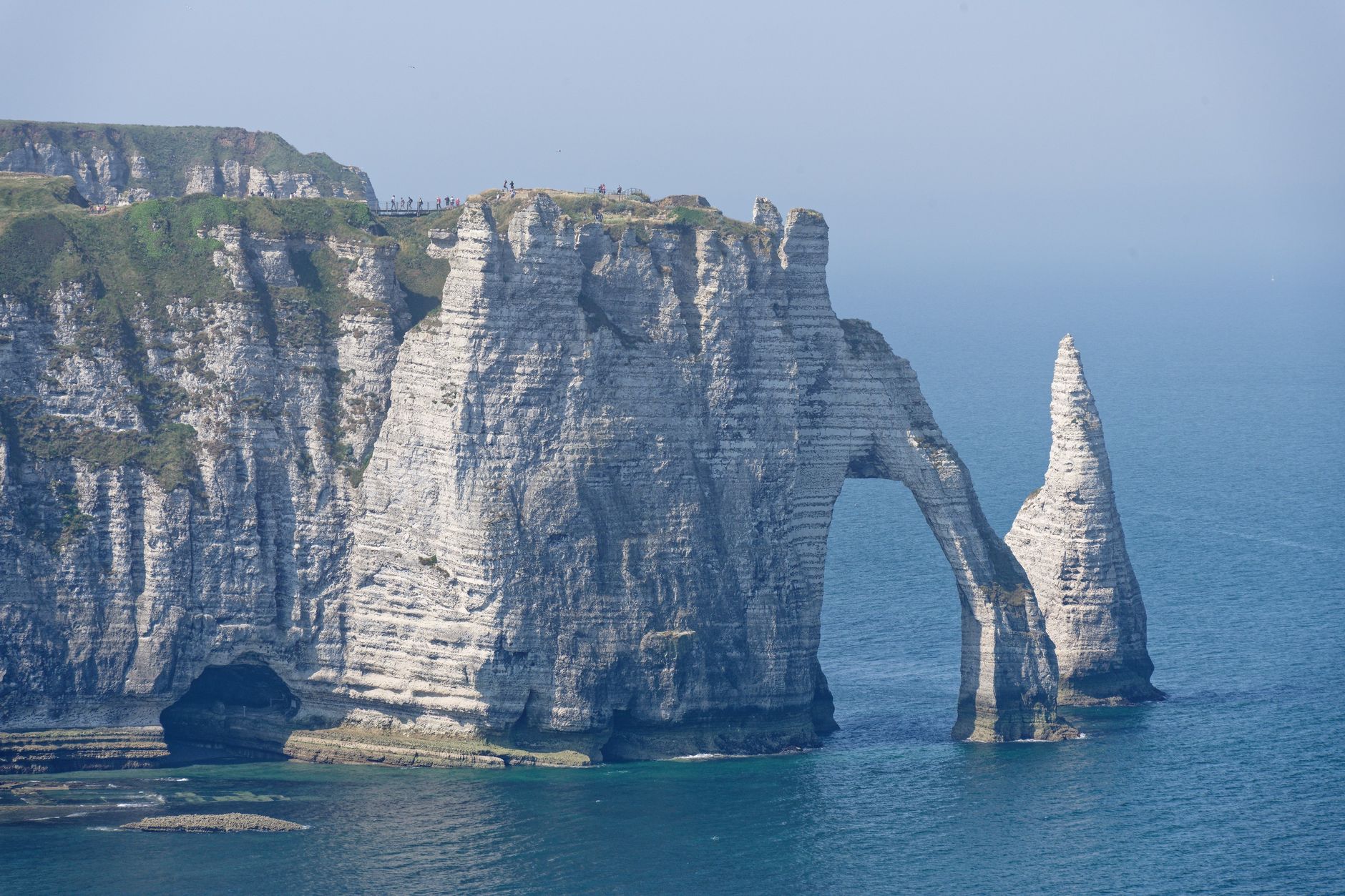
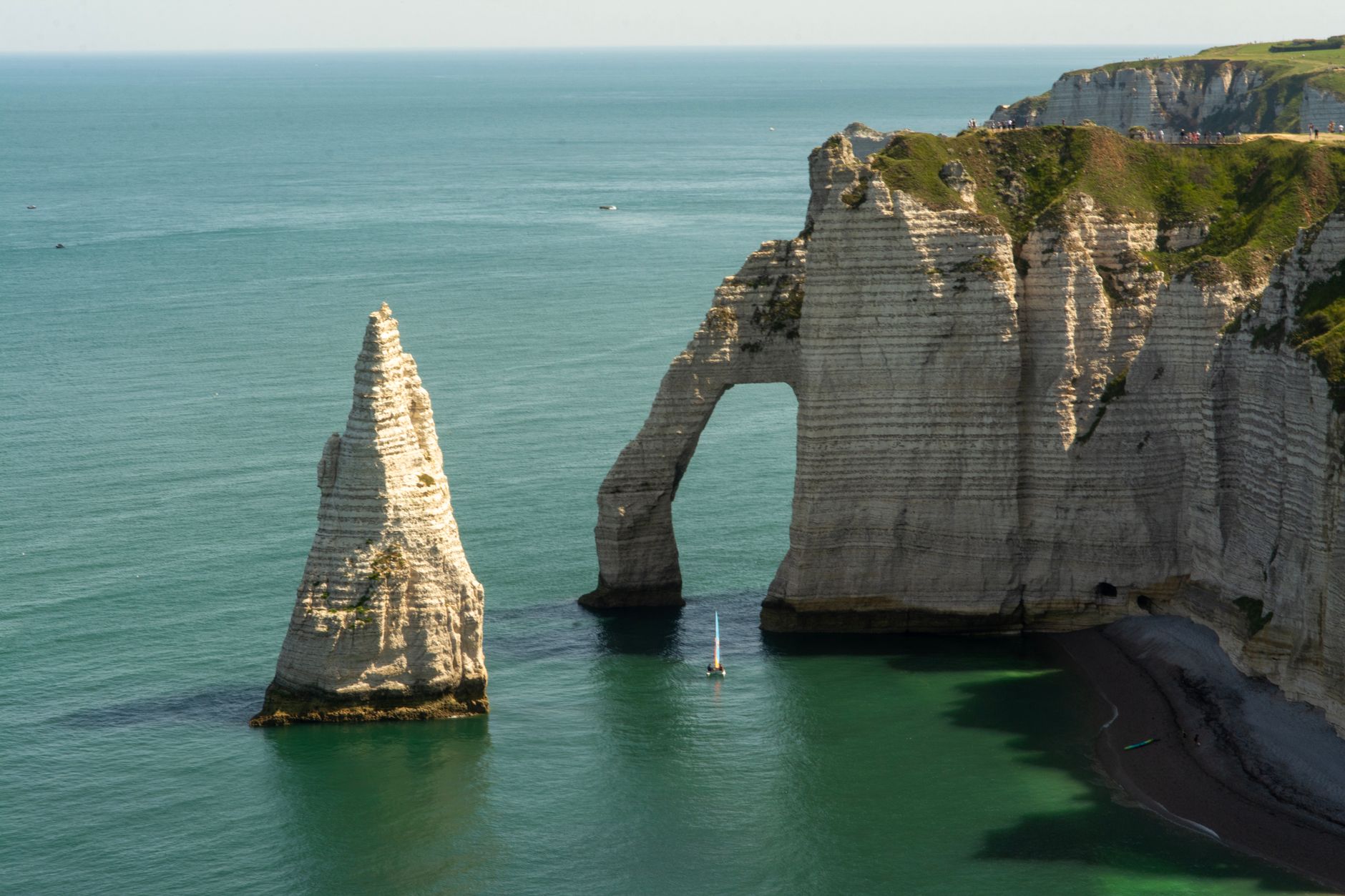
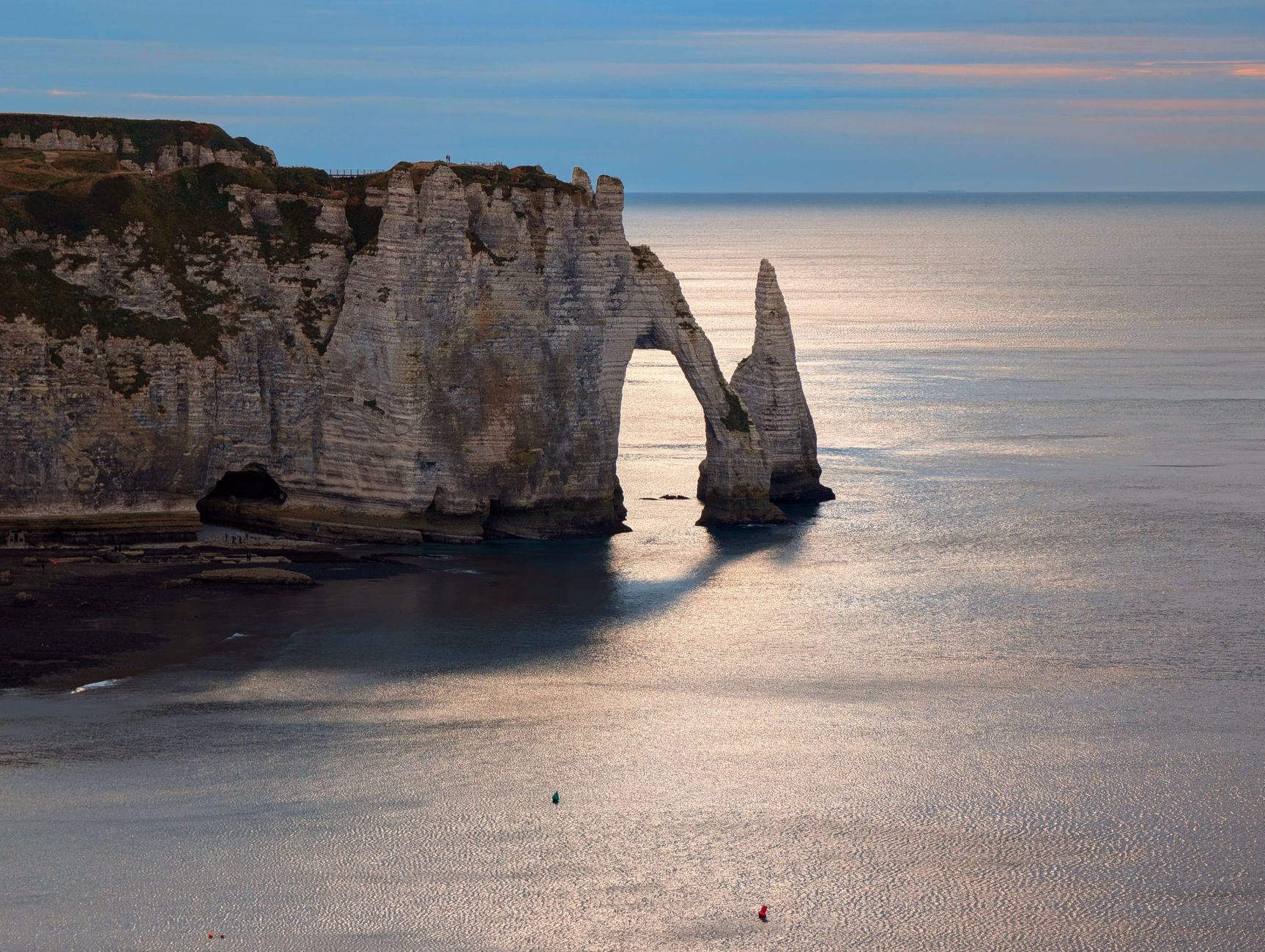
Stand on the shingle beach at Étretat and the cliffs do something unexpected: they curve around you like theatre wings, the great arches of Porte d'Aval and Porte d'Amont framing a sea that shifts from grey-green to almost turquoise depending on the hour. The 70-metre Needle rises offshore like a punctuation mark. This is a small Norman town of perhaps 1,500 people, and for roughly two centuries painters, composers, novelists and oyster merchants have been arriving and finding it very hard to leave.
The town's scale keeps things honest. You can walk the cliff path above Aval in twenty minutes, drop back down for a glass of cider, and still have time to find the Protestant temple on Rue Guy de Maupassant where André Gide was married.
💛 What travellers fall for
Regulars tend to arrive on weekdays in May or October, when the coach parties thin out and the light on the chalk faces goes soft and particular. They walk to Manneporte — the largest of the three arches, invisible from town — by scrambling the coastal path at low tide. Most have been to Le Clos Lupin at least once; some go back just to sit in the garden.
Experiences you don't want to miss


Deals in Étretat
Book directly at the provider


How Étretat came to be
The name traces back to Old Norse — the Vikings who raided and then settled this coastline in the 9th century called it something close to 'Strutat'. Merovingian graves found in the presbytery garden suggest the site was inhabited well before that. By the 18th century the town had a more delicate occupation: cultivating oysters refined enough to be rushed overnight to Versailles for Marie-Antoinette's table.
The modern Étretat began in 1820 when painter Eugène Isabey put the cliffs on canvas, and within two decades the Paris–London cultural circuit had taken notice. Courbet painted here in 1869, Monet followed, and writers including Guy de Maupassant — who spent much of his childhood at 'Les Verguies' and later built his own house, La Guillette, in 1883 — made it a place where art and sea air arrived together. The Germans fortified the cliffs as part of the Atlantic Wall during WWII; the concrete emplacements are still visible if you know where to look.
Who and what shaped it
People who shaped it
Landmark buildings
See Étretat in motion
Plan your visit
On the map
When to go
Normandy's Atlantic weather means Étretat is rarely hot and rarely truly cold, but it is frequently windy and can turn grey without warning even in July. Spring and early autumn offer the most reliable combination of manageable crowds and decent light; winter visits are austere and genuinely beautiful, but pack for rain.
Right now
Background & history adapted from Wikipedia (CC BY-SA) · specs from Wikidata (CC0) · weather from Open-Meteo · map data © OpenStreetMap contributors · photos from Wikimedia Commons / Unsplash with per-image credit. No third-party reviews or social posts reproduced.