
Englischer Garten

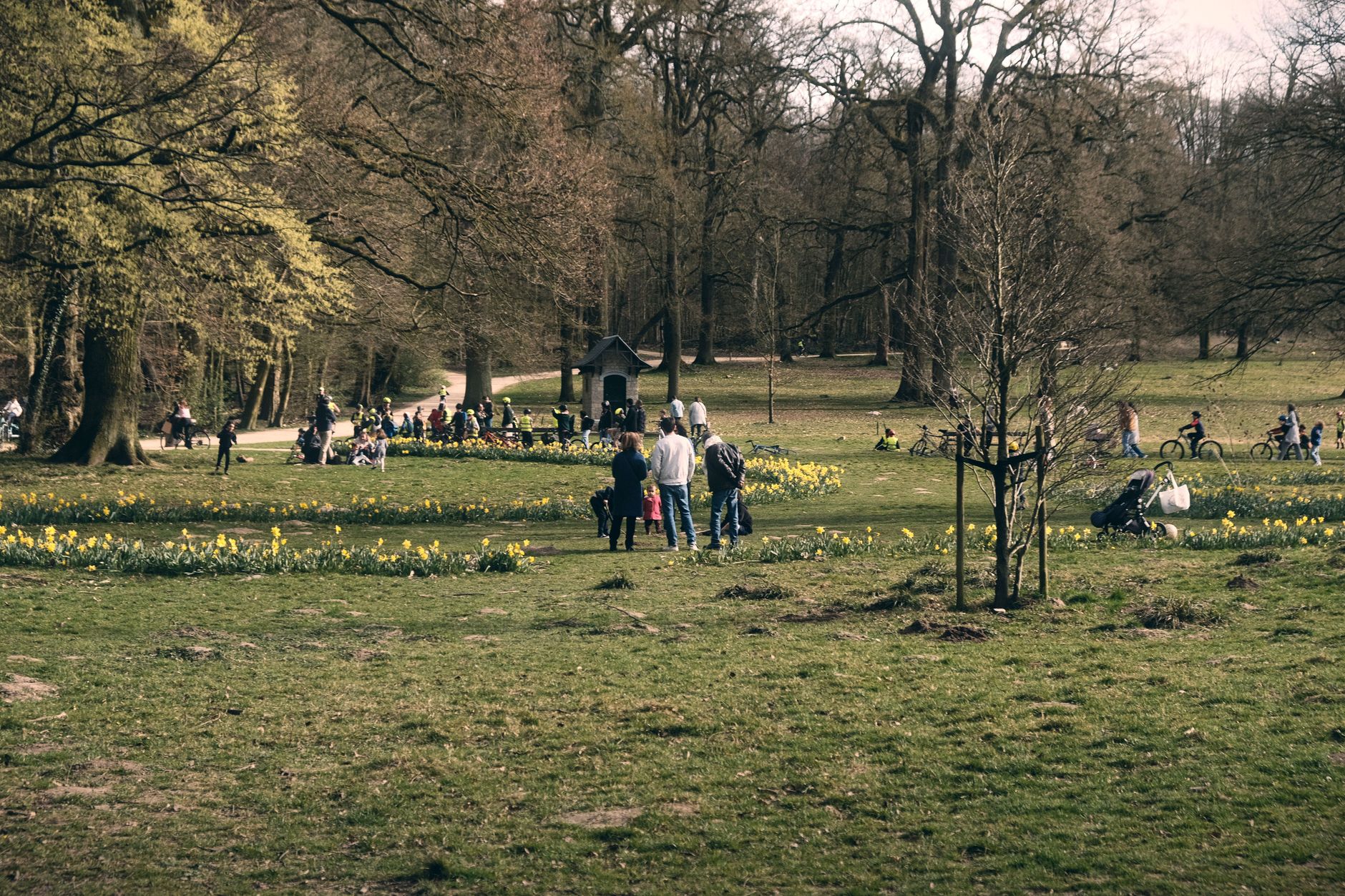
On a warm afternoon, the Isar's current splits off into a standing wave at the park's southern edge, and surfers in wetsuits queue on the bank, waiting their turn. This is the Englischer Garten — 375 hectares of meadow, woodland, lake and beer garden running north through Munich, larger than Central Park and, on any given Sunday, just as crowded with people doing exactly what they want.
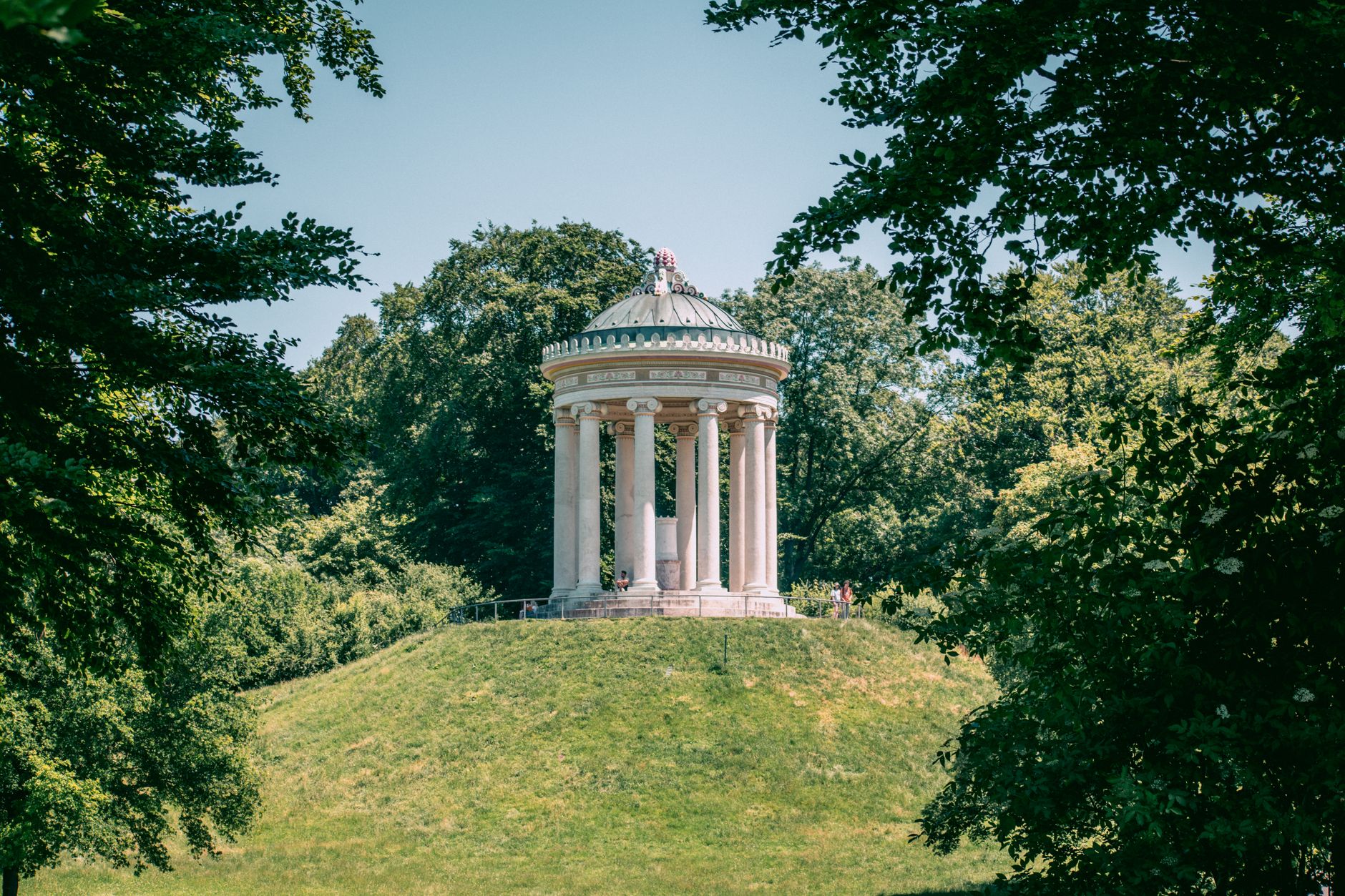
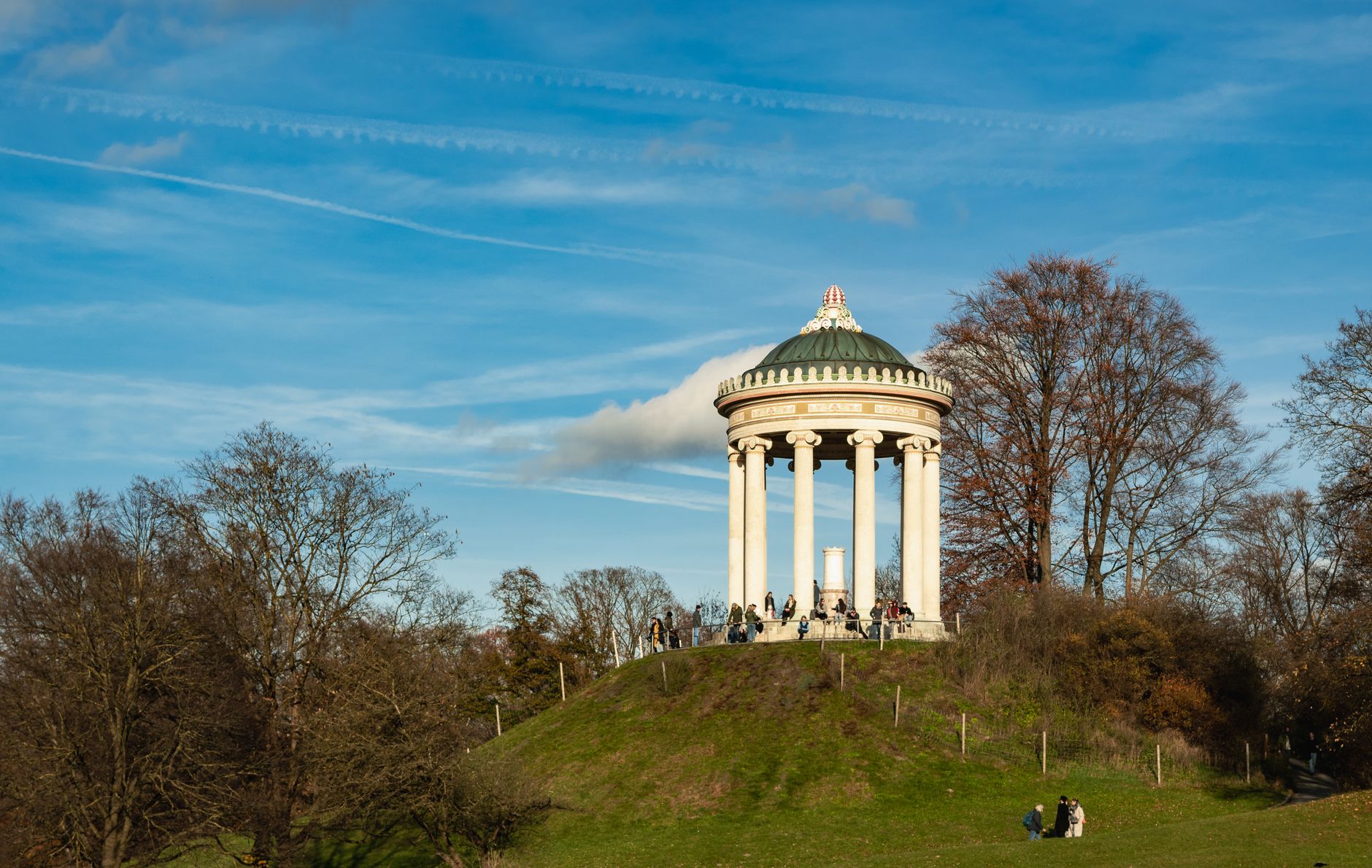
The park was designed not as a royal retreat but as a people's park from the start, opened in 1792 for Munich's 40,000 citizens. That democratic intention still shapes the place. You can sit on the Monopteros hill, buy a Mass at the Chinese Tower, paddle out on the Kleinhesseloher See, or simply lie in the grass and read.
💛 What travellers fall for
Regulars tend to arrive at the Chinesischer Turm beer garden before noon on weekdays, when the 7,000 seats are still half-empty and the light comes through the chestnut trees at a useful angle. The Monopteros at dusk, with the Frauenkirche silhouette on the horizon, is worth timing carefully — the hill fills fast on clear evenings.
Deals in Englischer Garten
Book directly at the provider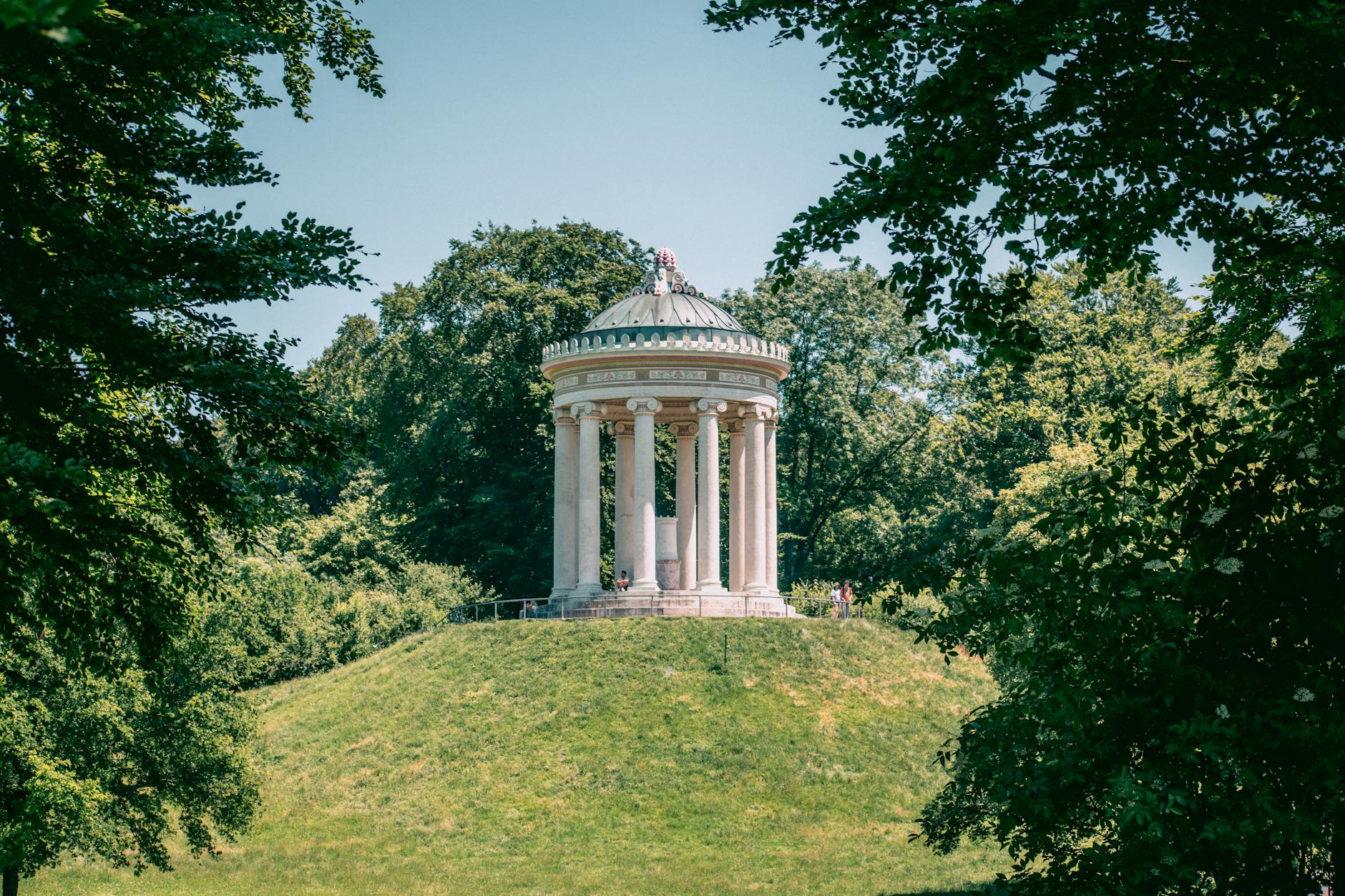
How Englischer Garten came to be
The park's founding date is precise: 13 August 1789, when Elector Karl Theodor signed the order to transform military land east of the city into public grounds. The man who made it happen was Benjamin Thompson — a Massachusetts-born Loyalist who had fled America after the British defeat, drifted through London and eventually entered Bavarian service in 1784. Thompson, later Count Rumford, supervised the initial work before handing over to Reinhard von Werneck and Friedrich Ludwig von Sckell, who had both advised the project from the beginning.
Sckell took sole charge in 1804 and spent the next two decades steering the park away from its early agricultural functions toward the English landscape-garden ideal the name already suggested. The Kleinhesseloher See was dug from 1804. Leo von Klenze added the Monopteros between 1833 and 1837. The Chinese Tower, first built in 1789–90 from a design by Mannheimer military architect Joseph Frey and modelled on Kew's Great Pagoda, burned down in a bombing raid on 13 July 1944 and was faithfully reconstructed by September 1952. In 1972, ahead of the Summer Olympics, a Japanese teahouse arrived as a gift from Soshitsu Sen of the Urasenke school in Kyoto, set on a small island behind the Haus der Kunst.
Who and what shaped it
People who shaped it
Landmark buildings
See Englischer Garten in motion
Plan your visit
On the map
When to go
Summers run warm and sociable, with long evenings well-suited to the beer gardens, though afternoon thunderstorms roll in fast from June onward. Winter strips the trees bare and quietens the meadows considerably, but a cold clear morning with frost on the grass around the Monopteros has its own austere appeal.
Right now
Background & history adapted from Wikipedia (CC BY-SA) · specs from Wikidata (CC0) · weather from Open-Meteo · map data © OpenStreetMap contributors · photos from Wikimedia Commons / Unsplash with per-image credit. No third-party reviews or social posts reproduced.