
Eguisheim
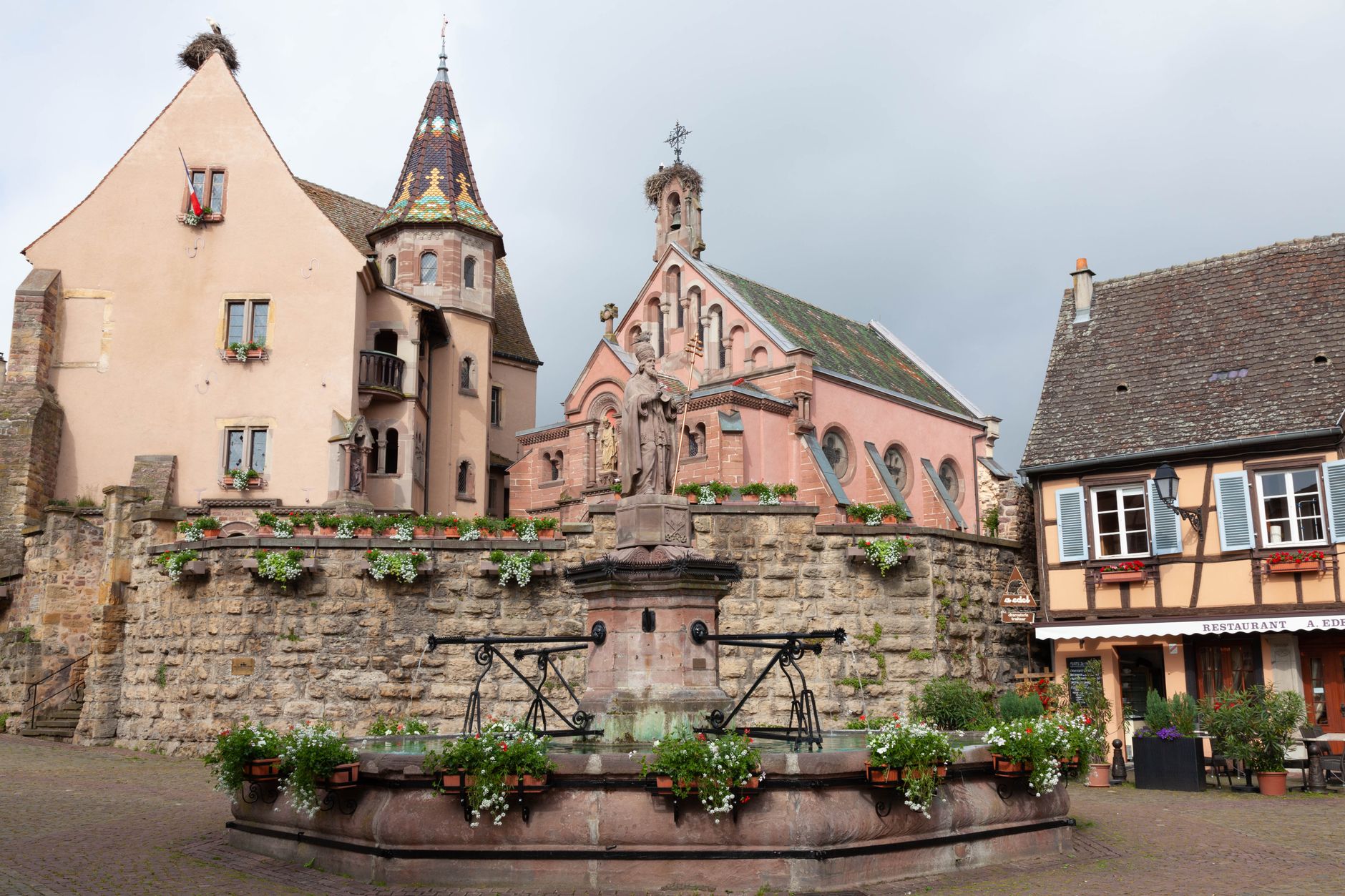
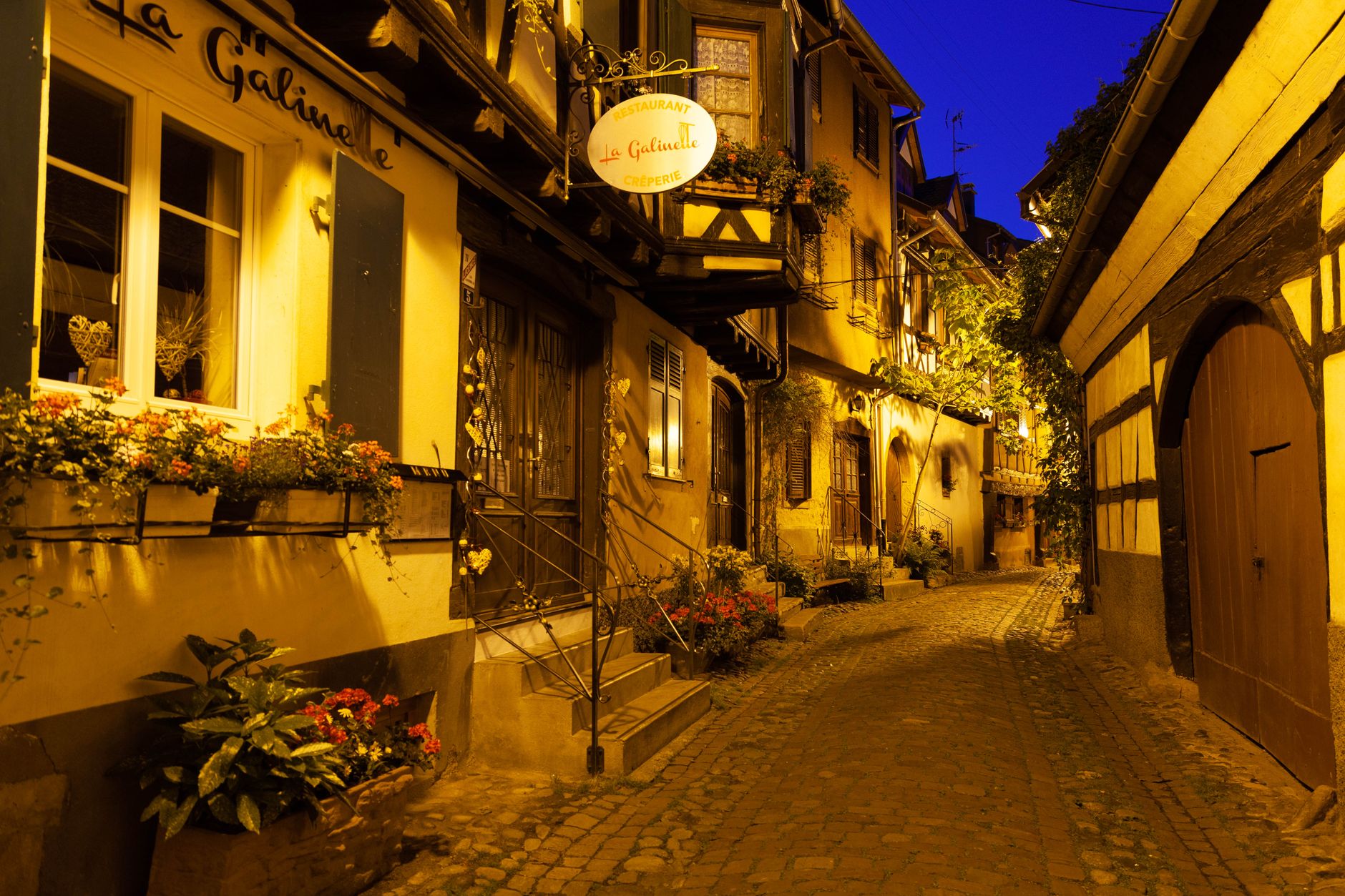
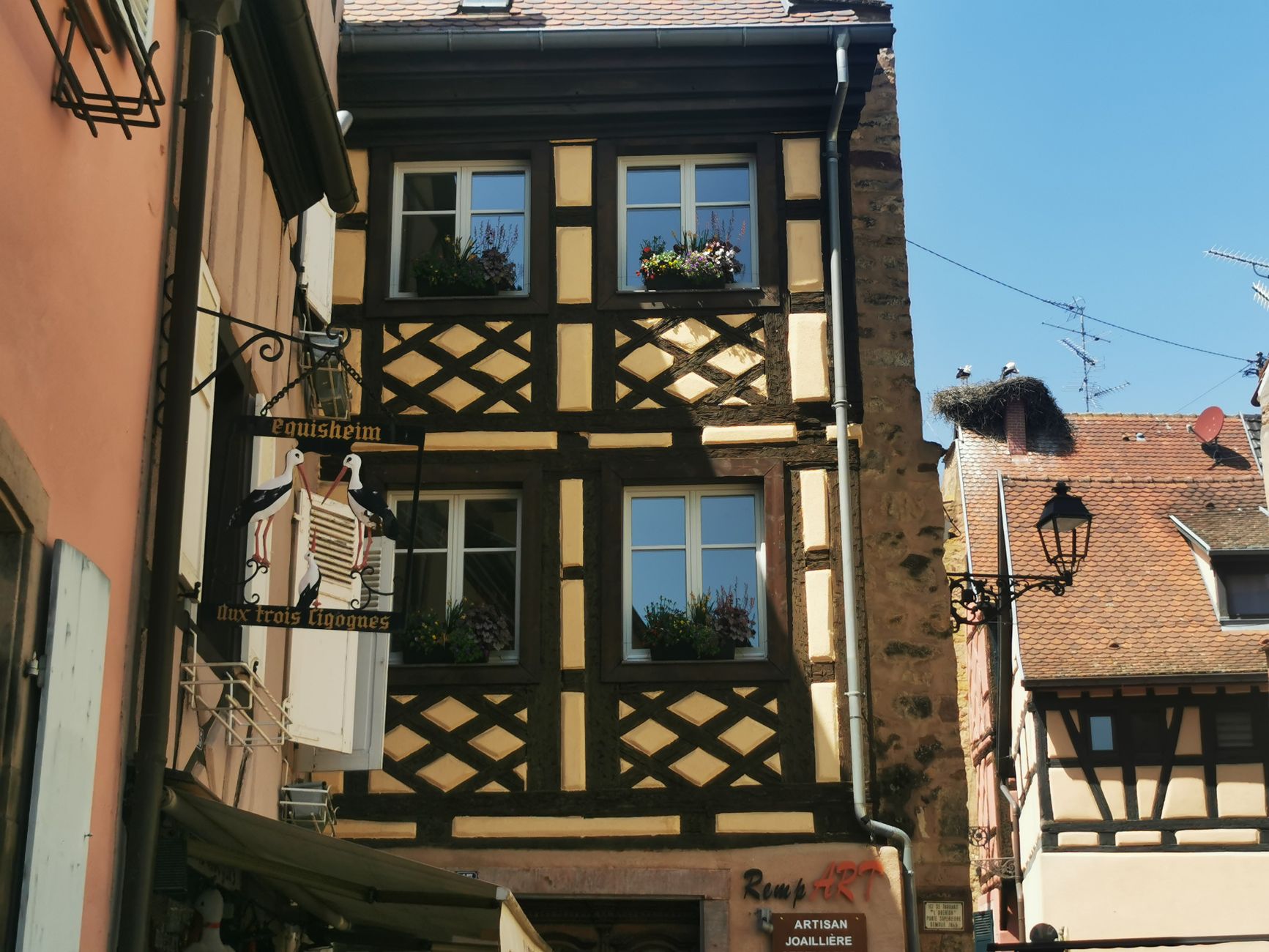
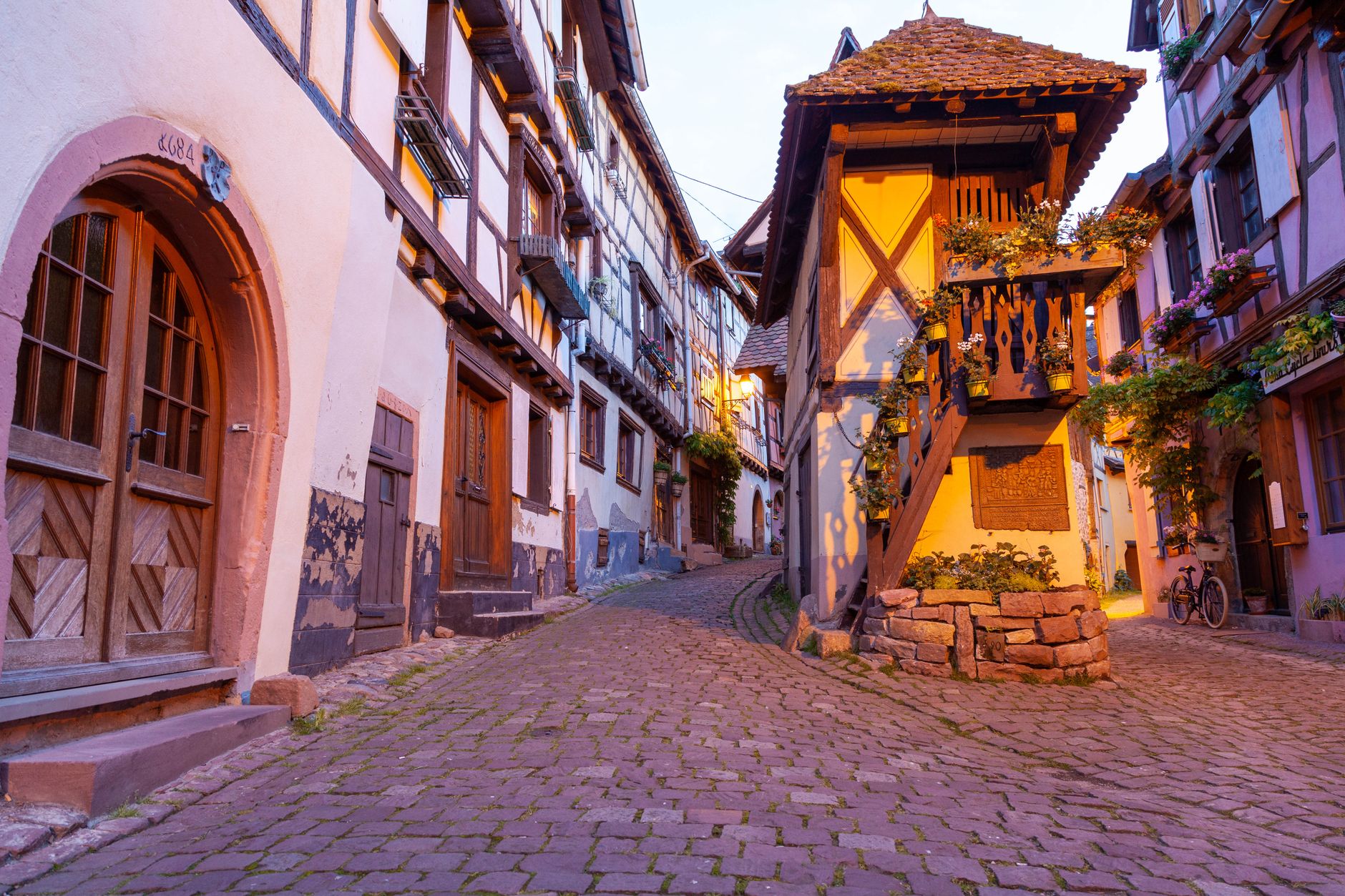
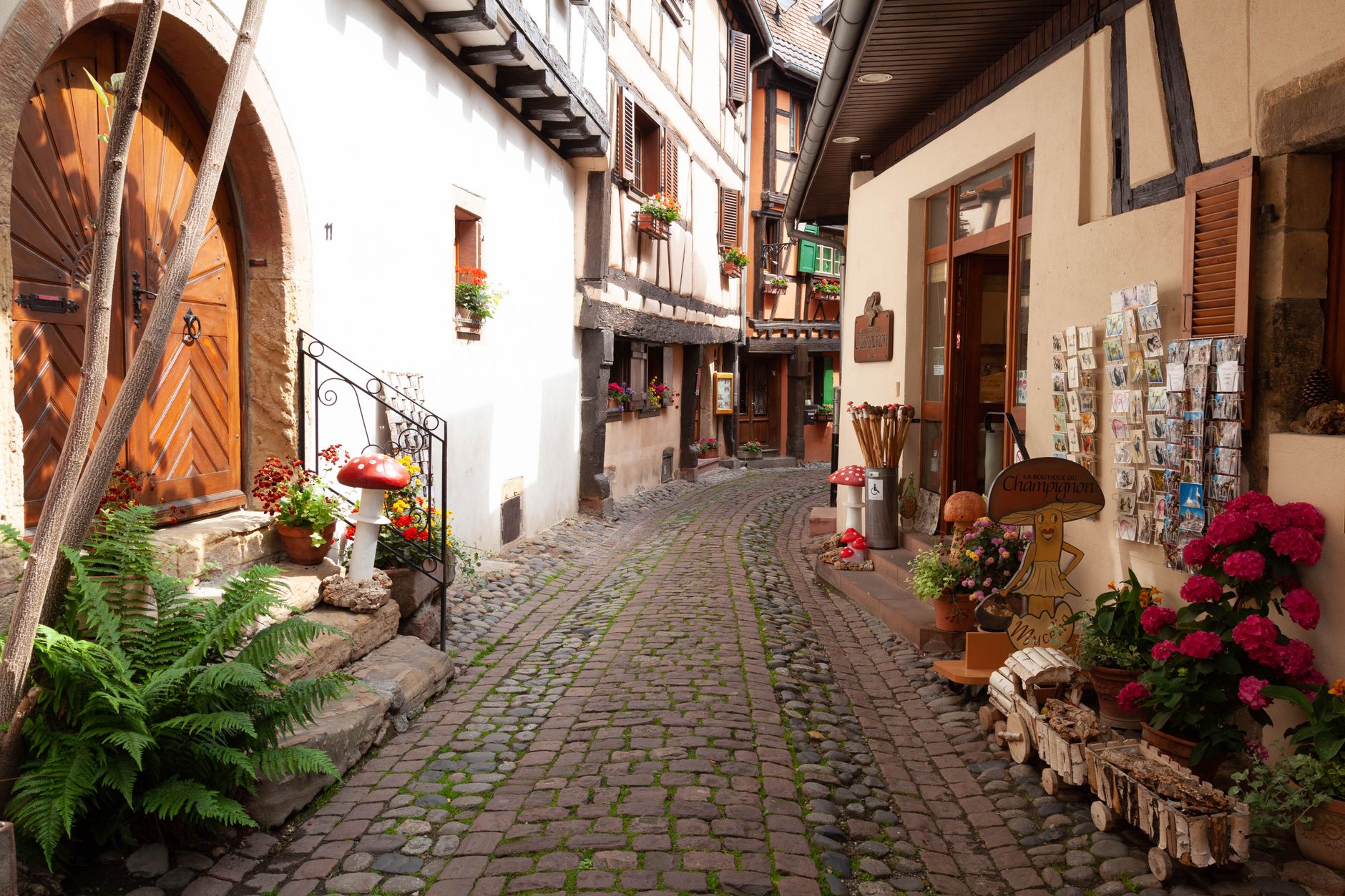
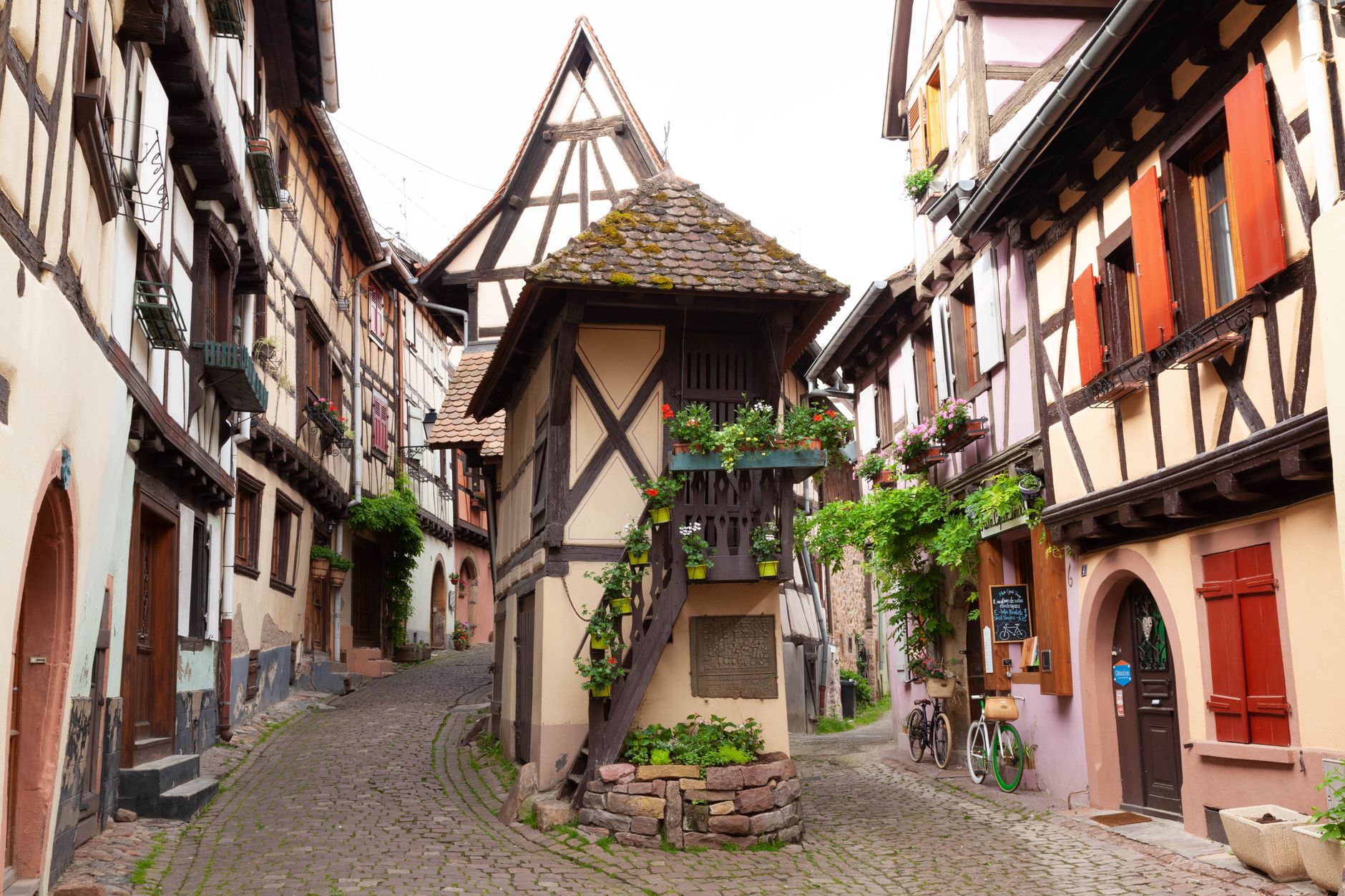
Eguisheim is the village that gave the medieval Catholic Church one of its most consequential reformers — and then quietly went back to growing wine. The streets here form concentric rings around a central castle, a layout so intact it reads like a diagram of how a medieval settlement actually worked. Half-timbered houses line the inner and outer rampart roads, geraniums spilling from window boxes, and the whole circuit takes about twenty minutes to walk without stopping.
At the centre stands the Château-Bas d'Eguisheim, its octagonal 13th-century walls in rusticated stone still essentially as they were in the 16th century. The village is small — genuinely small — and that honesty is part of its character.
💛 What travellers fall for
People who come back tend to time it around the last weekend of August, when the Fête des Vignerons fills the rampart streets with local producers and a small entrance fee buys you the afternoon. The rest of the year, the Dovecote at the fork between the two ring roads is the shot everyone is quietly lining up for — arrive early or late to have it to yourself.
Experiences you don't want to miss




Deals in Eguisheim
Book directly at the providerHow Eguisheim came to be
The site traces back to around 720, when Count Eberhard — a relative of the Duke of Alsace — established a castle here. The village grew outward from that point in rings, a concentric plan still legible in the streets today. A stone structure replaced the earlier fortification from the 11th century onward, and by the Middle Ages Eguisheim had become a functioning market town with wine at the core of its economy.
The village's most far-reaching export was a person: Bruno of Eguisheim-Dagsbourg, born here in 1002, who became Pope Leo IX and spent his 1049–1054 papacy driving significant reforms through the Catholic Church. The Thirty Years' War hit hard — severe depopulation, widespread destruction — but the village rebuilt, and the wine trade held.
Who and what shaped it
People who shaped it
Landmark buildings
See Eguisheim in motion
Plan your visit
On the map
When to go
Summers are warm and dry, with July averaging around 20°C — good walking weather, and the vines are in full leaf. Winters are cold but rarely brutal, hovering just above freezing in January, and the village takes on a quieter character once the summer visitors thin out.
Right now
Background & history adapted from Wikipedia (CC BY-SA) · specs from Wikidata (CC0) · weather from Open-Meteo · map data © OpenStreetMap contributors · photos from Wikimedia Commons / Unsplash with per-image credit. No third-party reviews or social posts reproduced.