
Église Notre-Dame d'Espérance
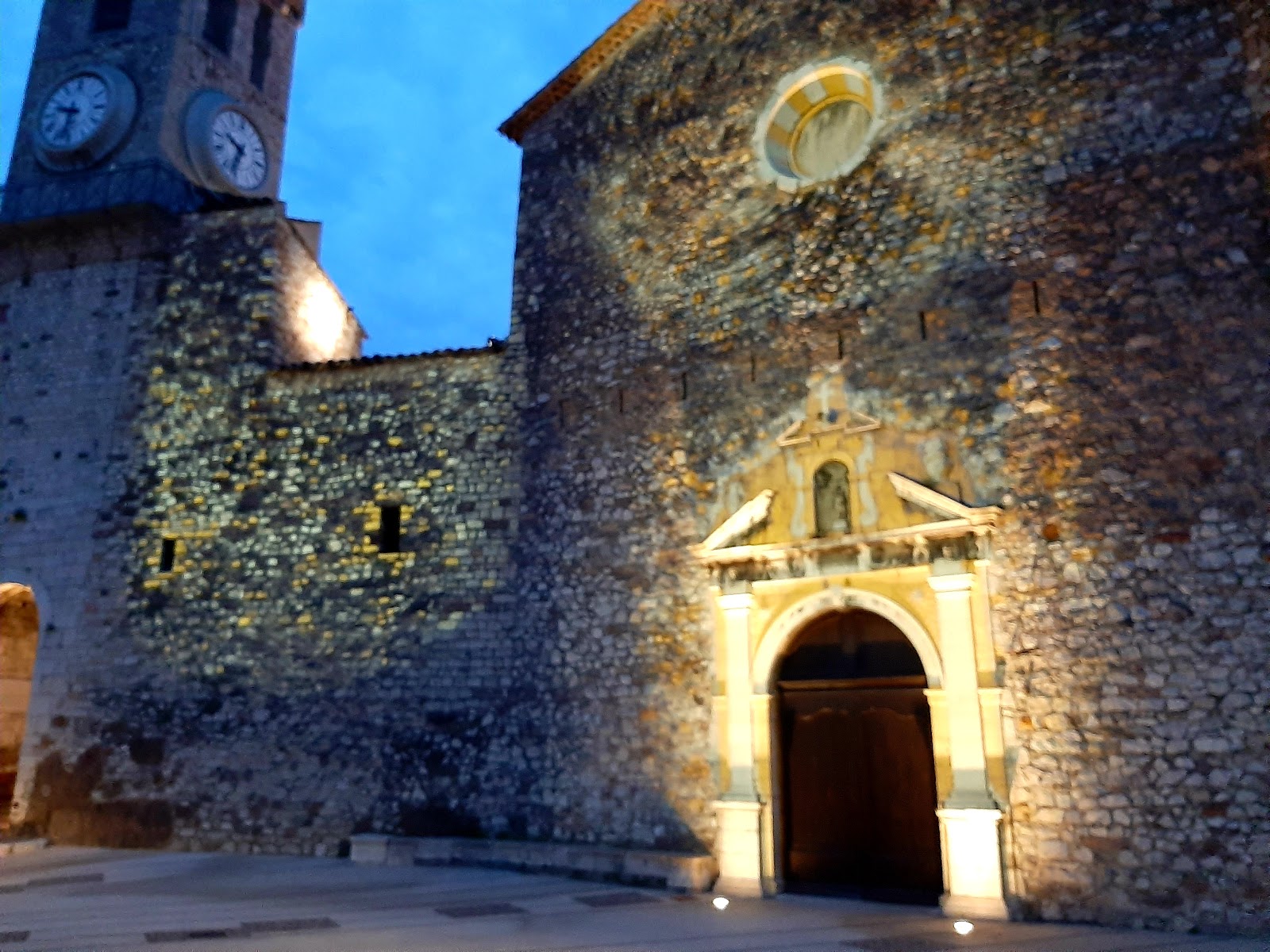
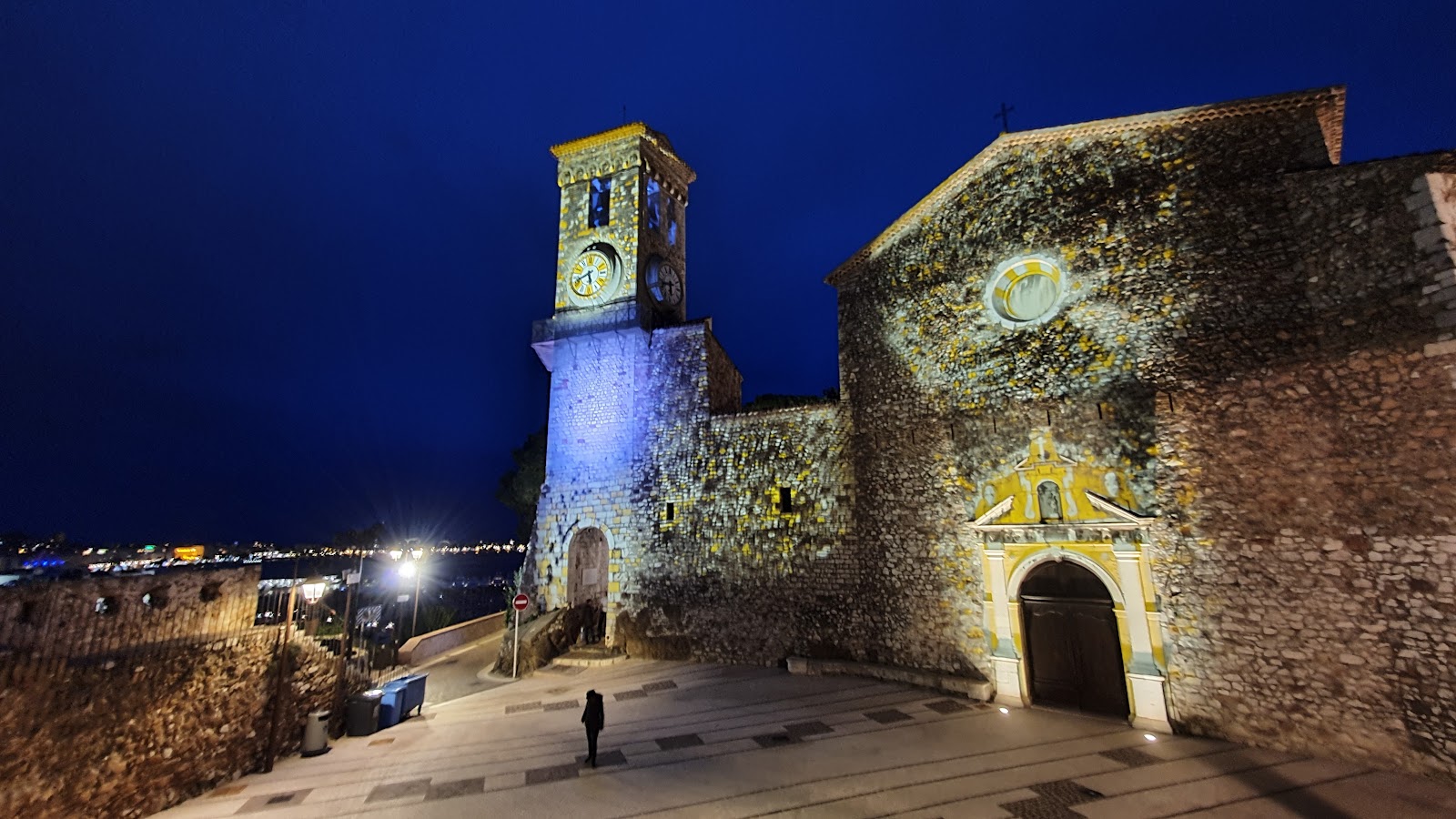
You climb Rue Saint-Antoine — narrow, flower-lined, paved in uneven stone — and the church appears at the top of Le Suquet like a punctuation mark at the end of a long sentence. Notre-Dame d'Espérance has been standing here, in one form or another, since the monks of Lérins Abbey first built a fortified church on this hill. The current building took more than a century to finish, which perhaps explains why Gothic arches, a Renaissance porch, and a square Romanesque bell tower all coexist without argument.
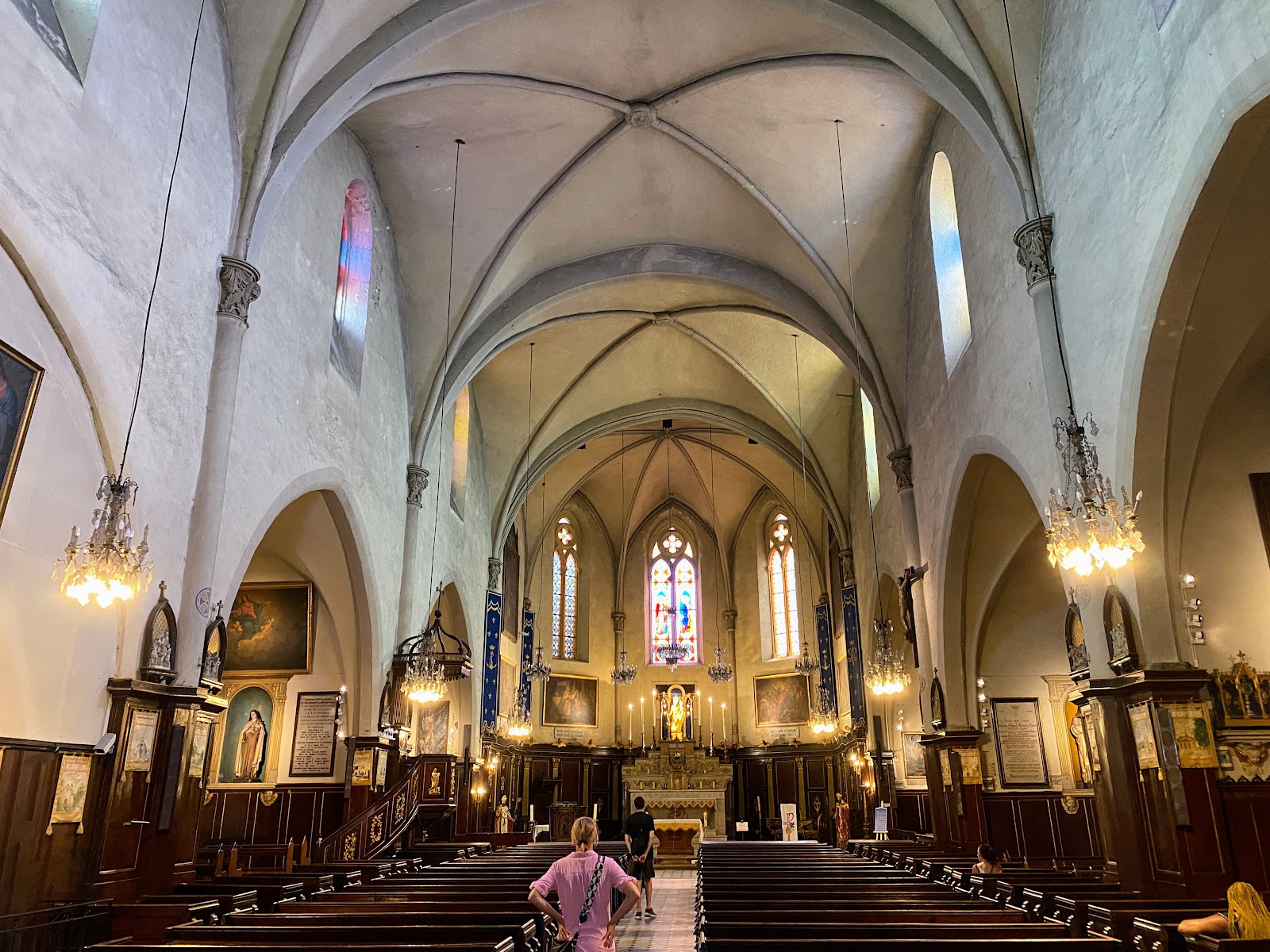
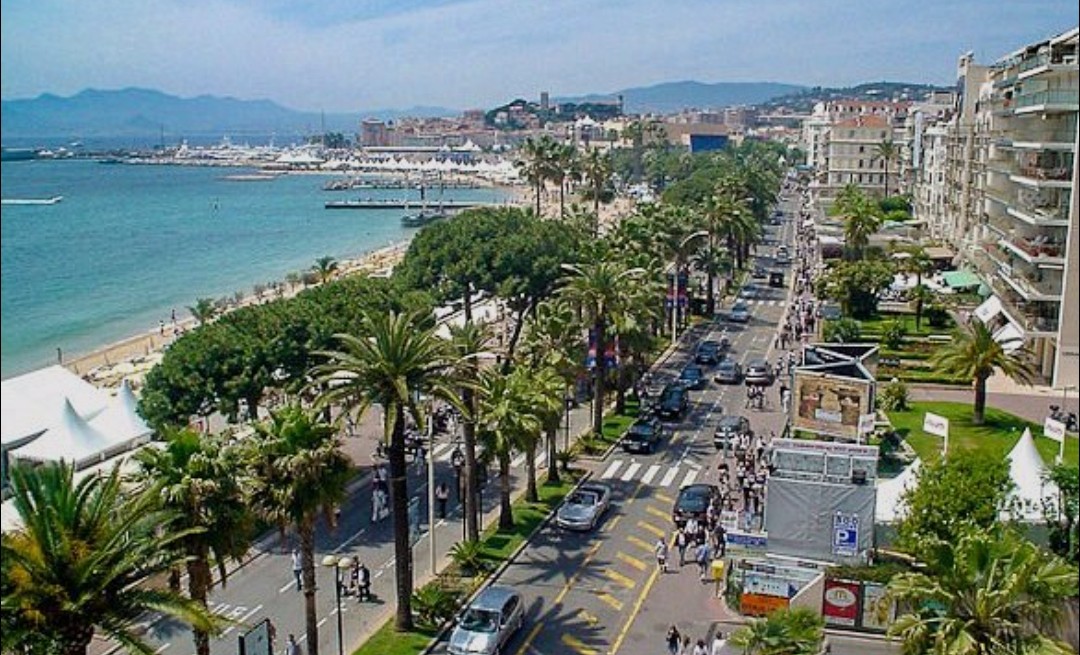
Inside, eight side chapels were each claimed by a different artisan confraternity. The one dedicated to the fishermen still holds model boats and carved maritime details. An Italian organ from Pavia, installed in 1857, sits in a neogothic French case. The whole interior is quieter than the Croisette below, and considerably older.
💛 What travellers fall for
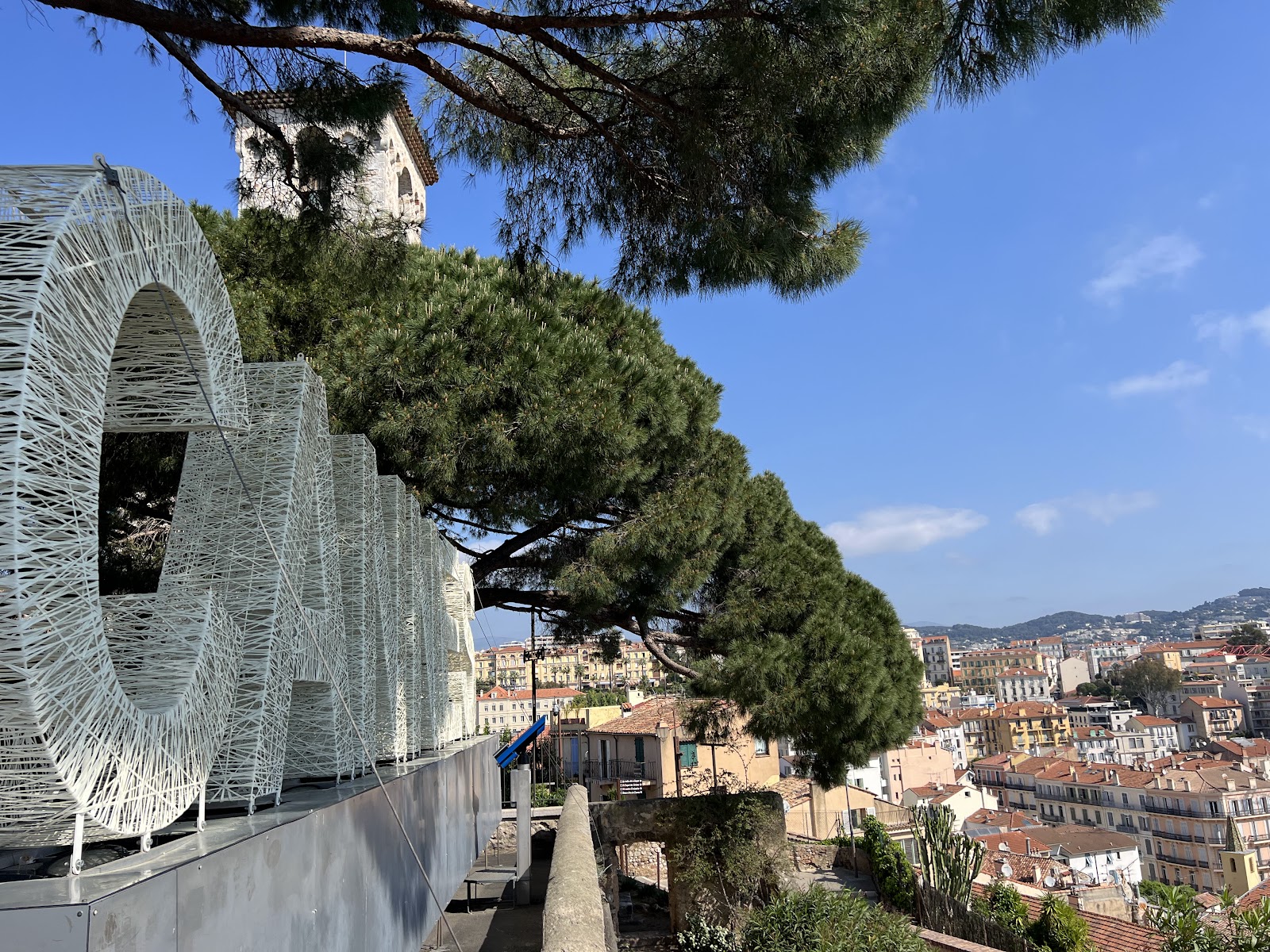
People who come back tend to arrive just before the 11:30 Sunday Mass, when the organ fills the nave properly. Others time a visit to the Christmas crèche — a large Sulpician-style nativity with blacksmiths, bakers and washerwomen among the figurines. And if the bell tower is open, the view across the terracotta rooftops to the sea earns the climb.
The story behind Église Notre-Dame d'Espérance
The site's religious use predates the current building by centuries. Monks from the Lérins Abbey originally raised a fortified church here called Notre-Dame-du-Puy, later rededicated as the Sainte-Anne chapel. By the early sixteenth century that structure had grown too small for the community, and work on a replacement began in 1521.
Construction moved slowly — almost comically so. Contractor César Ferrare de Brignoles was brought in as late as 1628 to finish what had been under way for over a hundred years, and the building was finally complete in 1641. It was formally dedicated to Notre-Dame d'Espérance on 25 March 1645, the Feast of the Annunciation. Consecration came in 1678, marked by twelve crosses on the pillars. A marble floor was laid as a restoration offering in 1886, and in 1932, by papal authorization of Pius XI, the statue of Notre-Dame d'Espérance was crowned. The French state classified the church as a historic monument in 1937, alongside the adjacent Castre Tower and Sainte-Anne chapel.
Good to know
The church is free to enter. Doors open daily 09:00–12:00 and 14:00–19:00, though hours can shift — worth checking locally. Bus lines 1, 1A, 2, 4 and 6A stop at Hôtel de Ville nearby. The Musée de la Castre sits directly adjacent, making the two a natural pairing.
Where is Église Notre-Dame d'Espérance?
More tickets & tours for Église Notre-Dame d'Espérance
Book directly at the provider
What travellers say about Église Notre-Dame d'Espérance
Église Notre-Dame d’Espérance de Cannes is an old church on the hilltop of Cannes. One has to climb some way stiff. From the top, beautiful views of Cannes city, port and beach can be enjoyed. history. It is a quiet church, ideal for calmness. The architecture is good.
Iconic church which overlook Cannes' Bay and located in the heart of Le Suquet, it was built in 1627 when the town had barely a thousand inhabitants ... but it was only completed in 1641 ! Its construction lasted over a century and was constantly interrupted by invasions and outbreaks of plague. Since then, it has replaced the former Sainte-Anne Chapel, which was then considered too small and is now part of the Castre Museum. A single nave with four bays flanked by eight side chapels and a semicircular chancel constitute the main part of its mediocre interior decoration. It is particularly distinguished by its entrance portal and its bell tower, erected as an extension of the facade on a postern gate of the old fortified castle walls.
Église Notre-Dame d’Espérance in Cannes is a true piece of historic art, standing proudly atop Le Suquet with breathtaking views of the city and sea. The church’s charming architecture and serene atmosphere make it an ideal escape from the bustling streets below. Whether you’re admiring the intricate details of the interior or enjoying the peaceful courtyard, it’s a place where hours pass without even noticing. The tranquil setting makes it perfect for reading, reflecting, or simply taking in the beauty of the surroundings.
Beautiful walk on the way up through cobblestone streets an amazing view once you get to the top. The church itself is well-maintained and built in the 1600s well worth the visit if you’re in cannes.
Beautiful old church on top of the hill where the origin of Cannes begin. Nowadays a beautiful square with a great view over Cannes. The pines on the square create a welcome shadow on a hot summer day. You can visit the church and/or castle by foot (either walking up the road or taking stairs) but this place is also visited by the tourist train which starts at Palais de Congres.
More of Cannes
Discover where to stay, what to do and the best deals for your trip.
Explore Cannes →More attractions in Cannes
All of Cannes →
Background adapted from Wikipedia (CC BY-SA) · map data © OpenStreetMap contributors · ratings & place photos via Google · other photos with per-image credit. Ticket links may earn us a commission at no extra cost to you.