
Edfu
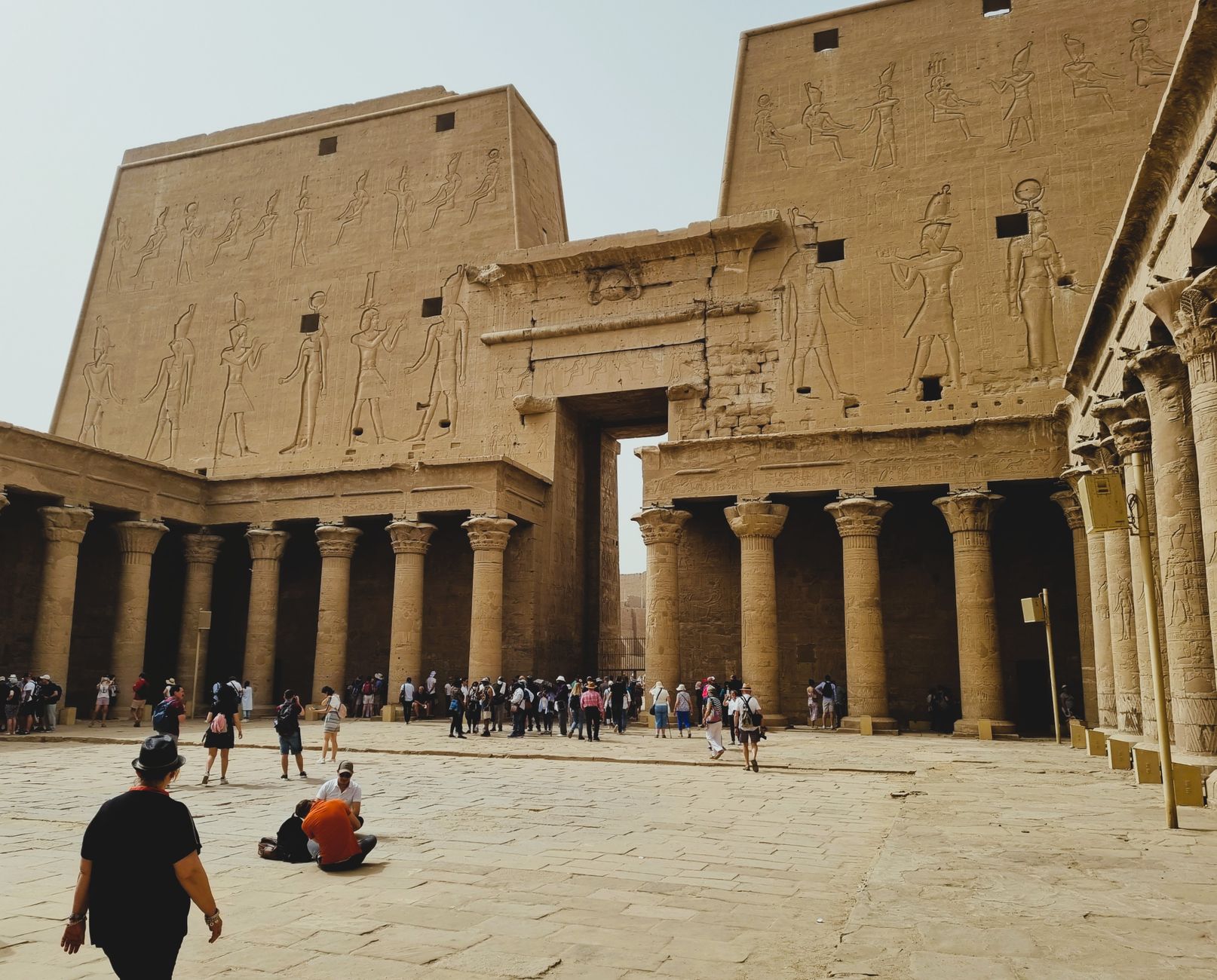
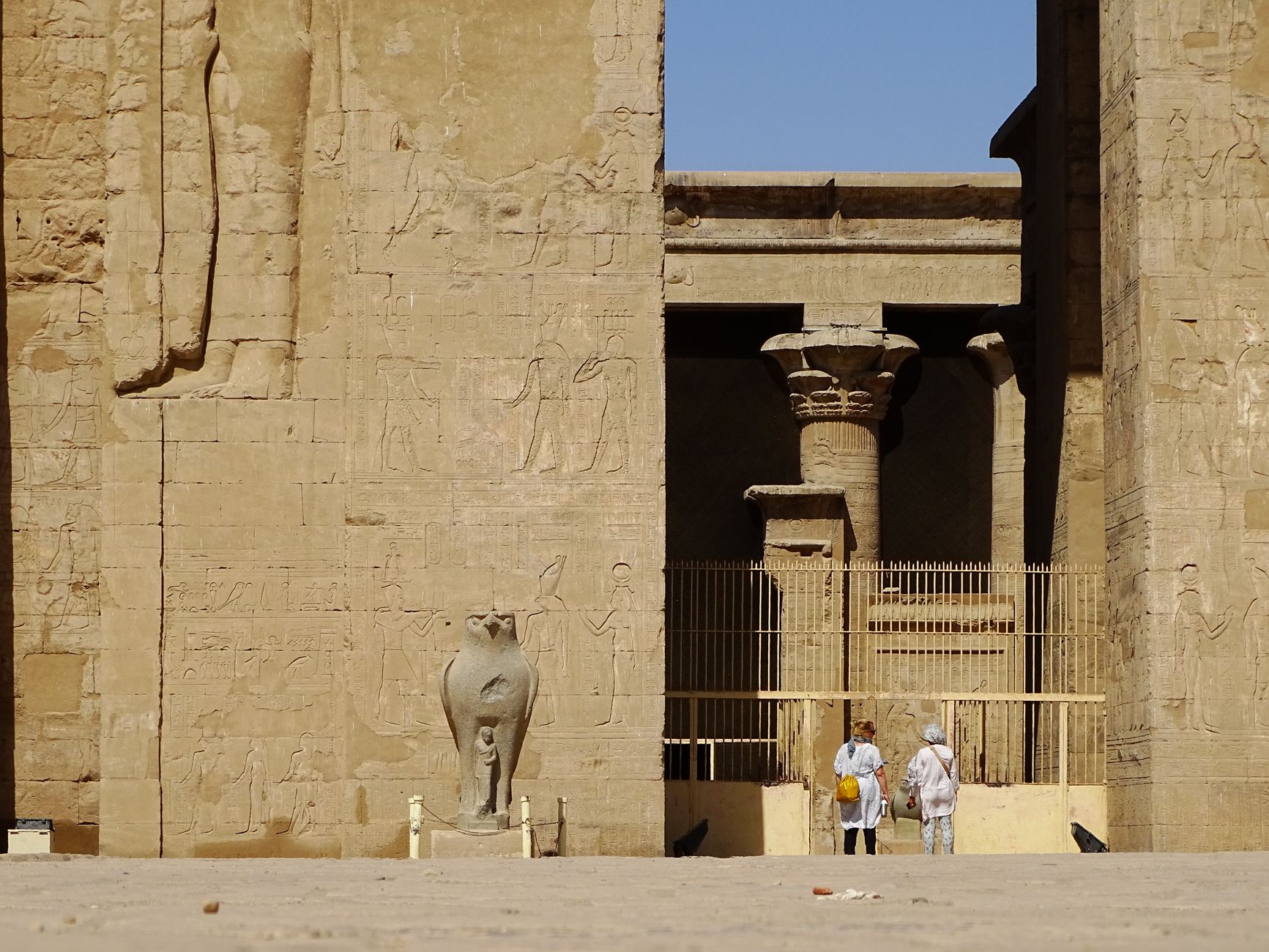
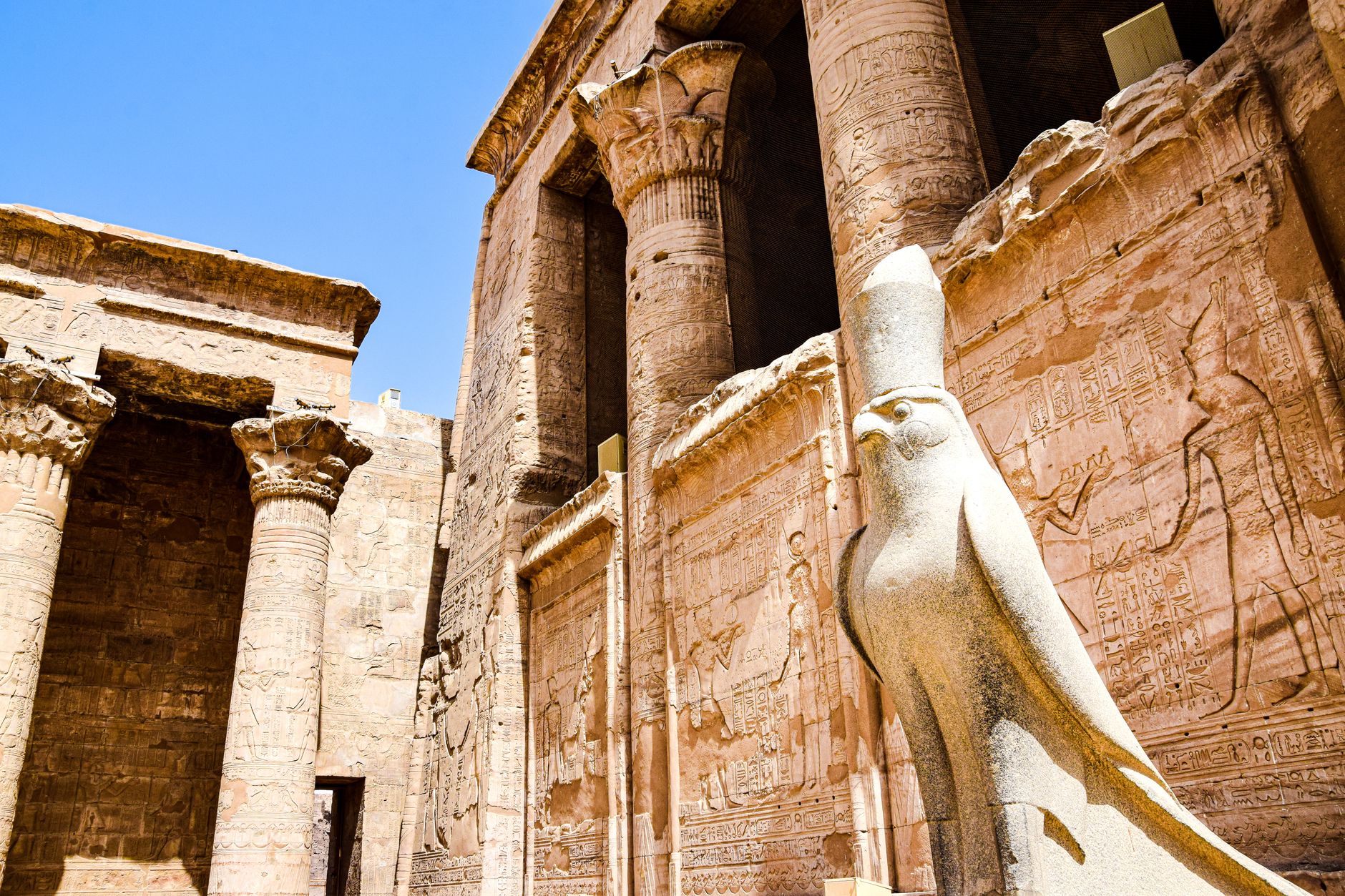
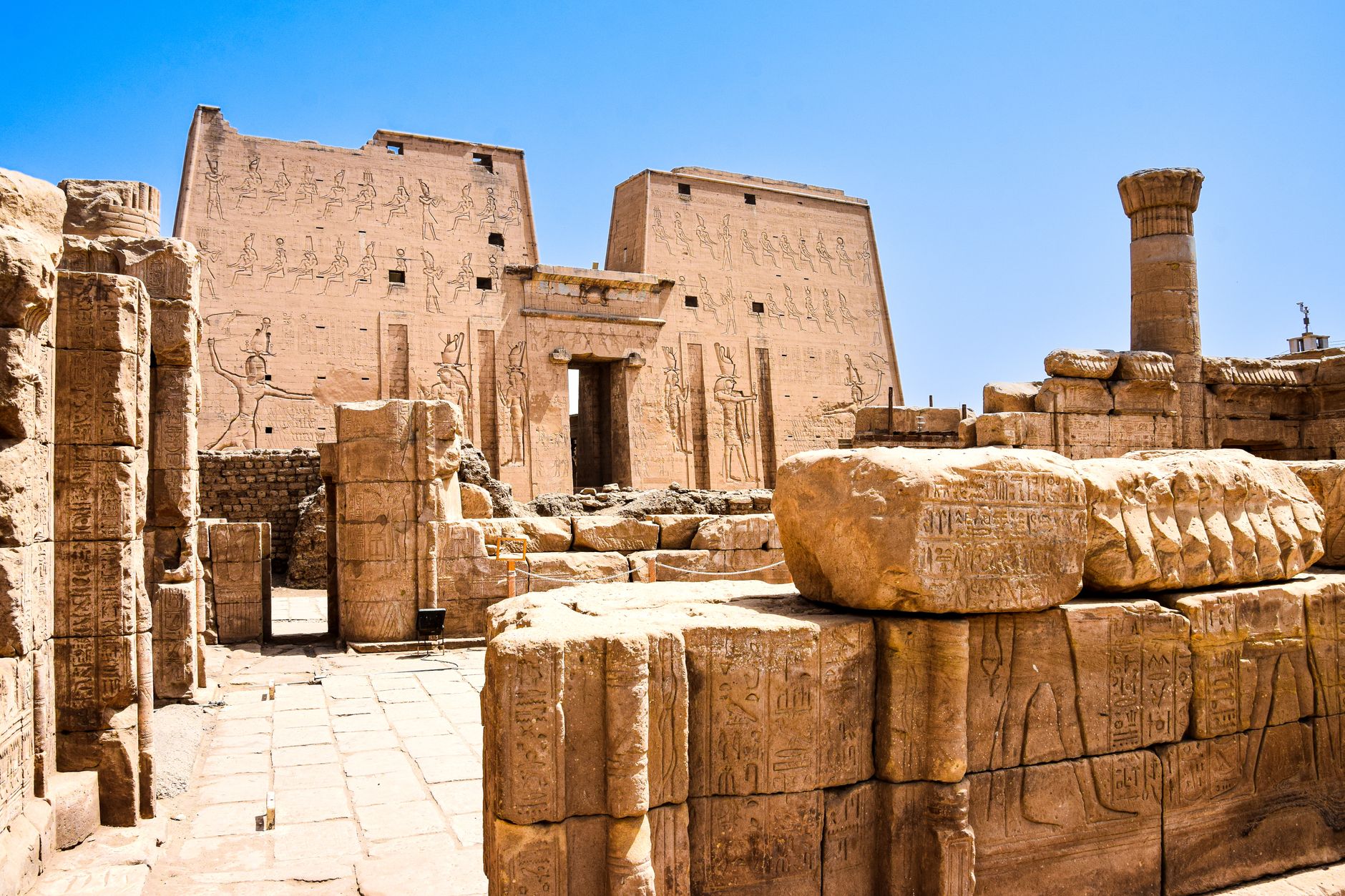
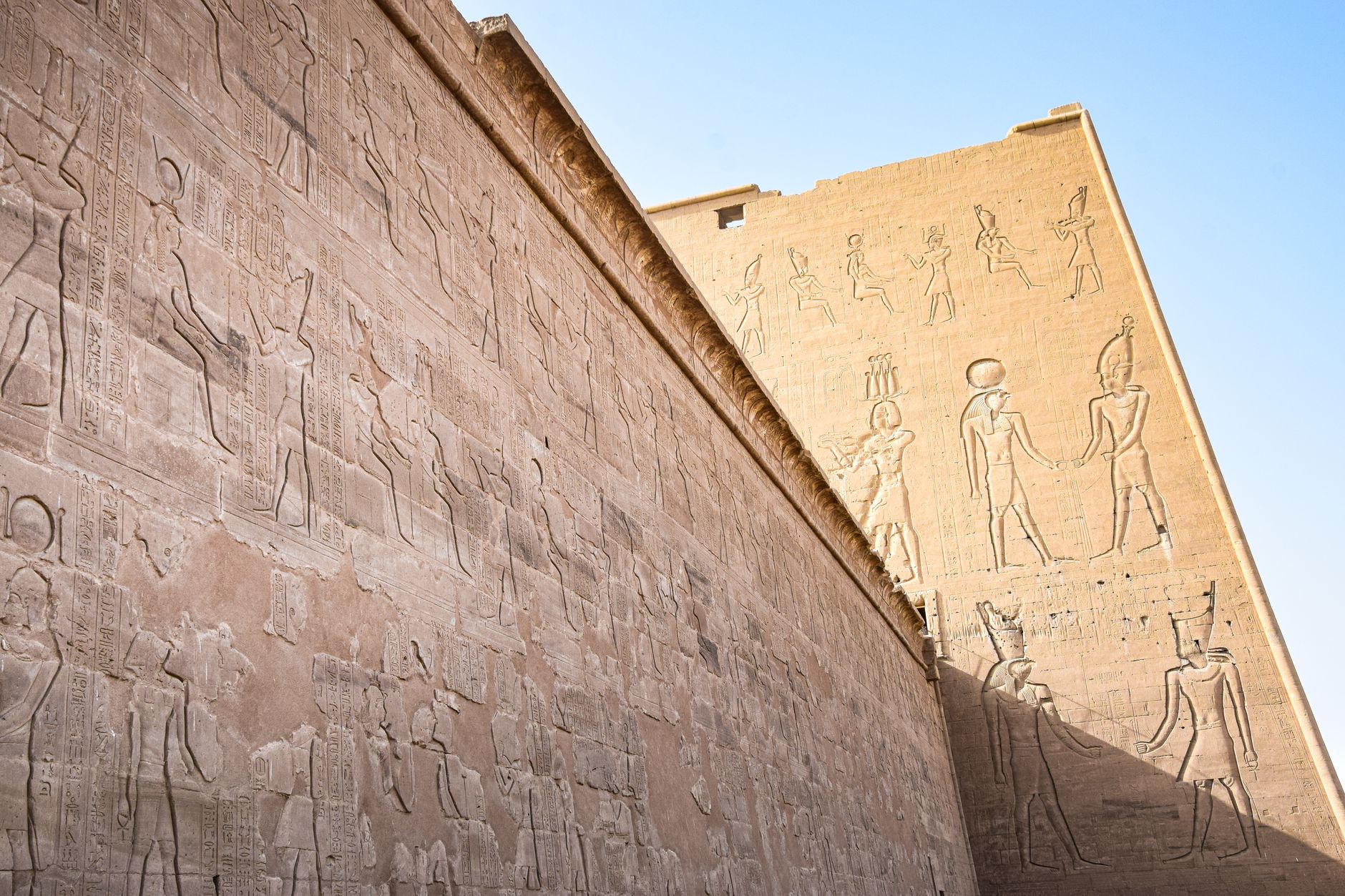
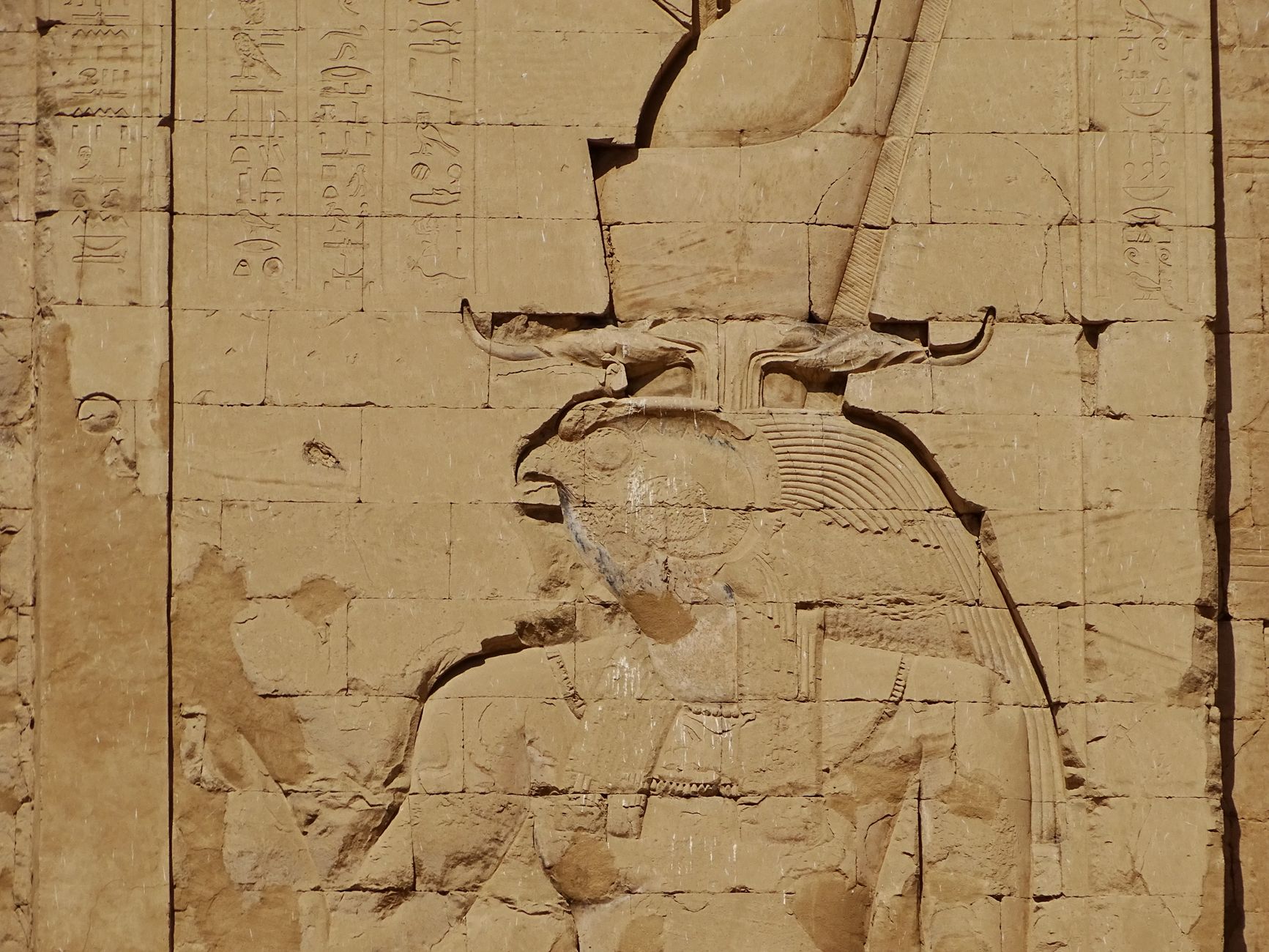
The first thing you notice at Edfu is scale. Two sandstone pylons rise 36 metres above the plain — taller than a ten-storey building — and they are still standing because the desert buried them almost to the top. When Auguste Mariette cleared the sand in 1860, he uncovered a temple so intact that its roof, columns and inner sanctuary had survived two millennia in near-perfect condition.
Edfu sits midway between Luxor and Aswan on the west bank of the Nile, a working agricultural town that happens to contain Egypt's most completely preserved ancient temple. The Temple of Horus is the destination, but the tell beneath the modern city holds more than 3,000 years of layered settlement, and a small step pyramid five kilometres south quietly marks the town's even older edge.
💛 What travellers fall for
People who come back tend to arrive early — the 6 AM opening puts you inside before the cruise groups disembark. The granite shrine at the sanctuary's centre, the one that once held a gold statue of Horus, repays a slow look. And the Nilometer on the eastern enclosure wall is easy to miss; most visitors walk straight past it.
Deals in Edfu
Book directly at the provider
How Edfu came to be
Edfu's sacred history begins well before the Ptolemies. The site was known as Behdet in the Old Kingdom, and texts identify its deity as Horus of Behdet — one of the oldest divine epithets in Egypt, suggesting an active sanctuary here as early as the Third Dynasty, around 2686 BCE. The town also served as capital of the Second Upper Egypt nome and, unusually, expanded and thrived during the First Intermediate Period when much of southern Egypt was in economic decline.
Construction of the Ptolemaic temple began on 23 August 237 BCE under Ptolemy III Euergetes and was not finished until 57 BCE, when Ptolemy XII installed Lebanese cedar doors in the completed sanctuary — 180 years of building across seven reigns. Ptolemy VIII inaugurated an earlier phase in 142 BCE and initiated the enclosure wall and the mammisi, a birth house where an annual procession celebrated the divine birth of Harsomtus, son of Horus and Hathor of Dendera.
Who and what shaped it
People who shaped it
Landmark buildings
See Edfu in motion
Plan your visit
On the map
When to go
Upper Egypt is hot and dry; summer temperatures regularly exceed 40°C, which makes June through September genuinely punishing for outdoor sites. October through February brings cooler days and comfortable mornings — the practical season for spending real time here.
Right now
Background & history adapted from Wikipedia (CC BY-SA) · specs from Wikidata (CC0) · weather from Open-Meteo · map data © OpenStreetMap contributors · photos from Wikimedia Commons / Unsplash with per-image credit. No third-party reviews or social posts reproduced.