
Drumnadrochit


The village of Drumnadrochit sits where the River Enrick meets the western shore of Loch Ness, and its name — Druim na Drochaid in Gaelic — simply means the ridge of the bridge. That bridge, a Thomas Telford stone crossing finished around 1811, still carries traffic over the Enrick today, though it was widened in 1933 to take the A82.
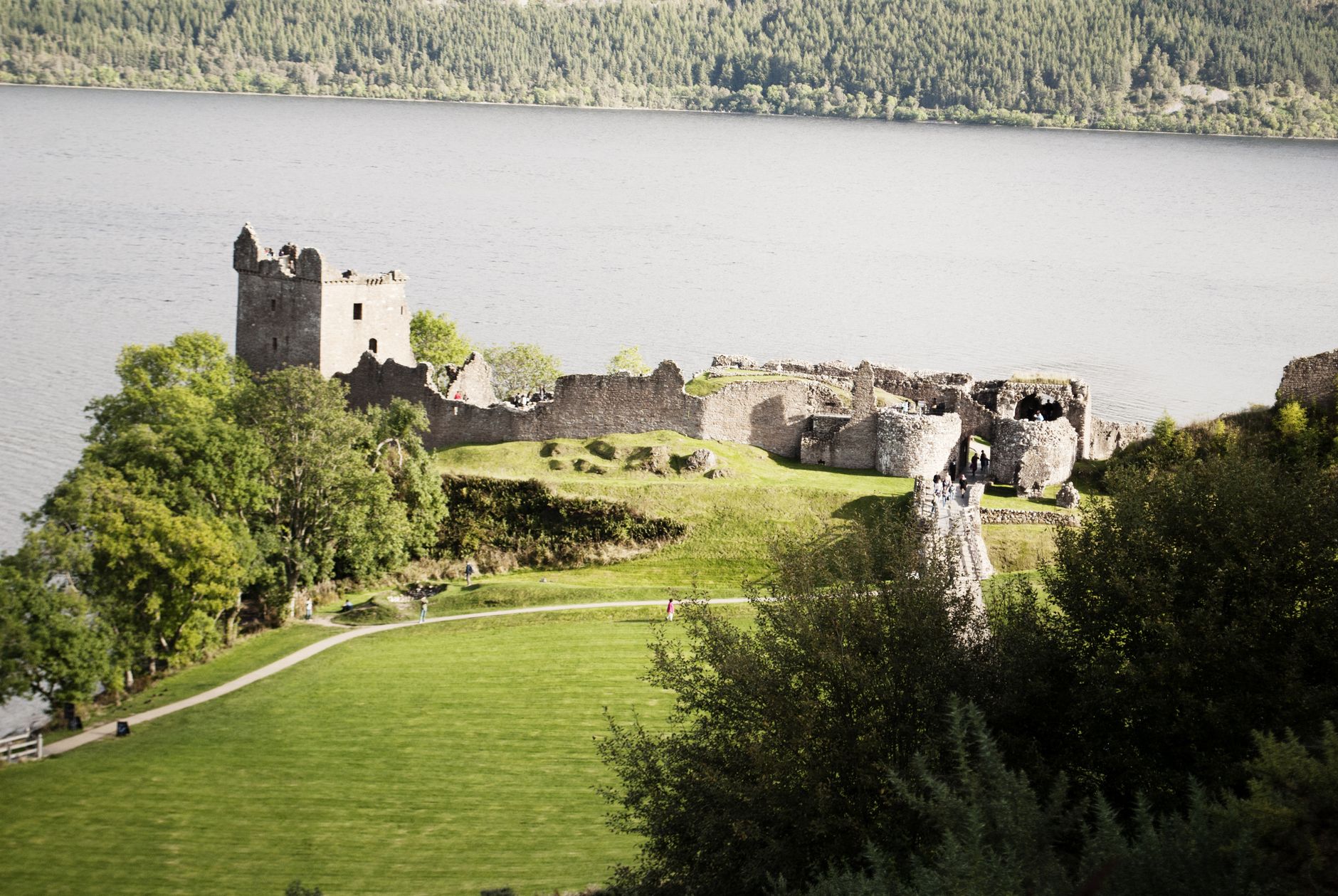
Most people arrive chasing a monster. The Loch Ness Centre and Exhibition, open since 1980 in a Victorian building that once served Balmacaan Estate as a courthouse and shooting-season guesthouse, handles that honestly — sonar data, eyewitness accounts, the full ambiguity. A mile south, the broken towers of Urquhart Castle stand on a promontory above the water, blown up by government troops in 1692 so Jacobite forces couldn't use them.
💛 What travellers fall for
Regulars tend to mention the village green in April, when the daffodils turn it entirely yellow and the car park is still quiet. They also note that the Citylink 917 and 919 services — bound for Skye and Fort William respectively — pass through, making Drumnadrochit a useful pivot point rather than a dead end.
Deals in Drumnadrochit
Book directly at the provider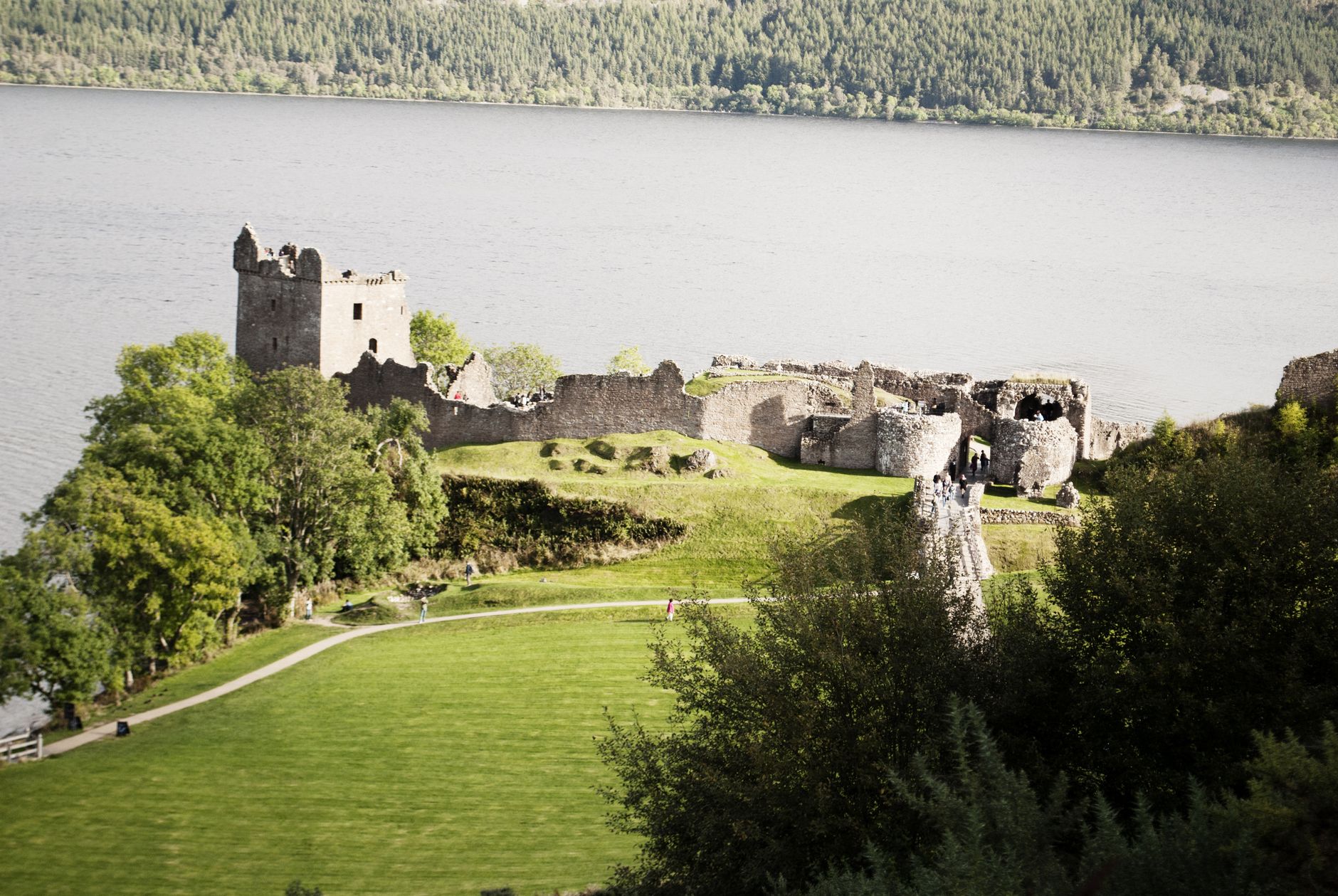
How Drumnadrochit came to be
The planned village of Lewiston was laid out in 1803 to support local agriculture and industry, and Drumnadrochit grew around it. Telford's bridge, completed between 1808 and 1811, anchored the settlement; serious flooding damaged it in 1818, and it was widened again in 1933. The land behind the village had been Balmacaan Estate since King James IV granted it to the Grants of Seafield in 1509.
In the late nineteenth century the estate was rented by Bradley Martin, an American industrialist, and it flourished during the 1880s and 1890s before declining after the 1920s. The best of its forestry timber was felled during the Second World War, and the estate was finally dissolved in 1946 — ending 437 years of continuous ownership. John Cobb, the land-speed record holder, died on Loch Ness in 1952 attempting to break the water speed record.
Who and what shaped it
People who shaped it
Landmark buildings
See Drumnadrochit in motion
Plan your visit
On the map
When to go
Summers are mild rather than warm — July highs average around 15°C — and rain is a year-round companion, with October the wettest month at roughly 146 mm. Winter days are short and cold, with barely an hour of sun in December, so if you want light and a reasonable chance of dry spells, May and June are the most reliable windows.
Right now
Background & history adapted from Wikipedia (CC BY-SA) · specs from Wikidata (CC0) · weather from Open-Meteo · map data © OpenStreetMap contributors · photos from Wikimedia Commons / Unsplash with per-image credit. No third-party reviews or social posts reproduced.