
Don Benito
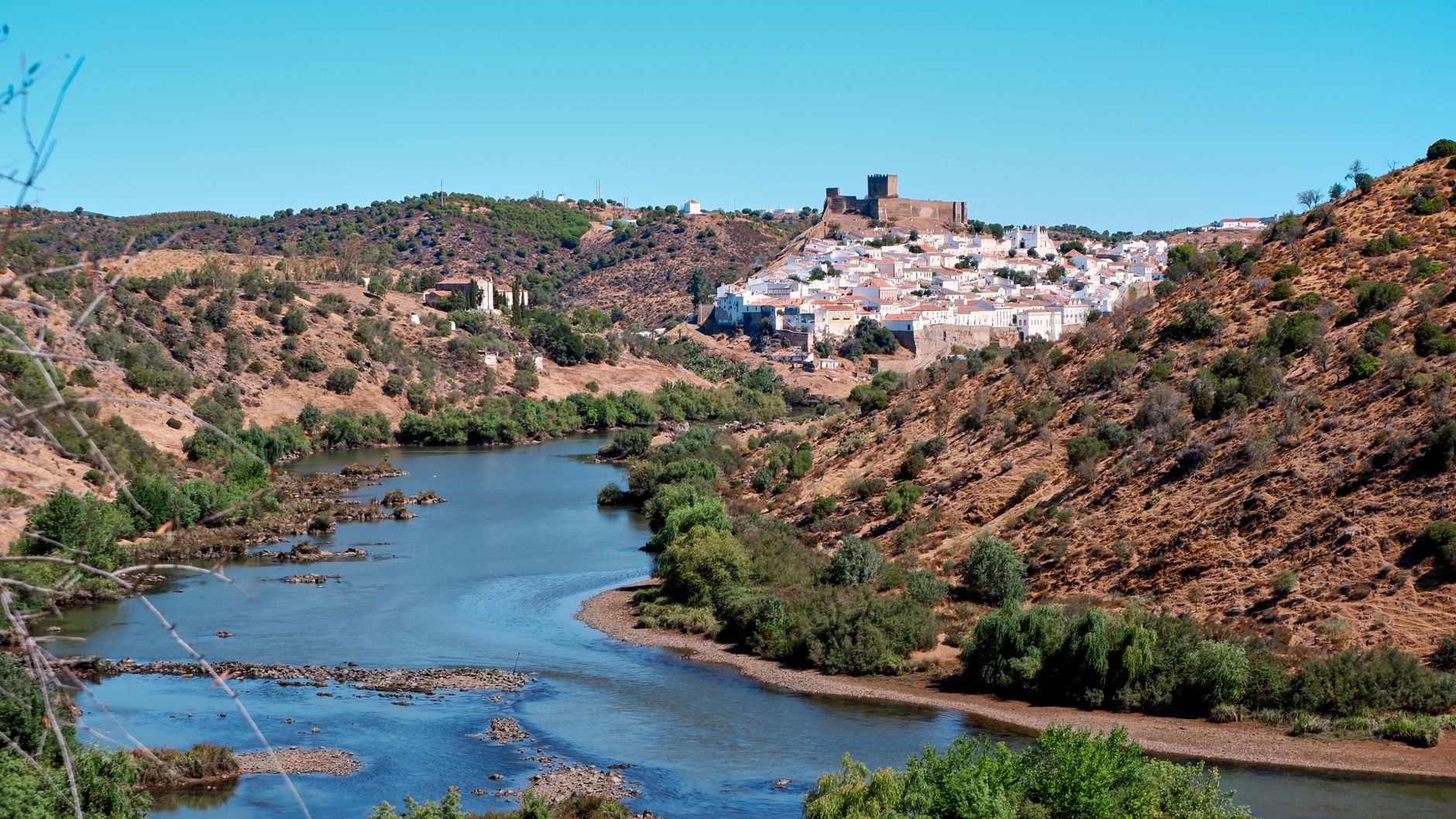
Don Benito sits in the Vegas of the Guadiana, a stretch of Extremaduran plain where the river makes the land unusually generous — watermelons, brandy, chocolate. The city traces its founding to 1469, when settlers from a flood-prone village upstream decided dry ground was worth starting over for. That pragmatic origin suits a place that has always been more working town than showpiece.
The Plaza de España anchors daily life here, about 6,300 square metres of it, with a monument to water and earth by Enrique Pérez Comendador standing at its centre. Two kilometres out, the Guadiana offers boat docks where people fish on weekday afternoons without much ceremony.
💛 What travellers fall for
People who come back tend to mention the Museo del Automóvil Clásico almost sheepishly — over 200 cars, the oldest from 1910, plus tractors and vintage radios near the train station. They also point to the Iglesia de San Sebastián, where a crucifix used in the 1954 film Marcelino, Pan y Vino sits quietly inside a late-14th-century Romanesque shell.
Experiences you don't want to miss



Deals in Don Benito
Book directly at the provider

How Don Benito came to be
The town's founding story is essentially a flood story. Settlers from Don Llorente, a village repeatedly threatened by the Guadiana, relocated in 1469 to higher, safer ground and named their new settlement after the local landowner who made it possible. The river that drove them out remained central to the land's identity — the fertile Vegas of the Guadiana made agriculture the engine of everything that followed.
The Peninsular War left a mark nine kilometres away at Medellín, where French forces defeated Spanish troops on 28 March 1809 in one of the campaign's more decisive engagements. Inside the Iglesia de Santiago on Plaza de España, the retablo mayor dates to 1956, carved by local craftsman Claudio Martín Soriano to replace the original altar lost in 1936.
Who and what shaped it
People who shaped it
Landmark buildings
See Don Benito in motion
Plan your visit
On the map
When to go
Summers are genuinely fierce — 35°C is routine and 40°C is not unusual — while winters are mild and rarely dip below freezing. Spring and autumn are the comfortable windows, with warm afternoons and enough light to make the Guadiana valley look its best.
Right now
Background & history adapted from Wikipedia (CC BY-SA) · specs from Wikidata (CC0) · weather from Open-Meteo · map data © OpenStreetMap contributors · photos from Wikimedia Commons / Unsplash with per-image credit. No third-party reviews or social posts reproduced.