
Dodger Stadium
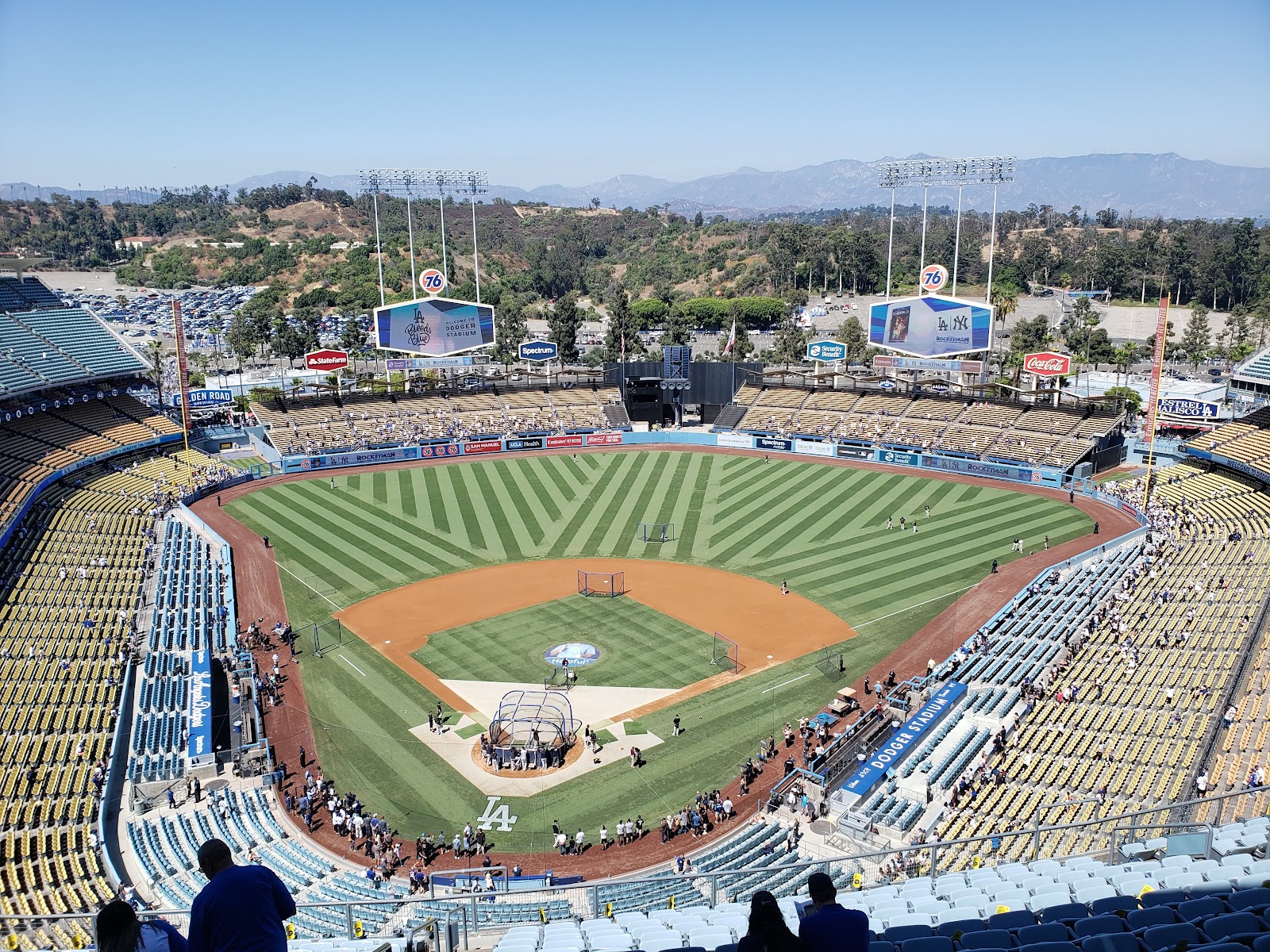
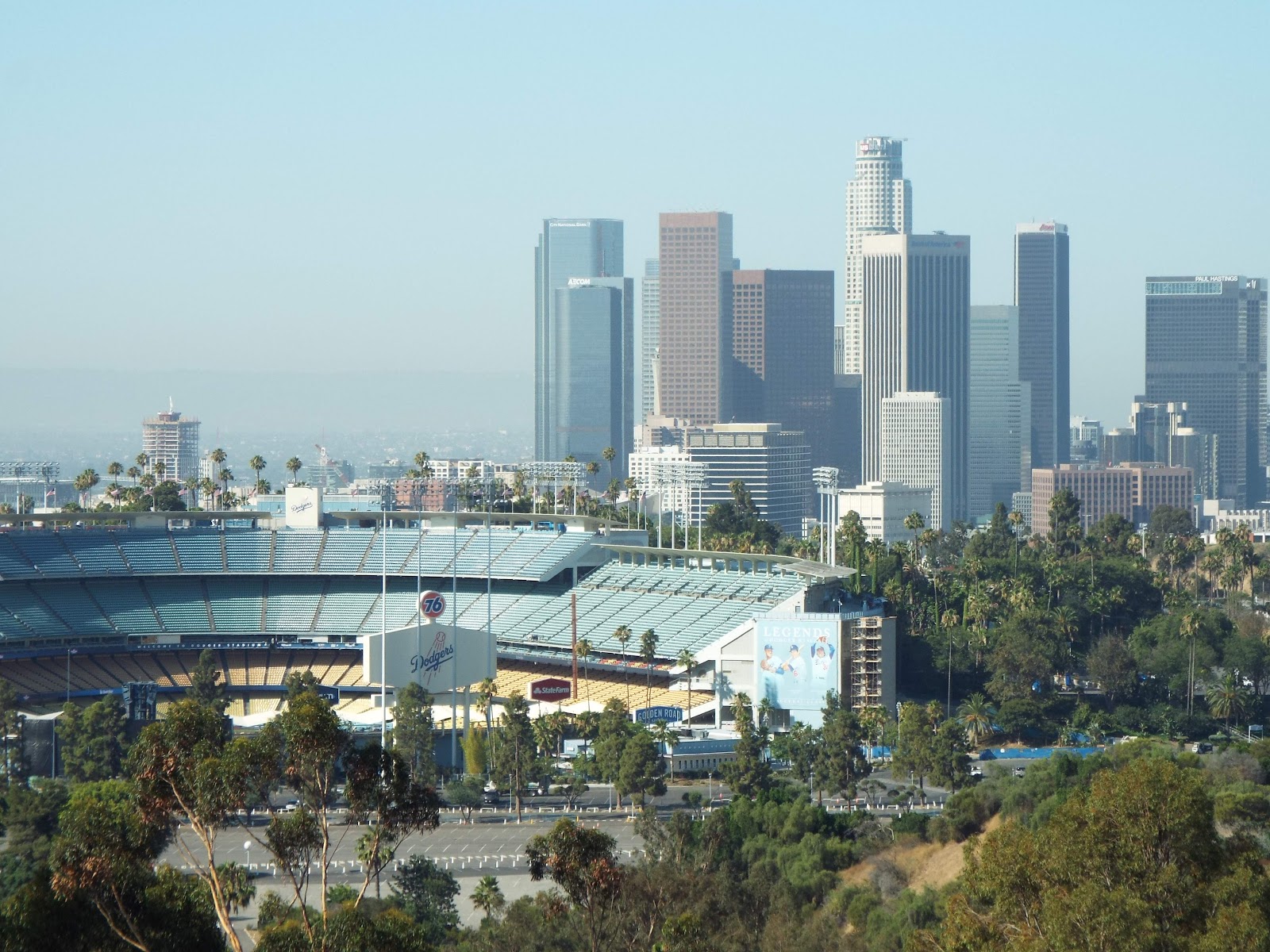
Dodger Stadium sits in the Elysian Park hills on 352 acres, and one of the first things you notice is that the parking lot is terraced into the hillside so you arrive roughly at the level of your own seat — a small, elegant piece of engineering that most people walk right past without clocking it. The stadium opened on April 10, 1962, built entirely with private money in under three years, and it remains one of the largest baseball stadiums in the world by capacity, capped at 56,000 by its conditional-use permit.
It is also, improbably, the only stadium in the United States designated an official botanic garden — a full-time arborist tends the grounds, and the landscaping traces back to a $1.5 million beautification project Walter O'Malley commissioned before the 1963 season.
💛 What travellers fall for
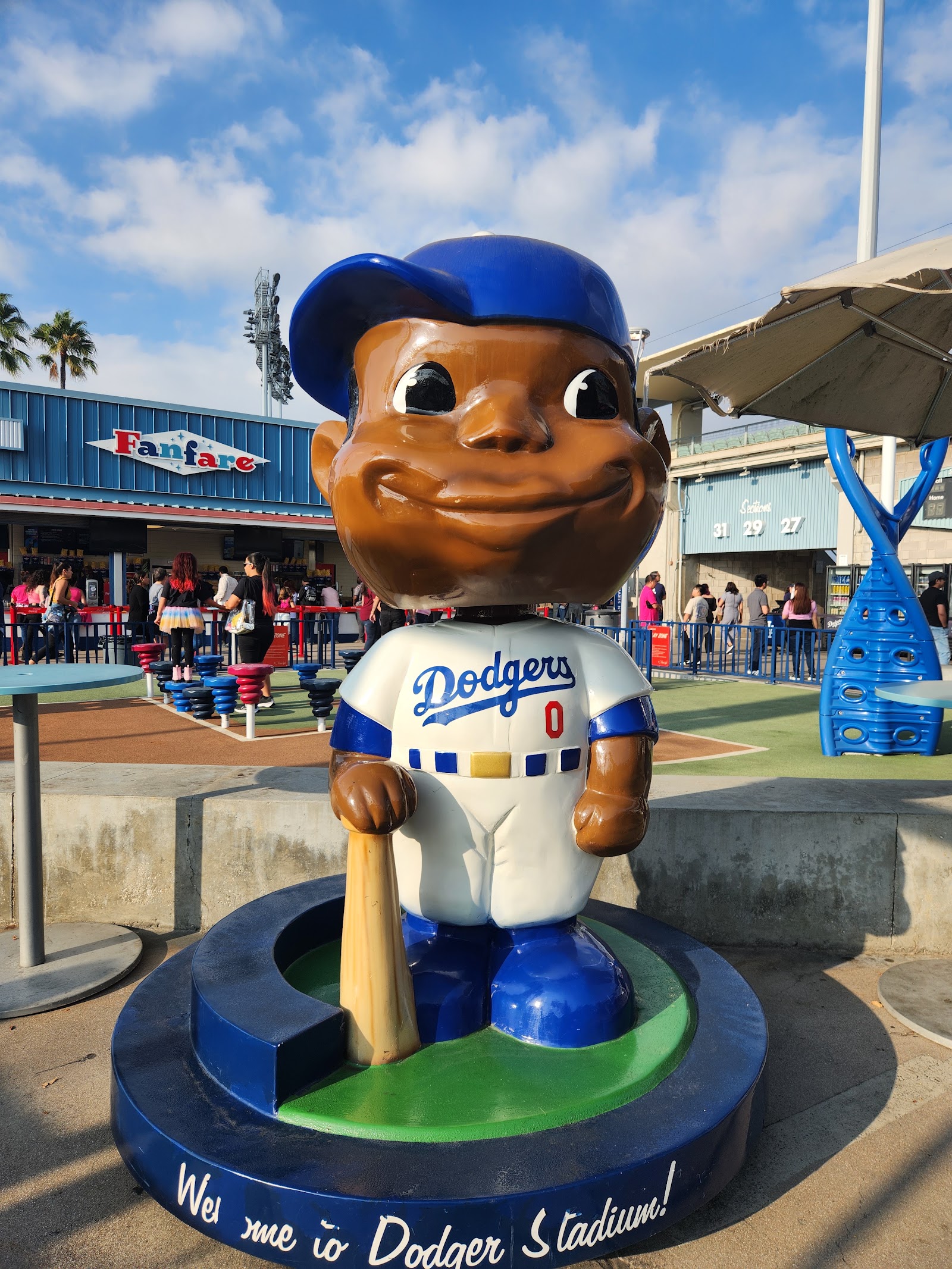
People who come back tend to arrive early enough to walk the two-acre Center Field Plaza before the gates fill — the Jackie Robinson statue, the Legends plaques, a beer in hand before first pitch. The Dodger Express buses from Union Station run every ten minutes and are free with a ticket, which makes the parking math easy to skip entirely.
The story behind Dodger Stadium
The stadium's origin is tangled in borough rivalry and California optimism. When Walter O'Malley, then president of the Brooklyn Dodgers, couldn't secure a new stadium deal in New York, he moved the franchise west in 1957. Los Angeles offered 352 acres at Chavez Ravine; the Dodgers would finance and build the park themselves. Construction began September 17, 1959, but landslides and legal challenges pushed the opening to April 1962.
The design came from two architects working in tandem: Emil Praeger, a New York civil engineer, shaped the structural logic — three cantilevered tiers on 78 precast bents, rising 124 feet — while Los Angeles-based Edward Fickett, FAIA, gave it its regional character. The covered dugout boxes behind home plate were directly inspired by Tokyo's Korakuen Stadium, which O'Malley had visited on a 1956 goodwill tour. Beneath the parking lot northwest of third base, the former Palo Verde Elementary School was buried rather than demolished during construction — it remains there.
Good to know
The Dodger Express bus from Union Station is free for ticket holders and runs every 10 minutes starting 2.5 hours before game time. Gates open roughly 2 hours before first pitch. Stadium tours run daily — 75 minutes, with Spanish and Japanese options — last tour at 1pm on game days. Tailgating is not permitted.
Baseball season runs April through October, which aligns neatly with Los Angeles's driest months. Evening games in summer can turn cool once the sun drops behind the upper deck, so a light layer is worth keeping in your bag.
Where is Dodger Stadium?
More tickets & tours for Dodger Stadium
Book directly at the provider
What travellers say about Dodger Stadium
The stadium may be older, but everything about a Dodgers home game is fantastic for fans of all ages. Plenty of bathrooms, snacks, and beverages for all tastes (though the food menu is not expansive, like you might find at more modern stadiums.) Every seat we’ve had is a good seat with killer views of the action on the field. You can’t help but fall in love with the history of this place!
Going to Dodger Stadium for the first time was genuinely emotional for me—and somehow, the experience still exceeded every expectation. I was lucky enough to do a full tour of both the inside and outside of the stadium, and walking through the tunnels, press areas, seating sections, and iconic viewpoints felt surreal. As a lifelong baseball fan, being in that space carried real weight. You can feel the history everywhere. Dodger FanFest made it even more special. The energy from the crowd, the sea of blue, the shared love for the team—it felt like stepping into a giant family reunion. From exhibits and photo ops to just soaking in the atmosphere with other die-hard fans, it was unforgettable. Everyone was welcoming, passionate, and buzzing with excitement for the season. The views of Los Angeles, the immaculate grounds, and the sense of tradition mixed with modern upgrades make this place truly legendary. This wasn’t just a stadium visit—it was a bucket-list moment and one I’ll never forget. I can’t wait to come back for games and keep building memories here. Absolute five stars. 💙⚾
My girlfriend surprised me with my very first game at Dodger Stadium, and it couldn’t have been a better experience. From the moment we walked in, the energy was incredible. The stadium itself is beautiful - set against palm trees and one of the best sunsets I’ve ever seen at a sporting event. We spent some time exploring, grabbed a hat and jersey, and the food definitely lived up to the hype. Everything felt classic but still high quality. The views from our seats were amazing, and being surrounded by such a passionate crowd made the whole game even more exciting. To top it all off, there was a drone show after the game, which was such a cool and unexpected bonus. It really made the night feel special from start to finish. If you’re even thinking about going, do it. Dodger Stadium is an iconic experience and the perfect place to make great memories.
One of my favorite stadiums and experiences. Tons and almost too much parking. Electric crowds and fans were all kind and supportive on both LA and away sides. Good sportsmanship is always nice. Great lighting and atmosphere.
I’m a huge Yankees fan. When it worked out that my wife and I would be traveling in LA during the World Series against the Yankees, I knew I had to go to a game. I have to say, the stadium is beautiful. It’s one of the oldest stadiums in baseball, but its design is fantastic. The fans talked trash with me, which I didn’t mind at all LOL. But they were respectful. The atmosphere was great. I was pleasantly surprised to see vegetarian and vegan food options as well as sushi served at a baseball stadium. Overall, a great experience!
More of Los Angeles
Discover where to stay, what to do and the best deals for your trip.
Explore Los Angeles →More attractions in Los Angeles
All of Los Angeles →


Background adapted from Wikipedia (CC BY-SA) · map data © OpenStreetMap contributors · ratings & place photos via Google · other photos with per-image credit. Ticket links may earn us a commission at no extra cost to you.