
Docklands
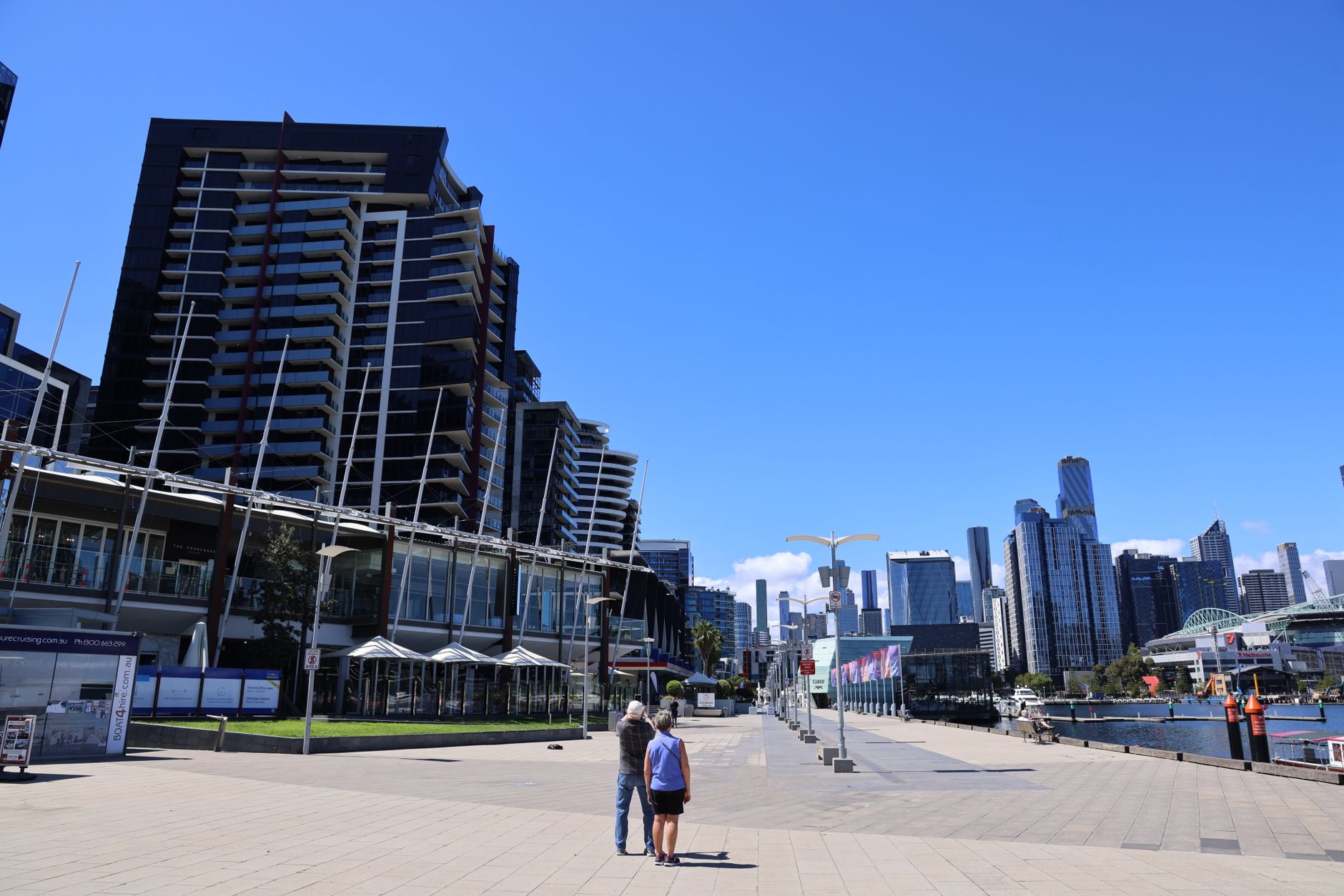
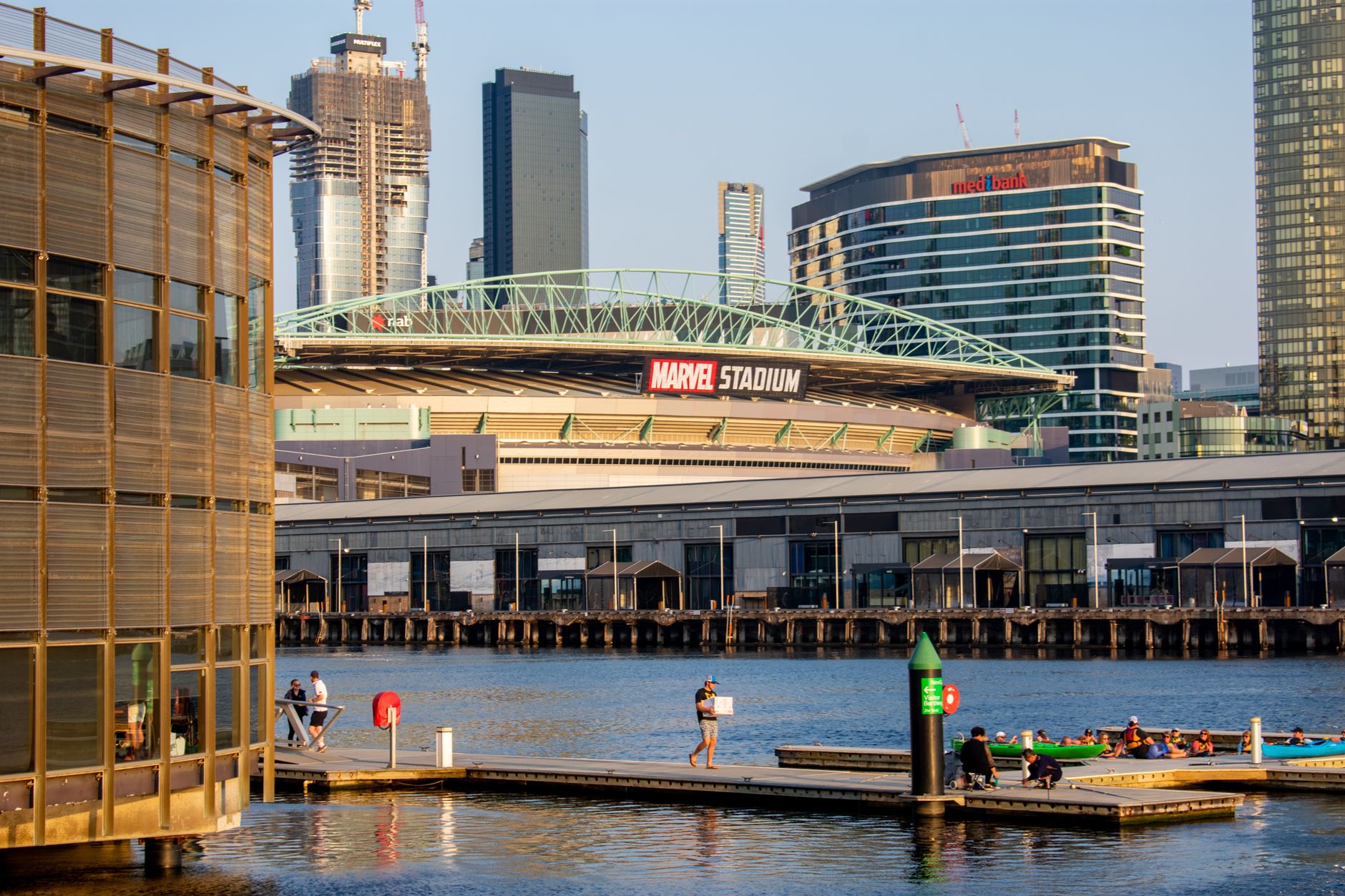
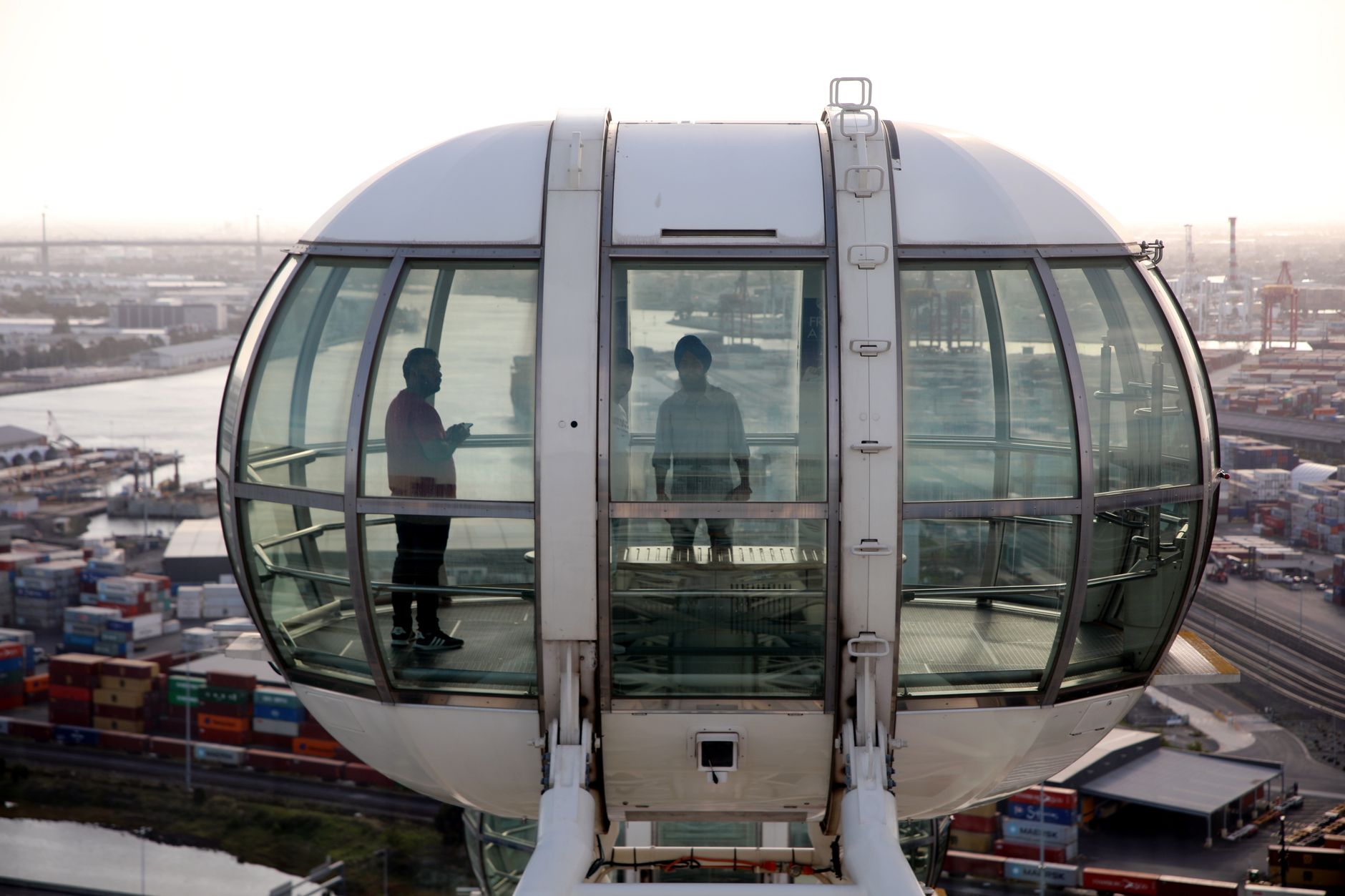
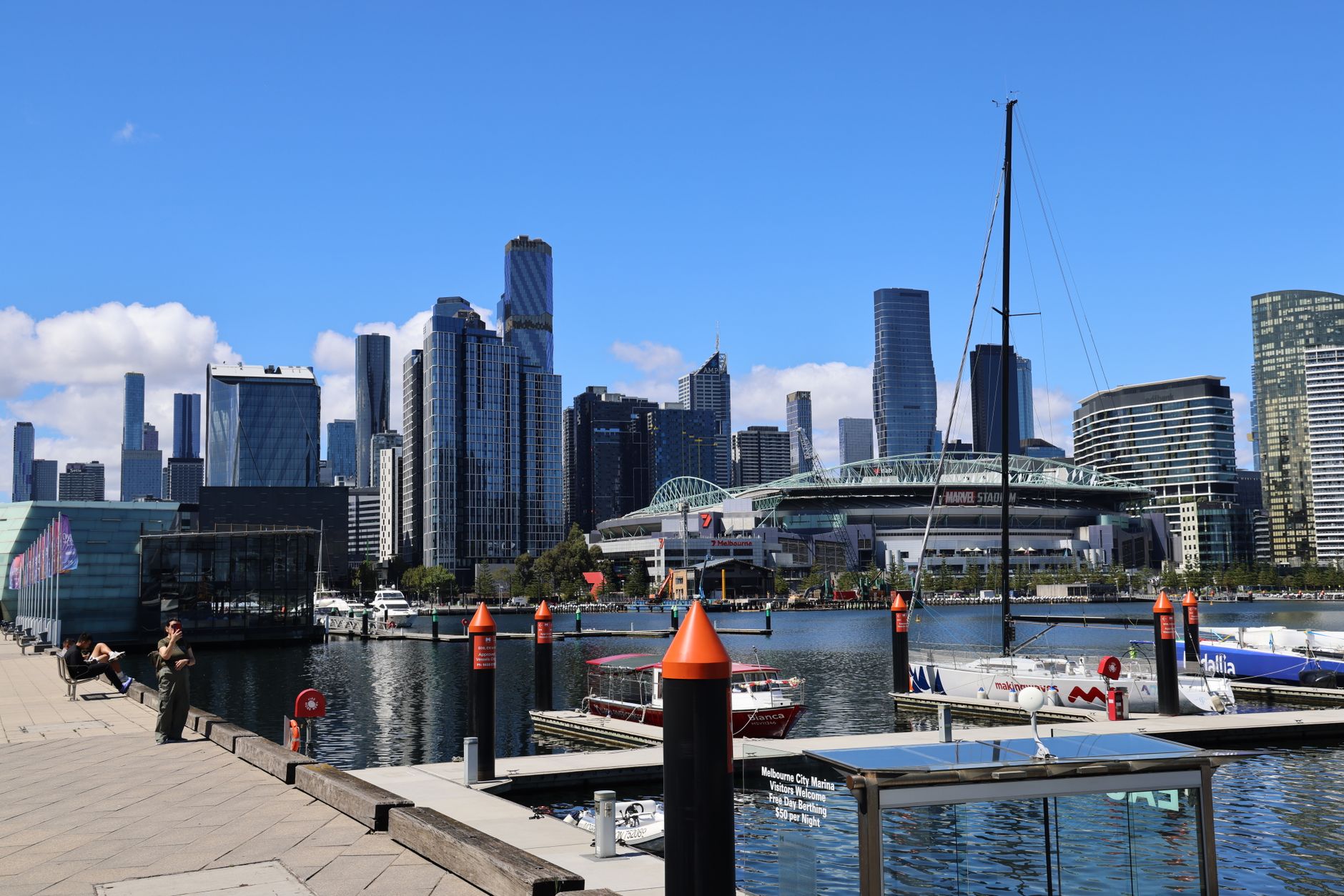
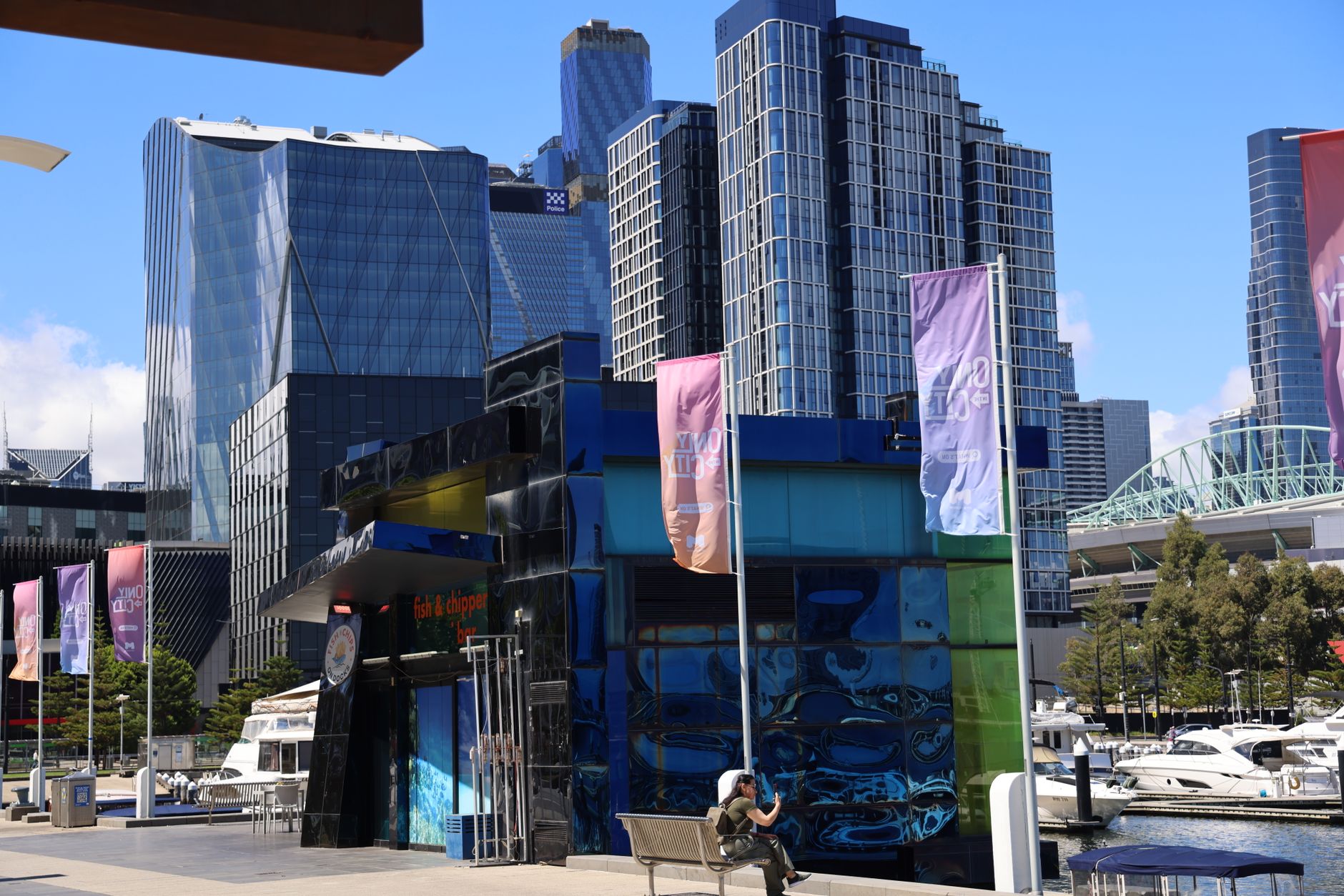
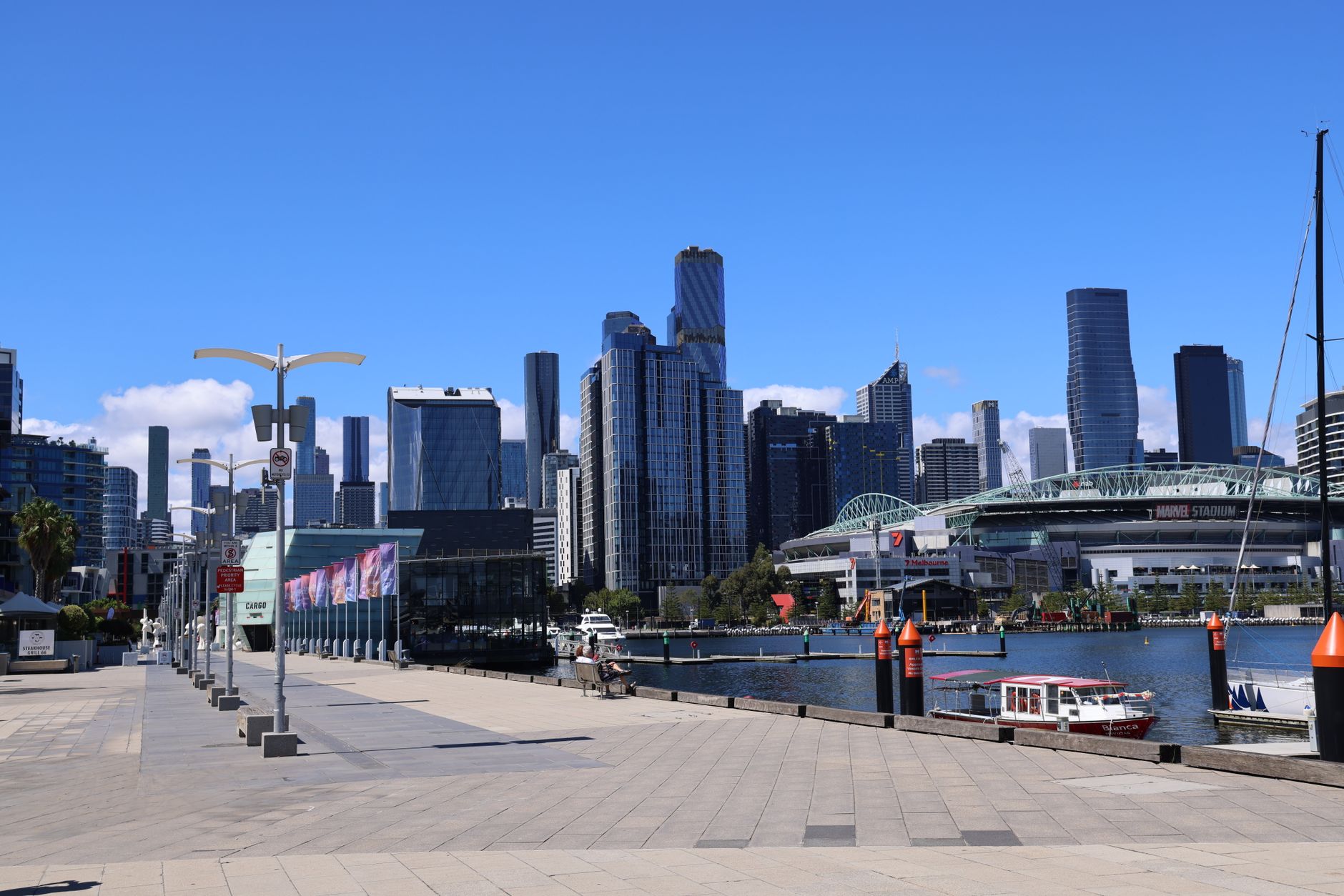
Before the apartment towers and the observation wheel, before the stadium crowds on a Friday night, Docklands was a place of salt water and silence — a tidal lagoon where the Wurundjeri hunted, then a working port that once handled nine-tenths of Melbourne's imports, then, in the 1990s, a stretch of derelict sheds loud with warehouse raves and little else.
What stands there now is Melbourne's most contested reinvention: a waterfront district still finding its shape, where heritage goods sheds have been turned into markets and apartments, where Southern Cross Station's wave-form roof spans an entire city block, and where the gaps between ambition and street life are still, honestly, visible.
💛 What travellers fall for
People who come back tend to arrive on foot across the Bourke Street pedestrian bridge from Southern Cross, then walk the Harbour Esplanade south toward Victoria Dock at dusk. The gantry crane at Docklands Park, lit against the water, is the kind of thing you notice only once you stop expecting the area to be something it isn't.
Deals in Docklands
Book directly at the provider


How Docklands came to be
The land was a Wurundjeri hunting ground — a wetland estuary edged with shell middens — before European settlement reshaped it into a working port. Construction on Victoria Dock began in 1880, and by 1908 it was receiving the vast majority of Melbourne's imported goods. The arrival of container ships in the 1960s made those wharves obsolete almost overnight, and by the 1980s the whole district was emptying out.
The 1990s brought a different kind of life: the abandoned warehouses became the stage for Melbourne's underground rave scene, with nights like Red Raw and Resurrection drawing international names including Carl Cox, Frankie Knuckles and Jeff Mills. The Docklands Authority was formed in July 1991, and by 2000 the stadium had opened and developer-led renewal was underway — a transformation that reshaped the waterfront while leaving questions about its soul largely unresolved.
Who and what shaped it
People who shaped it
Landmark buildings
See Docklands in motion
Plan your visit
On the map
When to go
Summer days sit comfortably in the low-to-mid twenties Celsius but can spike past 30°F in January and February, and the harbour amplifies winter winds enough to make the 7°C lows feel sharper than they read. Spring is the most unpredictable season — a calm morning can turn cold and blustery within an hour, so a layer in your bag is not overcaution.
Right now
Background & history adapted from Wikipedia (CC BY-SA) · specs from Wikidata (CC0) · weather from Open-Meteo · map data © OpenStreetMap contributors · photos from Wikimedia Commons / Unsplash with per-image credit. No third-party reviews or social posts reproduced.