
Dendara
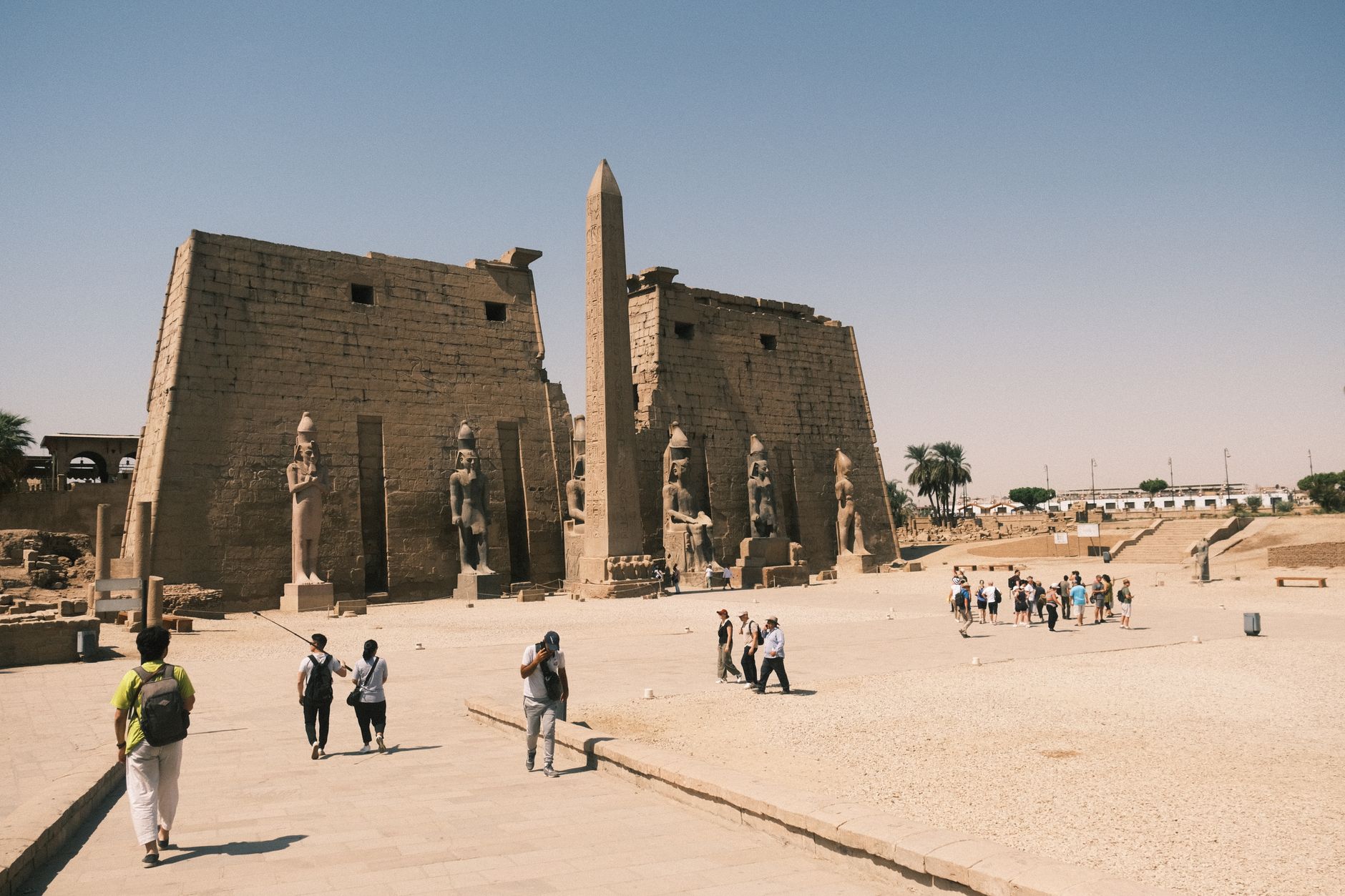
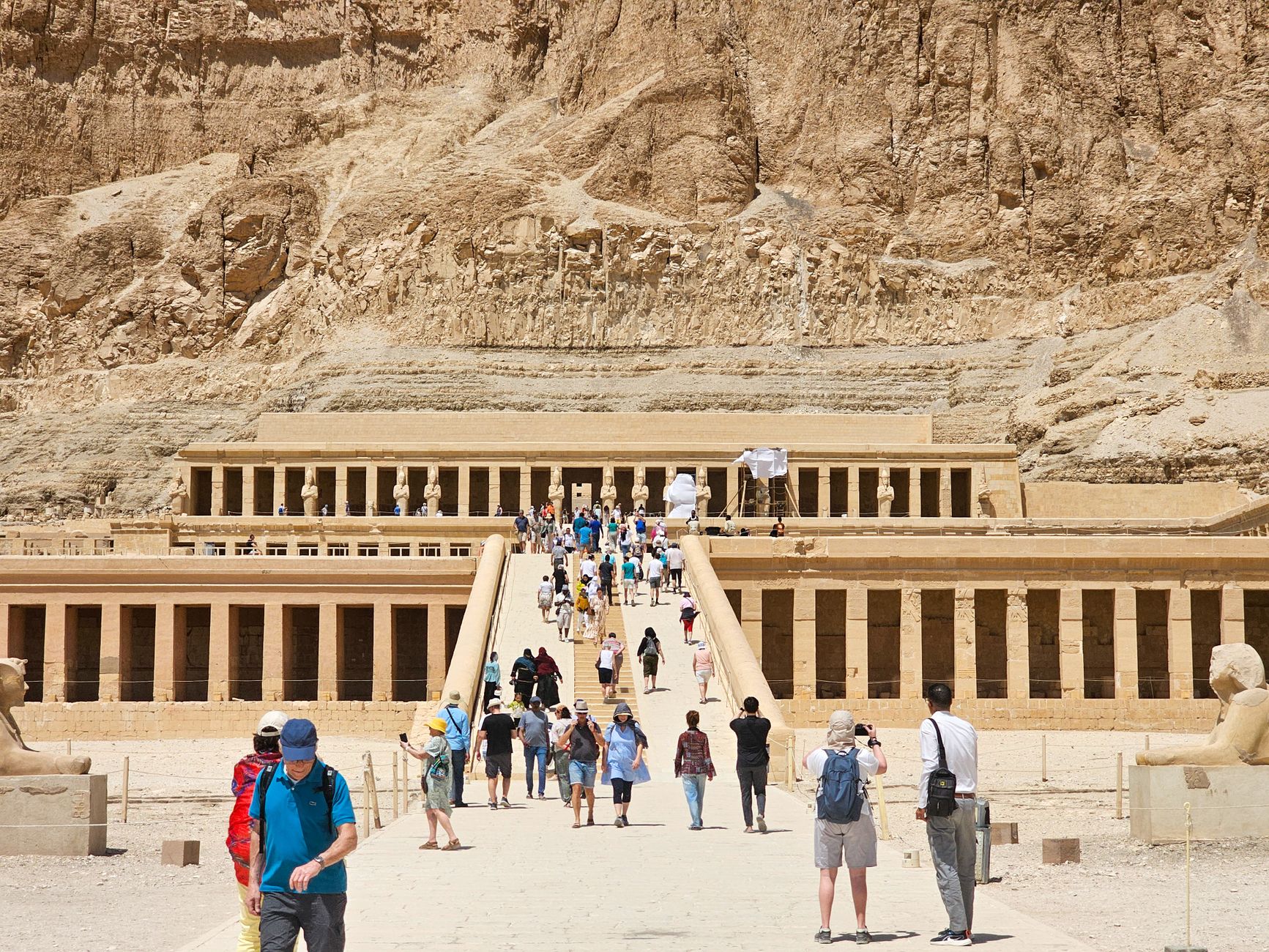
On the west bank of the Nile, about five kilometres south of Qena, Dendara sits quietly beside fields that have been farmed since before most cities existed. What draws people here is the Temple of Hathor — not a ruin in the usual sense, but a sandstone structure whose painted ceilings still hold colour, whose 18 Hathor-headed columns still stand in full, and whose hypostyle hall still closes around you like a held breath.
The complex is larger than it first appears. Beyond the main temple there is a small temple of Isis, a palm-lined Sacred Lake, the mudbrick foundations of an ancient sanatorium, and two birth houses. On the rear wall, Cleopatra stands carved in relief beside Caesarion. The original Dendera Zodiac — now in the Louvre — left only a plaster cast on the ceiling, but even that stops people mid-step.
💛 What travellers fall for
People who come back tend to go straight to the roof. The staircase is steep and the light up there is different — you get the lion-headed gargoyles at close range and a long view across the countryside that the main hall doesn't prepare you for. Go early, before the tour groups arrive from Luxor.
Deals in Dendara
Book directly at the provider


How Dendara came to be
Dendara's religious significance predates the temple you see today by several thousand years. Known in antiquity as Iunet, it served as the capital of the Sixth Nome of Upper Egypt from at least the 6th Dynasty, around 2320 BC, and excavations beneath the Hathor sanctuary have turned up strata reaching back to the Naqada IIC–D period and the Early Dynastic era — some of the oldest archaeological layers found anywhere in Upper Egypt.
The current Temple of Hathor was begun under Nectanebo I of the 30th Dynasty and construction continued through the Ptolemaic period, with the foundation formally laid on 16 July, 54 BC, during the reign of Ptolemy XII. Roman emperors Tiberius and Trajan carried the work forward; Trajan's image appears on the walls making offerings to Hathor. The site also has early Christian connections — Pachomius the Great, credited as the founder of cenobitic monasticism, is associated with the area. The town's present Arabic name, Denderah, dates from the late Ottoman period.
Who and what shaped it
People who shaped it
Landmark buildings
See Dendara in motion
Plan your visit
On the map
When to go
Dendara sits in one of Egypt's most arid stretches of the Nile Valley — the lion-headed gargoyles on the temple exterior exist to handle rain so rare it barely registers. Winters (November through February) bring cool mornings and mild afternoons, making them the most comfortable season to visit; summers are genuinely fierce, with midday temperatures that make the shaded interior of the hypostyle hall feel less like a choice and more like a necessity.
Right now
Background & history adapted from Wikipedia (CC BY-SA) · specs from Wikidata (CC0) · weather from Open-Meteo · map data © OpenStreetMap contributors · photos from Wikimedia Commons / Unsplash with per-image credit. No third-party reviews or social posts reproduced.