
Daroca
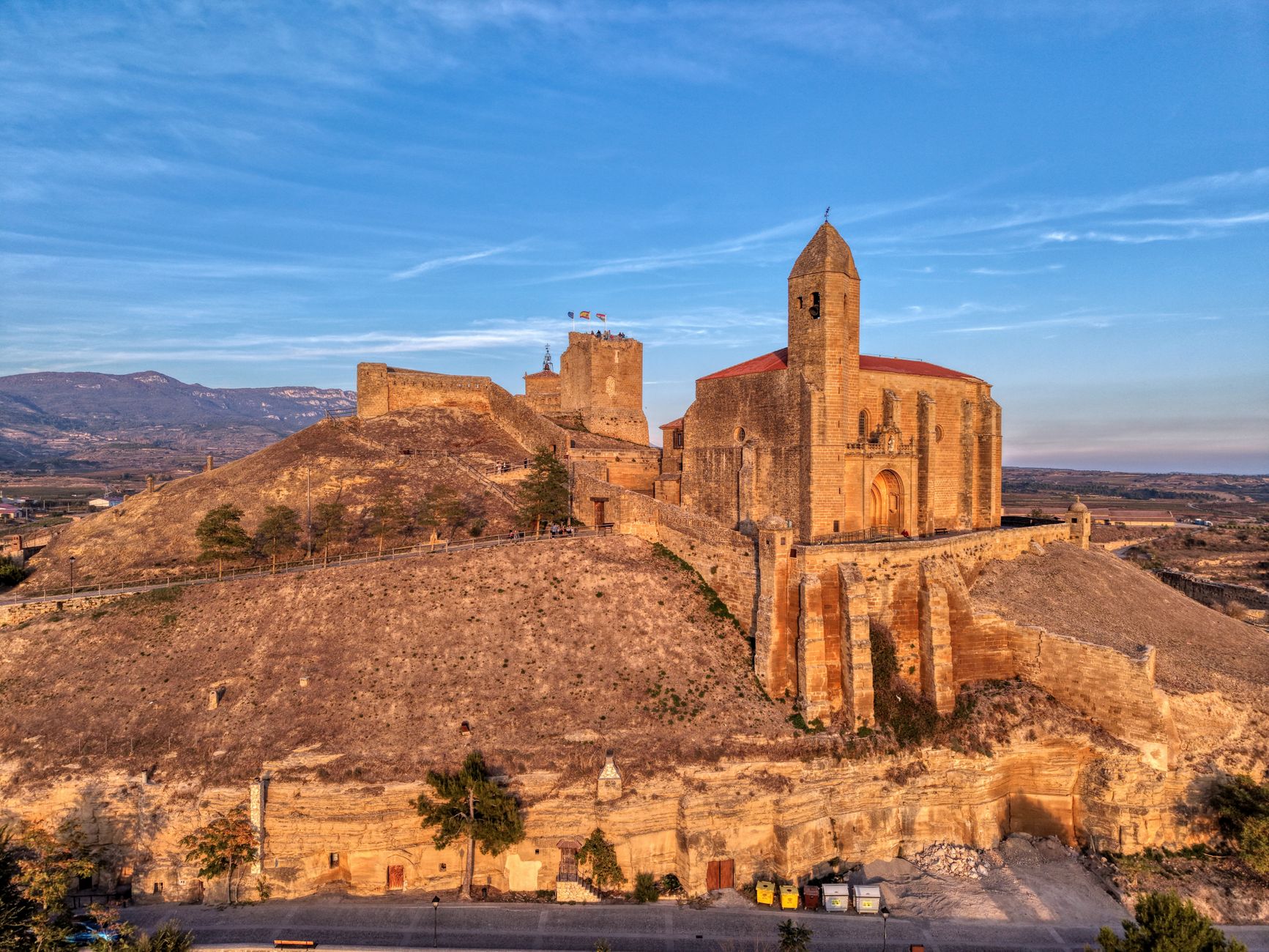
Daroca's walls tell you what kind of town this is before you've parked the car. Nearly four kilometres of medieval fortifications, 116 towers, two monumental gates — all of it enclosing a place with fewer than 2,000 people. Walk Calle Mayor, the main street running 700-odd metres between the Upper and Lower Gates, and you pass Romanesque churches, a Mudéjar palace, and a bakery that has been run by the same family since 1874.
At 780 metres above sea level in the Aragonese interior, Daroca sits in a valley hemmed by rock and history. The scale is intimate enough that a single day covers the ground, but the layers — Arab, Christian, Jewish, Renaissance — take longer to settle.
💛 What travellers fall for
People who come back tend to mention two things: the walk along the upper walls at dusk, when the light goes amber across the valley, and stopping at Pastelería Manuel Segura on Calle Mayor for whatever is fresh that morning. The tunnel, La Mina, surprises almost everyone — 600 metres bored through a hillside in the 16th century, and you can walk the length of it.
Experiences you don't want to miss


Deals in Daroca
Book directly at the provider

How Daroca came to be
Arabs from Yemen founded the settlement in the late 8th century, calling it Calat-Darawca by 862. Alfonso the Battler took it in 1120 and issued an early legal code in 1141; Ramon Berenguer IV later granted laws and privileges that made Daroca the capital of its own community. The town grew into a crossroads of faiths — the Church of San Juan Bautista was built on mosque foundations, and a Jewish quarter developed close to the centre.
Pedro Martínez de Luna, who would become the antipope Benedict XIII, commissioned the Palacio de los Luna here in the 14th century. The painter Bartolomé Bermejo kept a workshop in the town during the 15th century. Daroca received city status on 26 April 1366, and the Spanish state declared it a national historic-artistic ensemble in 1967.
Who and what shaped it
People who shaped it
Landmark buildings
See Daroca in motion
Plan your visit
On the map
When to go
Winters are cold — January averages around 5°C — and snow is possible from November through April. Summers are hot and dry, with July pushing past 23°C on average; May and mid-September to mid-October offer the most comfortable conditions for walking the walls and the streets.
Right now
Background & history adapted from Wikipedia (CC BY-SA) · specs from Wikidata (CC0) · weather from Open-Meteo · map data © OpenStreetMap contributors · photos from Wikimedia Commons / Unsplash with per-image credit. No third-party reviews or social posts reproduced.