
Cuenca
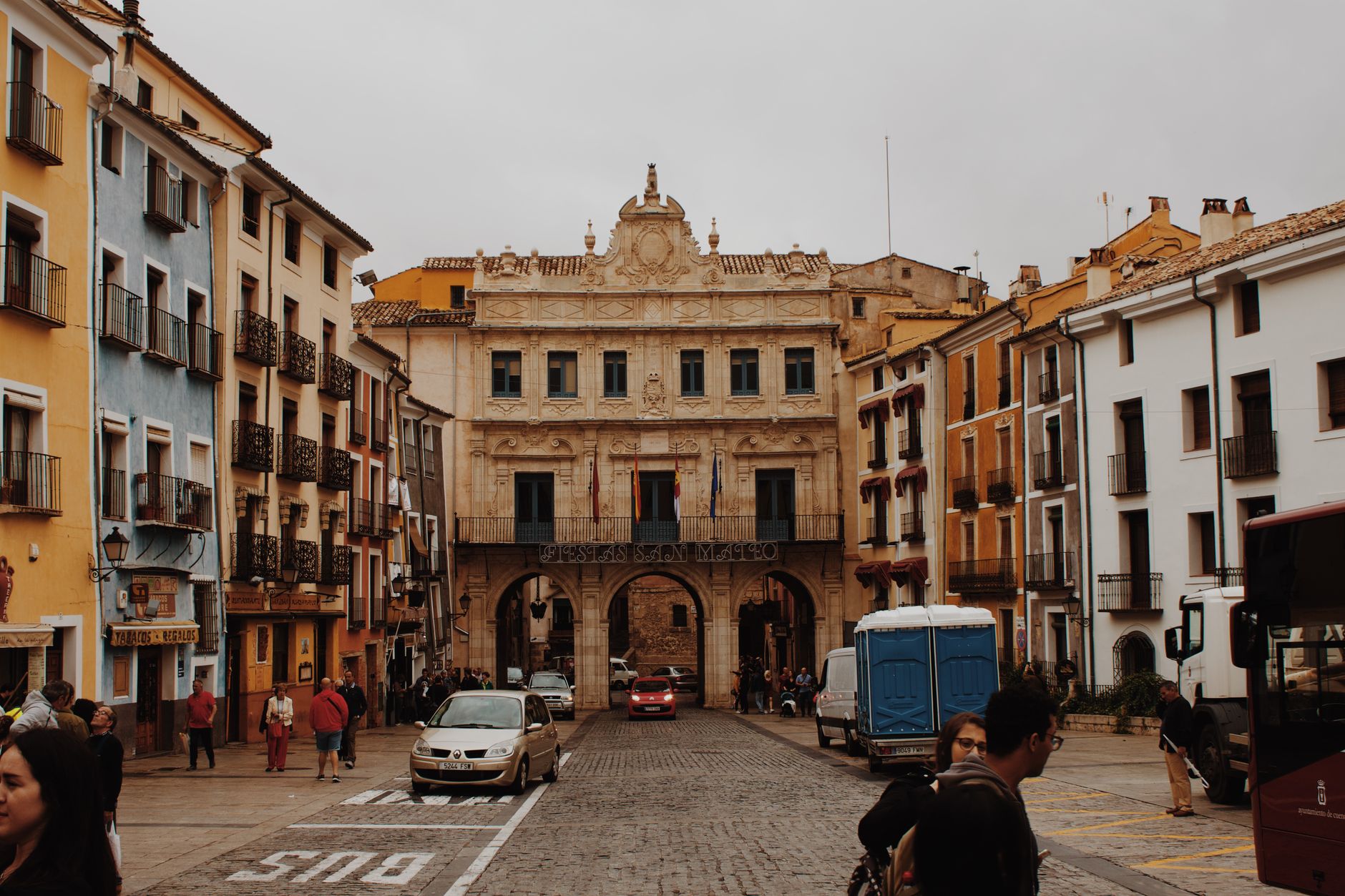
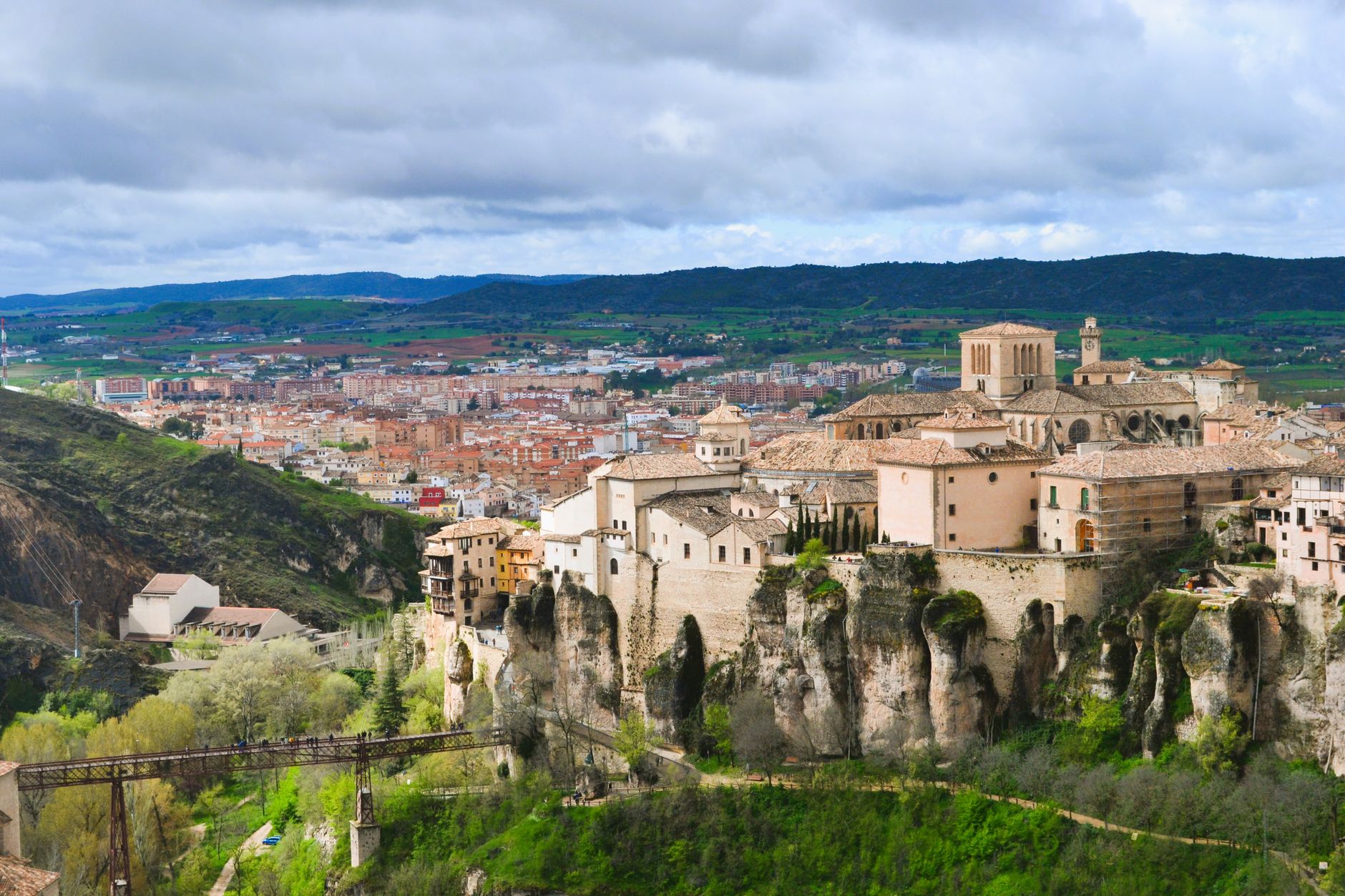
Cuenca sits on a dramatic spur of rock above two river gorges, and the city's most famous buildings — the Casas Colgadas, or Hanging Houses — extend straight out from the cliff face as if the 15th-century builders simply ran out of ground and kept going anyway. From the iron footbridge over the Huécar River, you look up at timber balconies suspended over nothing, and the geometry of it takes a moment to process.
The old town earned UNESCO World Heritage status in 1996, and it wears the designation lightly. The streets are narrow, the cathedral is Spain's earliest Gothic, and one of those teetering houses now holds a serious collection of Spanish abstract art.
💛 What travellers fall for
People who come back tend to cross the Huécar footbridge at dusk, when the light on the gorge walls goes amber. They also mention the Museum of Spanish Abstract Art — works by Chillida, Tàpies and Zóbel in a medieval hanging house — as the kind of pairing that stays with you longer than the architecture itself.
Experiences you don't want to miss




Deals in Cuenca
Book directly at the provider

How Cuenca came to be
The city's origins trace to a Berber stronghold — Qal'at Kūnka — probably established in the 10th century. It fell to Alfonso VIII of Castile on 21 September 1177, after a nine-month siege, and the king set about remaking it: construction of the cathedral began in 1182, and the influence of his wife, Queen Eleanor, shaped its Gothic form, making it among the first of its style in Spain.
A Sephardic Jewish community was documented from that same year of conquest until the 1492 expulsion. The city later built a textile industry, which Carlos IV shut down in the 18th century to protect the Royal Tapestry Factory from competition — a decision from which Cuenca's economy took a long time to recover.
Who and what shaped it
People who shaped it
Landmark buildings
See Cuenca in motion
Plan your visit
On the map
When to go
Winters are cold and clear, with January averaging around 5°C; summers push to 32°C in July, which is manageable in the gorge shade but tiring on the exposed upper-town streets. Late April through June and September through October offer the most comfortable conditions for walking the old city.
Right now
Background & history adapted from Wikipedia (CC BY-SA) · specs from Wikidata (CC0) · weather from Open-Meteo · map data © OpenStreetMap contributors · photos from Wikimedia Commons / Unsplash with per-image credit. No third-party reviews or social posts reproduced.