
Croix-Rousse
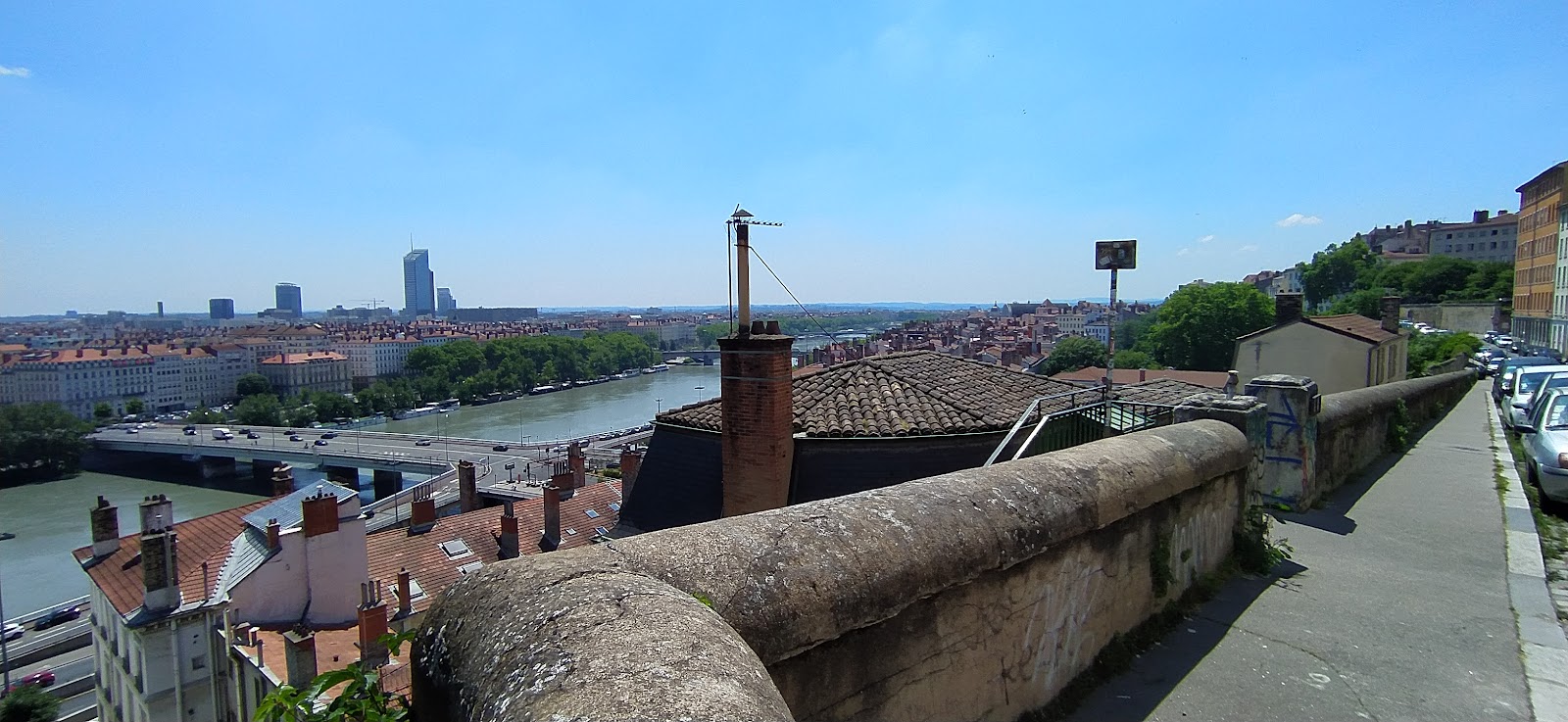
The first thing you notice climbing the Montée de la Grande-Côte is the ceiling height. Even from the street, the old buildings read differently — windows running nearly floor to ceiling, oak beams set wide apart, floors designed not for people but for the horizontal swing of a Jacquard loom. Croix-Rousse was built for silk, and the bones of that industry are still in the walls.
By the 19th century, tens of thousands of canuts — silk weavers — lived and worked on this plateau above Lyon. Their uprising in 1831 predated Marx. A stone cross erected here in 1560 gave the hill its name. The weaving is quieter now, but it hasn't stopped.
💛 What travellers fall for
Return visitors tend to time things around the boulevard market — Tuesday through Sunday, every morning, running since the Ancien Régime. They also seek out Soierie Vivante on a weekday afternoon: no reservation needed, and the intact workshop interior, with its mechanical looms still running, is unlike anything in a conventional museum.
The story behind Croix-Rousse
In 1512, Louis XII ordered a rampart built at the top of the hill, effectively isolating the plateau from the city below. A stone cross of Couzon was planted there in 1560, and the name stuck. The silk trade arrived in earnest in the early 19th century, reshaping every building on the hill — ceilings raised past thirteen feet, windows widened for light, passages cut through blocks so weavers could move fabric without exposing it to rain. These passages, the traboules, are still walkable today.
Croix-Rousse was absorbed into Lyon in 1852, the same year the hospital was built and the funicular — the ficelle — began hauling the plateau into the city's orbit. UNESCO added the slopes to its World Heritage list in 1998.
Good to know
Metro Line C reaches Croix-Rousse directly; the station opened as a funicular stop in 1891. Give yourself at least two hours — more if you plan to walk the pentes down. Maison des Canuts closes Mondays and a long list of public holidays, so check before you go.
The plateau catches wind that the city centre doesn't, so bring a layer even in summer. Spring and early autumn are the easiest seasons to walk the pentes — summer afternoons can be warm, and the market is at its best when the morning light is low.
Where is Croix-Rousse?
Location
- In Lyon
- 45.7756, 4.8289
- Open in Google Maps
More tickets & tours for Croix-Rousse
Book directly at the provider
More of Lyon
Discover where to stay, what to do and the best deals for your trip.
Explore Lyon →More attractions in Lyon
All of Lyon →
Background adapted from Wikipedia (CC BY-SA) · map data © OpenStreetMap contributors · ratings & place photos via Google · other photos with per-image credit. Ticket links may earn us a commission at no extra cost to you.