
Créteil


Créteil announces itself with one of the stranger skylines in greater Paris: ten cylindrical towers rising from the southern suburbs, their balconies curving outward like the leaves of a cabbage — which is exactly what they're called. Les Choux de Créteil were designed by Gérard Grandval and built between 1969 and 1974, and the French Ministry of Culture has since recognised them as heritage of the 20th century. That designation tells you something about Créteil: this is a city that took a radical bet on modernism and has lived with the results long enough to see them become history.
Beneath the concrete ambition sits something older. The Church of Saint-Christophe holds an 8th-century crypt and an 11th-century bell tower. A 14th-century dovecote once kept 1,500 pairs of birds. The name itself goes back to 865, when a monk named Usuard recorded it as Cristoilum — a clearing on a ridge, on the road between Paris and Sens. Both Créteil exist at once, and walking between them takes about twenty minutes.
💛 What travellers fall for
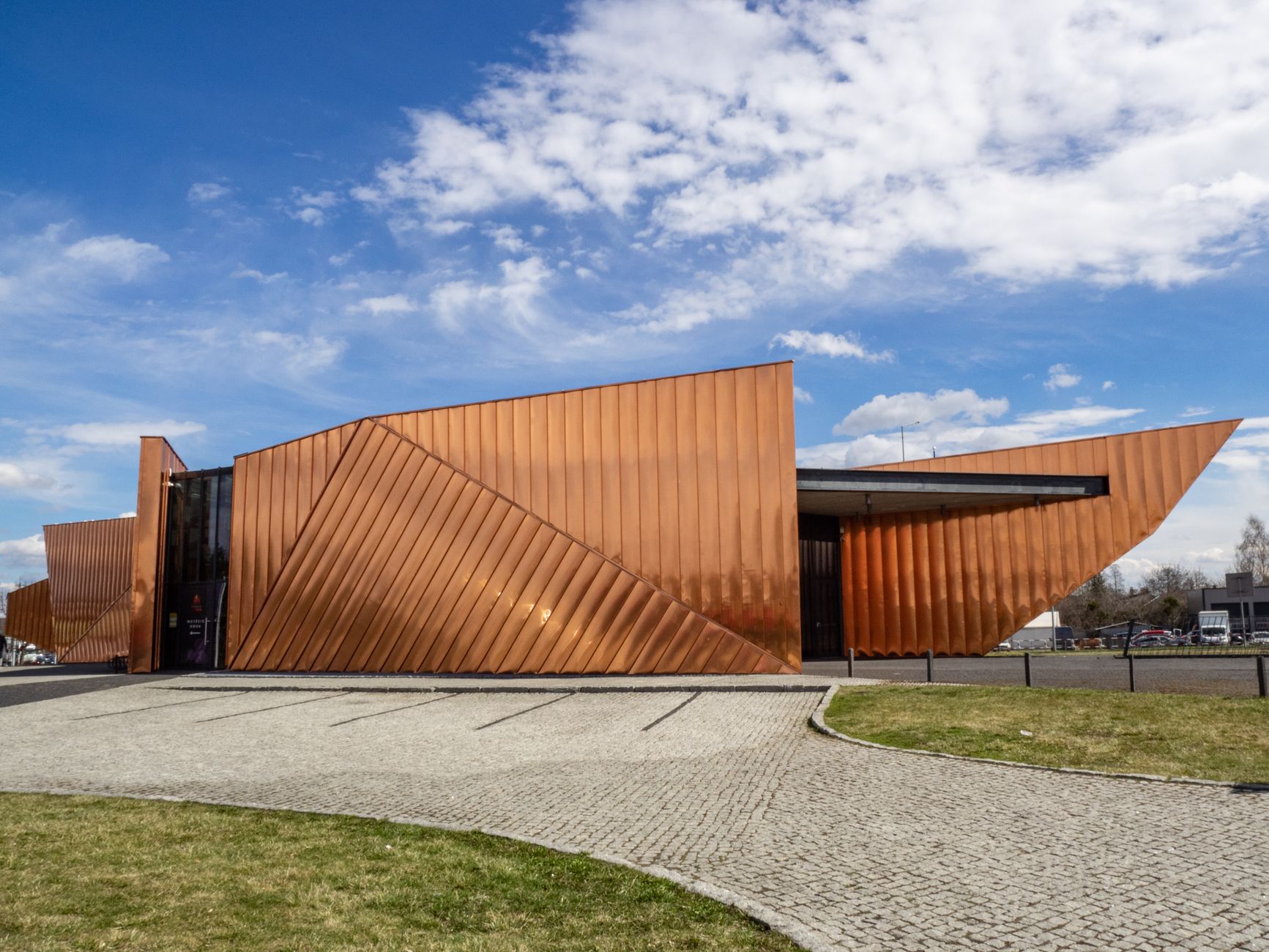
People who come back tend to do a loop: the lakefront at Île de Loisirs first, then up through the prefecture quarter to look at Daniel Badani's 180-metre sculptural building from the outside, then a ride on Câble A — the first urban cable car in Île-de-France — just to see the city from the air for a few minutes. It reframes everything.
Deals in Créteil
Book directly at the provider

How Créteil came to be
The name Créteil is older than France itself. A monk named Usuard wrote it down in 865 — Cristoilum, from a Celtic root meaning roughly 'clearing on the ridge,' referring to the plateau of Mont-Mesly on the Paris-to-Sens road. It remained a modest settlement for centuries, though the Franco-Prussian War hit hard: the town was plundered and left in ruins, and a battle on Mont-Mesly on 30 November 1870 killed 179 people.
The transformation came in 1965, when the Nouveau Créteil programme launched one of the most concentrated urban-design experiments in postwar France. Architect and urbanist Pierre Dufau oversaw the plan; Daniel Badani designed the Prefecture and Palace of Justice; Grandval designed Les Choux. Within a decade, 6,000 homes, a hospital, a town hall, law courts and a cathedral had risen from what had been farmland and quarry. The 42-hectare lake now occupying a former quarry pit is perhaps the most quietly useful thing that programme left behind.
Who and what shaped it
People who shaped it
Landmark buildings
See Créteil in motion
Plan your visit
On the map
When to go
Créteil follows the mild, damp rhythm of the Paris basin — cool grey winters where January rarely climbs above 6°C, and summers that settle into the low-to-mid 20s without much drama. June through August is the most comfortable stretch for the lake and outdoor walking; the rest of the year is perfectly workable with a layer and an umbrella.
Right now
Background & history adapted from Wikipedia (CC BY-SA) · specs from Wikidata (CC0) · weather from Open-Meteo · map data © OpenStreetMap contributors · photos from Wikimedia Commons / Unsplash with per-image credit. No third-party reviews or social posts reproduced.