
Cremona

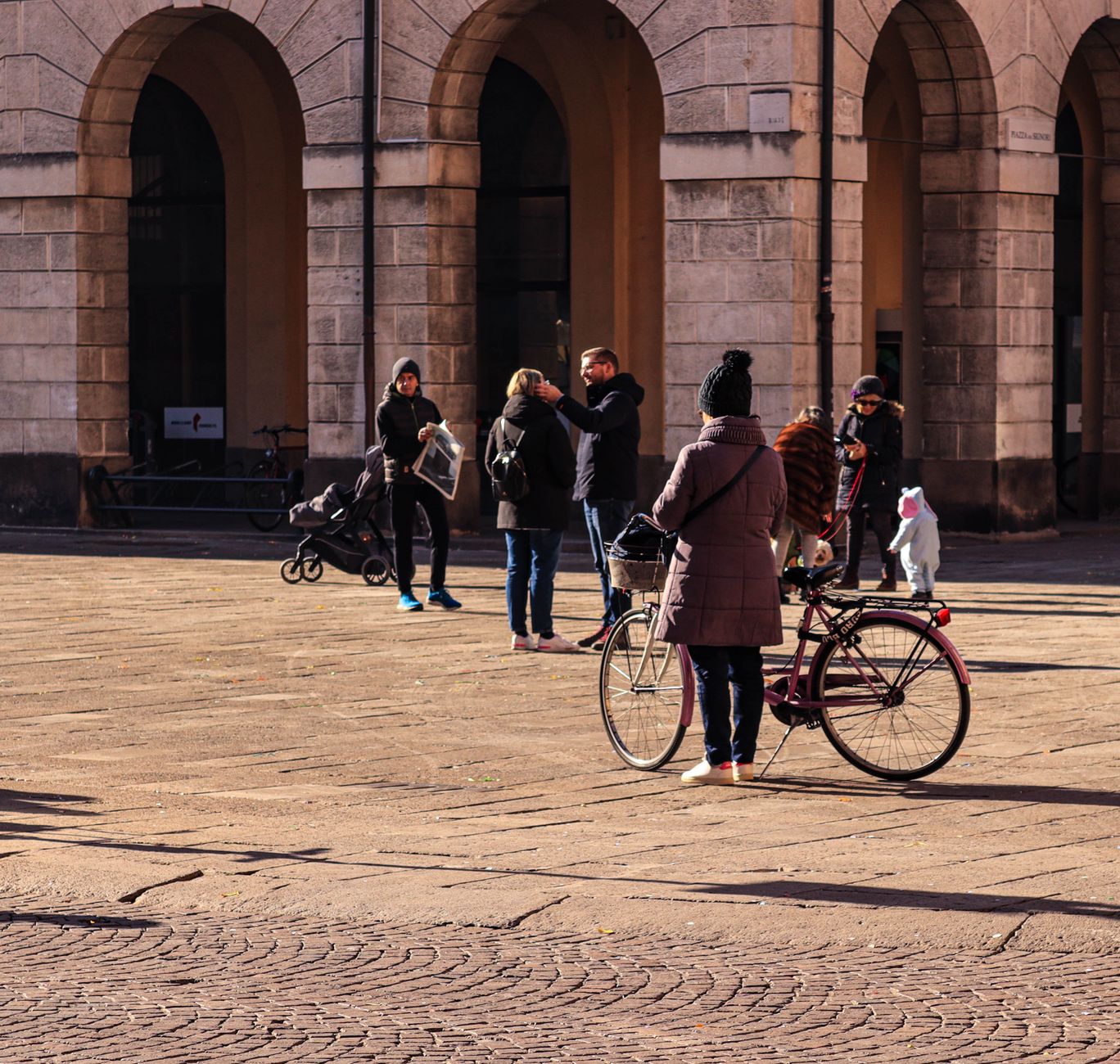
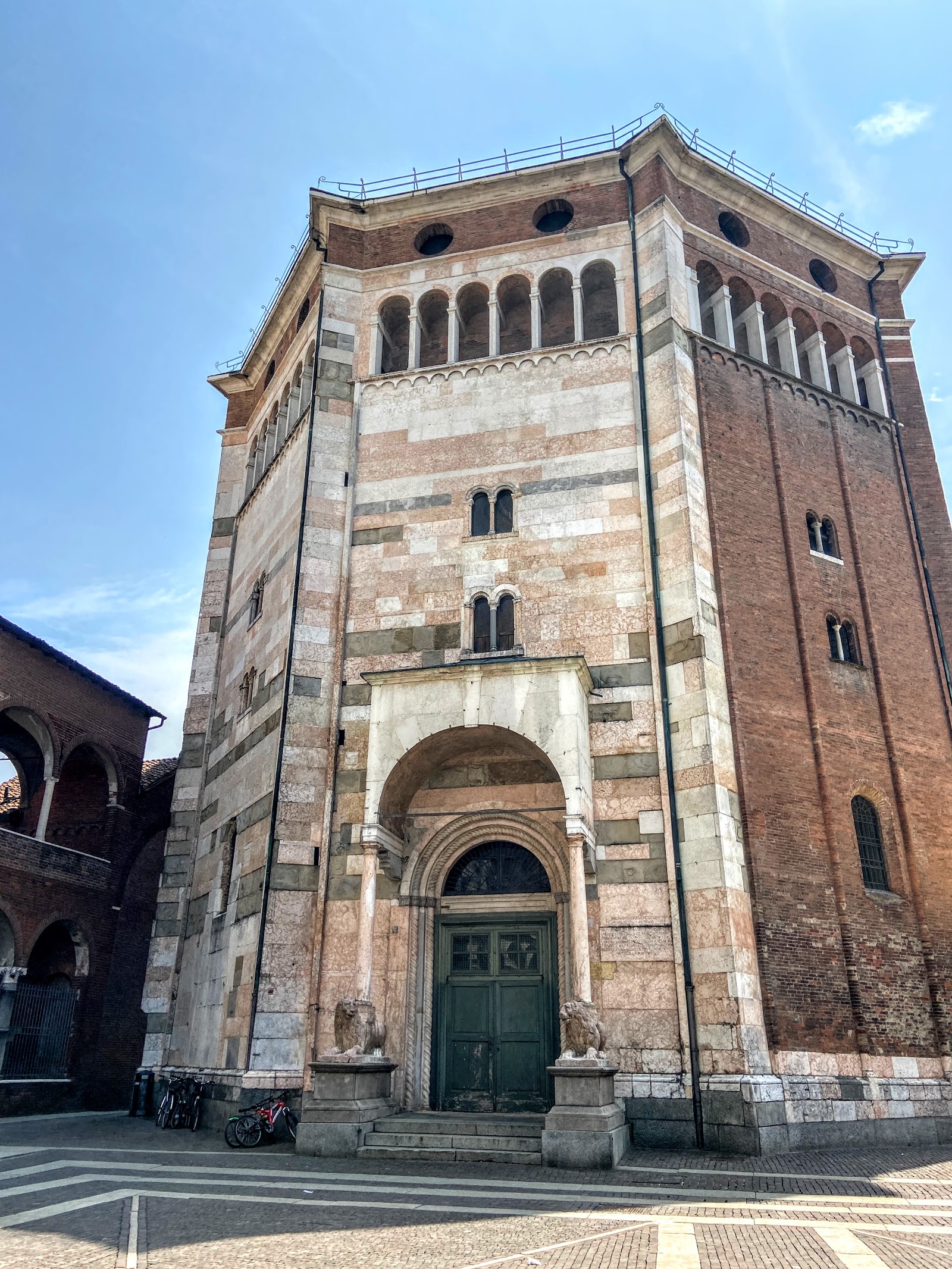
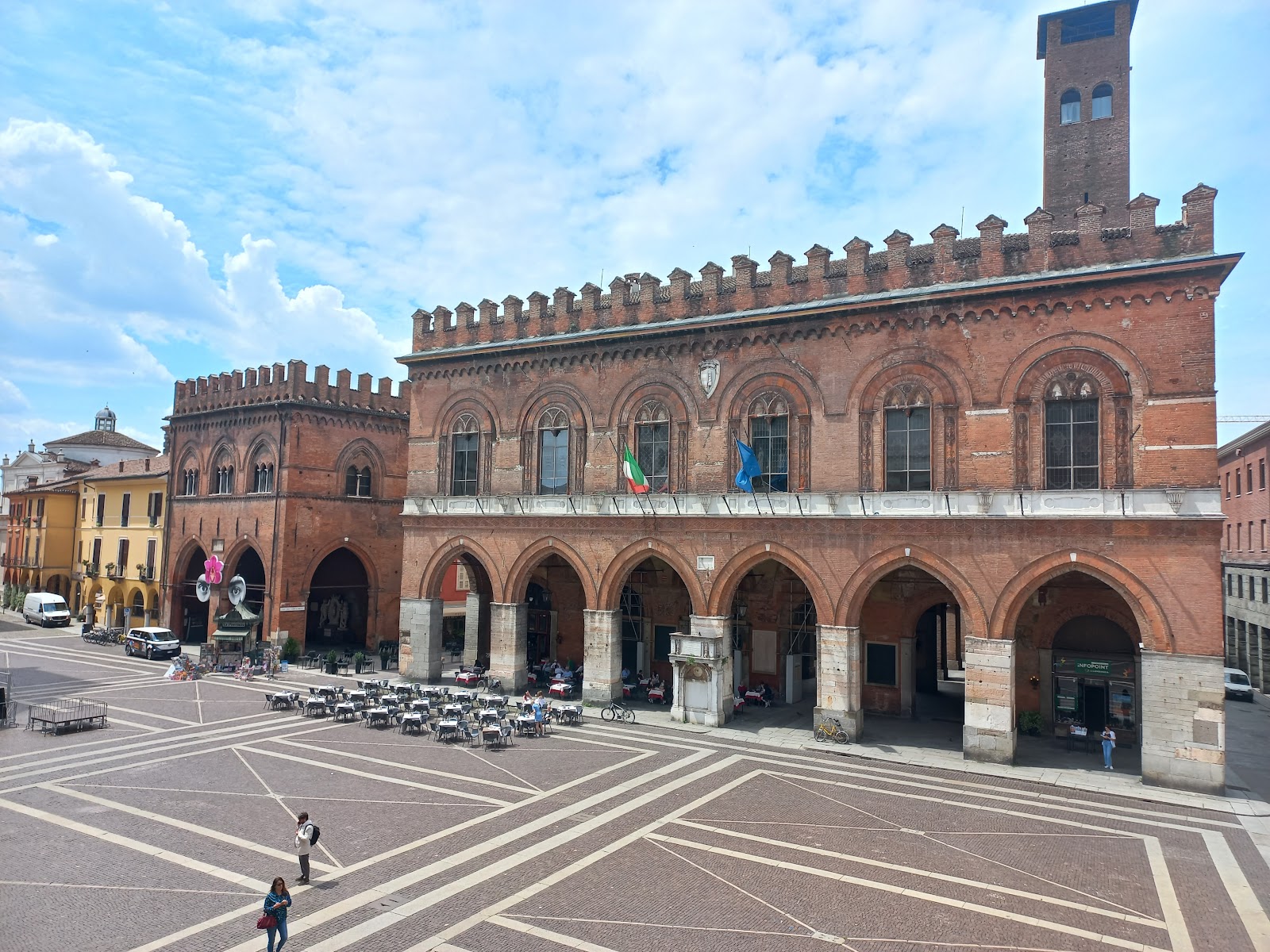
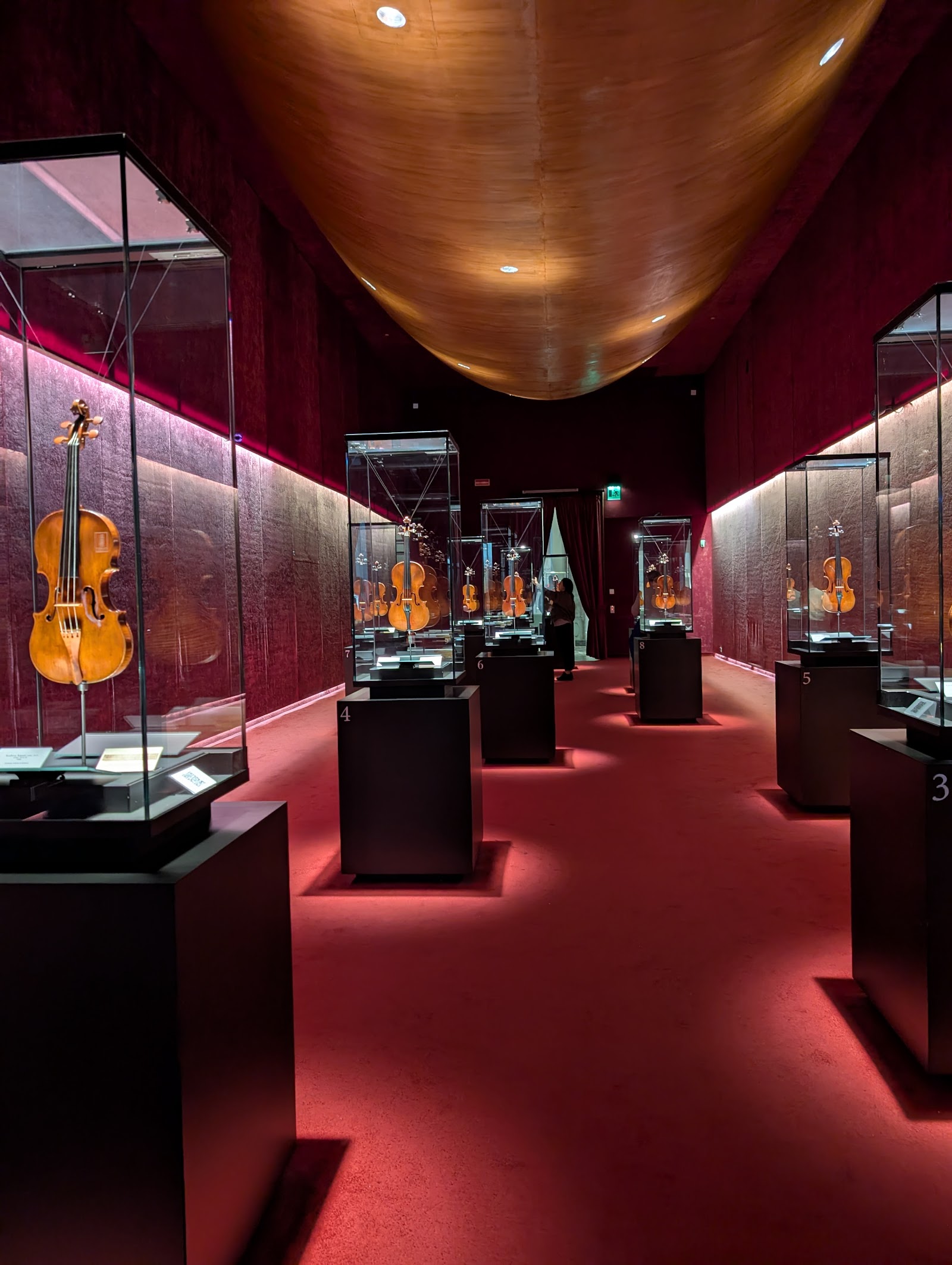
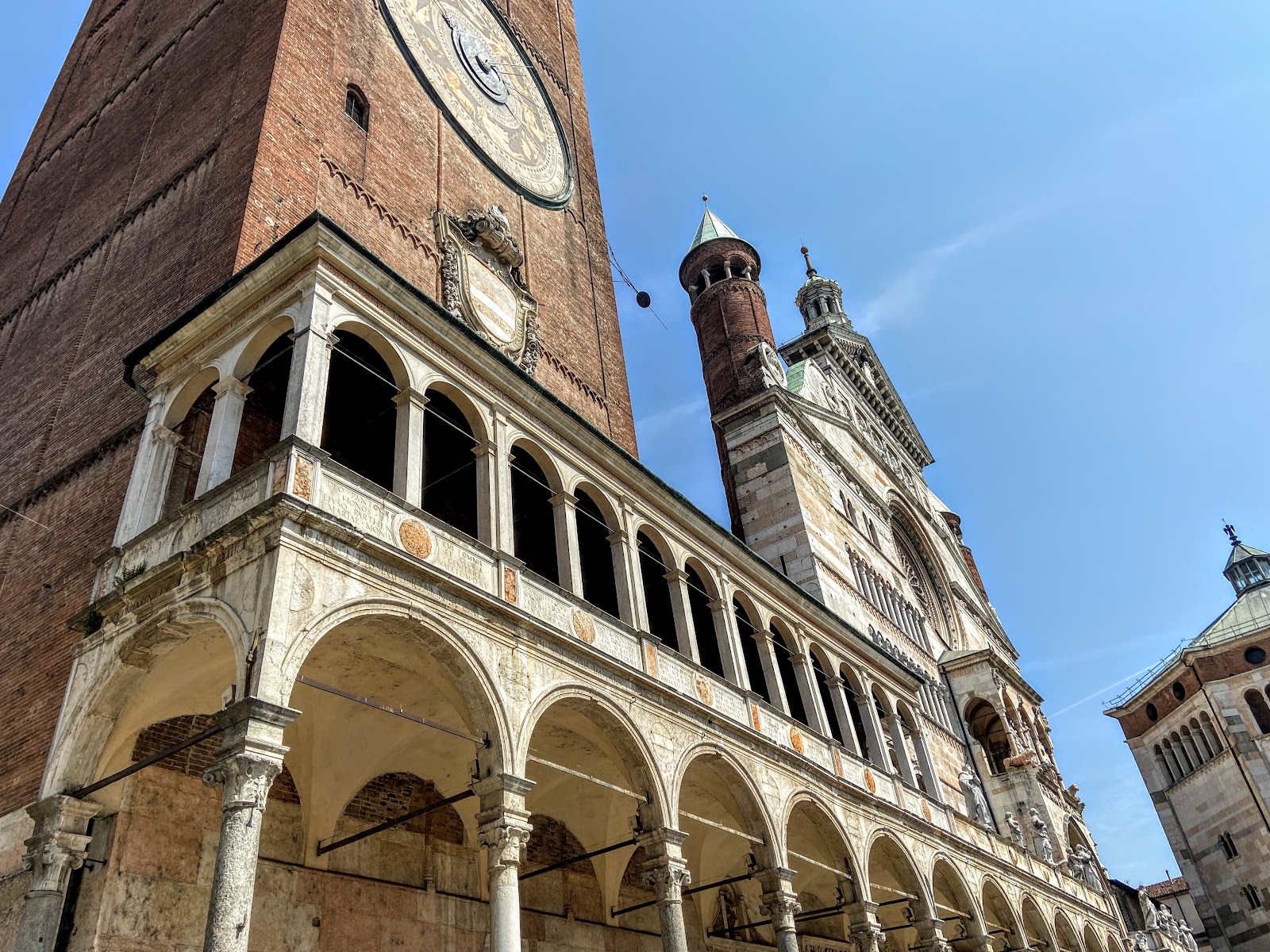
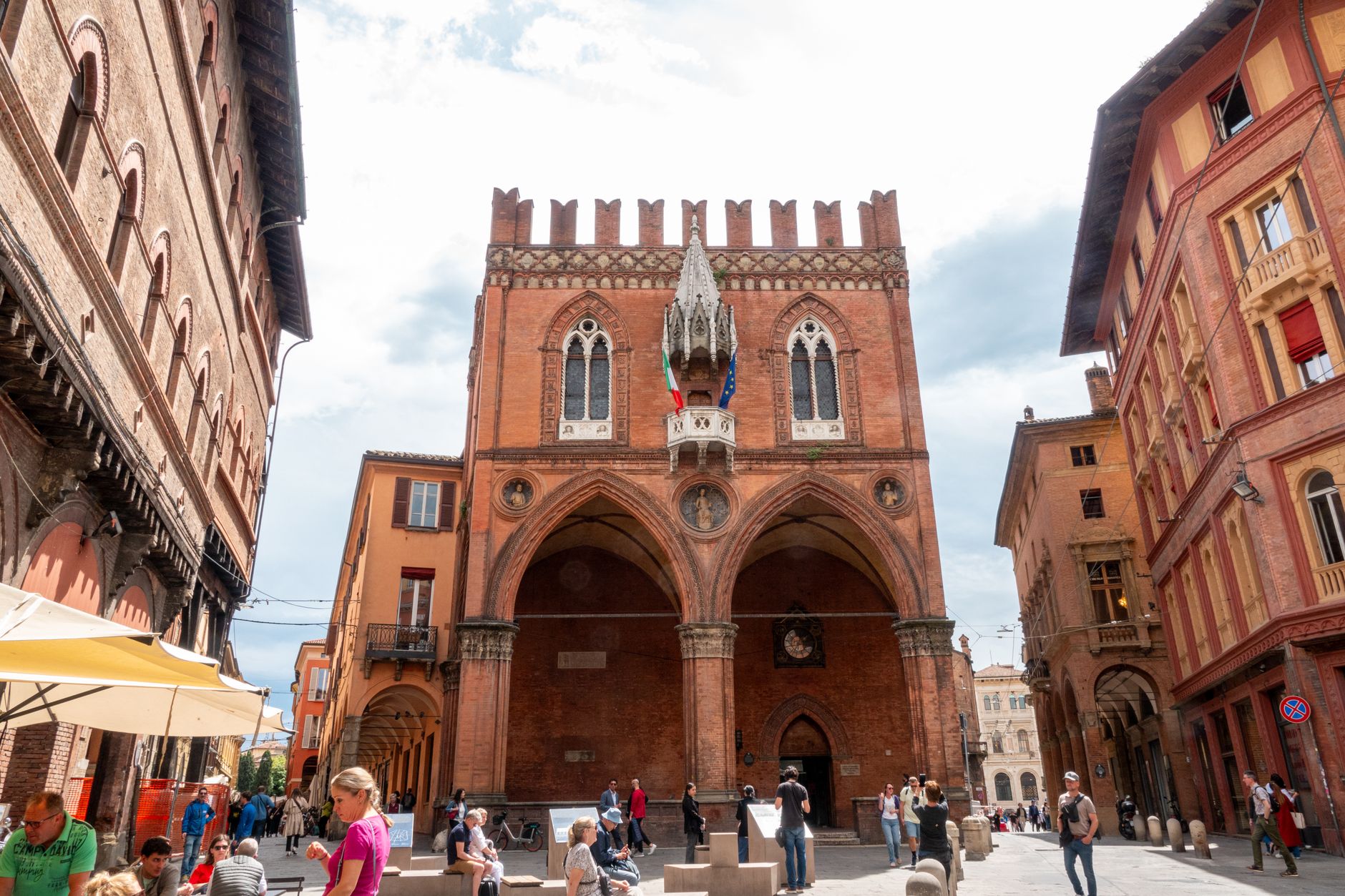
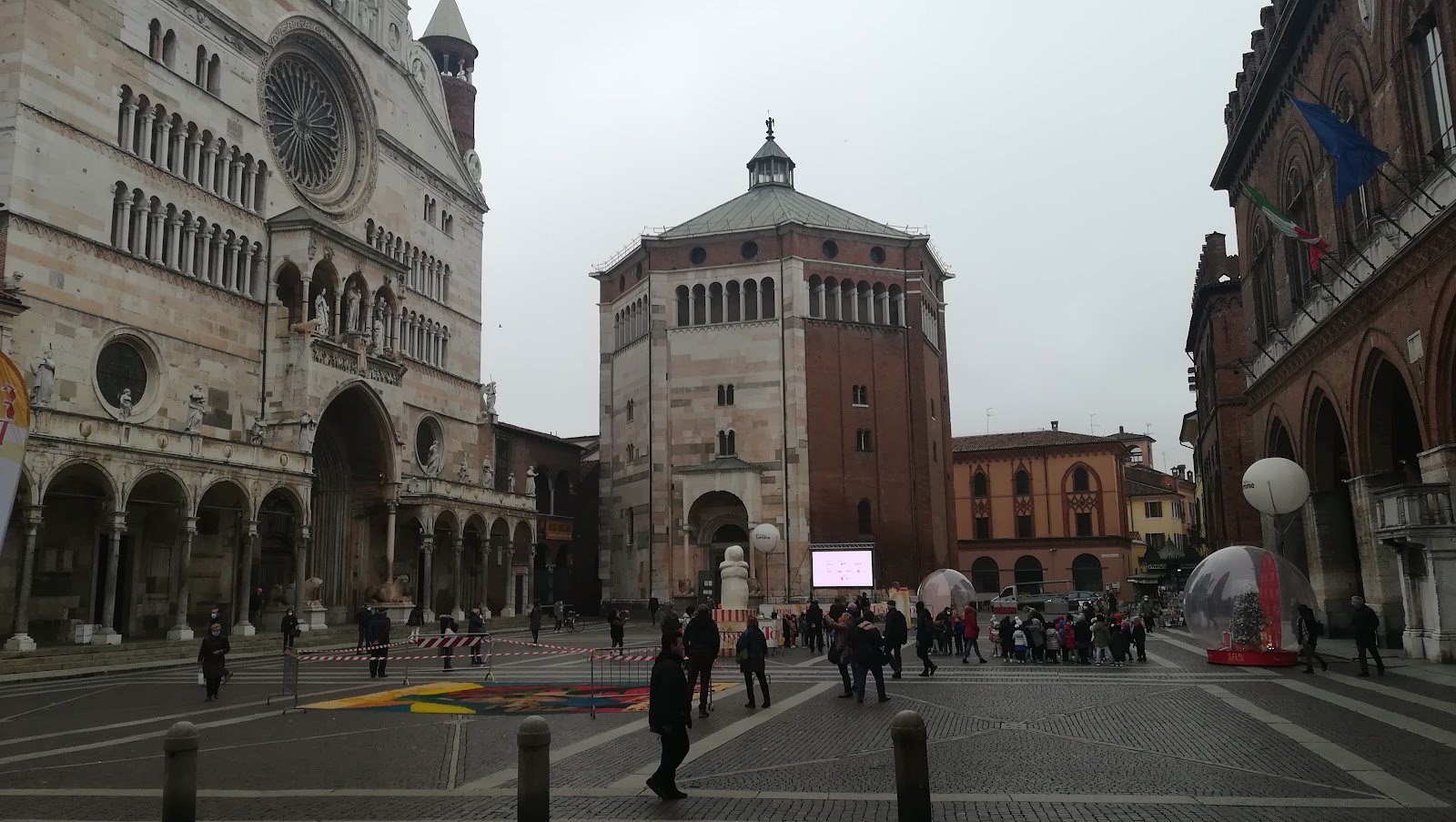
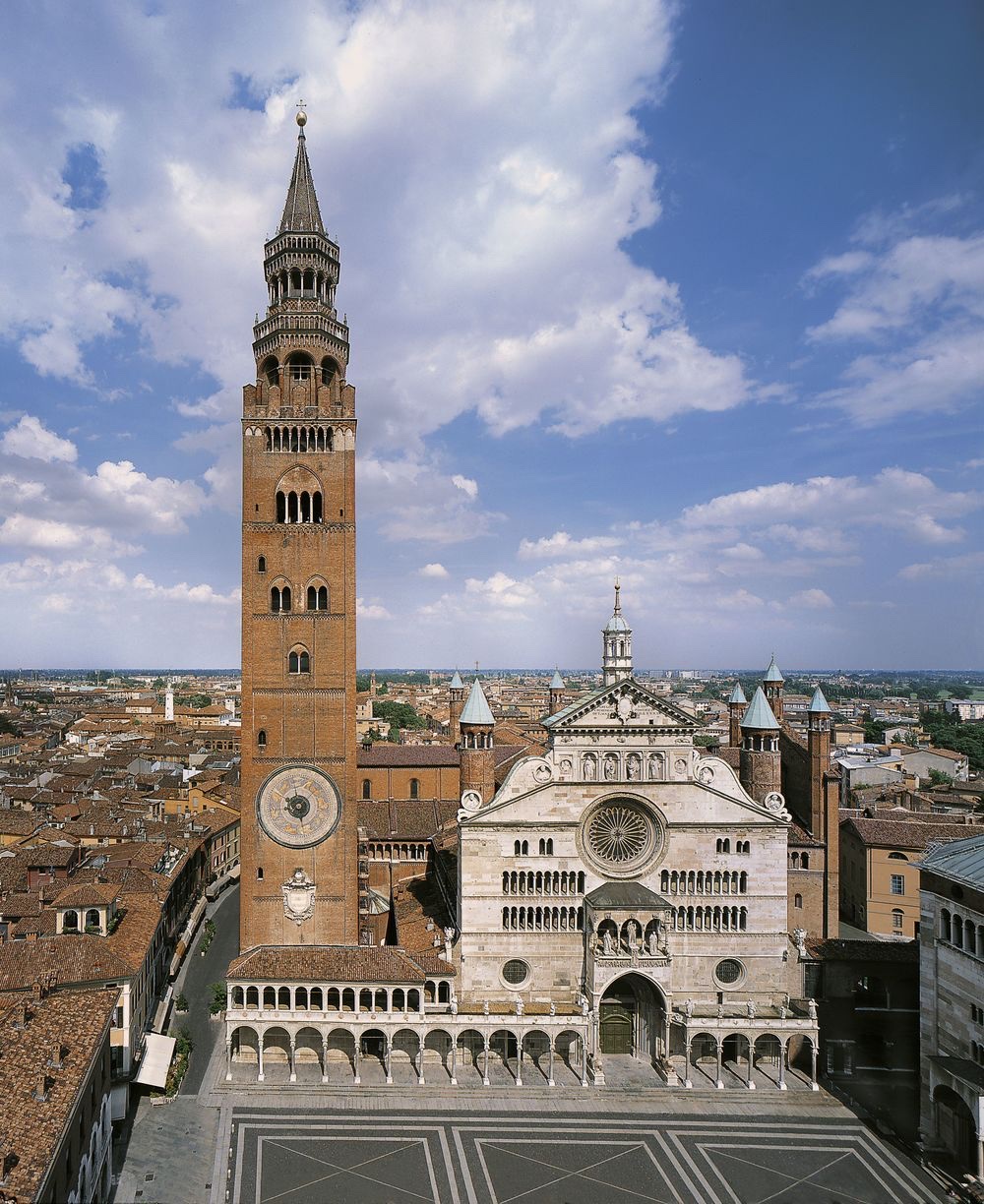
Stand in Piazza del Comune and you are surrounded by eight centuries of civic ambition compressed into one square: the Romanesque duomo, the octagonal baptistery from 1167, the city hall that took forty years to build, and above it all the Torrazzo, a brick campanile over 112 metres tall and still the highest medieval tower in Italy. Cremona earns its place on the map twice over — once for that skyline, and once for the violins. Andrea Amati invented the modern instrument here, Antonio Stradivari perfected it here, and the workshops are still open.
The Po plain around the city is flat and agricultural, which makes Cremona feel unusually concentrated: almost everything worth your time sits within a short walk of that central square.
💛 What travellers fall for
People who come back tend to spend longer in the luthiers' quarter than they planned, watching a maker bend wood over a form or scrape a soundboard with a thumbnail. They also mention the Torrazzo's 16th-century astronomical clock — lunar phases, zodiac signs — as something you need a second look at to fully read.
Experiences you don't want to miss


Deals in Cremona
Book directly at the provider
How Cremona came to be
Cremona began as a Celtic settlement of the Cenomani before Rome planted its first military colony north of the Po here in 218 BC, keeping the old name. The city was destroyed by the Lombard king Agilulf in 603 AD, then rebuilt twelve years later by Queen Theodelinda, who restored its bishopric as part of her campaign to convert her people to Roman Catholicism.
By 1093 Cremona was asserting itself as a free commune, joining an anti-imperial alliance alongside Milan, Lodi and Piacenza. The Visconti and then the Sforza families of Milan controlled it from 1334 to 1535 — with a brief Venetian interlude from 1499 to 1509 — before Spanish and then Austrian rule absorbed it into the broader Lombard story. The duomo's foundation stone was laid in 1107, destroyed by earthquake in 1117, relaunched in 1129, and not consecrated until 1190 or 1196: the building's long, interrupted biography is written plainly in its mix of Romanesque, Gothic, Renaissance and Baroque layers.
Who and what shaped it
People who shaped it
Landmark buildings
See Cremona in motion
Plan your visit
On the map
When to go
Summers on the Po plain are hot and humid, with temperatures regularly above 30°C and little breeze; spring (April–May) and autumn (September–October) are the more comfortable windows, with mild days and manageable crowds. Winters are cold and frequently foggy — characteristic of the plain, and atmospheric if you don't mind the chill.
Right now
↡ Attractions


Background & history adapted from Wikipedia (CC BY-SA) · specs from Wikidata (CC0) · weather from Open-Meteo · map data © OpenStreetMap contributors · photos from Wikimedia Commons / Unsplash with per-image credit. No third-party reviews or social posts reproduced.