
Covadonga
A spring emerges from the rock face here and runs down through seven stone spouts below the cave mouth — locals call it the Marriage Fountain, and tradition holds that a young woman who drinks from it without pausing for breath will marry within the year. That small, odd detail tells you something about Covadonga: this is a place where geology, faith and story have been layered together for so long they're impossible to separate.
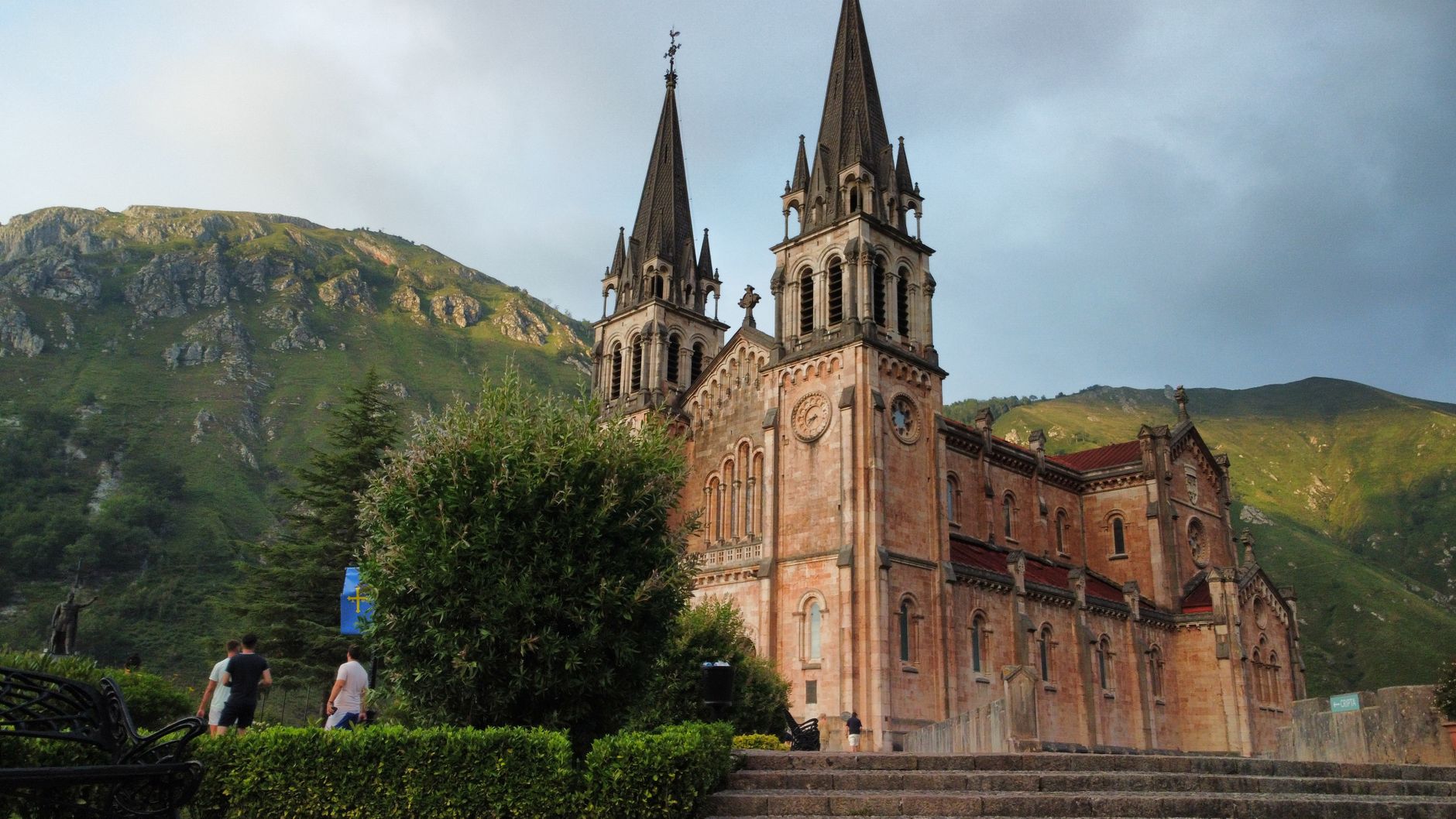
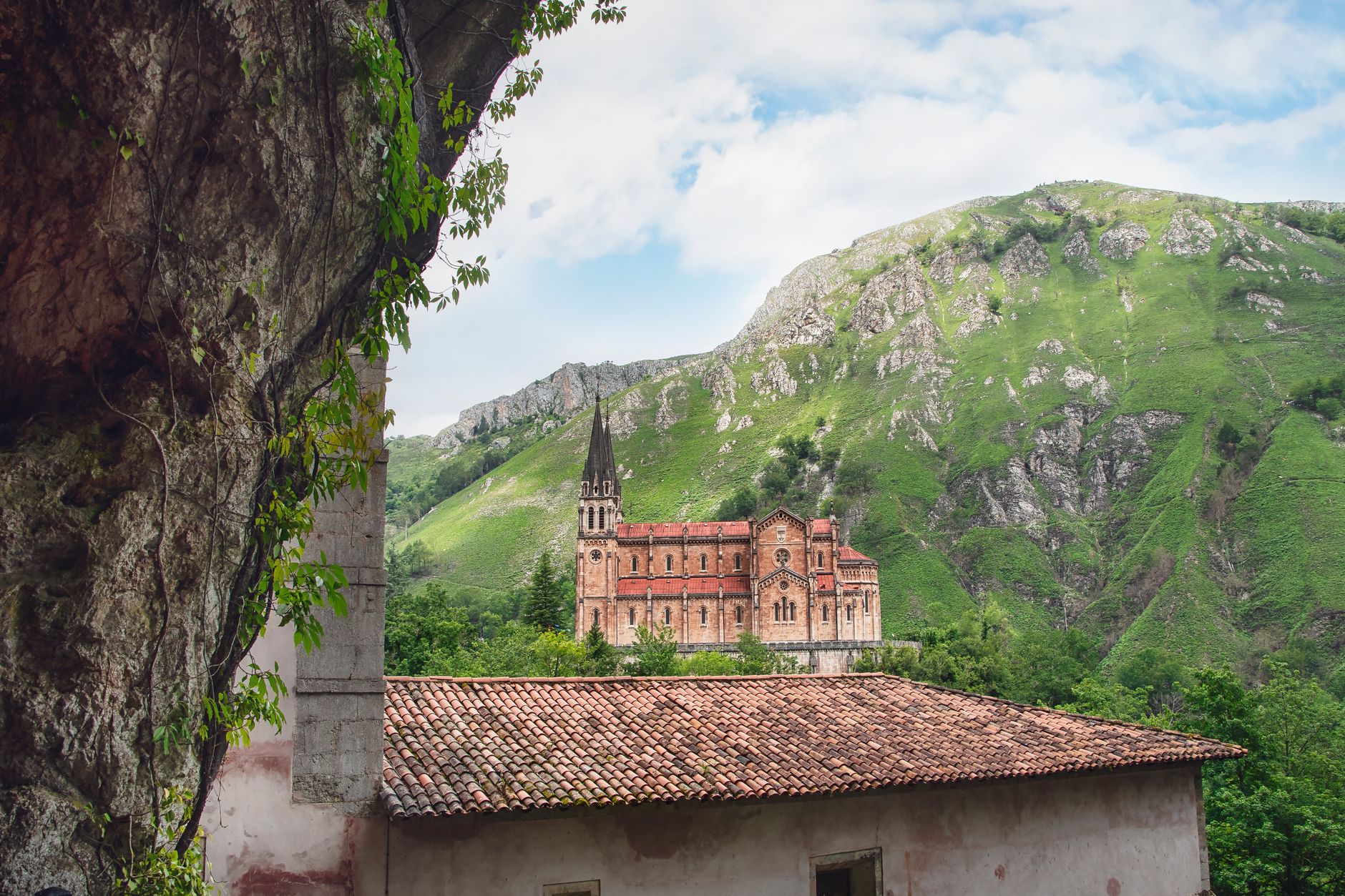
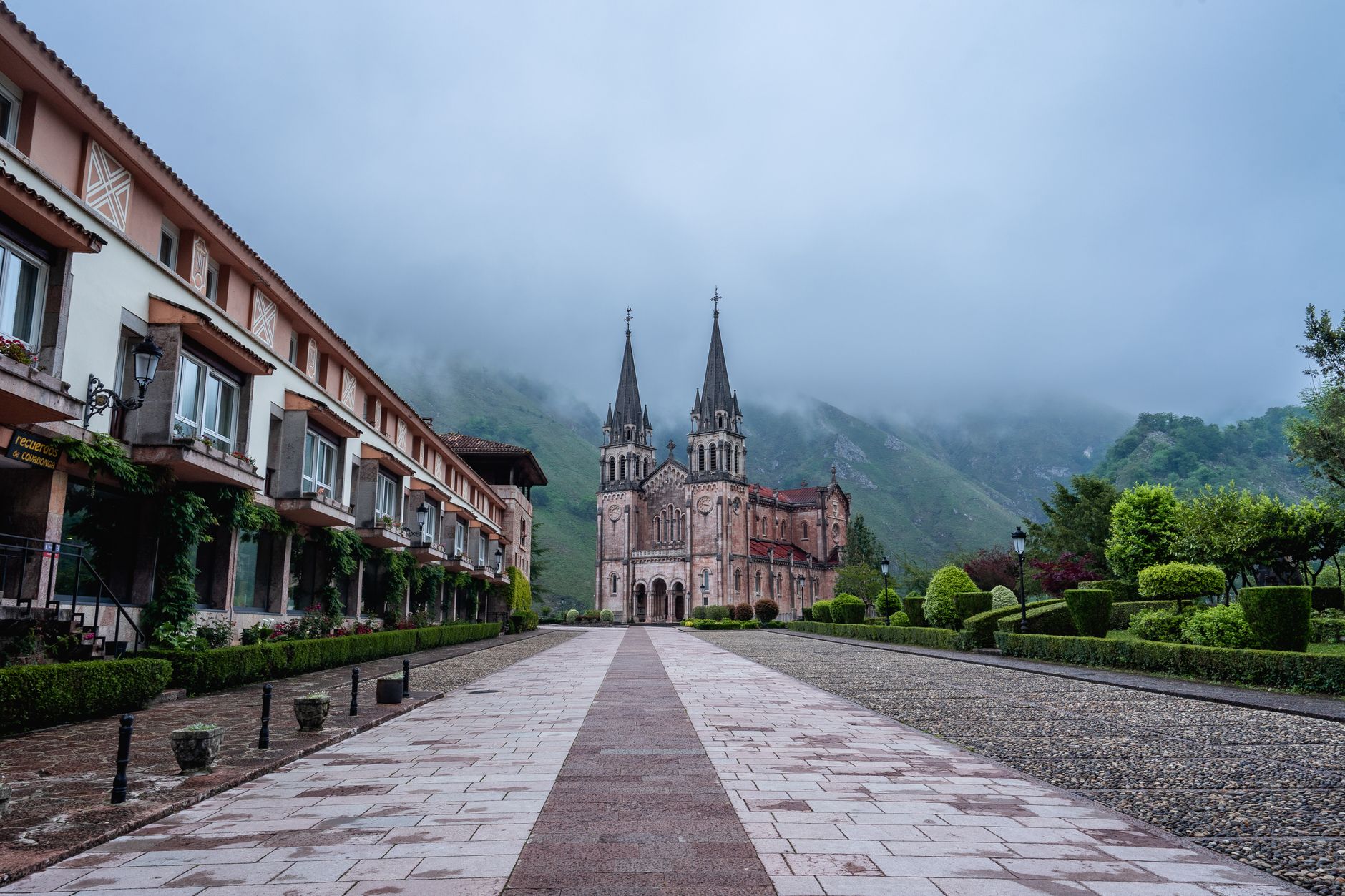
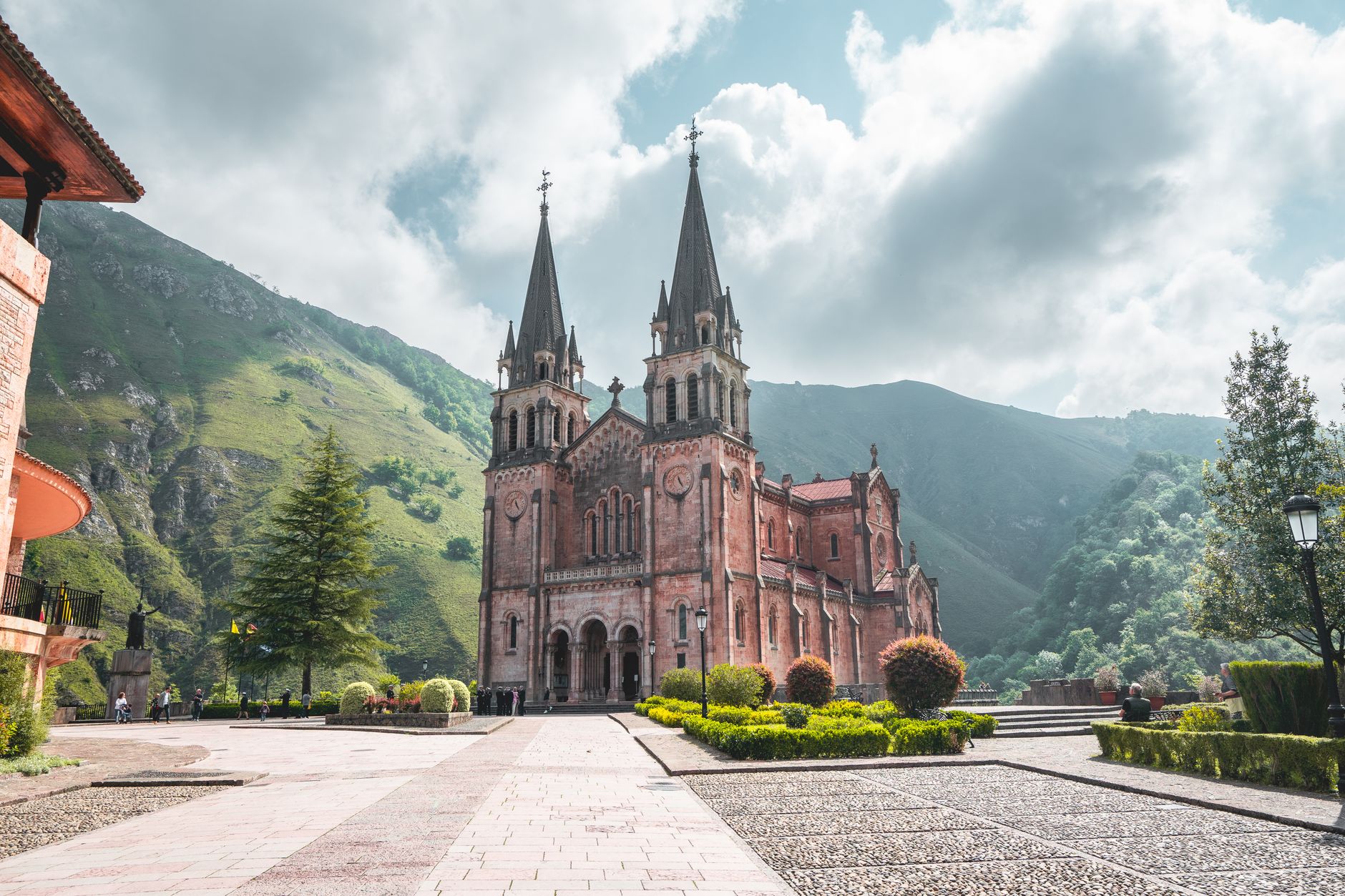
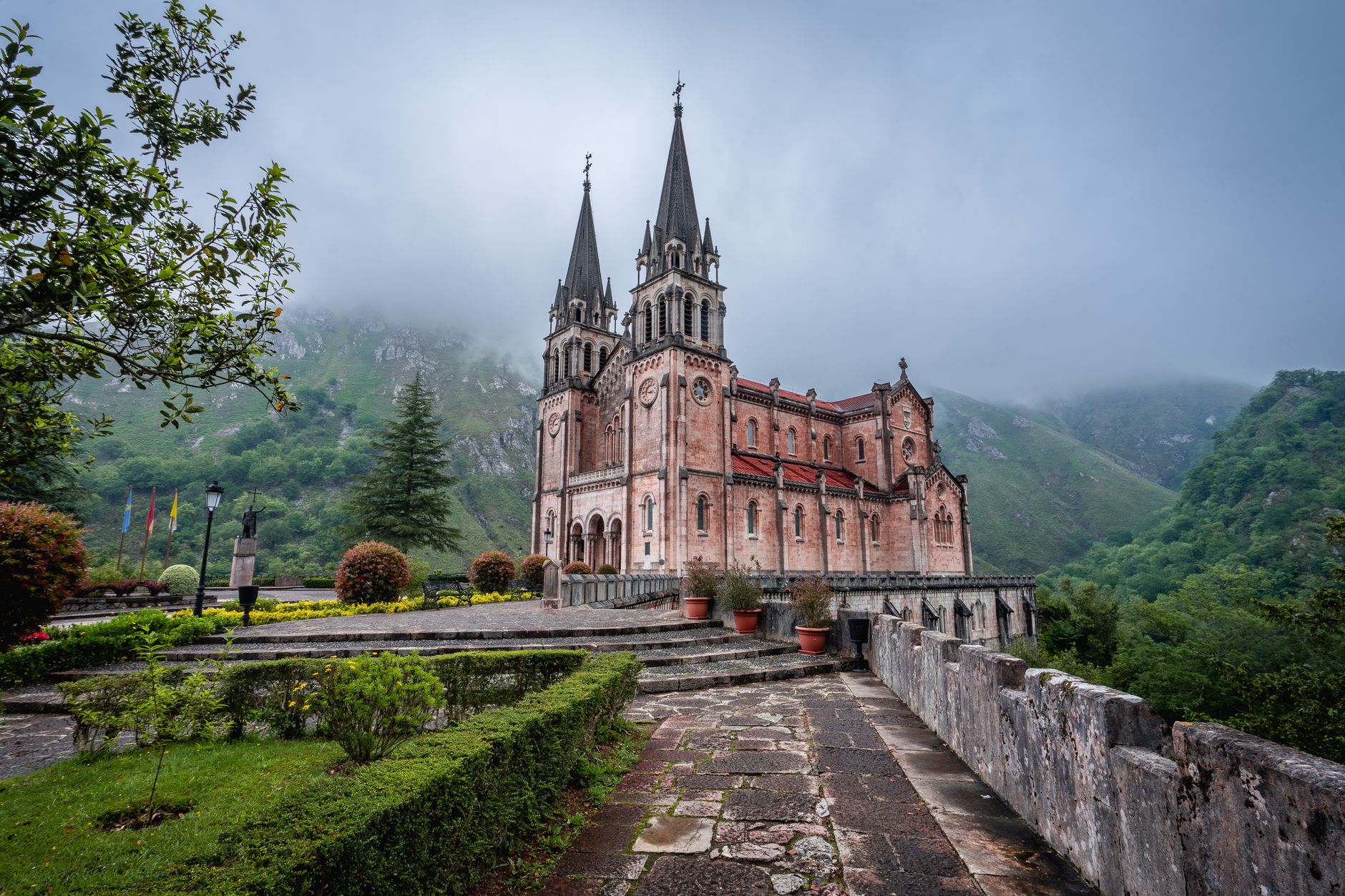
The centrepiece is a natural cave in the Picos de Europa foothills where a polychrome carving of the Virgin — La Santina, installed in her present position in 1778 — sits within living stone. Above on the hillside, a pink limestone basilica with twin towers completes the scene.
💛 What travellers fall for
People who return tend to arrive early on a weekday, before the shuttle buses fill up, and walk the short path between the cave and the Real Colegiata de San Fernando, whose sixteenth-century cloister gets overlooked by almost everyone heading straight for the basilica. The Fuente de los Siete Caños is also quieter before ten in the morning.
Experiences you don't want to miss



Deals in Covadonga
Book directly at the provider
How Covadonga came to be
The name comes from the Asturian cova domnica — Cave of Our Lady — and the place enters recorded history in 722, when a Visigothic nobleman named Pelayo led his men against Moorish troops here and won. Historians argue about the scale and significance of the engagement, and some question whether the battle unfolded quite as tradition describes, but the political consequence was lasting: Pelayo became the first king of Asturias, and the victory is traditionally marked as the opening of the centuries-long Reconquista.
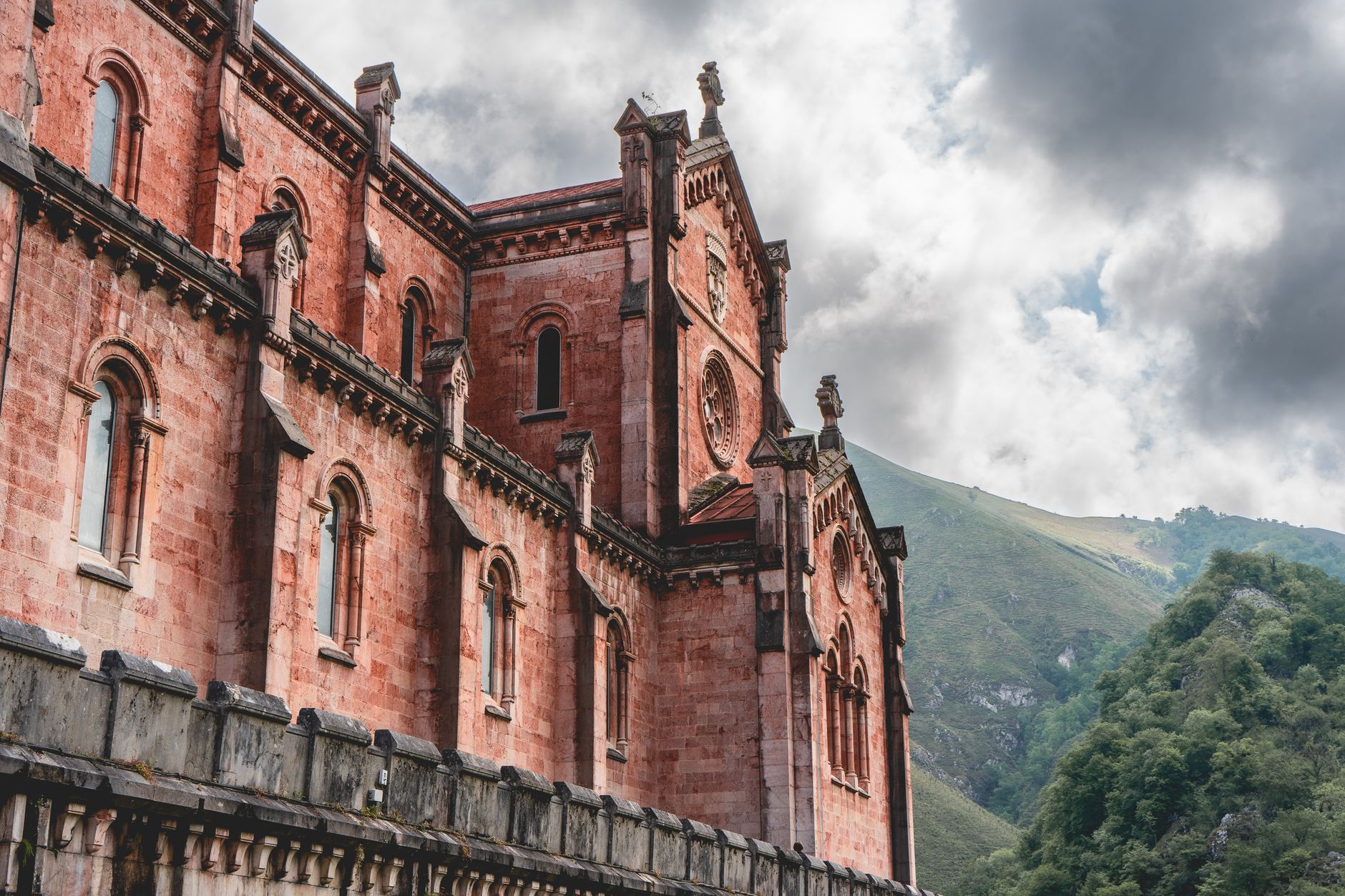
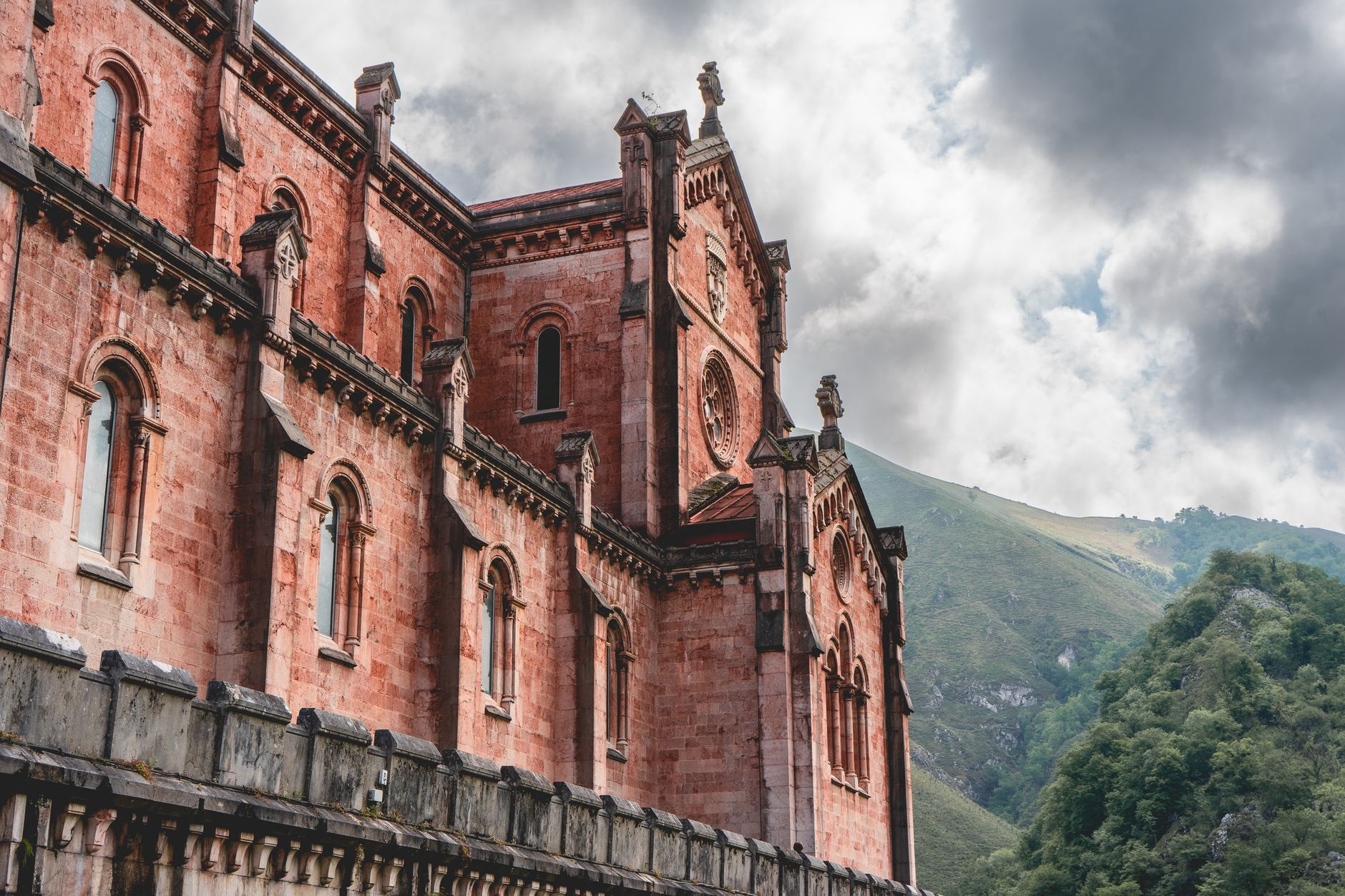
Pelayo died in 737 and was originally buried in Cangas de Onís, then moved to the cave in the thirteenth century. His son-in-law Alfonso I, who followed Favila on the Asturian throne and married Pelayo's daughter Ermesinda, also rests here. The pink limestone basilica above came much later — designed by Roberto Frassinelli and built between 1877 and 1901 under the direction of Madrid architect Federico Aparici y Soriano, it was formally designated a basilica on 11 September 1901.
Who and what shaped it
People who shaped it
Landmark buildings
See Covadonga in motion
Plan your visit
On the map
When to go
Summers are mild, with August days averaging around 22°C and nights staying near 14°C — comfortable walking weather, though the site draws its largest crowds in these months. Winter is cool and damp, with February temperatures dropping to around 10°C by day and 3°C at night; the landscape turns quieter and greener.
Right now
Background & history adapted from Wikipedia (CC BY-SA) · specs from Wikidata (CC0) · weather from Open-Meteo · map data © OpenStreetMap contributors · photos from Wikimedia Commons / Unsplash with per-image credit. No third-party reviews or social posts reproduced.