
Corniglia
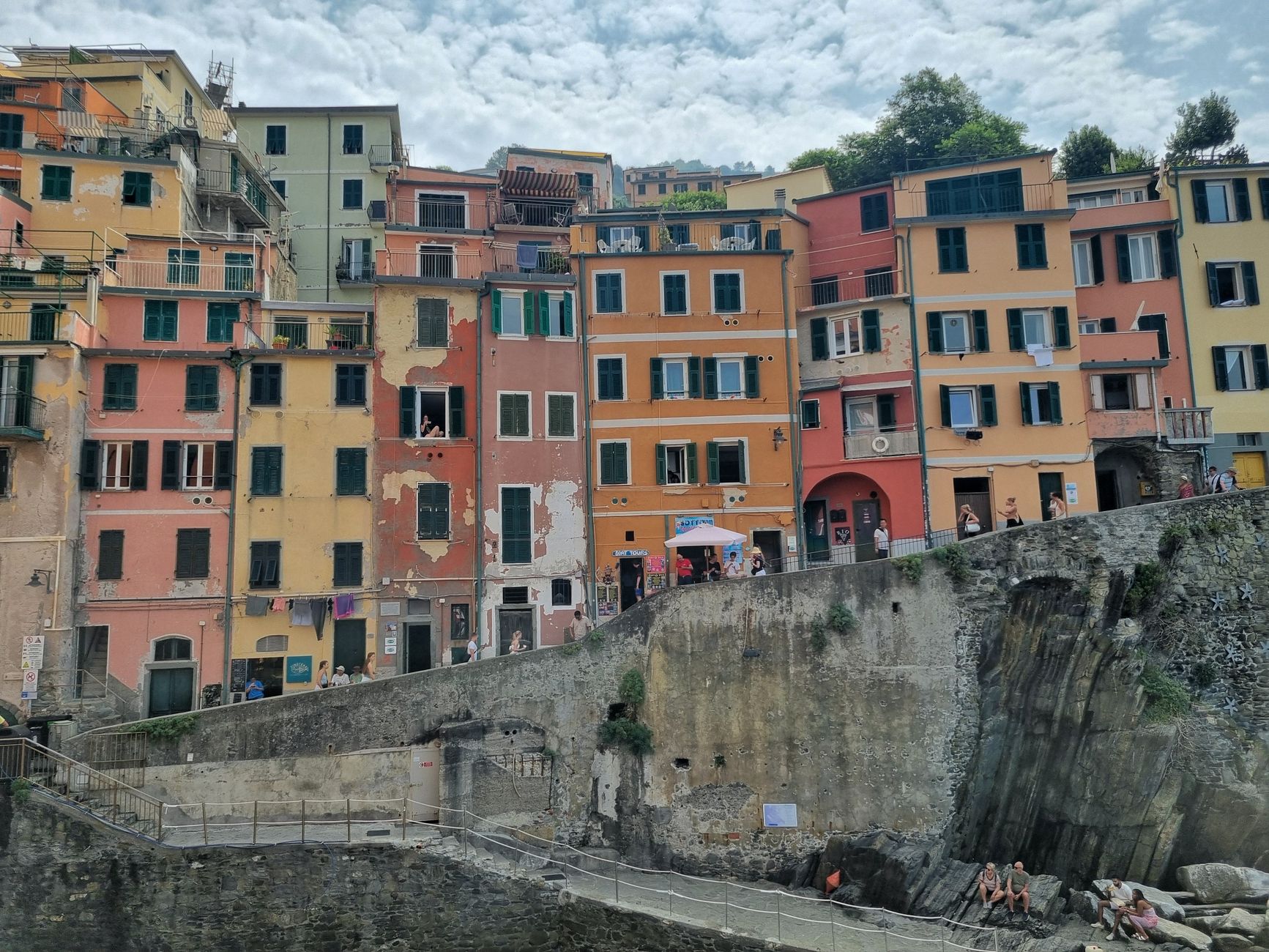
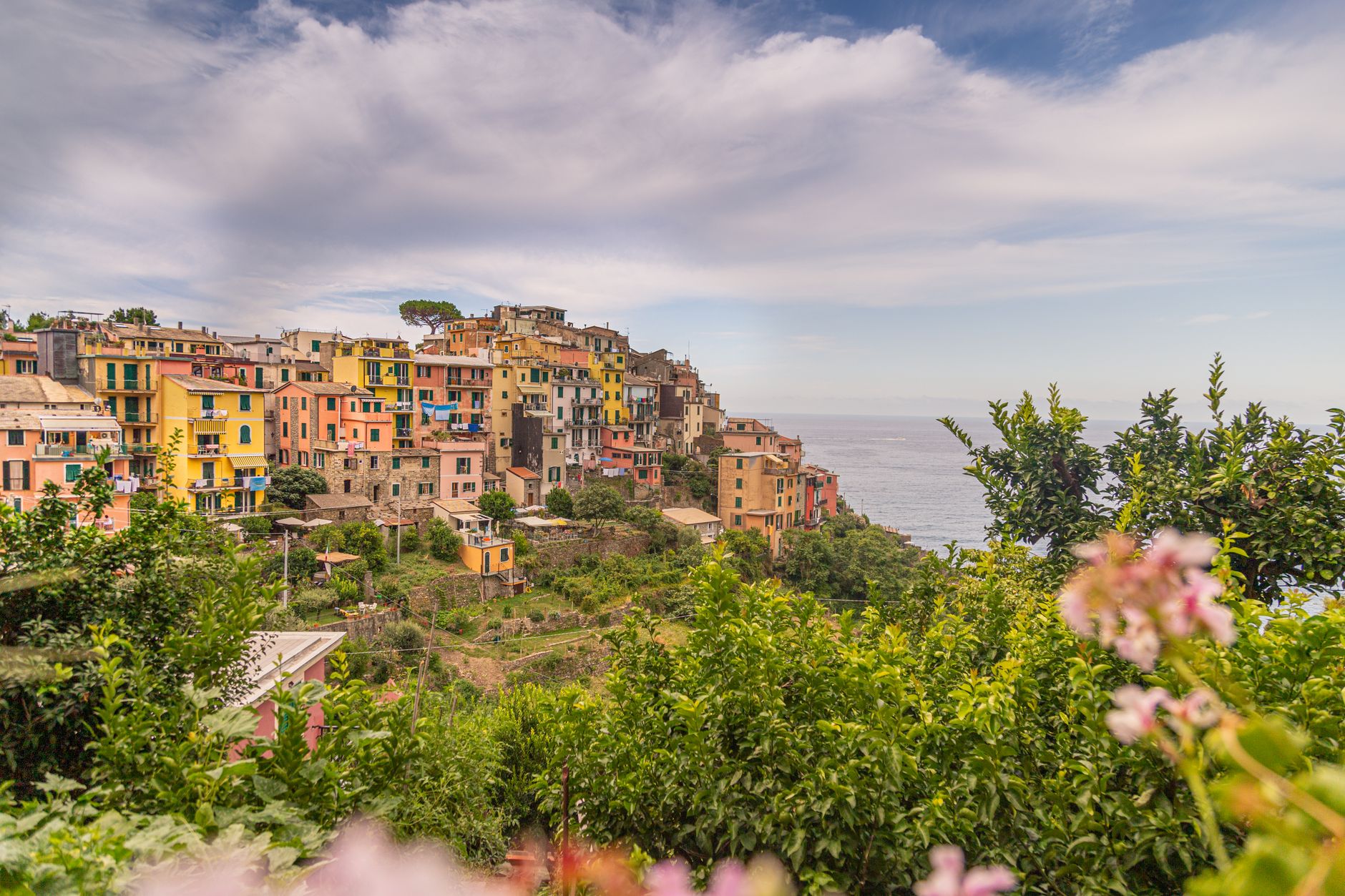
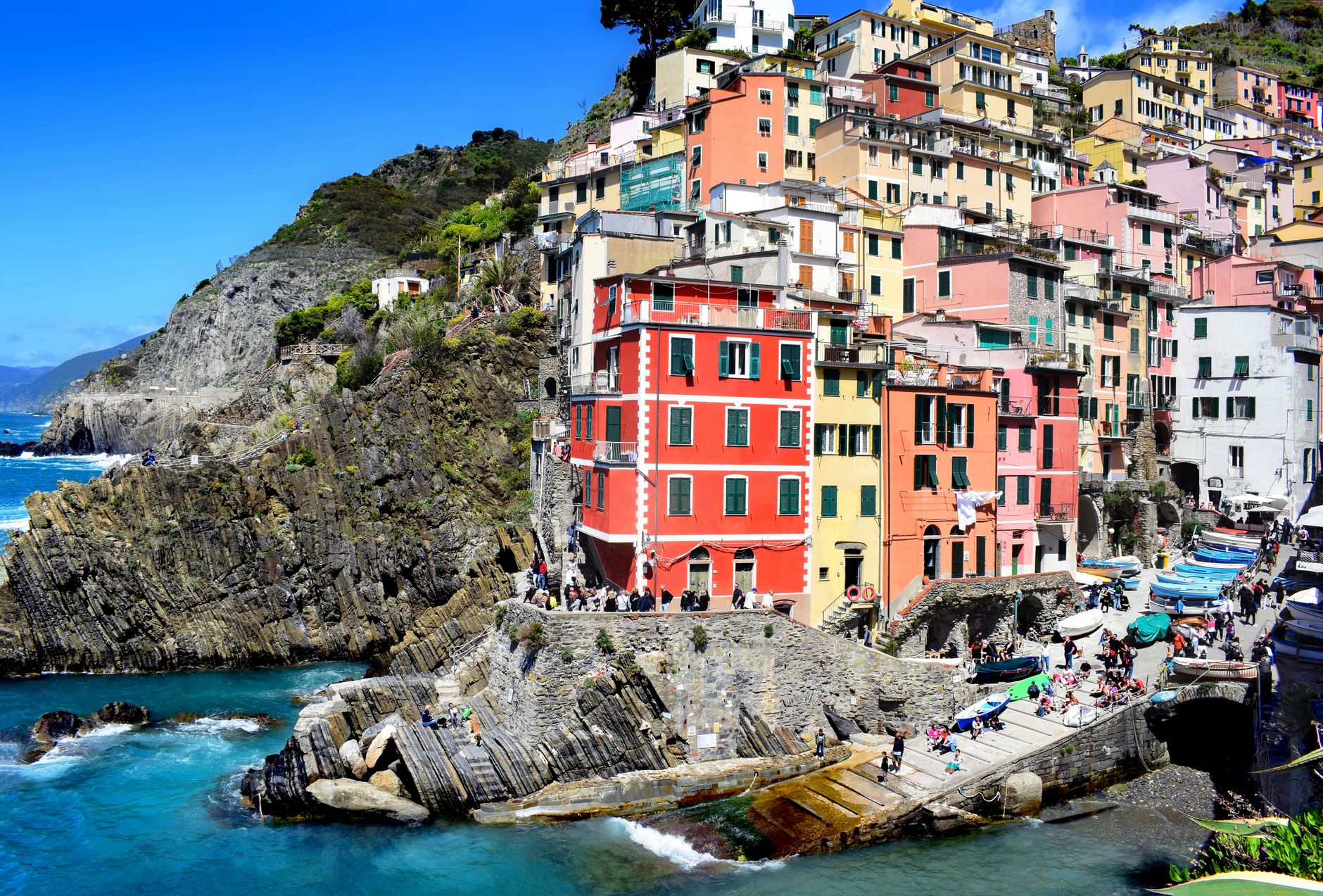
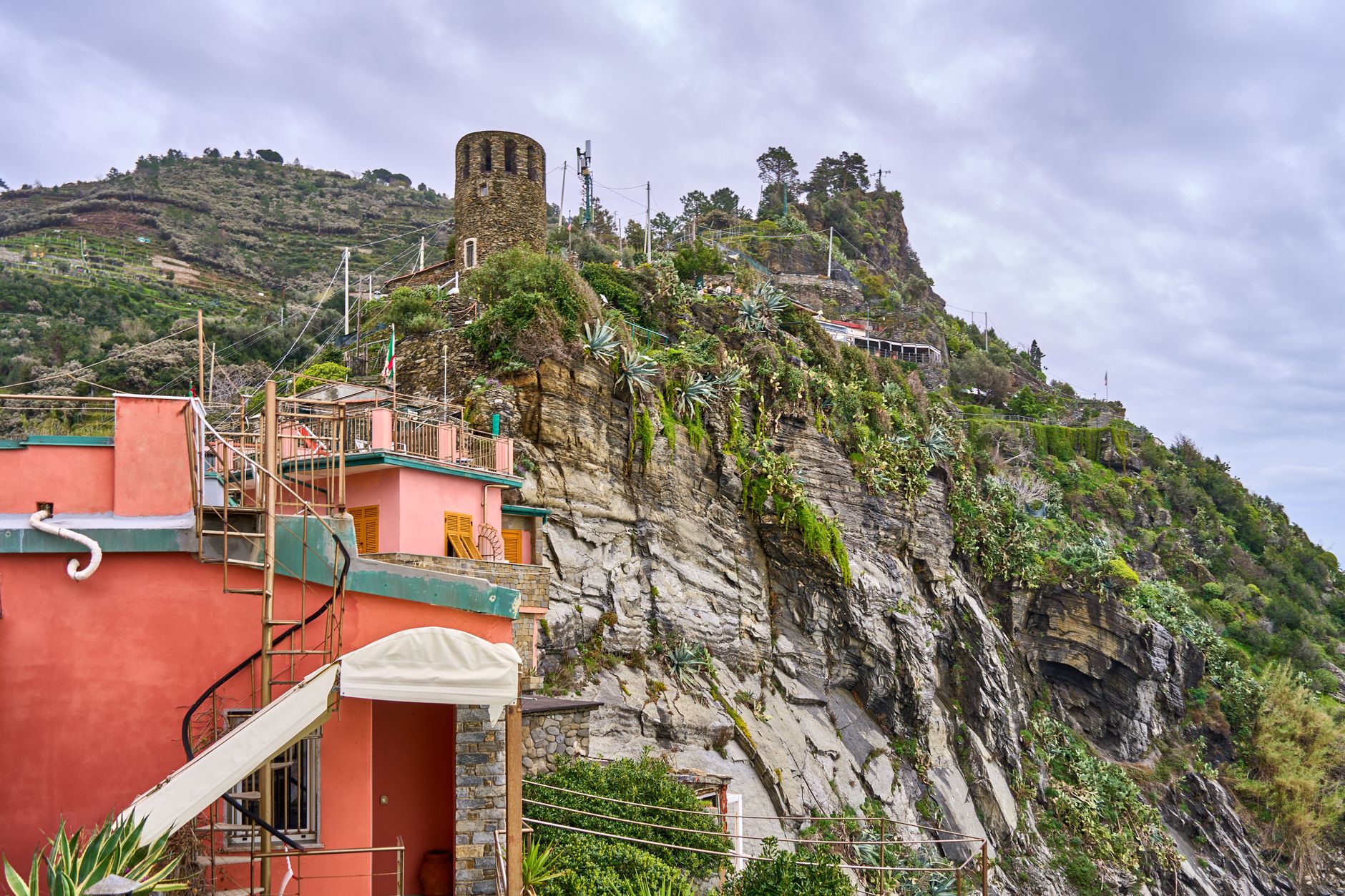
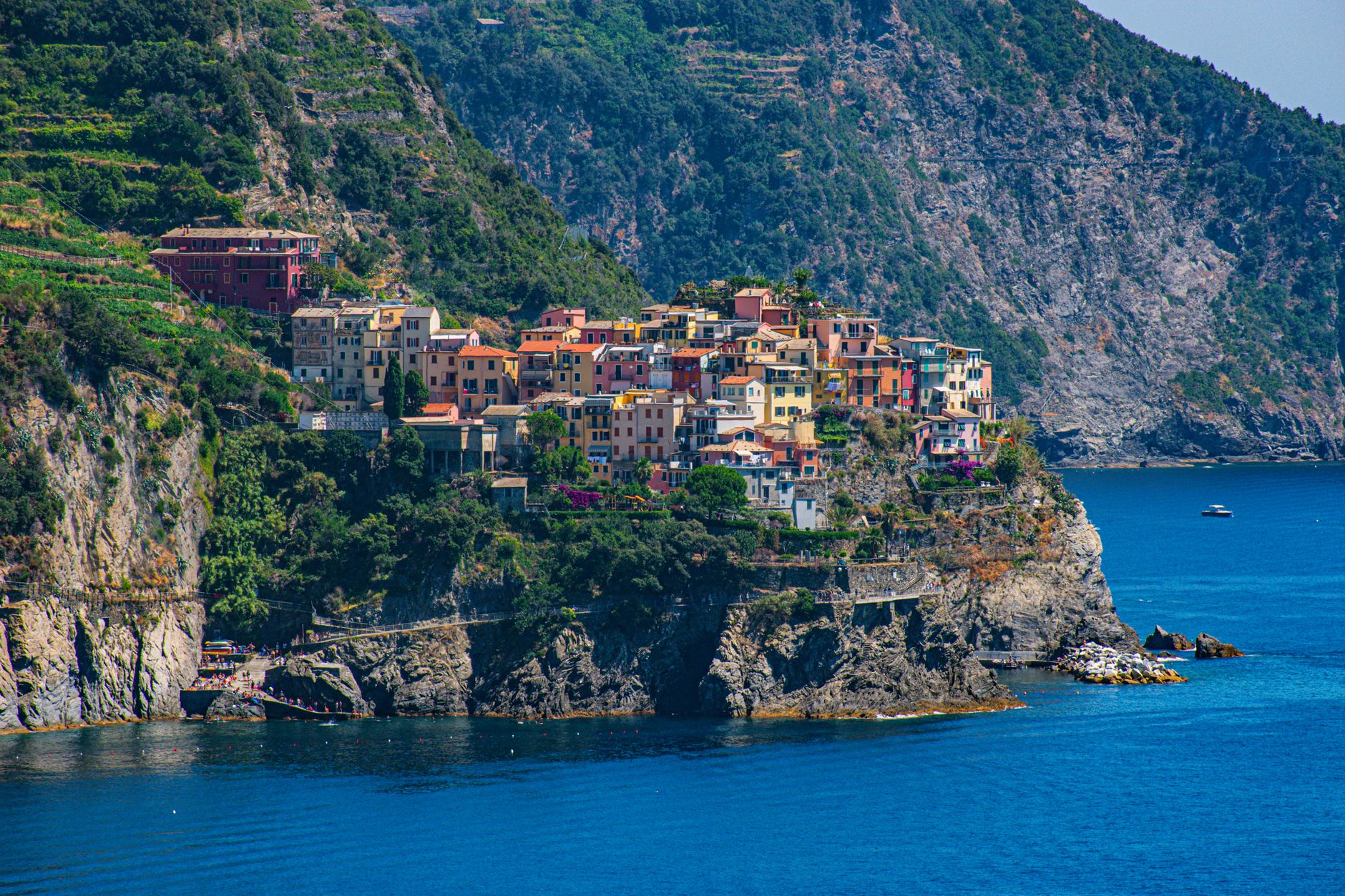
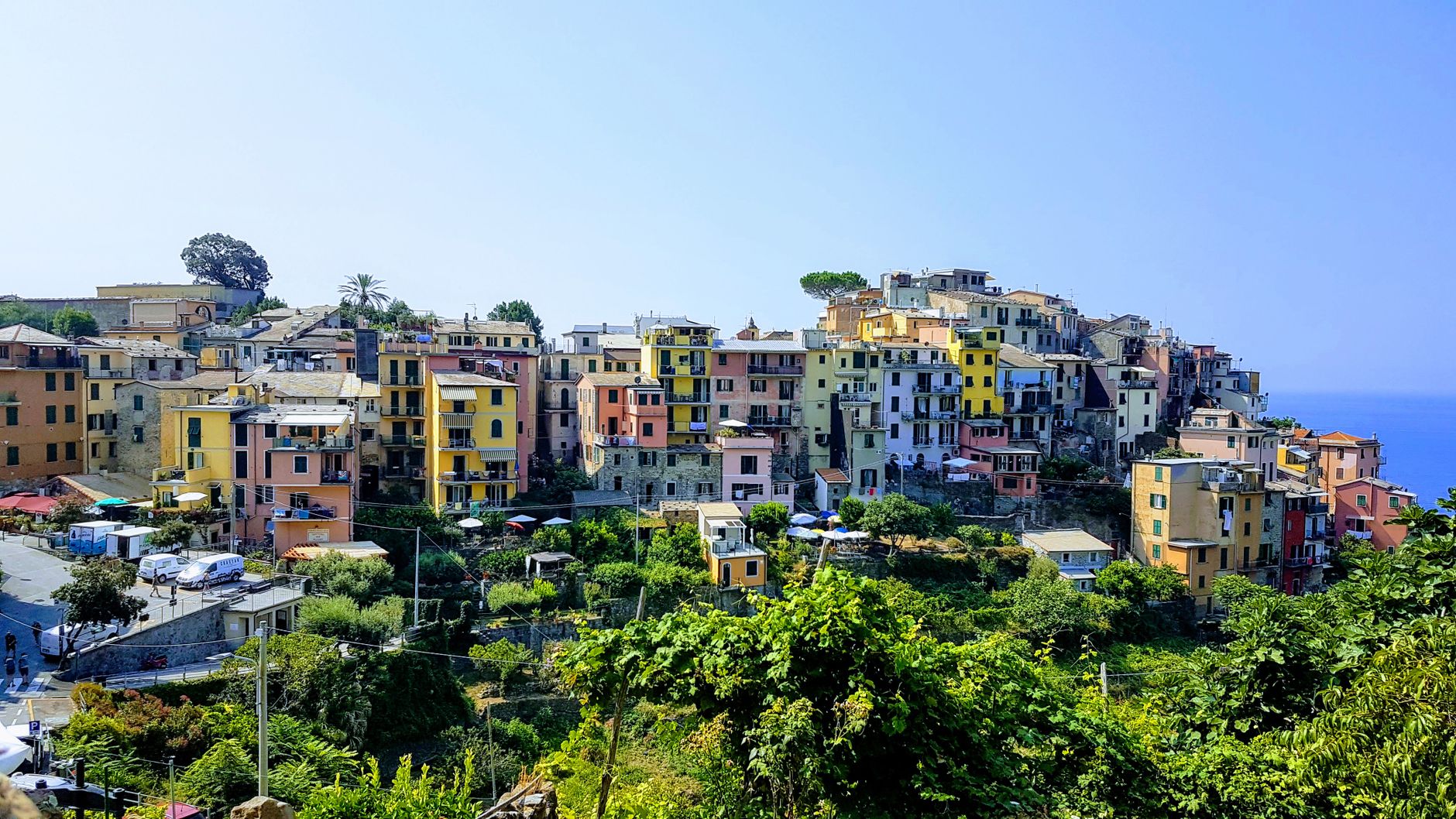
Of the five Cinque Terre villages, Corniglia is the one that sits on a clifftop rather than a harbour — there is no port, no ferry, no easy way in. You arrive by train and then climb 377 steps up the Lardarina staircase, or wait for the shuttle bus, and that friction alone keeps the crowds thinner than anywhere else along this coast. The reward at the top is a terrace cut into the rock where, on a clear day, you can pick out all four of the other villages strung along the Ligurian hillside.
With a population of around 150, the village runs along a single spine — Via Fieschi — ending at that cliff edge. There is not much to do here in the conventional sense, which is precisely the point.
💛 What travellers fall for
People who come back tend to mention the same things: arriving on the first train of the day before the shuttle starts running, climbing the Lardarina while the light is still low, and sitting at the terrace with coffee before anyone else appears. The organ festival at Chiesa San Pietro is worth timing a visit around if you can.
Experiences you don't want to miss


Deals in Corniglia
Book directly at the provider
How Corniglia came to be
The name Corniglia traces back to the Roman-era Gens Cornelia family, and the village appears in the historical record as early as 1244. By 1254 it had come under the control of the Fieschi family, allies of Pope Innocent IV, before passing to the Republic of Genoa in 1276. Pirates raided repeatedly enough that in 1556 the Republic built a fort and defensive walls — the ruins still sit in the upper part of the village.
The railway changed everything. When the Genoa–La Spezia line was completed on 24 October 1874, Corniglia's centuries of near-total isolation ended almost overnight. UNESCO recognised the entire Cinque Terre, Corniglia included, as a World Heritage Site in 1997.
Who and what shaped it
People who shaped it
Landmark buildings
See Corniglia in motion
Plan your visit
On the map
When to go
June and September are the most comfortable months — around 24°C, long sunshine hours, and sea temperatures warm enough to swim. August is hotter and more crowded; October turns wet, averaging over 200mm of rain across the month. Winter is quiet and mild by northern European standards, with daytime highs around 11°C, but many local businesses close.
Right now
Background & history adapted from Wikipedia (CC BY-SA) · specs from Wikidata (CC0) · weather from Open-Meteo · map data © OpenStreetMap contributors · photos from Wikimedia Commons / Unsplash with per-image credit. No third-party reviews or social posts reproduced.