
Consuegra
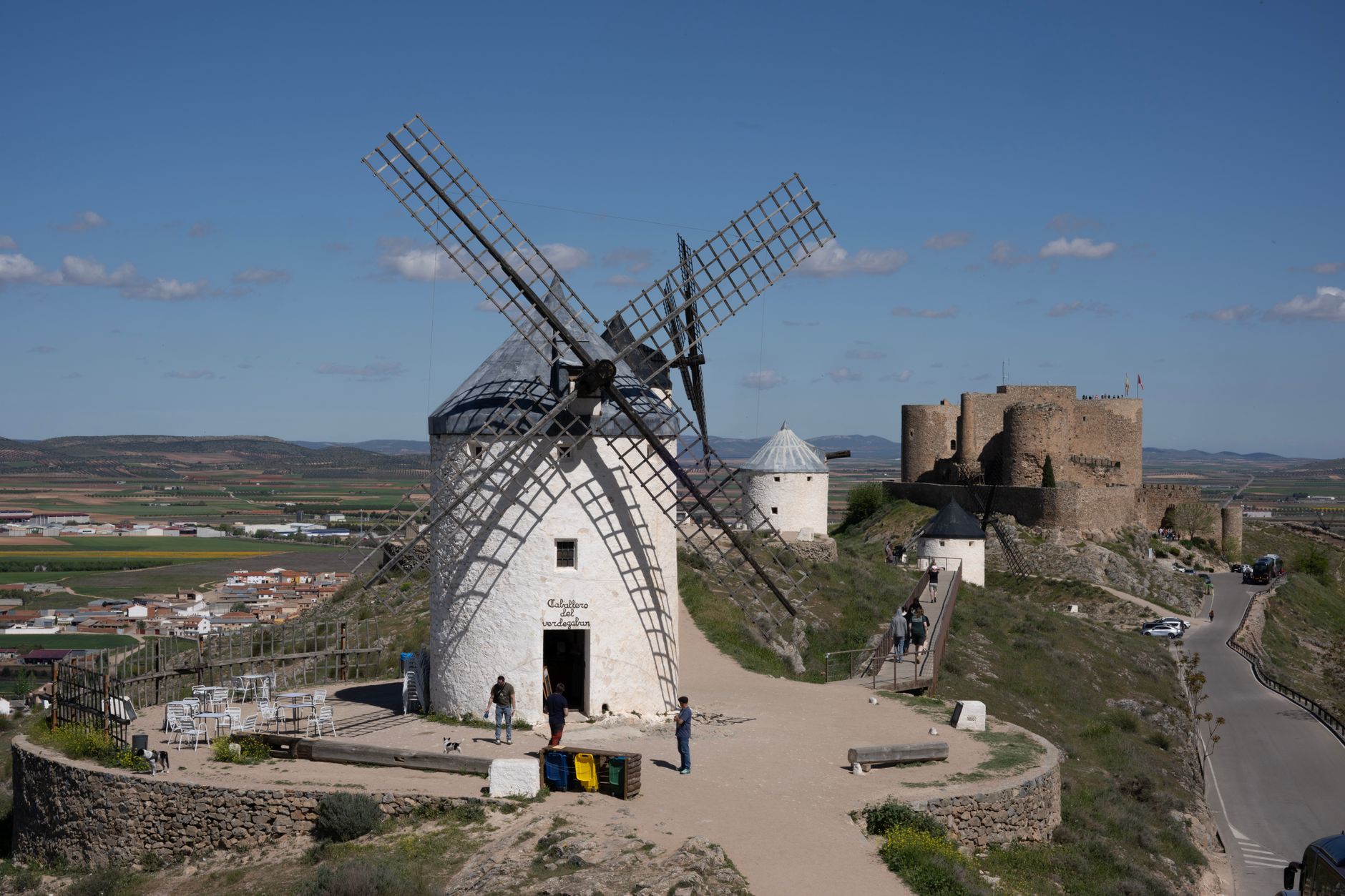
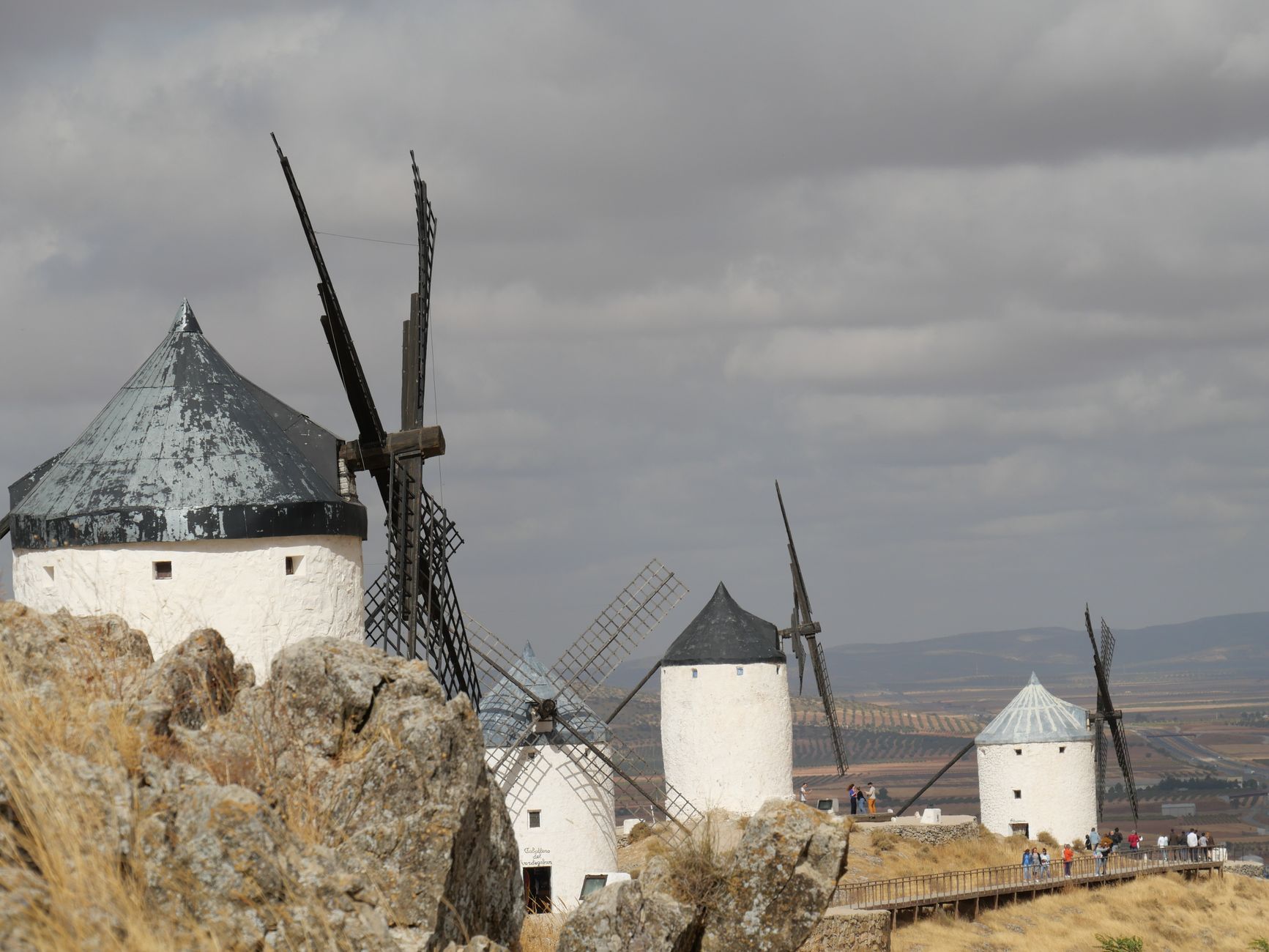
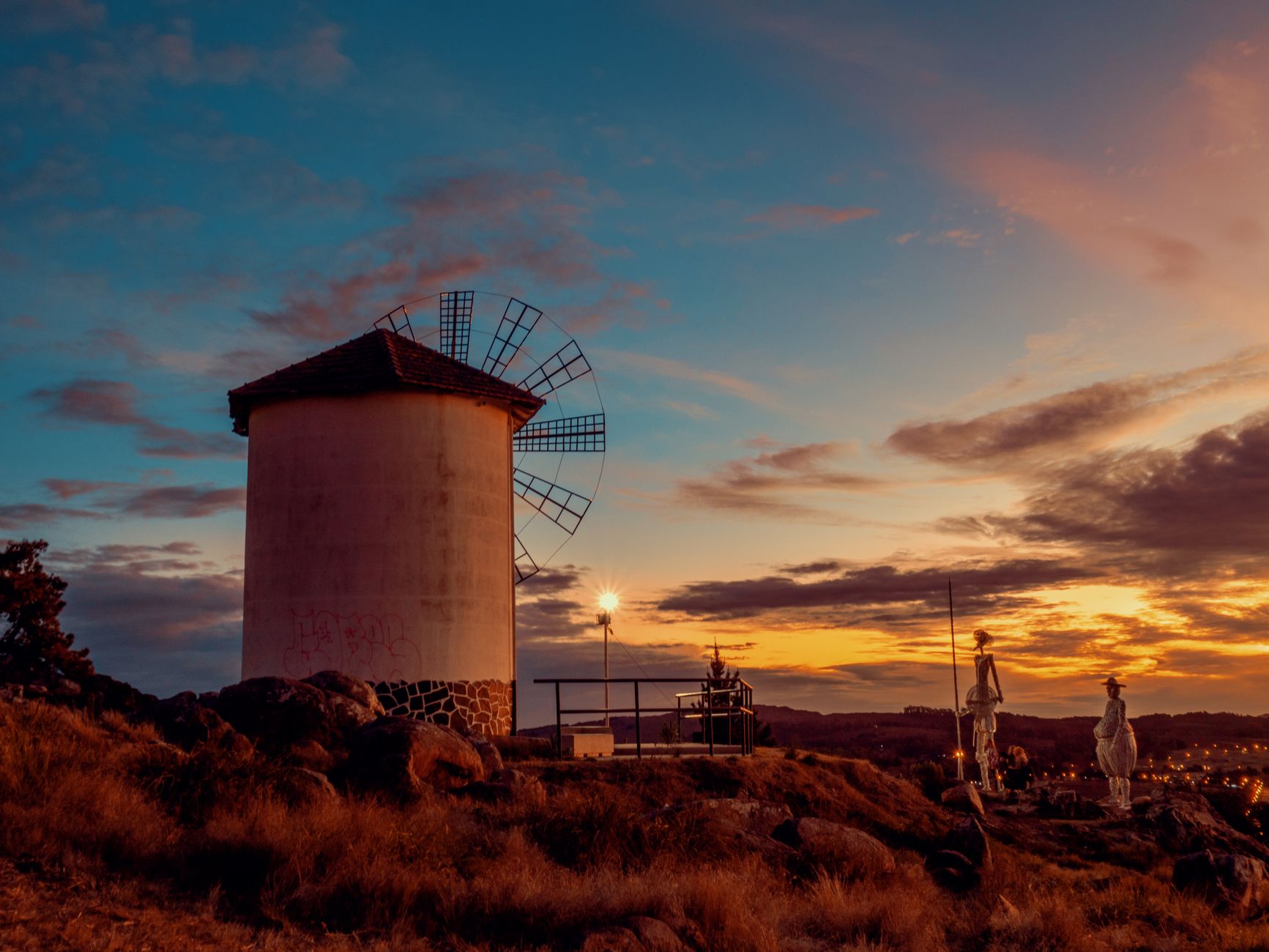
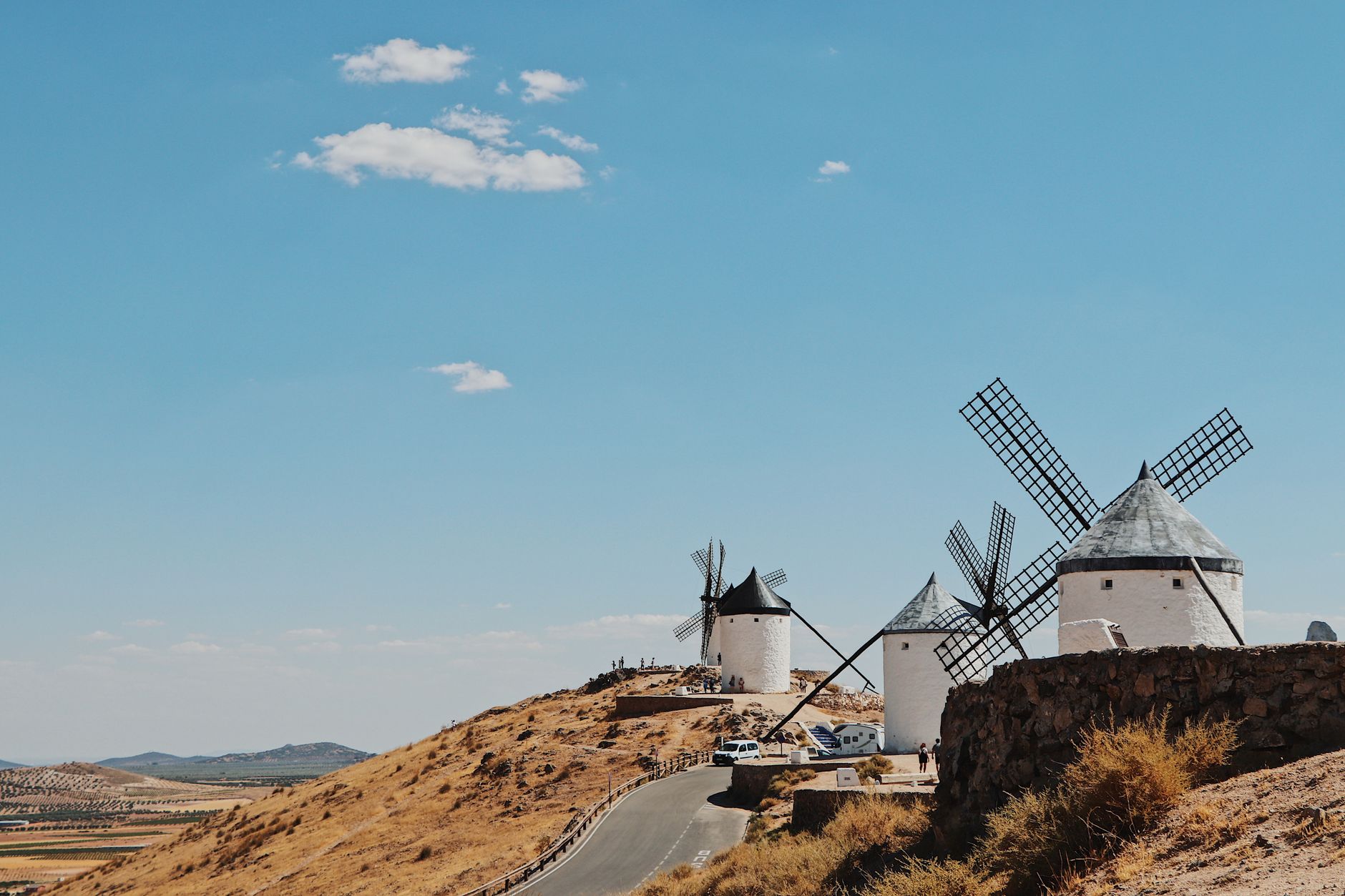
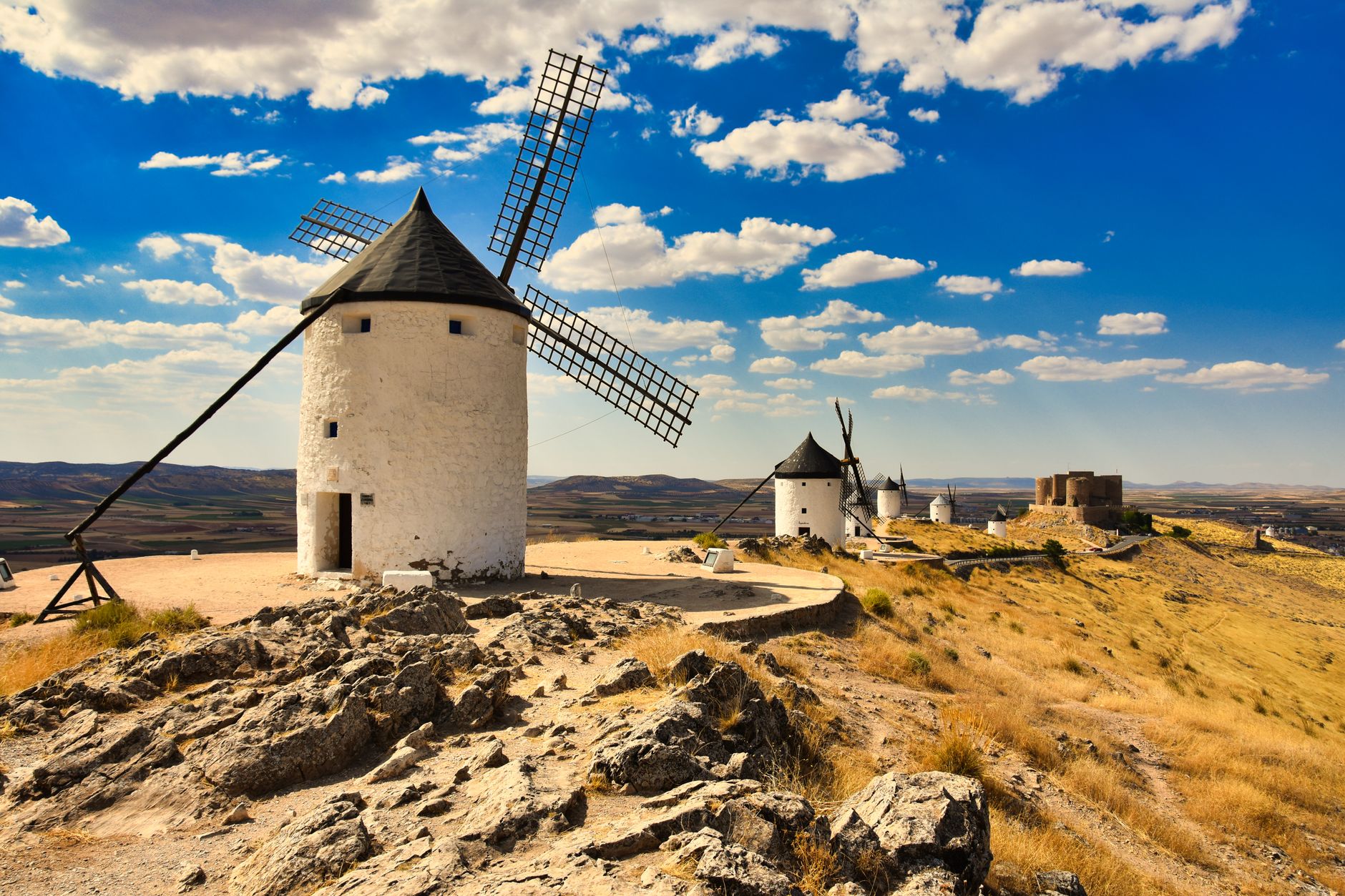
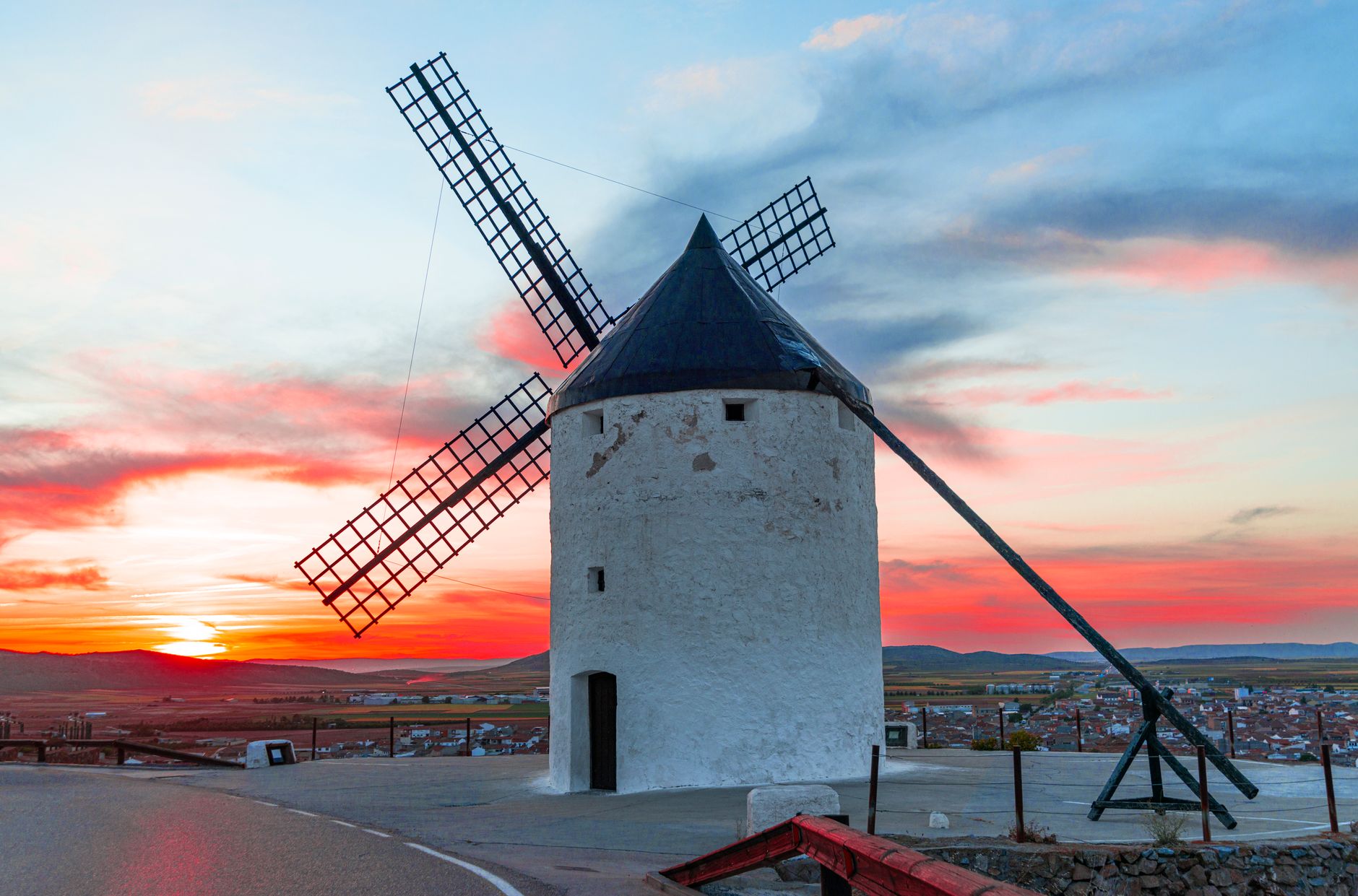
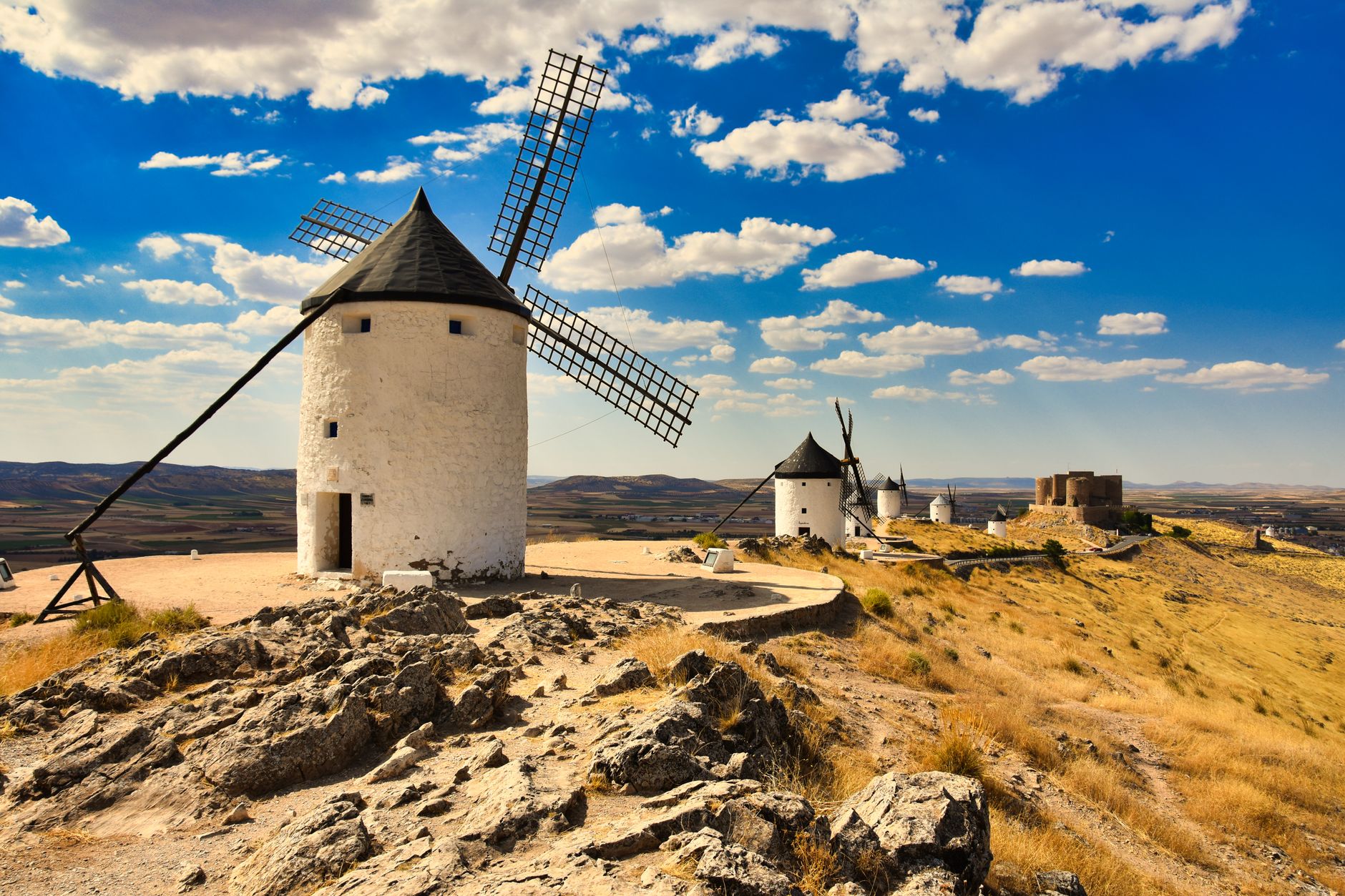
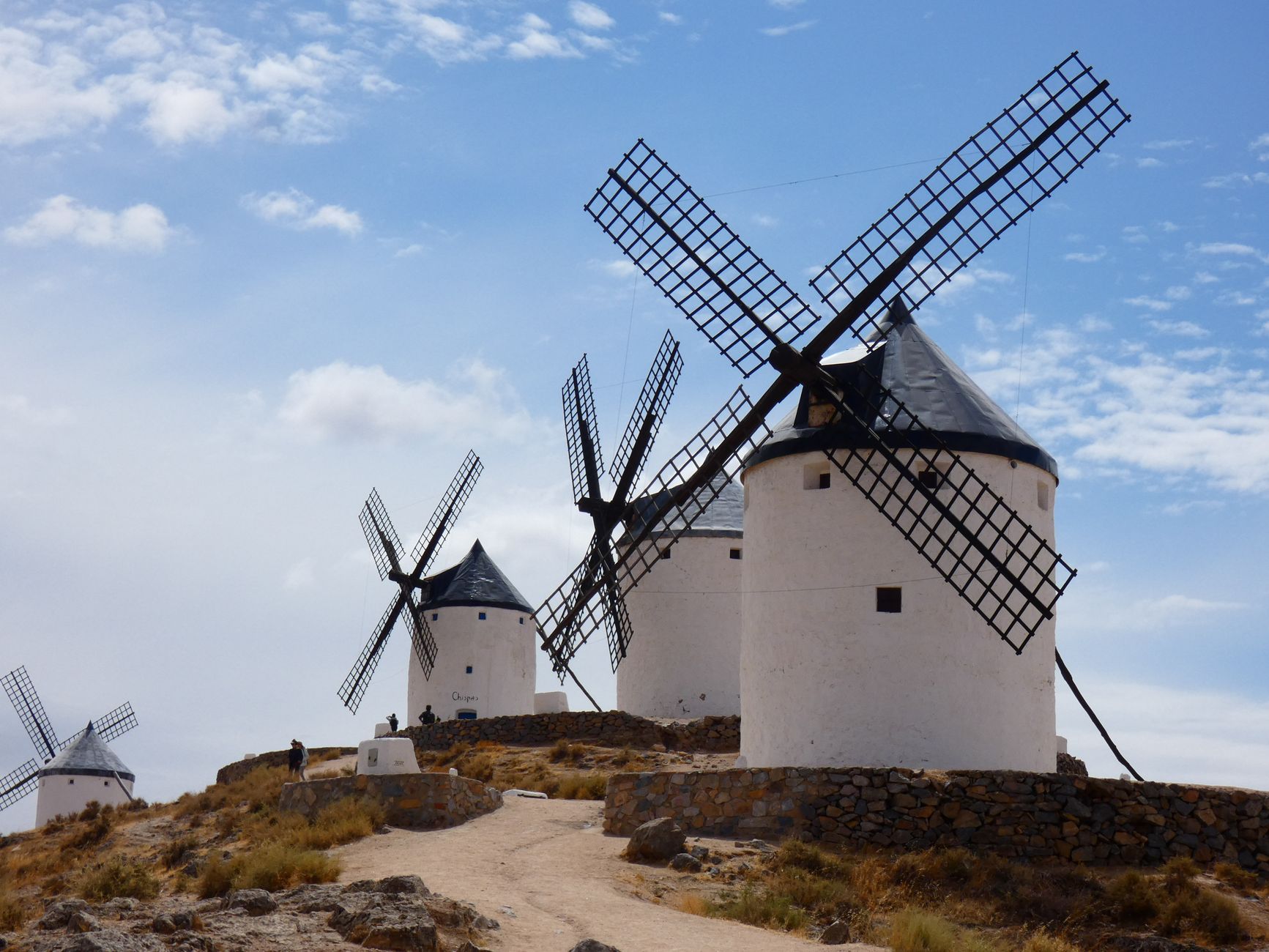
Twelve white windmills stand in a line along the ridge of Cerro Calderico, their sails turning or still depending on the wind, and below them the plain of La Mancha stretches out in every direction until it runs into the sky. This is the view that local tradition attached to Cervantes, though he never named Consuegra in Don Quixote — the association is an act of collective imagination that the town has quietly owned for centuries.
At the western end of the same ridge sits the castle, a tenth-century fortress that the Order of Saint John held from 1183, fought over repeatedly, and lost to French artillery during the Peninsular War. The town below is modest and unhurried, built in stone and brick, with two Mudéjar churches and a seventeenth-century town hall on the Plaza de España.
💛 What travellers fall for
People who come back tend to time it for a morning when Molino Rucio is grinding — the mechanism runs on certain days and it changes the place from a viewpoint into something that actually works. The castle's four semi-circular towers repay a slow circuit; the guided tour (€8) covers corners the general admission route doesn't reach.
Experiences you don't want to miss




Deals in Consuegra
Book directly at the provider
How Consuegra came to be
The hill was occupied before Rome arrived — the Carpetani built a fortified settlement on Cerro Calderico, and the Romans later promoted the town of Consabura to municipium status under the Flavian dynasty, even damming the Amarguillo River to manage its water supply. In 1097, the Almoravid army under Yusuf ibn Tashfin defeated a Castilian force here; Diego Rodríguez, son of El Cid, died in that battle. The castle changed hands more than once before Alfonso VIII donated it in 1183 to the Military Order of Saint John of Jerusalem.
The Order brought in windmills modeled on Dutch designs, and the mills ground wheat on this ridge from the sixteenth century until the early 1980s. French troops occupied the castle during the Peninsular War and damaged it badly on their retreat in 1813. A different kind of disaster struck in 1891, when the Amarguillo flooded and killed 359 people in a single day — a number that still registers in the town's memory.
Who and what shaped it
People who shaped it
Landmark buildings
See Consuegra in motion
Plan your visit
On the map
When to go
Summers on the Castilian plain are hot and dry, with temperatures regularly above 35°C; the ridge catches whatever breeze there is, which makes the windmill walk more bearable than the town below. Spring and autumn are the most comfortable seasons, with mild days and clear light that does justice to the view. Winters are cold and sometimes sharp, but the ridge is rarely crowded.
Right now
Background & history adapted from Wikipedia (CC BY-SA) · specs from Wikidata (CC0) · weather from Open-Meteo · map data © OpenStreetMap contributors · photos from Wikimedia Commons / Unsplash with per-image credit. No third-party reviews or social posts reproduced.