
Columbia Heights
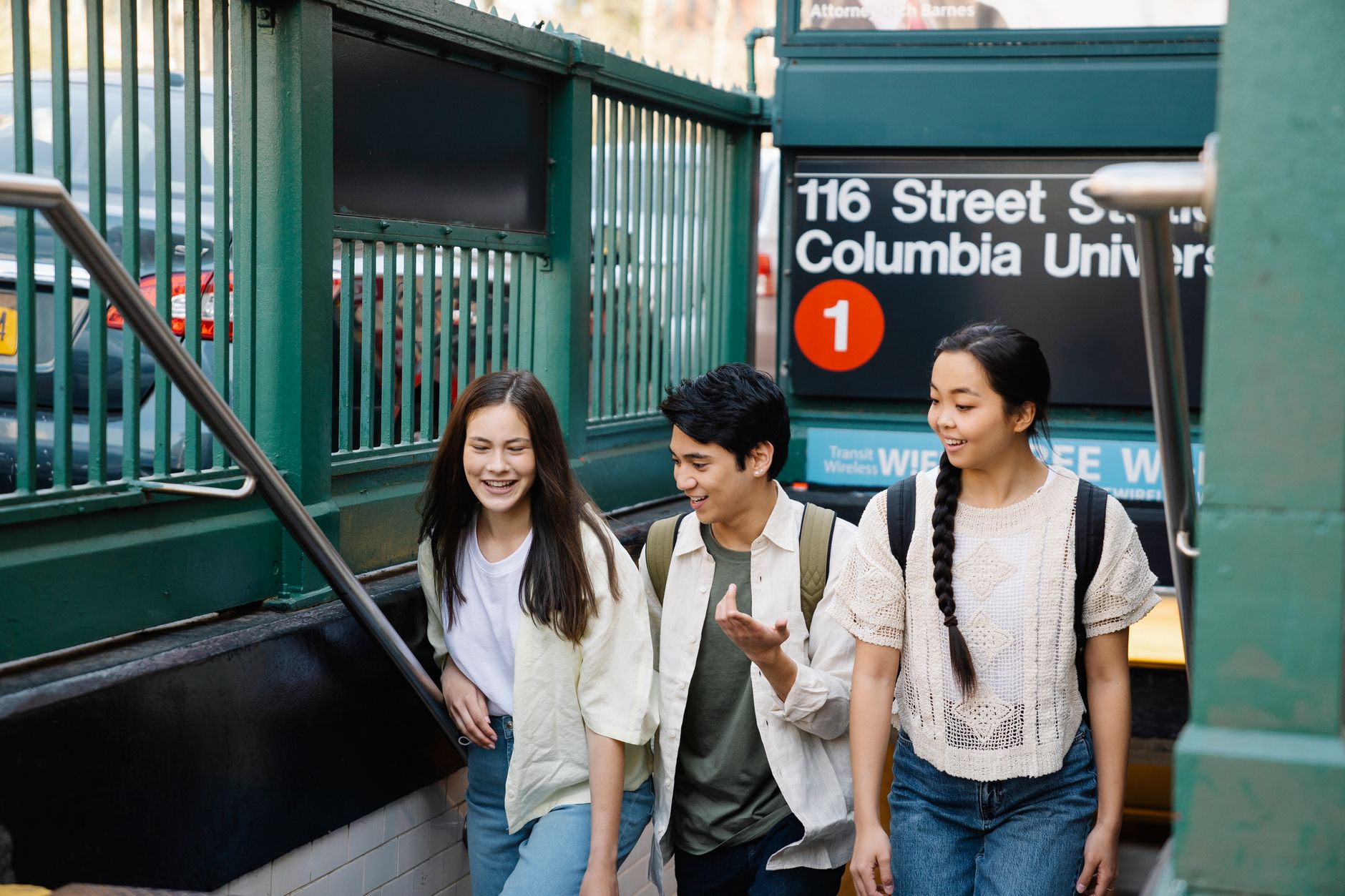
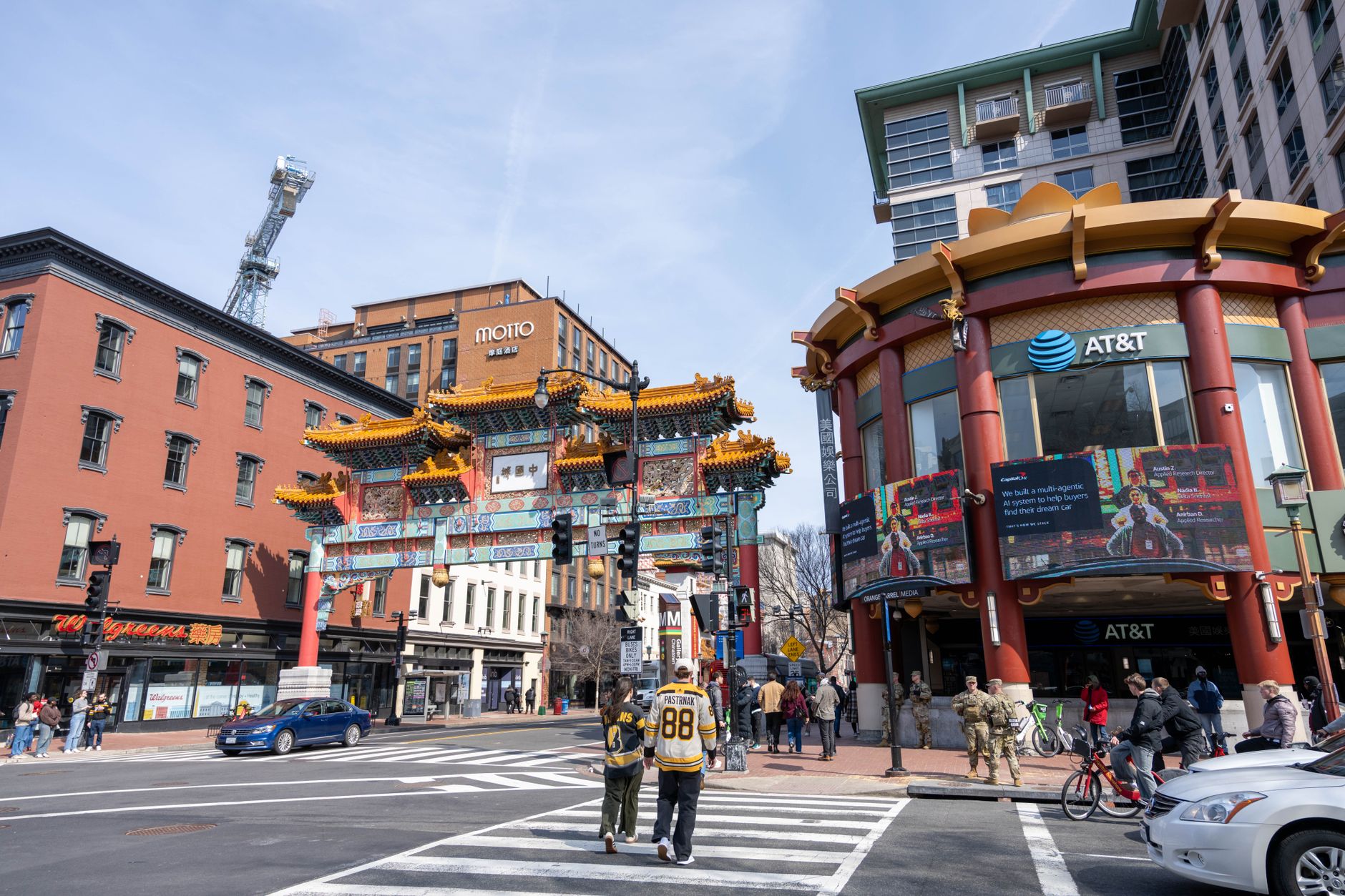
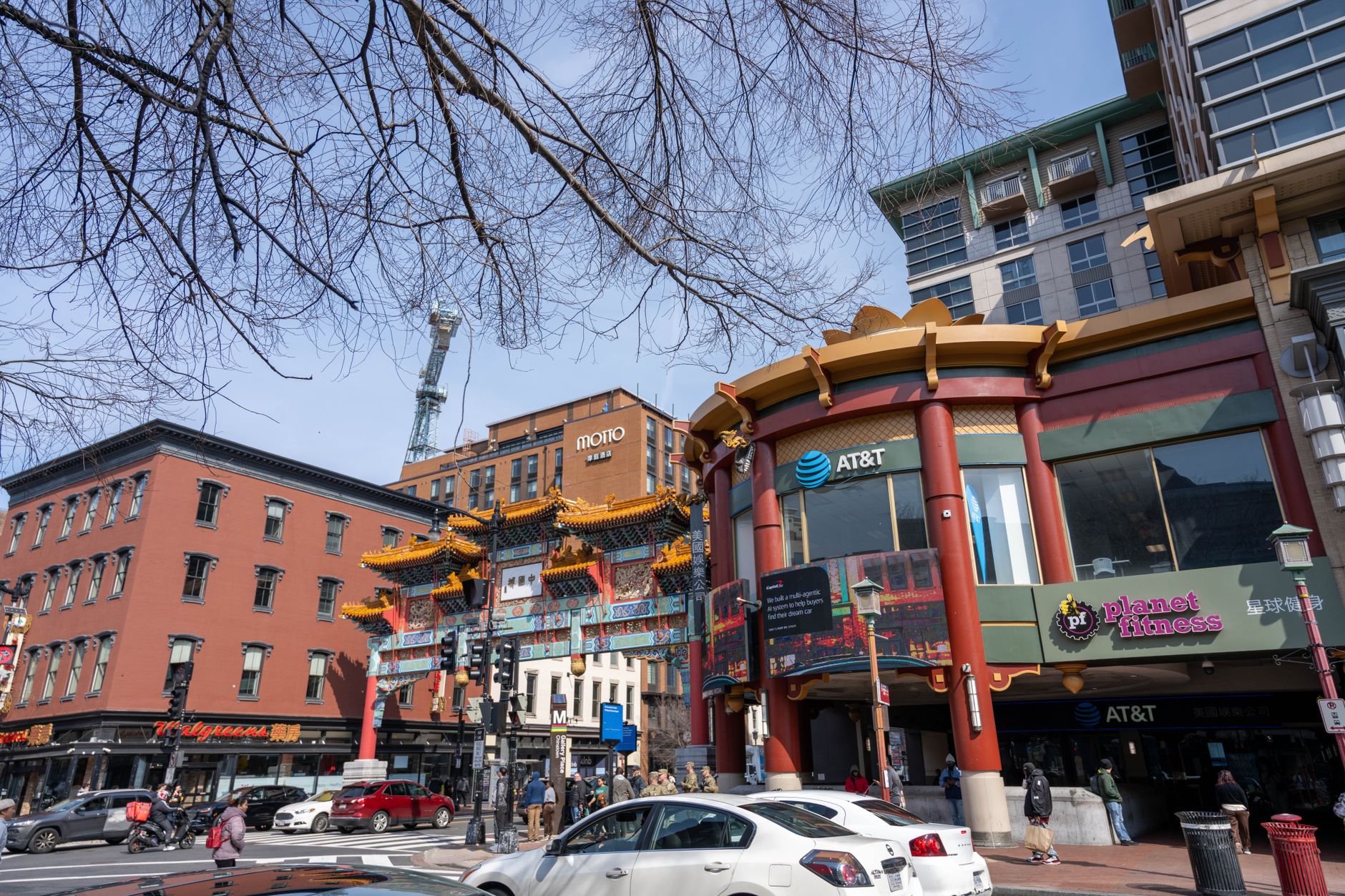
Columbia Heights sits on a genuine hill — the name isn't decorative — and the grade you feel climbing from the Metro toward 16th Street tells you something about how the neighborhood has always worked: it takes a little effort, and it rewards it. At 57,000 residents per square mile, this is one of the densest corners of D.C., and the sidewalks on a Saturday morning confirm it. Salvadoran bakeries, a Lao kitchen doing jungle-style dishes, a Filipino restaurant with 24 seats and no reservations — the block-by-block mix isn't curated, it accumulated.
The commercial spine is 14th Street, wide and unapologetically retail. But a block west, 11th Street moves at a different pace — smaller storefronts, longer conversations at the counter. And up on 16th, early-20th-century embassy buildings with turrets and stained glass remind you that this stretch once aimed at something grander.
💛 What travellers fall for
People who come back tend to time it for Sunday afternoon in Meridian Hill Park, when the drum circle — a tradition running some 40 years — fills the lower terraces. They also learn fast that Bad Saint doesn't take reservations, so they arrive when the door opens. Thip Khao on 14th is the other standing plan: sticky rice, Lao-style, chef Seng Luangrath at the helm.
Deals in Columbia Heights
Book directly at the provider

How Columbia Heights came to be
The land began as the Holmead family estate, called Pleasant Plains, then passed through several hands before Senator John Sherman purchased a parcel in 1881 and named his development Columbia Heights — a nod to Columbian College, whose first building had gone up nearby in 1822. The streetcar extension arrived in 1914 and the neighborhood filled quickly with federal workers and a middle class that wanted distance from downtown without losing access to it.
The 1940s brought a demographic shift when Cardozo High School was designated a school for Black students, and the neighborhood became predominantly African American — home, over the decades, to Duke Ellington, Marvin Gaye, and the writer Jean Toomer. On April 4, 1968, the night of Martin Luther King Jr.'s assassination, fires along the 14th Street corridor destroyed 60 percent of local businesses and damaged a fifth of the housing stock. Recovery took a generation. The Metro station opened in September 1999; the DC USA mall followed in 2008. J. Willard Marriott, for what it's worth, got his start here too — an A&W Root Beer stand on 14th Street, 1927.
Who and what shaped it
People who shaped it
Landmark buildings
See Columbia Heights in motion
Plan your visit
On the map
When to go
Washington D.C. summers are humid and hot, which makes the shade trees in Meridian Hill Park earn their keep; spring and fall are the most comfortable seasons for walking the hills. Winters are mild by northern standards but genuinely cold, and the farmers market closes out by December.
Right now
Background & history adapted from Wikipedia (CC BY-SA) · specs from Wikidata (CC0) · weather from Open-Meteo · map data © OpenStreetMap contributors · photos from Wikimedia Commons / Unsplash with per-image credit. No third-party reviews or social posts reproduced.