
Ciudad de las Artes y las Ciencias
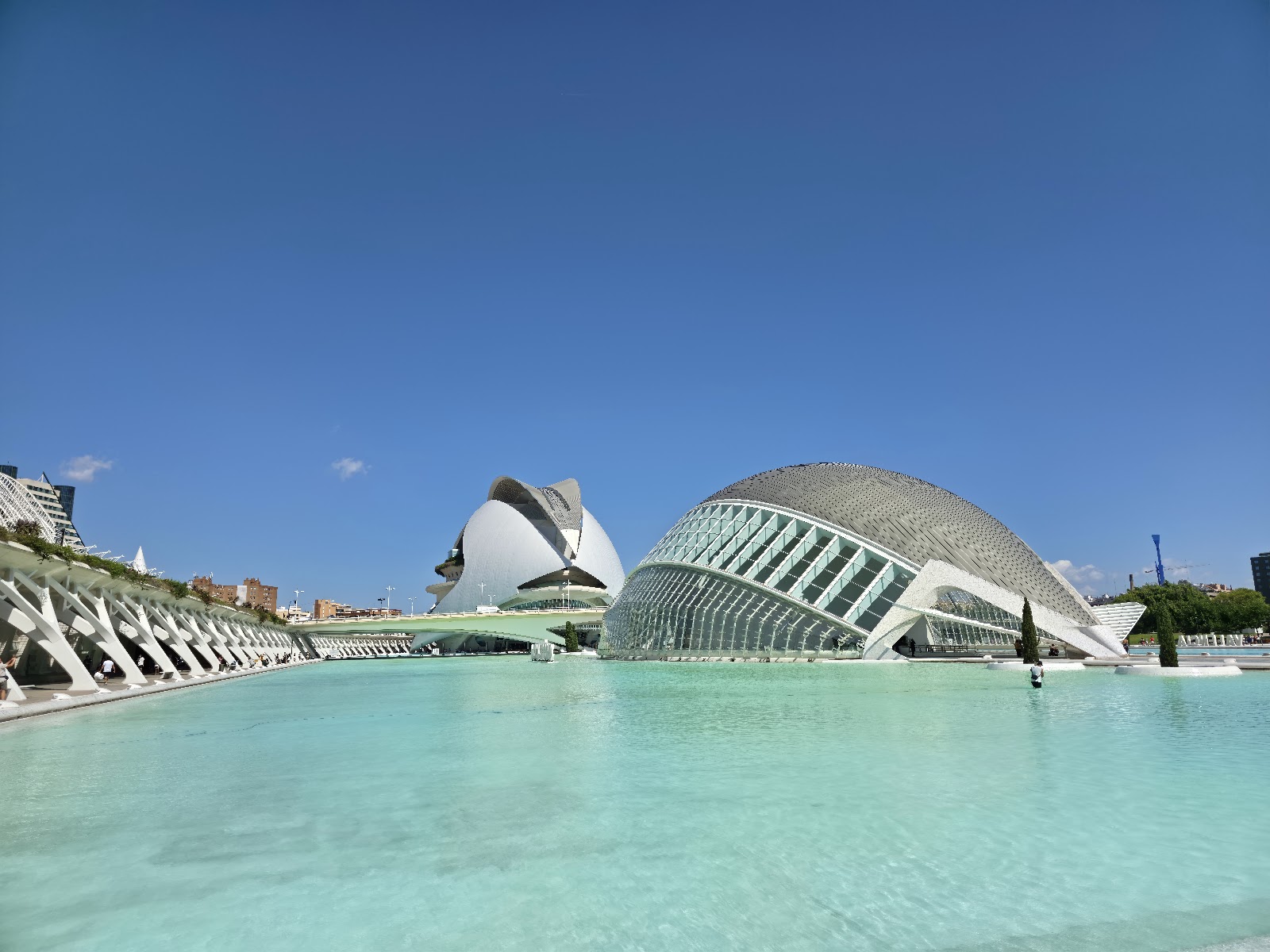
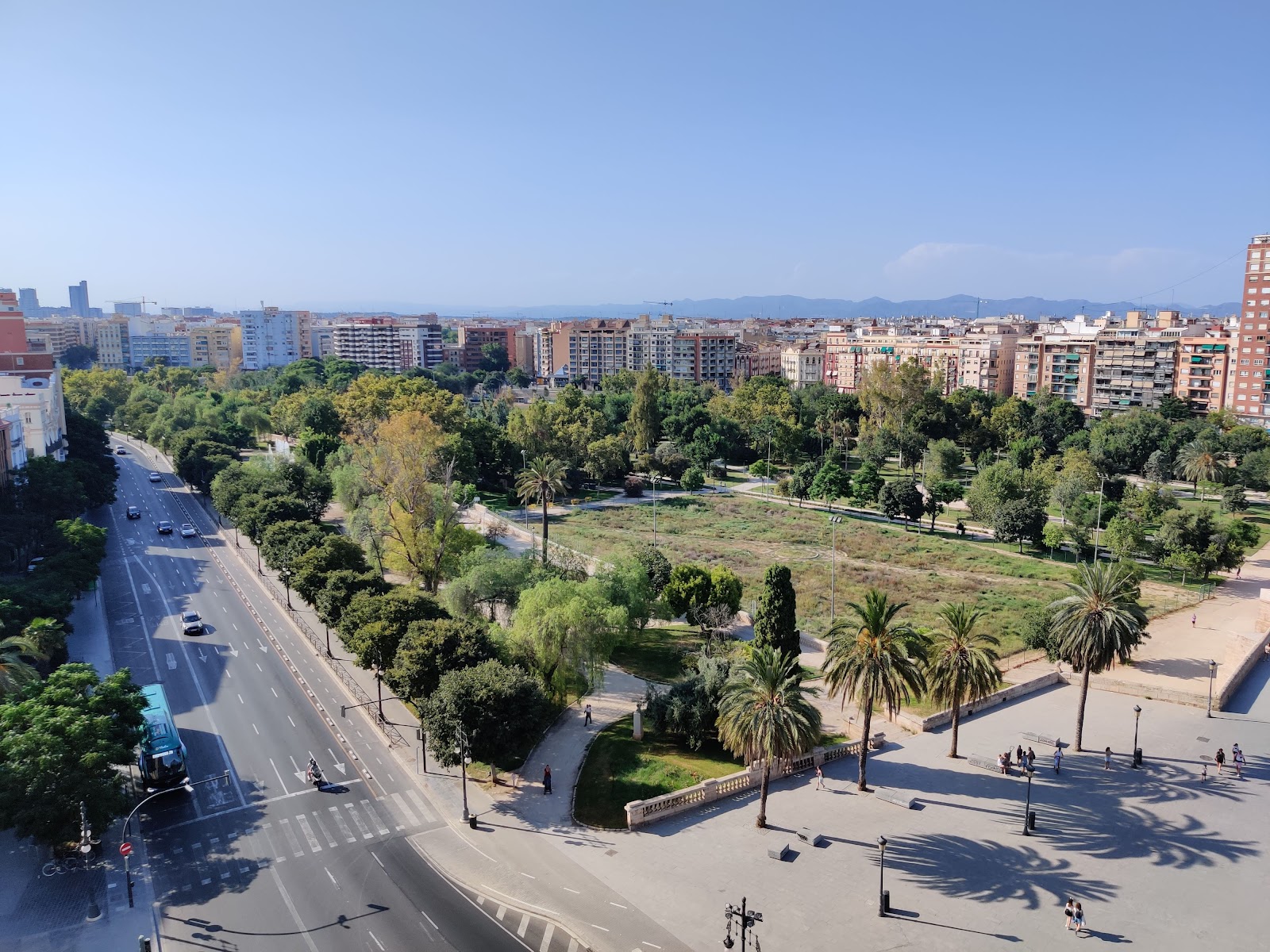
The Ciudad de las Artes y las Ciencias occupies the southeast end of the old Turia riverbed — a dry channel that runs through Valencia like a scar from the catastrophic 1957 flood that prompted the river's rerouting. Where water once ran, Santiago Calatrava and Félix Candela drew a complex of six structures across 350,000 square metres of white concrete and still reflective pools.
L'Hemisfèric came first in 1998, its IMAX dome shaped like a lidded eye floating in 24,000 square metres of water. The opera house, the science museum, Europe's largest oceanarium — each arrived in turn, the last piece landing in 2009, the whole thing costing roughly three times its original estimate.

💛 What travellers fall for
Return visitors tend to split the complex across two days rather than one. The Oceanogràfic alone runs to four hours if you take it seriously, and the Science Museum adds another three. Most people buy the multi-day ticket, do the Hemisfèric screening on arrival — 45 minutes, a good way to orient yourself — then let the afternoon slow down at L'Umbracle, which costs nothing and smells of rosemary and lavender.
The story behind Ciudad de las Artes y las Ciencias
The idea came from Joan Lerma, then president of the Generalitat Valenciana, who in the late 1980s pushed for a scientific and cultural centre that could serve the whole region. The operating company was formally founded in July 1996, and construction started the same month. L'Hemisfèric opened on 16 April 1998; the Science Museum followed in November 2000, the Oceanogràfic in February 2003.
The Palau de les Arts Reina Sofía — 37,000 square metres, more than 70 metres tall — was inaugurated on 9 October 2005, Valencian Community Day. Félix Candela, who co-designed the project, died in 1997 and did not see most of it finished. The original three-building budget was set at 300 million euros in 1991; the final cost of the expanded complex ran to roughly three times that figure.

Good to know
Metro line 10 stops at Ciutat Arts i Ciències-Justícia (open since 2022), or take EMT buses 35, 95, or 13. Walking from the old town through the Turia gardens takes about 40 minutes. The complex opens every day of the year; the Museum and Oceanogràfic both open at 10:00. Multi-day tickets don't allow re-entry to the same building on different days.
The complex sits in the open, so summer afternoons — June through August — are genuinely hot and largely shadeless between buildings. Spring and autumn give you the best light on the white facades without the midday heat. The pools catch the sky on calm mornings in a way that doesn't last once the crowds arrive.
Where is Ciudad de las Artes y las Ciencias?
More tickets & tours for Ciudad de las Artes y las Ciencias
Book directly at the provider
What travellers say about Ciudad de las Artes y las Ciencias
Even if you don't go inside the museums, the surrounding gardens and outdoor areas are absolutely spectacular. Walking around the massive blue pools and the iconic white buildings makes you feel like you've stepped into the future. It's a fantastic, wide-open space for taking photos, having a relaxing walk, or just enjoying the architecture. A beautifully designed area that is completely free to wander around!
We walked from the cruise port to old town. In hindsight it would be better to catch a taxi and start your walk here. Modern architecture in parkland setting. Walk from here to old town via the park. Beautiful!
An absolutely beautiful place with so much to see. The architecture is stunning and makes the whole complex feel unique and special. It’s a huge area, so you can easily spend hours just walking around and exploring. The mix of museums, open spaces, and water features creates a really nice atmosphere. Definitely a must-visit if you’re in the city
The City of Arts and Sciences is an amazing place that looks like something from the future. The architecture is truly unique — the buildings look almost like space structures. Walking around here feels like visiting another planet. It’s one of the most interesting and impressive places in Valencia. Definitely one of the best spots in the city and a must-visit for anyone coming to Valencia. Highly recommended!
The City of Arts and Sciences (Ciudad de las Artes y las Ciencias) in Valencia is a breathtaking masterpiece of modern architecture that feels like a portal into the future. Designed primarily by Santiago Calatrava, this sprawling cultural complex is an absolute must-visit, whether you're a science geek, an art lover, or just someone who appreciates a stunning photo opportunity. Highlights of the Complex L'Hemisfèric: Shaped like a giant eye, this building houses an IMAX cinema and planetarium. Its reflection in the surrounding turquoise pools is iconic. Museu de les Ciències: An interactive science museum where the motto is "Forbidden not to touch." It’s housed in a structure resembling a whale skeleton. L'Oceanogràfic: Europe’s largest aquarium, featuring distinct marine ecosystems and an incredible underwater tunnel. Palau de les Arts: A majestic opera house that looks like a futuristic helmet. The Experience Walking through the complex is free and arguably the best part. The contrast between the stark white concrete, the deep blue tiles, and the shallow water pools creates a serene, otherworldly atmosphere. While the individual museum tickets can be pricey, the Umbracle—a landscaped walkway with local plant species—offers a lovely shaded stroll for free. Pro-tip: Visit at sunset. As the sky turns orange and the buildings light up, the entire area transforms into a sci-fi dreamscape. It’s the perfect blend of Valencia’s historical charm and its ambitious vision for the future. Don’t forget your camera!
More of Valencia
Discover where to stay, what to do and the best deals for your trip.
Explore Valencia →More attractions in Valencia
All of Valencia →
Background adapted from Wikipedia (CC BY-SA) · map data © OpenStreetMap contributors · ratings & place photos via Google · other photos with per-image credit. Ticket links may earn us a commission at no extra cost to you.