
Cité de l'Espace
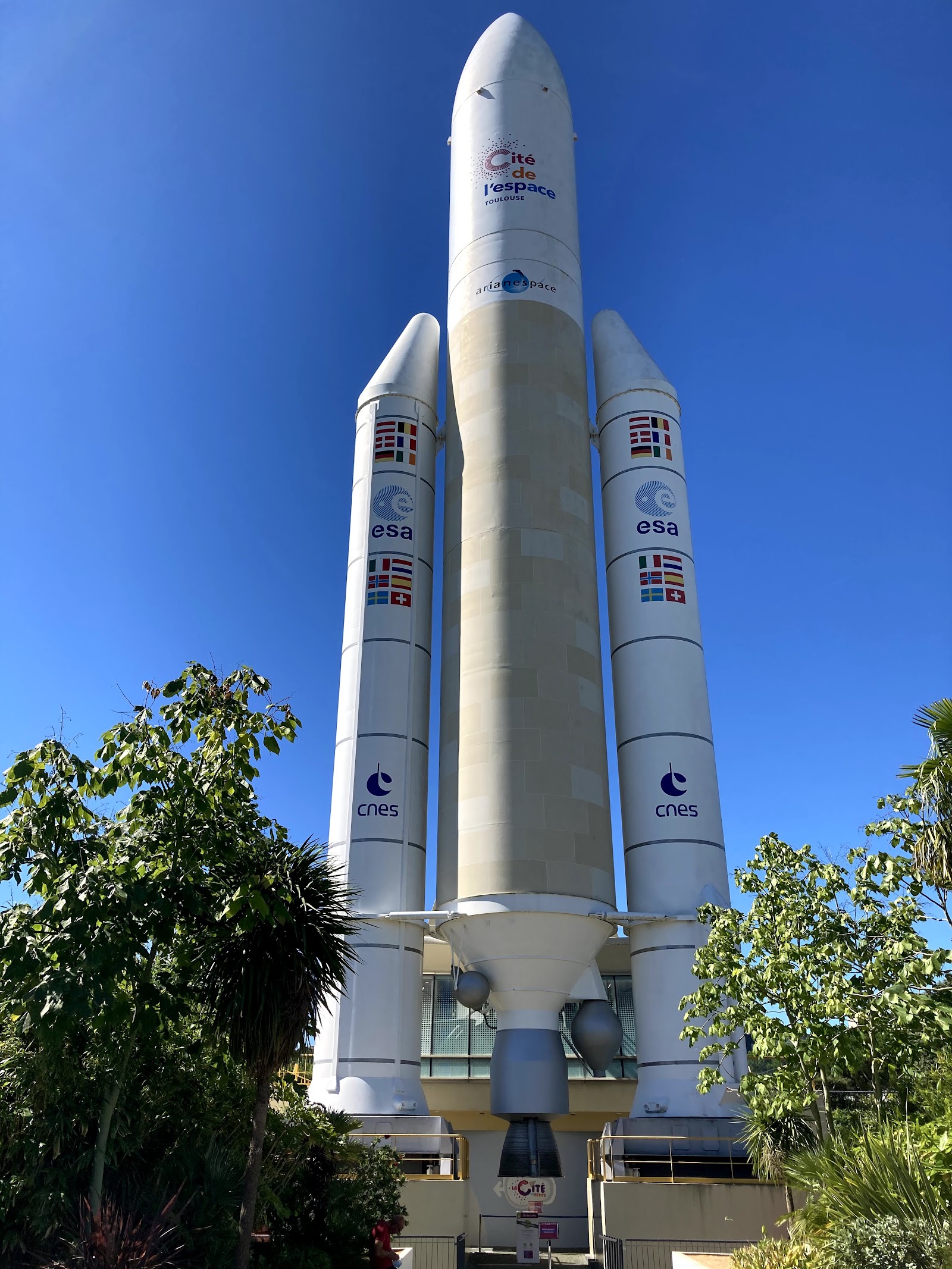
A 55-metre Ariane 5 rocket stands in the open air on the eastern edge of Toulouse, and the first time you see it from the approach path, it stops you. Cité de l'Espace is a full-scale space park — not a collection of scale models, but the real proportions of the things that leave Earth.
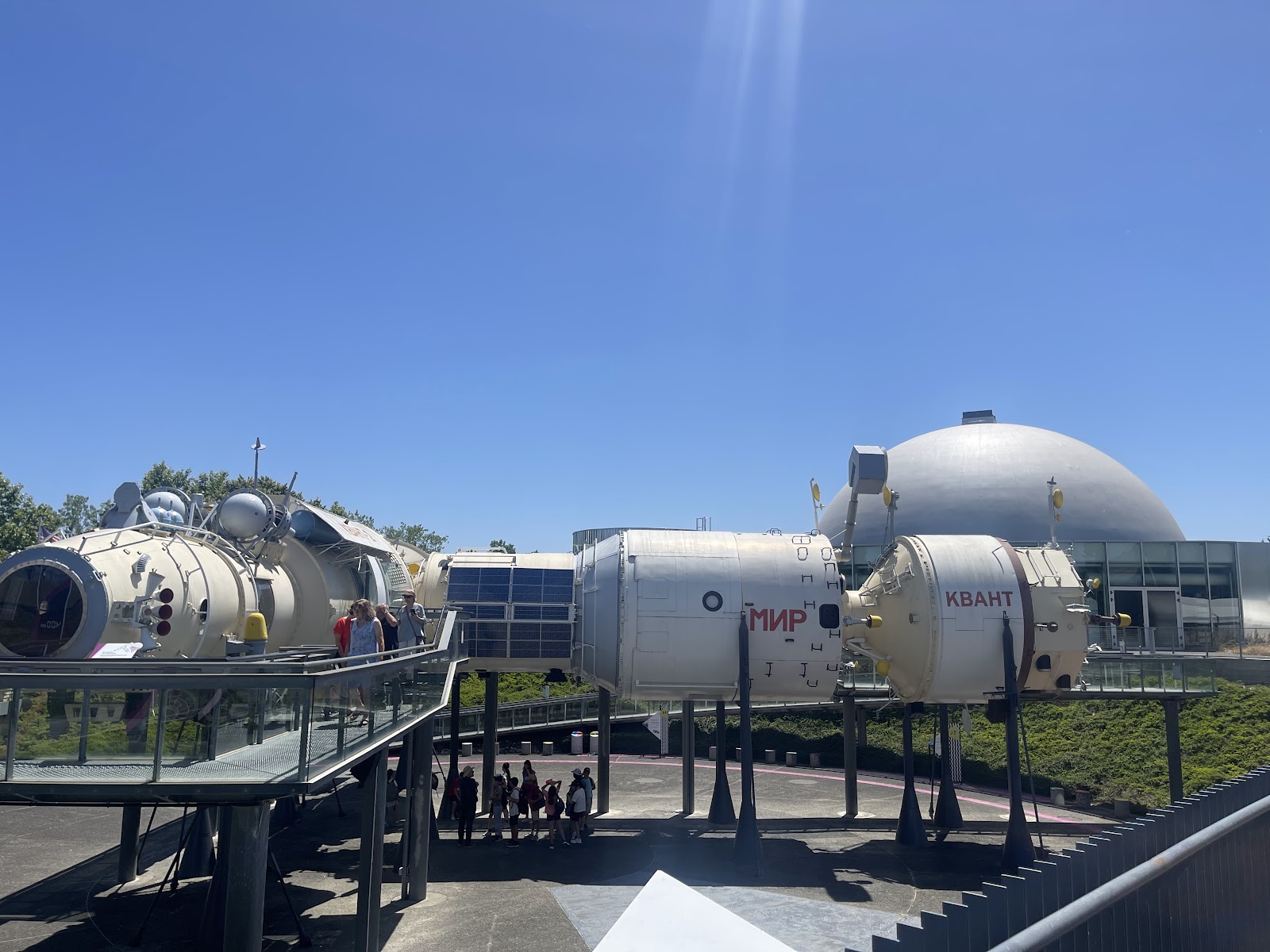
Inside, a Mir space station replica lets you stoop through the same narrow tube where cosmonauts once floated; the metal walls carry a faint smell of old coins and the Cyrillic labels are uncleaned and close. A 163-gram Moon rock, collected during Apollo 15 in 1971, sits behind glass — roughly 3.4 billion years old, at the park since 1998.
💛 What travellers fall for
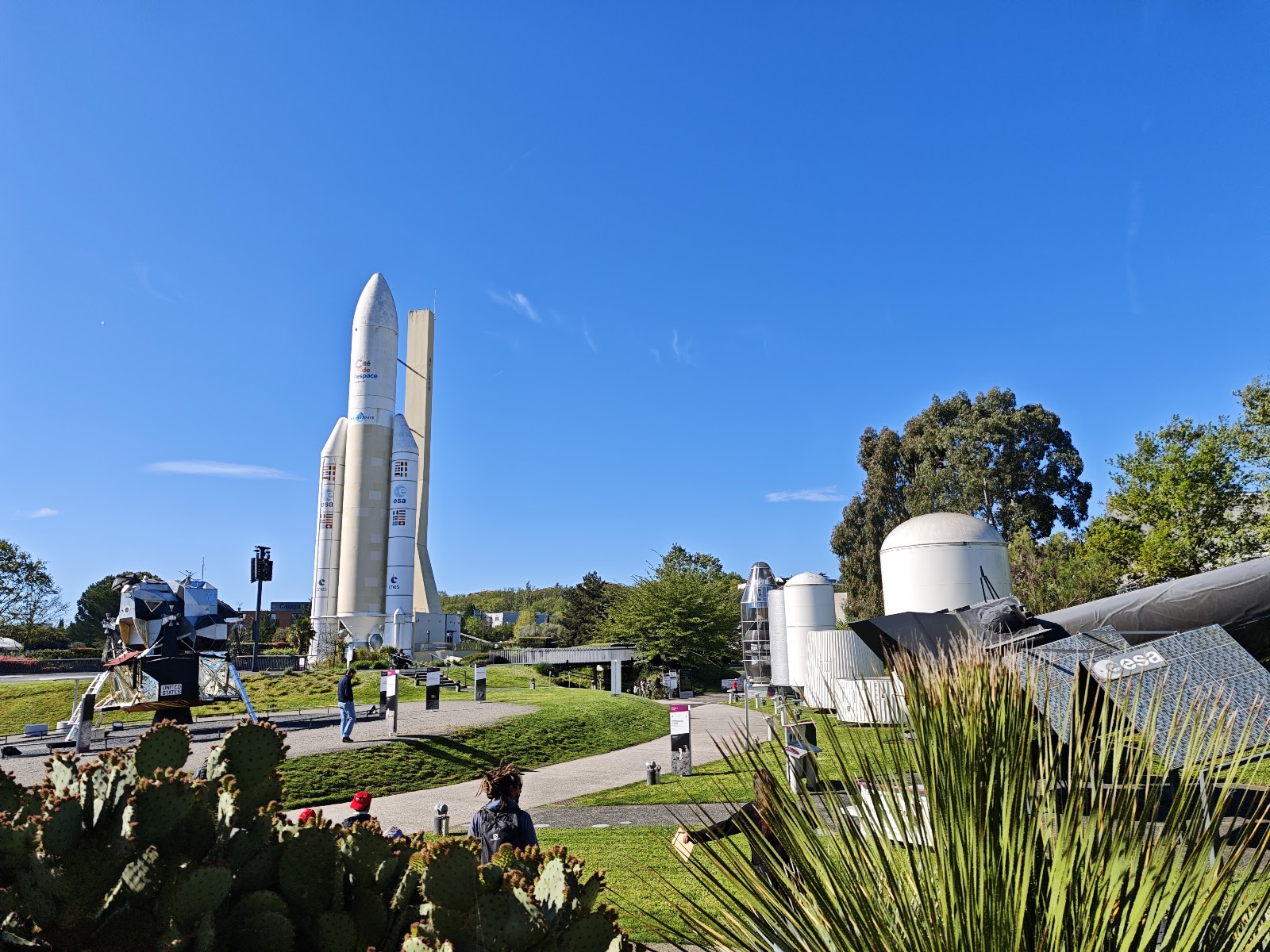
People who come back tend to plan around the fixed-time sessions: the LuneXplorer queue moves fast, so aim for the doors at opening and get in line at least 20 minutes before your slot. The Allée de l'Infini — a scale walk through solar system distances — is best done early, before the Ariane 5 plaza fills up and the lack of shade becomes a real calculation.
The story behind Cité de l'Espace
In July 1994 the Toulouse municipal council voted to build a park dedicated to aerospace, committing around 133 million francs to the project. Construction began in December 1995, and the park opened in June 1997, with Mayor Dominique Baudis and astronaut Claudie Haigneré — its godmother — presiding over the ceremony. Jean-Michel Oberto drove the development as founding director. The Mir exhibit followed in July 1998; the millionth visitor arrived by September 2000.
The Astralia building, housing a 280-seat planetarium with a 600-square-metre hemispherical screen and a 300-seat IMAX theatre, opened in 2005. The planetarium was renovated and reopened in July 2017. By July 2023 the park had crossed eight million visitors.
Good to know
Take Metro Line A to Jolimont, then bus 37 to the entrance — allow 40 minutes from the city centre. Buy tickets online. The park closes Mondays from September to March (except school holidays) and shuts entirely in January. A full day is the right unit of time.
The Ariane 5 plaza and the Martian Terrain are fully exposed, and Toulouse summers run genuinely hot — the outdoor sections demand sunscreen and water from June through August. Winter visits are quieter and cooler, though some outdoor food stalls close and Monday closures apply from September to March.
Where is Cité de l'Espace?
More tickets & tours for Cité de l'Espace
Book directly at the provider
What travellers say about Cité de l'Espace
100% recommended! An incredible experience with top-notch space simulations! 🚀🔭🪐 I absolutely loved my visit to Cité de l'Espace! To make the most of your day, here is my personal review, timeline, and some useful tips: Tickets & Arrival Tip: You can buy tickets online, but if you buy them at the ticket office (which opens at 10:00 AM), make sure to arrive around 9:30 AM. This allows you to be one of the first in line and avoid long waits. My Top Activities Checklist: 10:30 AM – Planetarium (30 mins): A fantastic show about stars, planets, and galaxies. Audioguides are available in English and Spanish, which makes it super easy to follow. 11:00 AM – IMAX Cinema: An amazing film about modern telescopes capturing breathtaking images of the universe and deep space. They also provide English/Spanish audioguides here. 🛰️ 11:30 AM / 3:30 PM – Mars Show: There is a show about Mars at these times, but please note it is only in French, so I skipped it since I don't speak the language. 1:30 PM to 4:00 PM – The absolute highlight! (Moon/Space flight simulation - Moon Runner/G-Force style): This was the best part of the day for me! My biggest advice: get in line around 1:00 PM (30 minutes before it opens) to secure your spot without spending hours waiting. Food & Vibes: Between the shows, I walked around the park, explored the outdoor rocket expositions, and had lunch at the local cafe. They have a great combo menu for around €13 (panini + cola + chocolate muffin), which is very reasonable. The atmosphere is great, and I noticed many French guides doing a wonderful job explaining things to groups of children. Whether you are a solo traveler, a space geek, or traveling with family, this place is a must-visit in Toulouse. 🛸👩🚀
A must visit attraction for any space enthusiast, great for students and young children for them to frame a career path and experience elife size simulations and models. Wonderful planetarium, imax shows. The best part was a moonlanding simulation where you can experience 2g. Absolutely amazing experience. Best way to explore in detail would be to.plan a 2 day visit. Multiple hotel options in the neighborhood Public transport bus stop right next to the museum. Suggestions Book tickets beforehand Download the application before you reach there. It has timings of the shows that can help to plan the itinerary accordingly. Enjoyable space station is replicated here. You can enter the get a glimpse of the astronauts and their lives in the MIR.
Perfect! Must-visit for all space lovers and enthusiasts. Plenty of information, expositions and immersive experiences. Even some original models which is quite extraordinary to see first-hand! I believe one day is enough to experience the entire park but you do need to stay for the entire day from the opening.
The exhibition and museum dedicated to space and science is truly a remarkable experience. It features an array of captivating attractions, thrilling rides, and engaging shows that cater to visitors of all ages, making it an ideal destination for families. Nestled within a thoughtfully designed science park, the entire experience is both convenient and immersive. What stands out is the careful attention given to explaining the wonders of the universe. Each display and interactive element invites curiosity and exploration, making complex concepts accessible and fascinating. I was particularly enchanted by the rover exhibition, which offered a hands-on glimpse into Mars exploration, and the breathtaking moon takeoff and landing simulation, which transported me to the very edge of the cosmos. Overall, this exhibition comes highly recommended for anyone eager to expand their knowledge and ignite their imagination!
We were very impressed with the museum. Even my 5 year old daughter lasted a whole 5 hours exploring. They have lots of interactive exhibits geared towards kids throuhgout plus an area completely geared to kids from 4-8 which was also very educational. Cool look at the Russian space station Mir and very interesting videos about what it is like to love on the current ISS. A must see when visiting Toulouse, especially for any Space fans.
More of Toulouse
Discover where to stay, what to do and the best deals for your trip.
Explore Toulouse →More attractions in Toulouse
All of Toulouse →
Background adapted from Wikipedia (CC BY-SA) · map data © OpenStreetMap contributors · ratings & place photos via Google · other photos with per-image credit. Ticket links may earn us a commission at no extra cost to you.