
Cirencester


The yew hedge that separates Cirencester Park from the town is said to be the tallest in the world — a hundred metres of clipped green wall that has been quietly making that claim since the early eighteenth century. It tells you something about Cirencester: a place that holds its records without making a fuss about them.
Before it was a Cotswolds market town, it was Corinium, the second-largest city by area in Roman Britain. That past isn't buried — it's in the Corinium Museum, in the exposed section of Roman wall at the edge of Abbey Grounds, in the earthwork humps of an amphitheatre that measured 46 by 41 metres and still sits, only partially excavated, to the south-west of town.
💛 What travellers fall for
People who come back tend to time a visit around the Friday antiques market at the Corn Hall — doors open at eight, and the good pieces go early. The New Brewery Arts complex is worth the detour too: a converted Victorian brewery where the café is genuinely good and the studios are usually open.
Deals in Cirencester
Book directly at the provider

How Cirencester came to be
Rome planted a fort here in the first century AD, but the fort closed around 70 AD and the civilian town — Corinium — kept growing. By the late second century it had defensive walls enclosing 240 acres, making it second only to London in area among Roman British cities. After the Battle of Dyrham in 577 AD it passed into Saxon hands, and the Roman fabric slowly dissolved into the landscape.
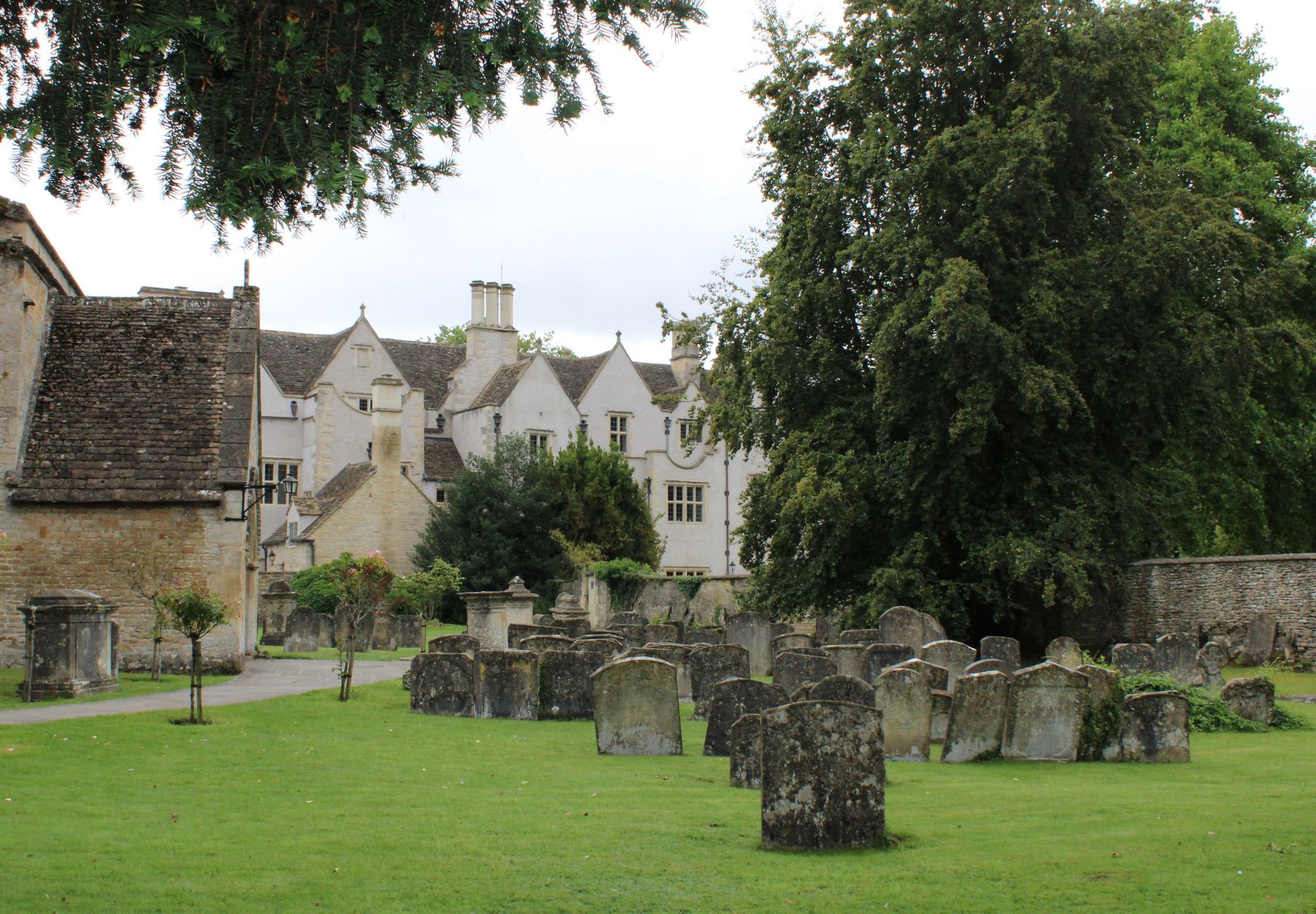
The medieval town was shaped by its abbey: Henry I founded Cirencester Abbey in 1117, and St. Mary's was dedicated in 1176. Henry VIII closed it in 1539, as he closed them all. The Church of St. John the Baptist — whose south porch was built by the abbey around 1480 — outlasted the dissolution and still anchors the market place. The Royal Agricultural College arrived in 1845, and the early twentieth century brought Ernest Gimson and Norman Jewson, whose Arts and Crafts workshops made the area a quiet centre of that movement.
Who and what shaped it
People who shaped it
Landmark buildings
See Cirencester in motion
Plan your visit
On the map
When to go
Summers are mild, with July days averaging around 22°C and up to seven hours of sunshine — the most comfortable window for walking the town and the park. Winter is grey and damp, with February nights dropping to around 2°C and December offering less than two hours of daylight sun on an average day.
Right now
Background & history adapted from Wikipedia (CC BY-SA) · specs from Wikidata (CC0) · weather from Open-Meteo · map data © OpenStreetMap contributors · photos from Wikimedia Commons / Unsplash with per-image credit. No third-party reviews or social posts reproduced.