
Chinchón
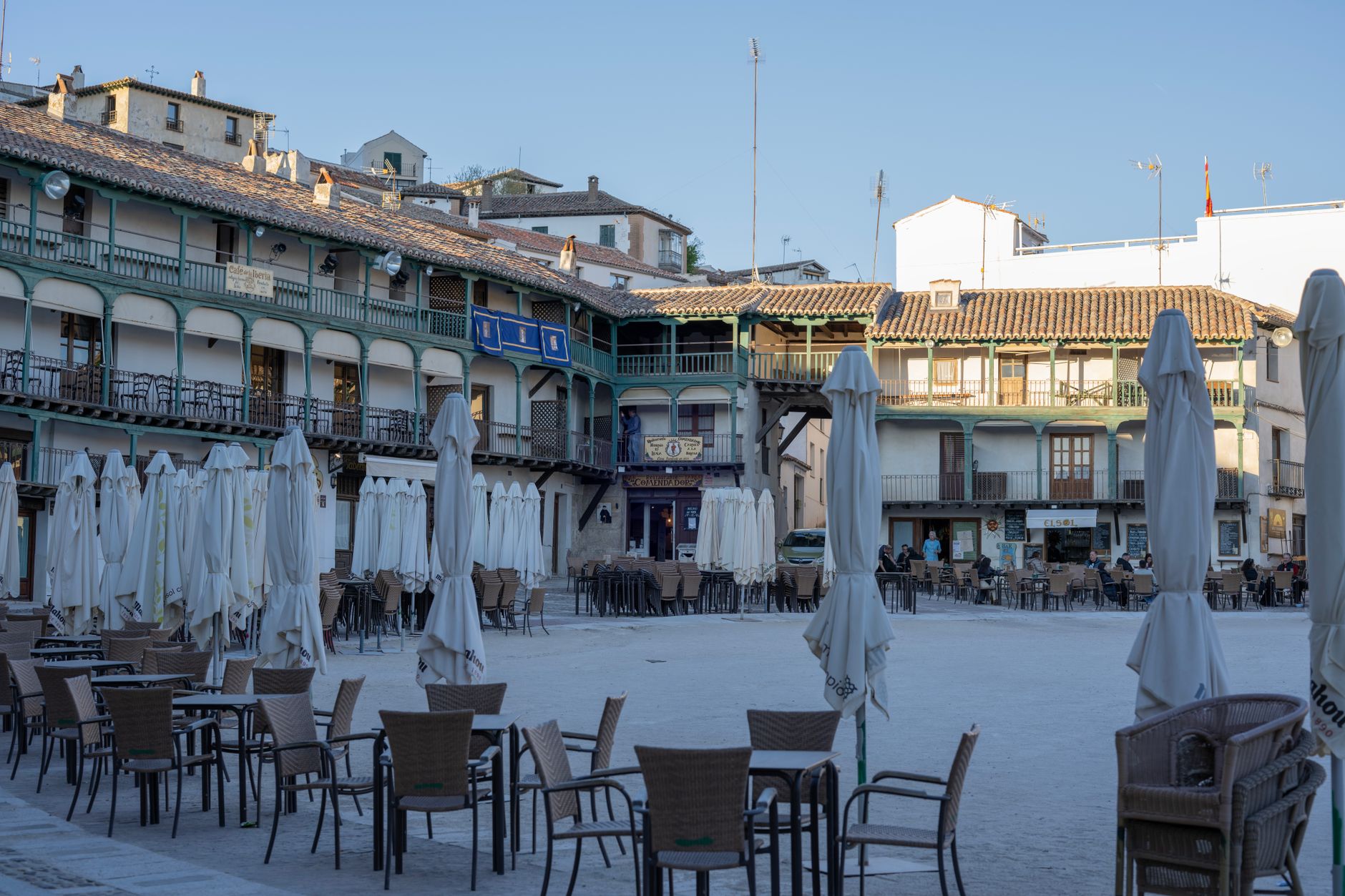
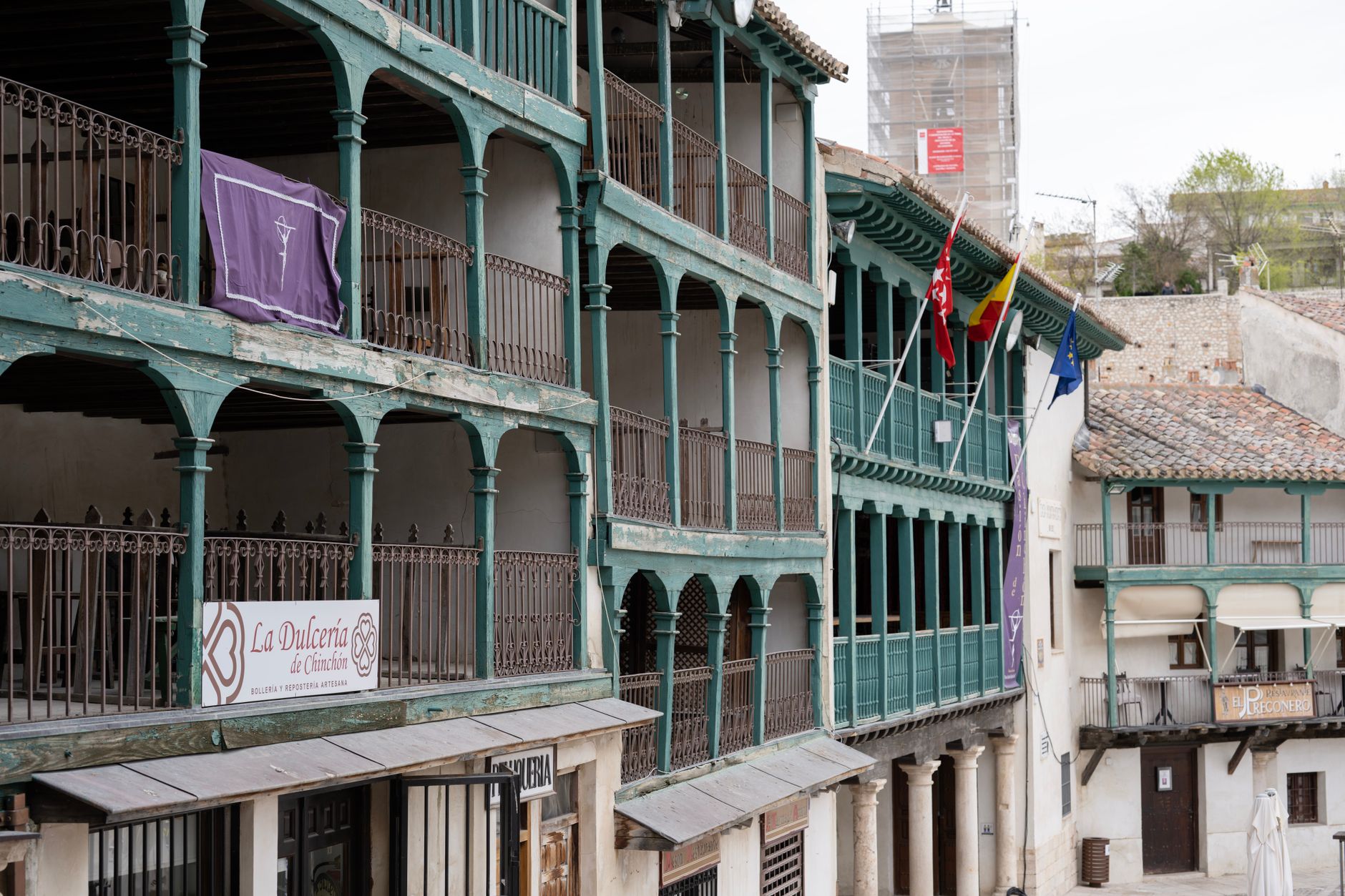
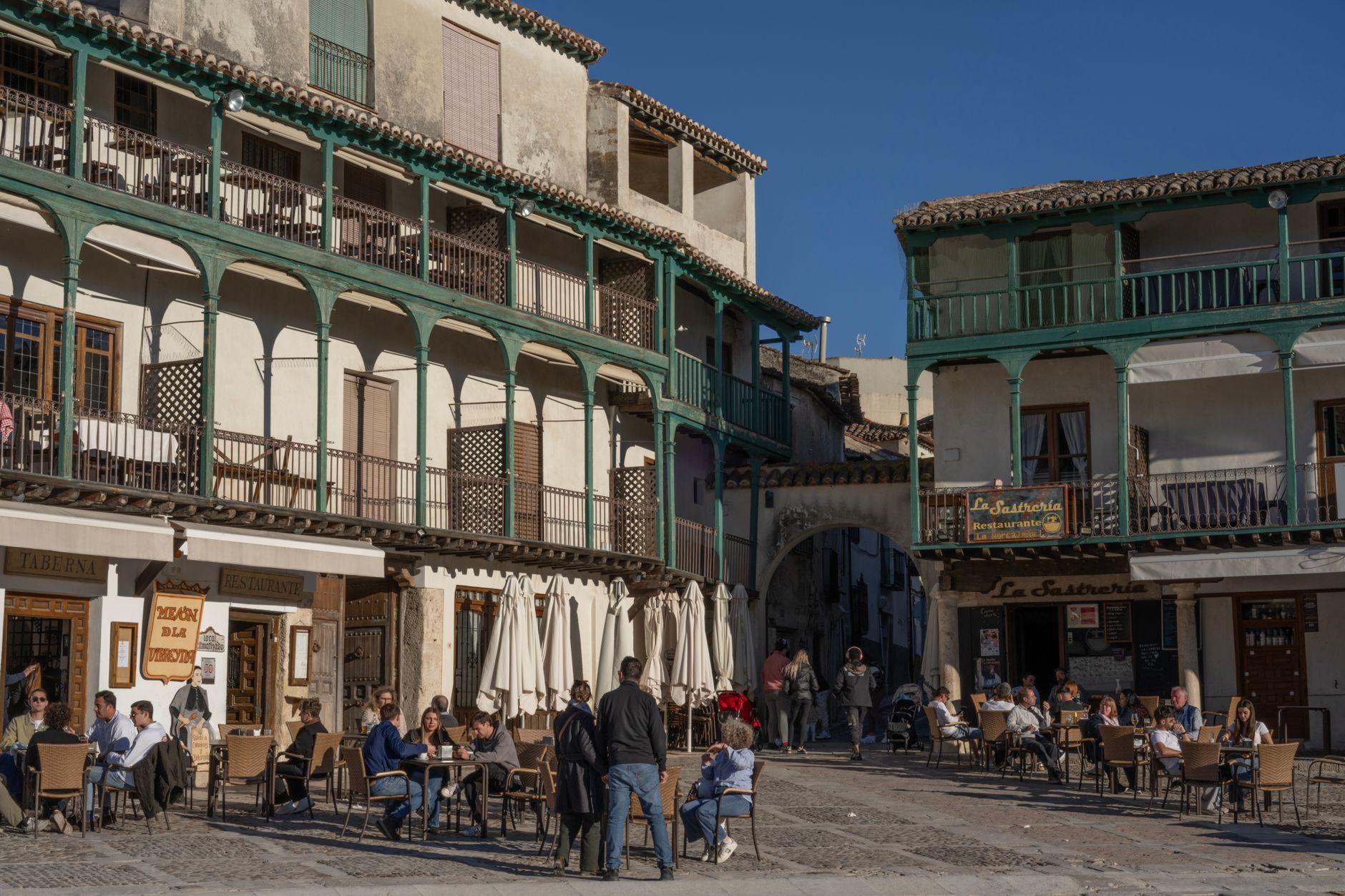
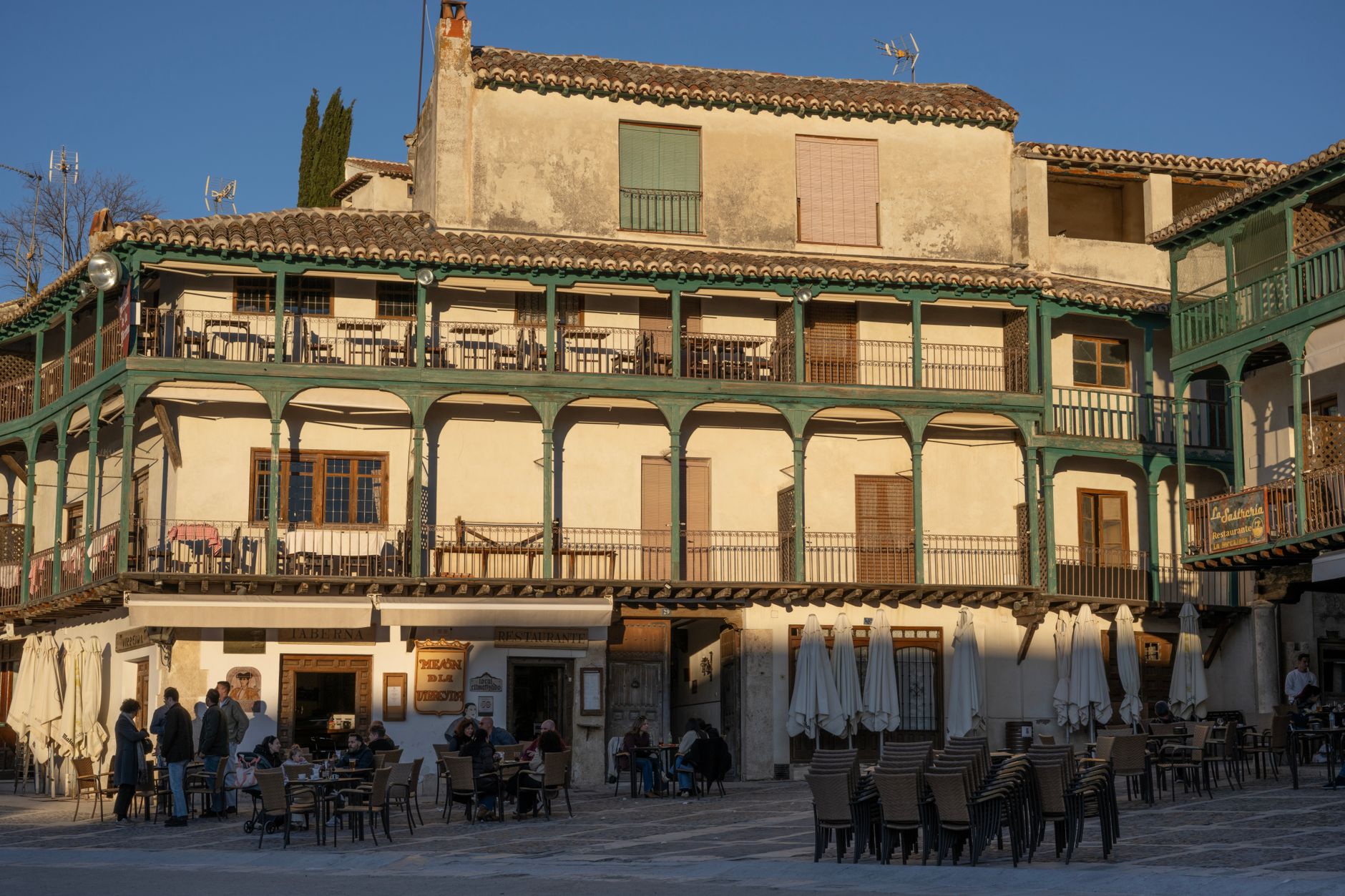
Fifty kilometres south-east of Madrid, Chinchón organises its entire public life around a single oval plaza — 234 wooden balconies stacked three floors high, the whole thing closed in on itself like a theatre in the round. Which, periodically, is exactly what it becomes: the square has hosted bullfights, open-air cinema and carnival for centuries, and the tourism office sits in what used to be the municipal wash house.
The town is also, quietly, the reason quinine has a Latin name. When the Countess of Chinchón reportedly recovered from malaria in 17th-century Peru using bark from a local tree, the botanists who later classified it called it Chinchona in her honour. That kind of accidental reach is very Chinchón.
💛 What travellers fall for
People who come back tend to time their visit for the first week of any month outside summer, when the Open Doors event unlocks buildings that are otherwise closed. The Church of Nuestra Señora de la Asunción — where Goya painted an altarpiece in 1812 after Napoleon's troops burned the original — repays a slow look rather than a quick circuit of the plaza.
Experiences you don't want to miss


Deals in Chinchón
Book directly at the providerHow Chinchón came to be
The site traces back to around the year 1000, when it existed under Islamic rule before Alphonse VII brought it into Castile in 1139. It remained a minor lordship until 1480, when the Catholic Monarchs granted it to Fernando Cabrera and Beatriz de Bobadilla. King Charles V elevated the title to a County on 9 May 1520, and in 1629 the Counts were appointed Viceroys of Peru — the appointment that would inadvertently give the world a name for the anti-malarial tree.
The War of the Spanish Succession reached Chinchón in 1706, when Philip V lodged in the house now called Casa de la Cadena. A century later, Napoleon's troops sacked and burned the church. Goya, who had known the town from childhood, painted a new altarpiece for it in 1812. By 1974 the whole town was declared a Heritage Site, and since the 1950s it has appeared as a film location in more than 30 feature films.
Who and what shaped it
People who shaped it
Landmark buildings
See Chinchón in motion
Plan your visit
On the map
When to go
Summer days push past 35°C in July with low humidity, which makes the shaded arcades of the plaza genuinely useful but midday walks punishing. Spring and autumn are the more comfortable seasons for walking the streets and the path down toward the Castillo de Casasola.
Right now
Background & history adapted from Wikipedia (CC BY-SA) · specs from Wikidata (CC0) · weather from Open-Meteo · map data © OpenStreetMap contributors · photos from Wikimedia Commons / Unsplash with per-image credit. No third-party reviews or social posts reproduced.