
Chambéry

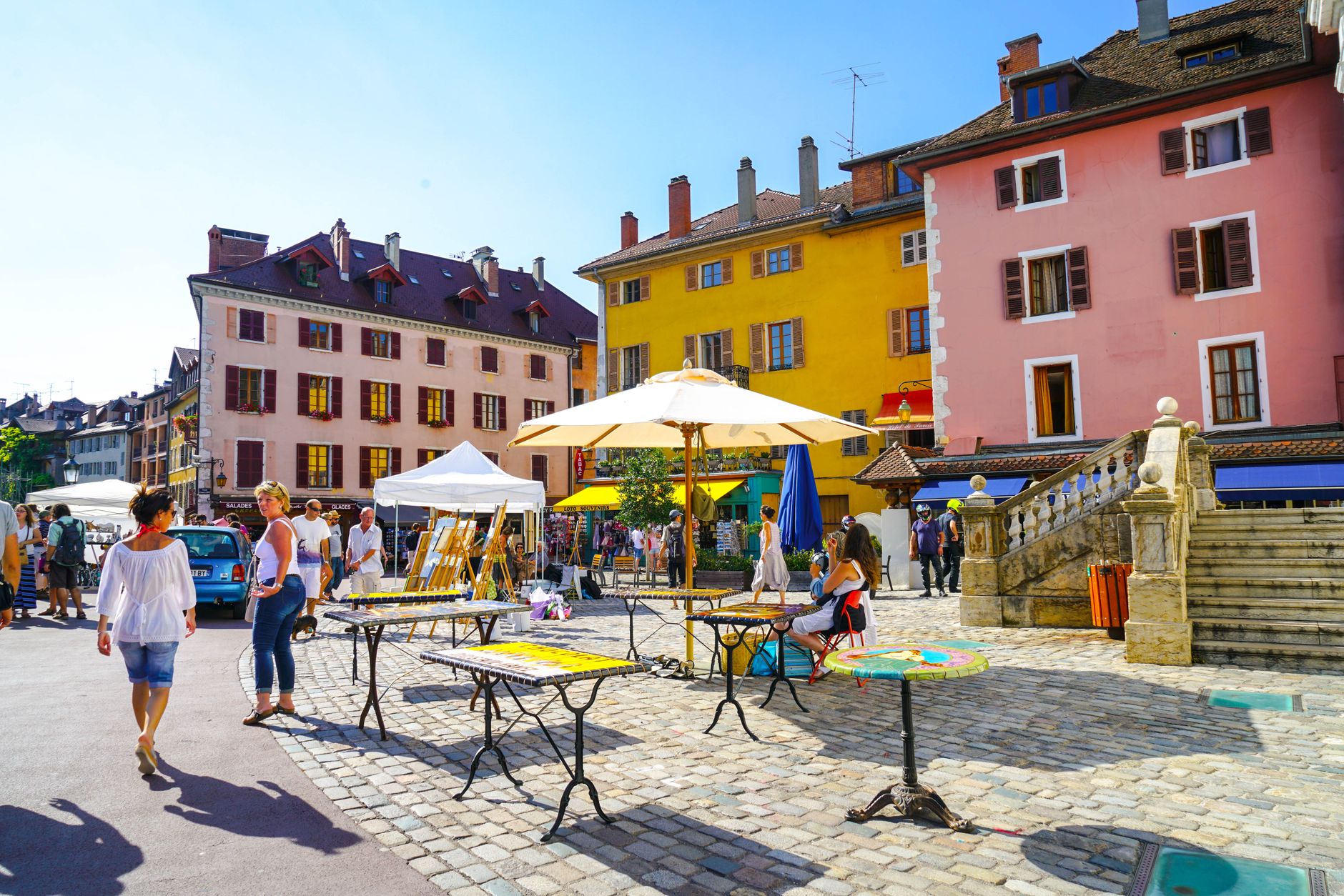
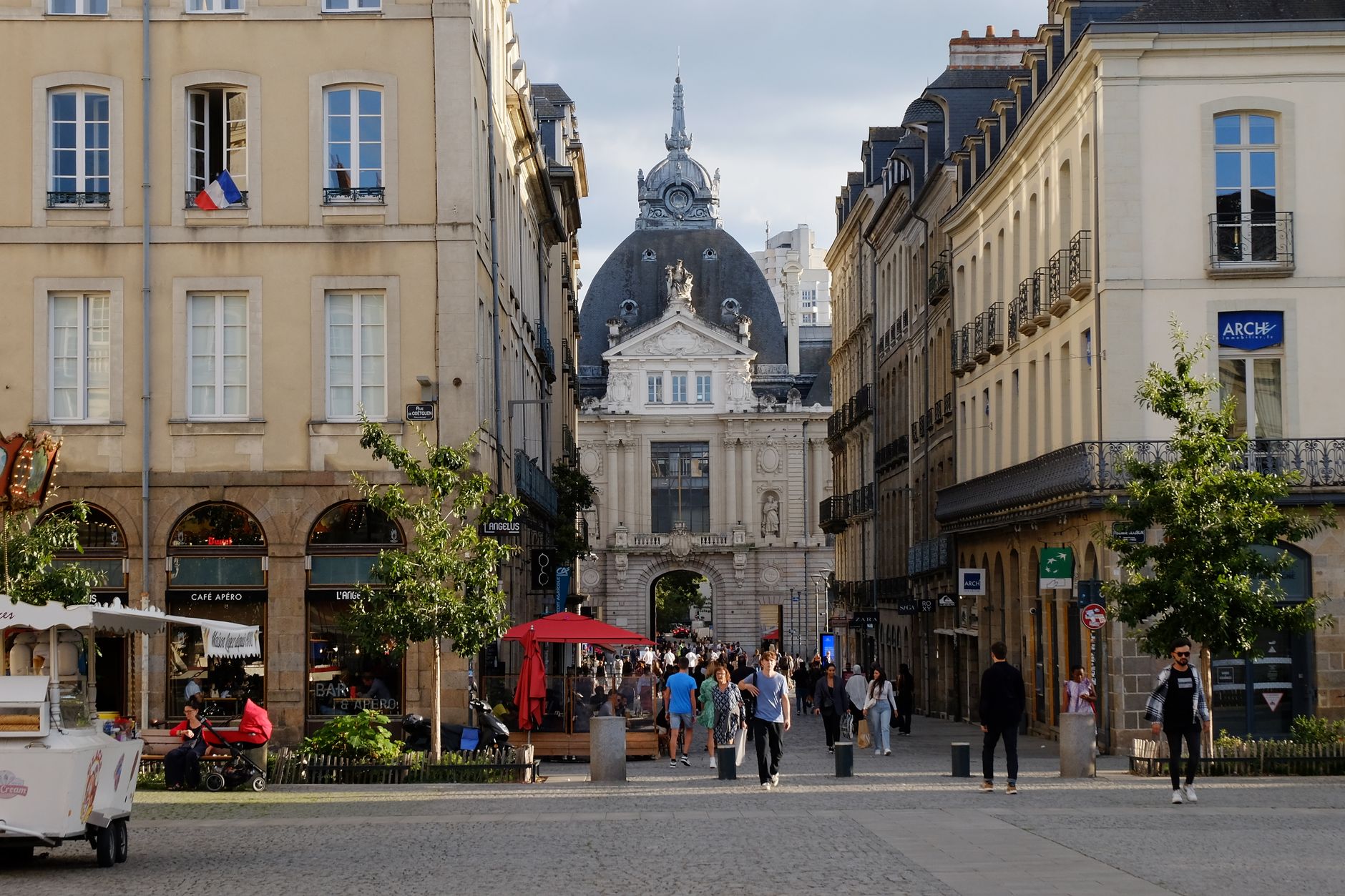
The four elephants stop you cold. They rise from the base of a tall column in the middle of Chambéry's old quarter — heads and forelimbs only, truncated into stone, built in 1838 to honour a local soldier who made his fortune in India. That odd, specific monument tells you something about this city: it has always looked outward while staying firmly itself.
For five centuries Chambéry was the capital of Savoy, a duchy that straddled the Alps and belonged to neither France nor Italy in any simple sense. That in-between quality persists. The arcaded streets of the southern quarter feel more Turin than Lyon, and the cathedral holds the largest trompe-l'oeil ceiling in Europe.
💛 What travellers fall for
People who return tend to make straight for the Musée des Beaux-Arts — second only to the Louvre for Italian paintings in France, and rarely crowded. The Hôtel de Cordon on Rue Saint-Réal is worth the free visit for the building alone. And most will walk out to Les Charmettes, Rousseau's country house, at least once.
Experiences you don't want to miss




Deals in Chambéry
Book directly at the provider

How Chambéry came to be
Thomas I of Savoy bought the land that would become Chambéry in 1232. By 1295 his successor Amadeus V had made it the county's administrative heart, and the dukes expanded the old hilltop fortress into the castle complex that still anchors the city. In 1416 Emperor Sigismund elevated Savoy to a duchy; by 1502 the Shroud of Turin had been installed in the ducal chapel. Then in 1563 Duke Emmanuel Philibert moved the capital to Turin, and Chambéry settled into a quieter role as a judicial centre.
French revolutionary troops arrived in 1792, and the city became a departmental seat. After decades of back-and-forth sovereignty, 1860 brought the definitive answer: the whole region was ceded to France under Napoleon III. The 1944 bombing that levelled the northern quarter is still readable in the streetplan — wide postwar avenues give way, just south, to 17th-century arcades and earlier stonework.
Who and what shaped it
People who shaped it
Landmark buildings
See Chambéry in motion
Plan your visit
On the map
When to go
Summers are warm and sometimes stormy, with Alpine weather moving in quickly from the east. Winters are cold and often grey, with snow possible; spring and autumn offer the clearest skies and the most comfortable temperatures for walking.
Right now
Background & history adapted from Wikipedia (CC BY-SA) · specs from Wikidata (CC0) · weather from Open-Meteo · map data © OpenStreetMap contributors · photos from Wikimedia Commons / Unsplash with per-image credit. No third-party reviews or social posts reproduced.