
Chalong
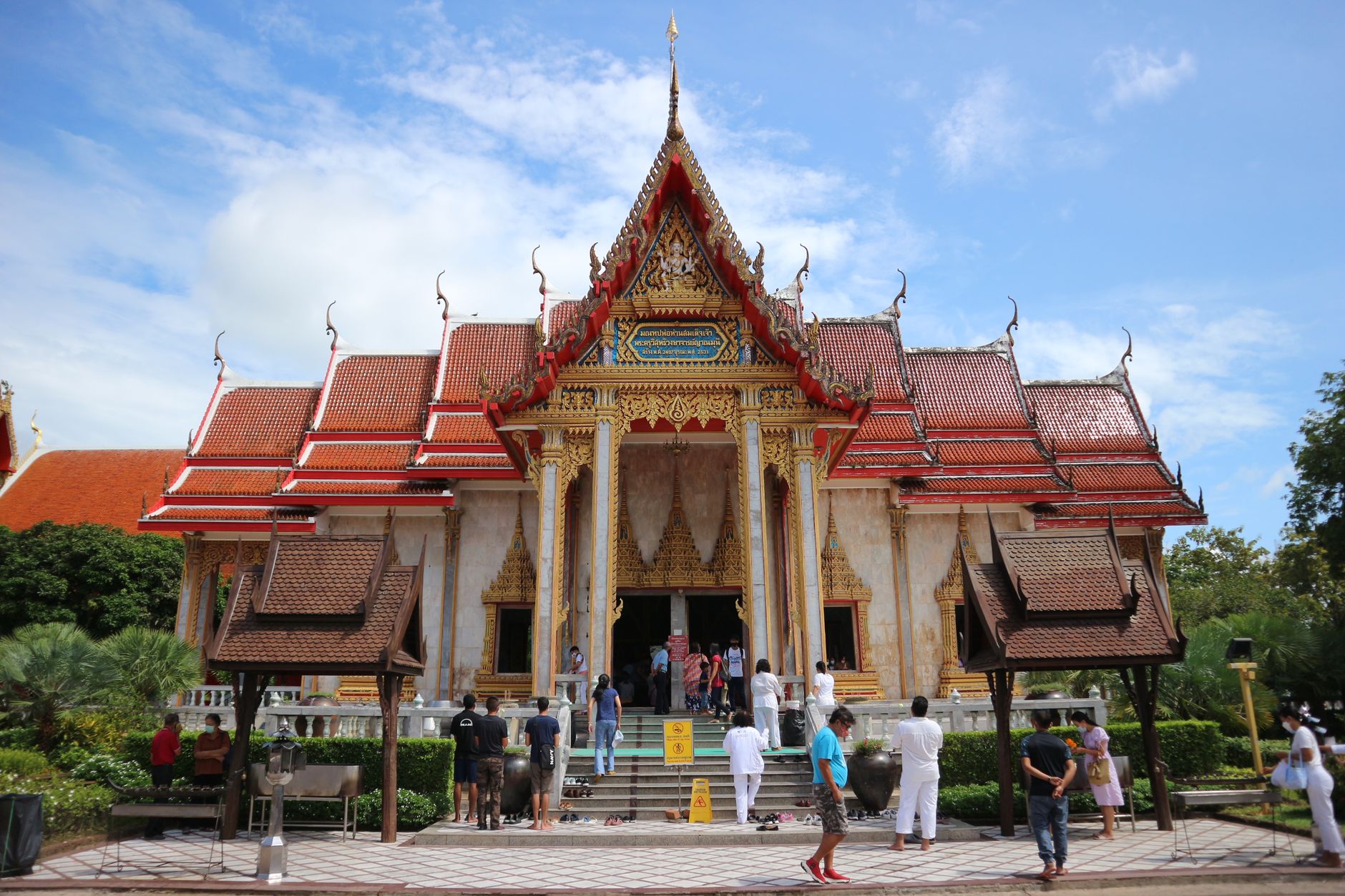
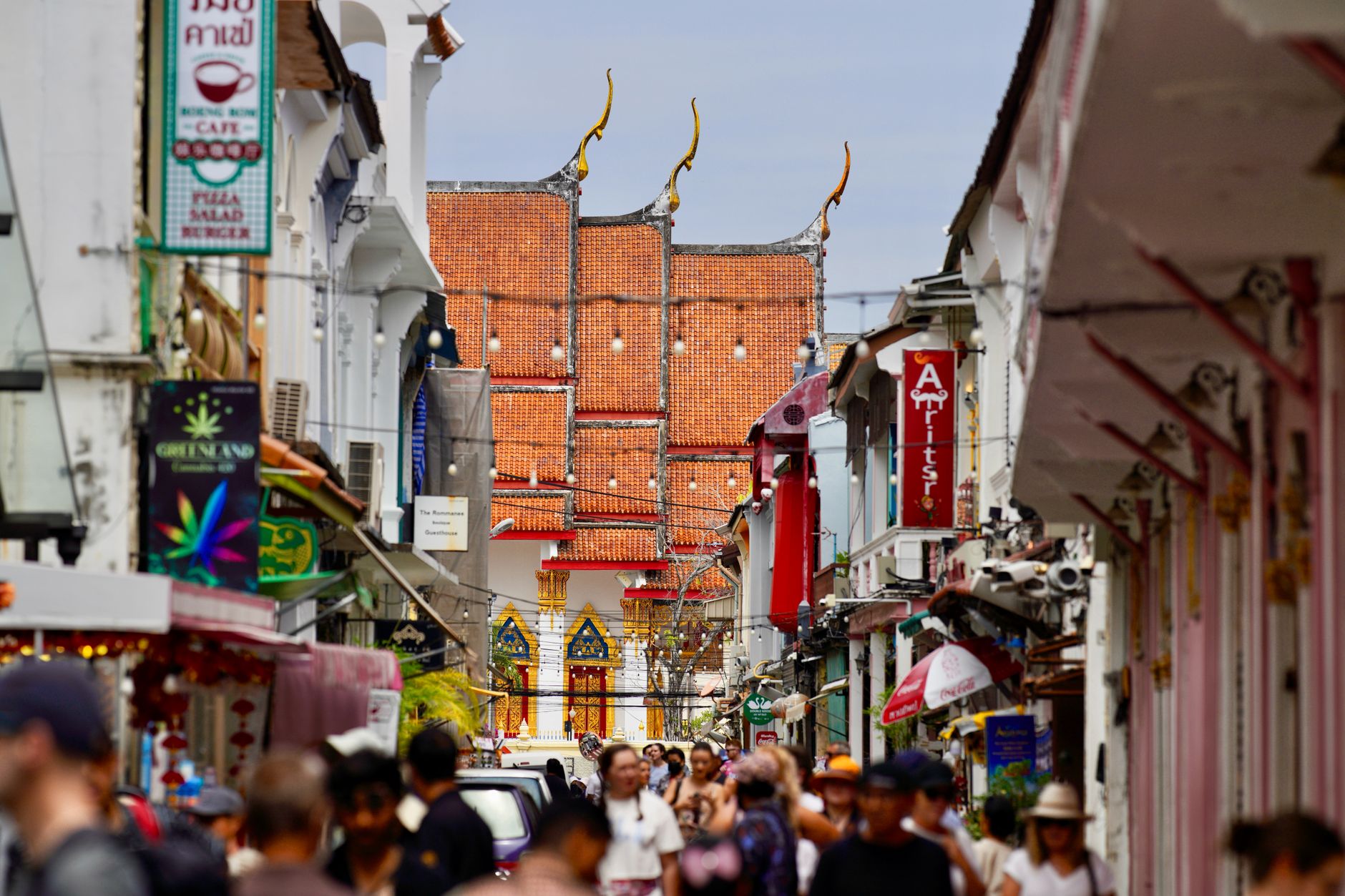
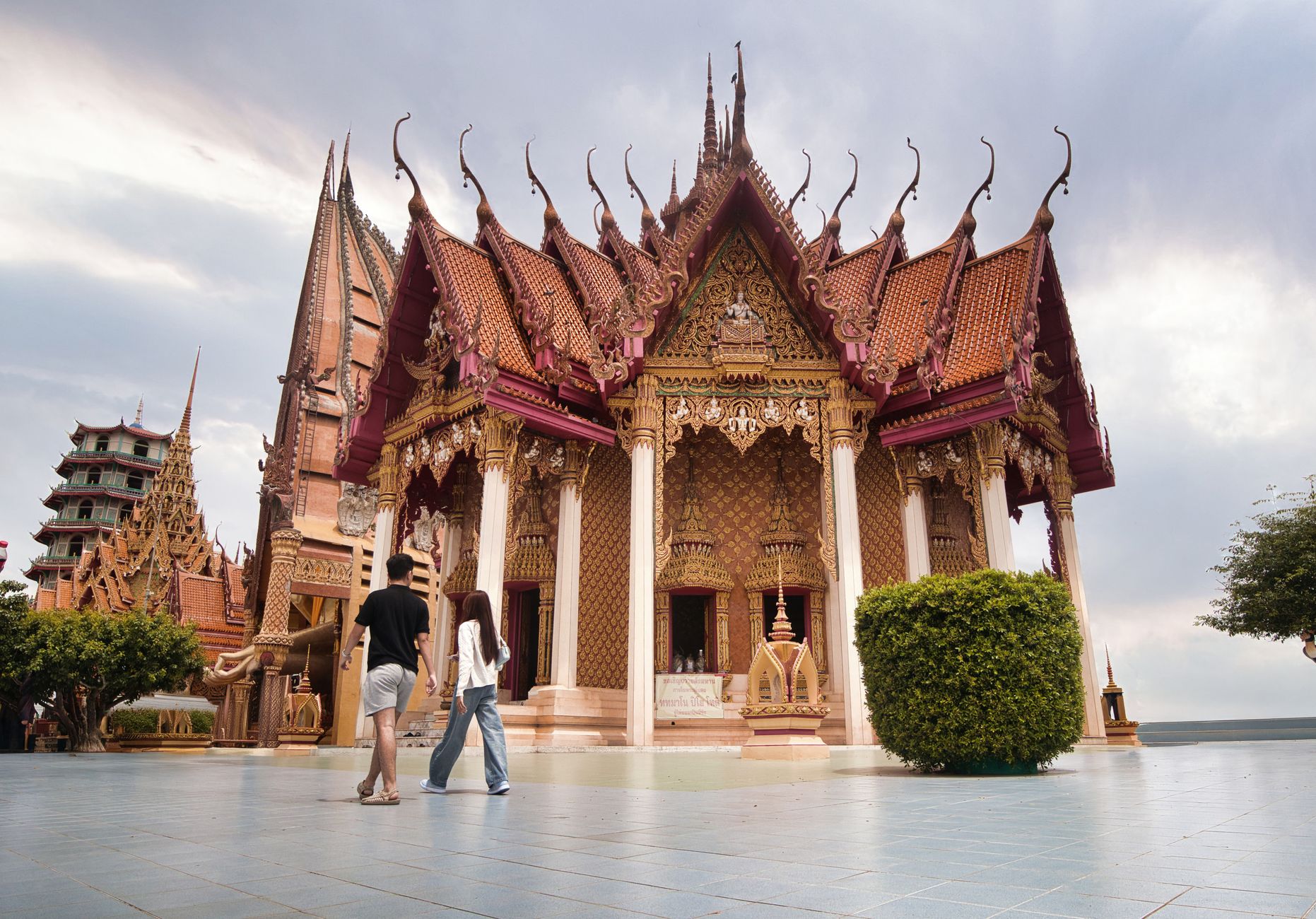
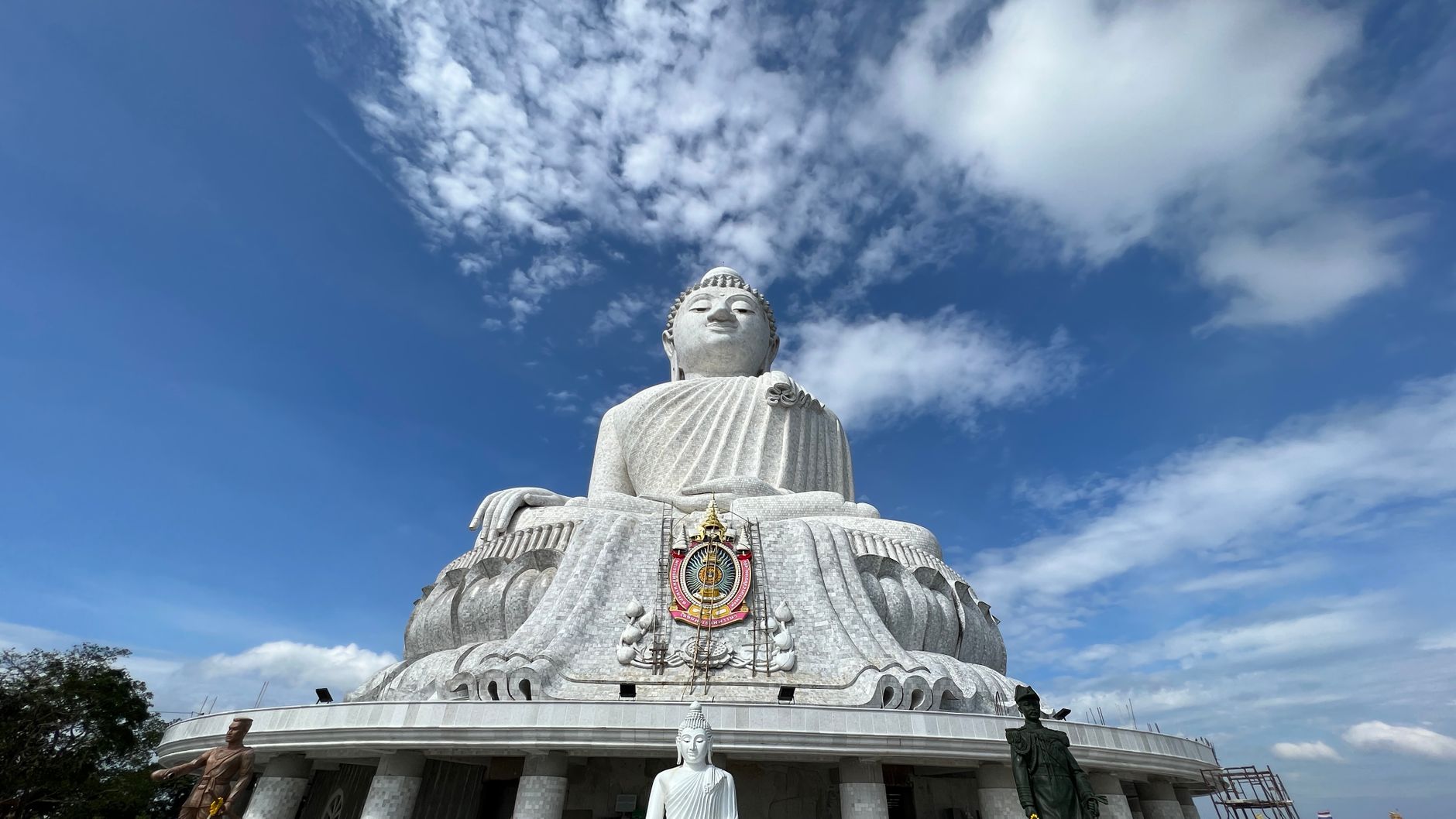
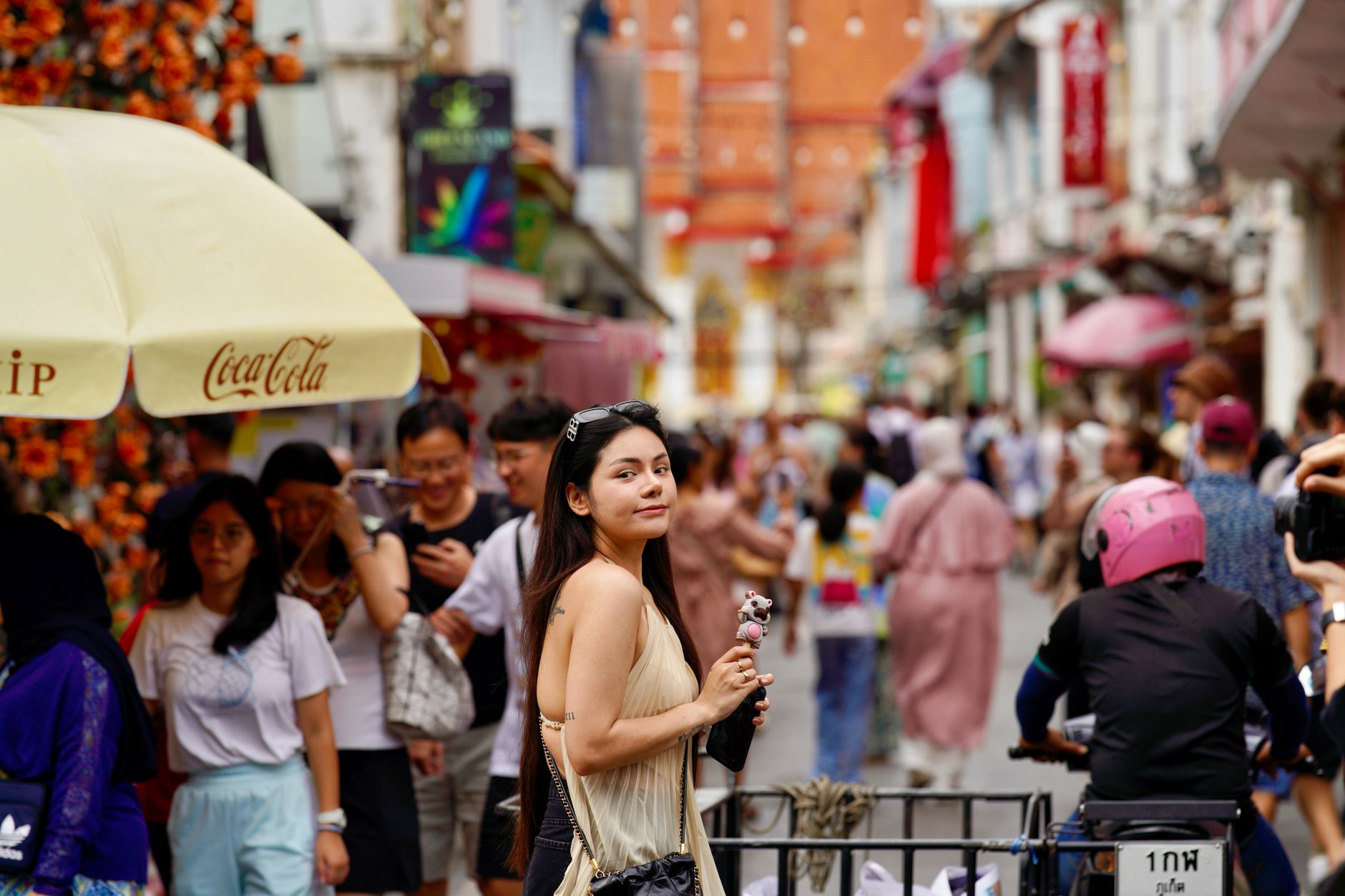
The golden chedi at Wat Chalong rises sixty metres above the palm canopy of Phuket's southeastern corner, visible long before you arrive. This is where the island comes to pray — not tourists, primarily, but local families, fishermen, monks moving between incense smoke and shade. Chalong is less a town than a working crossroads: fuel stops, seafood restaurants on stilts over the bay, dive shops kitting out boats for the Andaman. The temple is its gravitational centre, and an hour inside it tells you more about Phuket than most of the island's beaches ever will.
The subdistrict sits about eight kilometres south of Phuket Town, close enough to reach easily but far enough to feel like its own thing. There is no main drag to stroll, no particular nightlife. What it has is a temple with a real story, a bay that catches the late light, and the practical, unpretentious feel of a place that exists for the people who live here.
💛 What travellers fall for
People who keep coming back tend to show up on a Tuesday or Wednesday morning, when the grounds are quiet enough to hear the bells. Take your shoes off slowly — the tiled floor is cool underfoot — and climb to the top floor of the chedi, where the bone fragment relic is kept behind glass. The scale of the thing only lands from up there.
Deals in Chalong
Book directly at the provider

How Chalong came to be
Wat Chalong was founded around 1837, during the reign of King Rama III, to serve the Thai Buddhist villagers and Hokkien Chinese tin miners who had settled in the area. Its second abbot, Luang Pho Chaem, arrived from Phang Nga as a child and became known across Phuket for his Vipassana practice and deep knowledge of herbal medicine.
In 1876, a violent uprising among Chinese labourers — the Ang Yi rebellion — left around a hundred people dead and the island's governor in flight. Luang Pho Chaem refused to leave the temple, sheltered refugees, and treated the injured from both sides. King Rama V recognised this the following year, appointing him Chief Ecclesiastical Officer of Phuket and granting the temple its formal royal name: Wat Chaiyathararam, Temple of Auspicious Waters. The golden Phra Mahathat Chedi, the complex's dominant structure today, was built between 1991 and 2001 and houses a bone fragment of the Buddha, donated by Sri Lanka in 1999.
Who and what shaped it
People who shaped it
Landmark buildings
See Chalong in motion
Plan your visit
On the map
When to go
Chalong is warm year-round, with daytime temperatures holding around 29–30°C in every season. The dry window runs December through March; from May to October the southwest monsoon brings heavy, often afternoon rain — manageable if you visit in the morning, but worth factoring in.
Right now
Background & history adapted from Wikipedia (CC BY-SA) · specs from Wikidata (CC0) · weather from Open-Meteo · map data © OpenStreetMap contributors · photos from Wikimedia Commons / Unsplash with per-image credit. No third-party reviews or social posts reproduced.