
Central Park
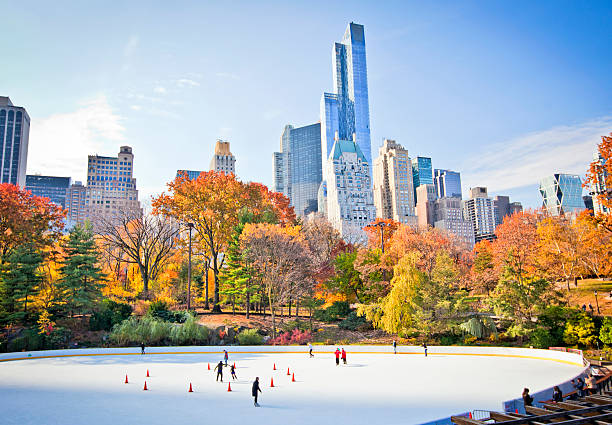
Central Park's 778 acres sit at the geographic and psychological centre of Manhattan — a fact that becomes obvious the moment the city noise drops behind the tree line. The park runs from 59th Street to 110th Street, and within that rectangle you'll find an 18-acre lake, a 36-acre woodland, a cast-iron bridge completed in 1862, and a tiled terrace ceiling made from nearly 16,000 individual pieces.
It is free to enter, open almost around the clock, and still somehow never feels entirely familiar — different light, different crowd, different corner every visit.
💛 What travellers fall for
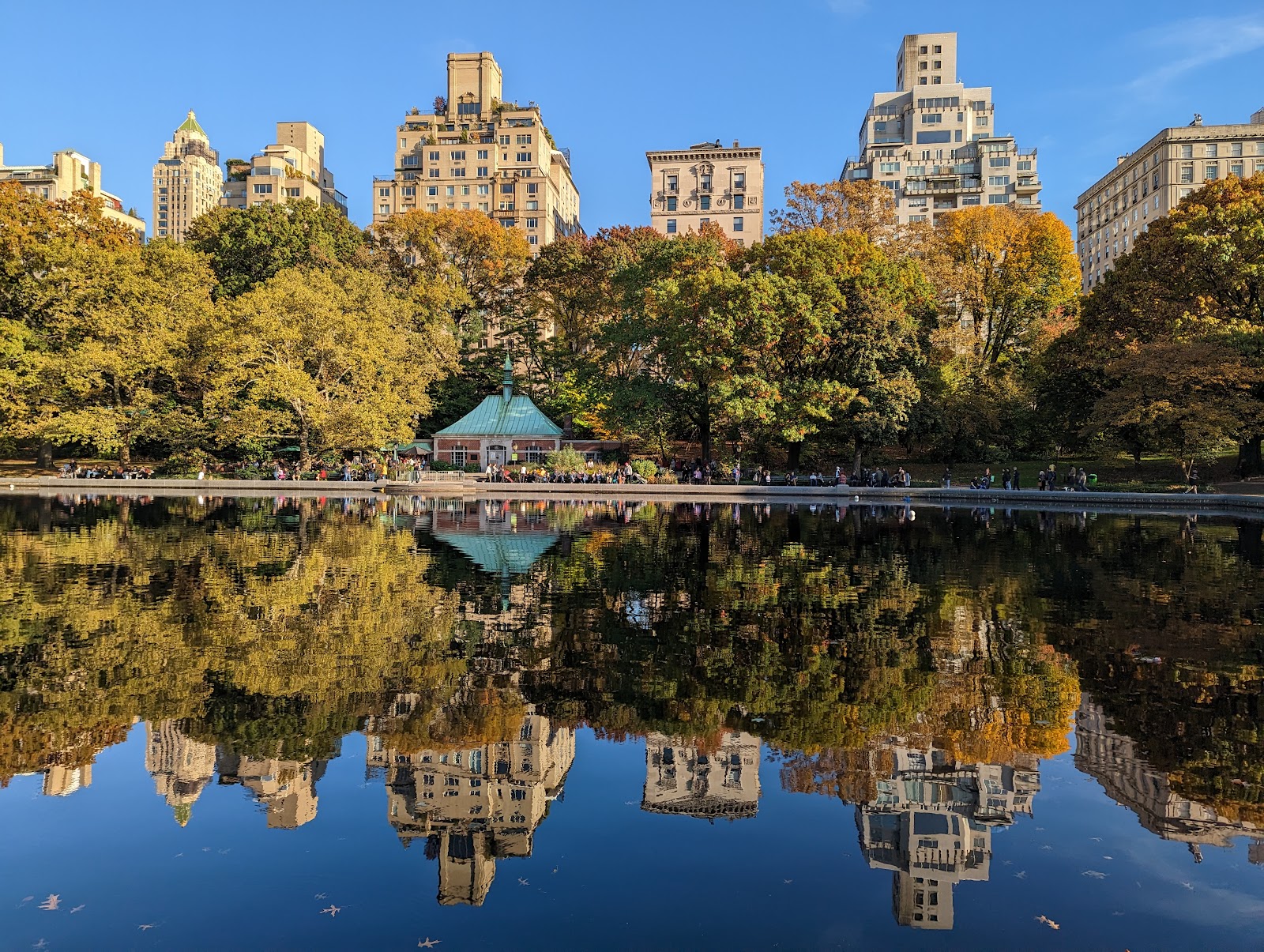
People who come back tend to anchor themselves to a specific spot rather than trying to cover everything. The Ramble rewards slow walkers and anyone with binoculars. The Mall, lined with American Elms and the only straight path in the park, is good early morning before the crowds find it. Bow Bridge over the Lake is worth the short detour for the reflection alone.
The story behind Central Park
In 1853, the city approved a 778-acre park on land that was seized through eminent domain — displacing existing residents, including the majority-Black community of Seneca Village, whose homes and church were razed. A design competition followed in 1858, won by landscape architect Frederick Law Olmsted and English-American architect Calvert Vaux with their Greensward Plan. The Lake opened to skaters that December; the Ramble followed in 1859. Construction stretched across fifteen years and cost $14 million, nearly three times the original budget.
By the 1960s the park had deteriorated sharply. The Central Park Conservancy, formed by a group of citizens, rebuilt and restored it, and has managed the park under a public-private contract with the city since 1998.
Good to know
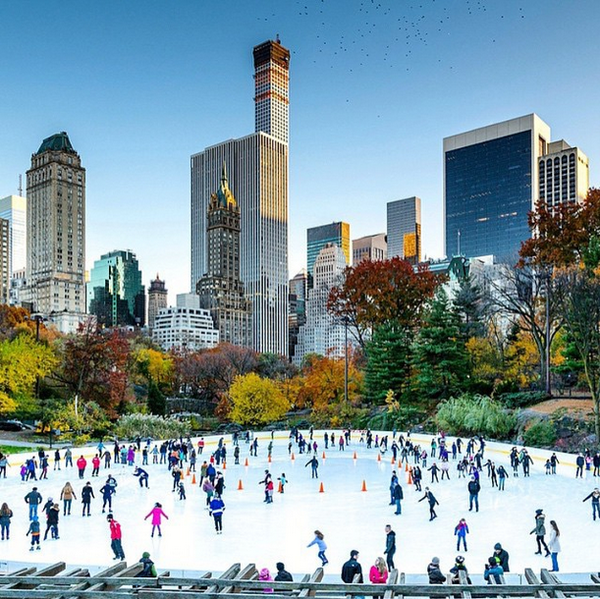
Enter free, any time between 6am and 1am. Subway access is easiest on the west side via the A, C, B, or D lines. The Central Park Zoo and Wollman Rink charge admission; everything else is free. Half a day is the realistic minimum if you want to move beyond the southern end.
Spring and autumn are the most comfortable seasons — mild temperatures, the trees either coming into leaf or turning. Summer brings real heat and humidity, though the shade canopy helps. Winter has its own appeal: the Lake freezes some years, and the park is genuinely quieter.
Where is Central Park?
Location
- In New York City
- 40.7851, -73.9683
- Open in Google Maps
Rating
4.8 ★ · 300,053 Google reviews
More tickets & tours for Central Park
Book directly at the provider
What travellers say about Central Park
If you could only do 1 thing in NYC, go walk around Central Park! This did not disappoint! Massive park right in the center of the city full of locals and tourism enjoying the beautiful weather. We visited in lake March/early April and there were so many cherry blossoms to stop by and take pictures with. There are multiple ponds/lakes/playgrounds/museums/washrooms. A very walkable area. Lots of benches everywhere. Some street vendors selling drinks and ice cream. No tickets, no fees - just enjoy the walk. If you want to get away from the crowds the top park of the part is much quieter and feels more local. The bottom park around Billionaire row is very very busy. We went here early in the morning on a weekday and it was a good amount of people. We visited against on a weekend around lunchtime and it was packed.
Beautiful in every season, but fall is my favorite, especially when the leaves are changing. Best enjoyed in the morning while it’s still quiet. The Literary Walk is a standout—perfect for sitting on a bench and people-watching. Truly an oasis in the middle of the city. It’s massive, so don’t expect to see everything in one day—pick one area and take your time.
Central Park is one of the most beautiful urban parks in the world and a perfect example of how landscape design can transform a busy city into a peaceful public space. Surrounded by Manhattan’s skyscrapers, the park creates an amazing balance between nature and urban life. What makes Central Park truly special is the variety of experiences within one large landscape. From open green lawns and lakes to tree-lined pathways, bridges, gardens, and performance spaces, every area has its own unique atmosphere. The planning and circulation are designed so naturally that visitors can walk for hours while continuously discovering new views and spaces. Architecturally and from an urban design perspective, the park is extraordinary because it integrates nature with the dense city fabric so seamlessly. The stone bridges, Bethesda Terrace, water bodies, and carefully framed skyline views create a timeless spatial experience. Even with thousands of visitors, many corners still feel calm and intimate. The park is equally enjoyable for families, tourists, joggers, cyclists, photographers, and architects. During different seasons, the character of the park changes completely — vibrant greenery in summer, colorful foliage in autumn, snow-covered landscapes in winter, and fresh blossoms in spring. Located in the heart of Manhattan, Central Park is not just a park but the green soul of New York City. A must-visit destination where landscape, architecture, culture, and public life come together beautifully.
An absolutely gorgeous park with serene and beautiful foliage. The most famous part of the park would probably be the Bethesda fountain and Bethesda terrace. There is also a toilet there. There are lots of squirrels and other small animals in the park as well.
This park feels like the ultimate urban escape and comes remarkably close to perfection. One moment you’re wandering through peaceful wooded paths, and the next you’re relaxing on open lawns or enjoying live performances, many of them free. There’s so much to do—boating on the lake, people-watching, or simply soaking in the scenery. In certain areas, it’s easy to forget you’re even in the middle of a city. For anyone visiting New York, spending time here is a must. With attractions like a zoo, carousel, ice-skating rink, and even a castle, the park offers something memorable for every age.
More of New York City
Discover where to stay, what to do and the best deals for your trip.
Explore New York City →More attractions in New York City
All of New York City →
Background adapted from Wikipedia (CC BY-SA) · map data © OpenStreetMap contributors · ratings & place photos via Google · other photos with per-image credit. Ticket links may earn us a commission at no extra cost to you.