
Cattolica
Cattolica sits at the southern tip of Emilia-Romagna, where the Adriatic railway line grazes the beach and the old harbour still smells of diesel and salt. The fishing fleet moors where it always has, and at the centre of the square a fountain shaped like a boat marks the spot where bars and trattorias now face the water. It is a compact Adriatic resort town — not grand, not sleepy — with a genuinely strange piece of Fascist-era architecture repurposed as an aquarium, and a medieval tower that most people walk past without stopping.
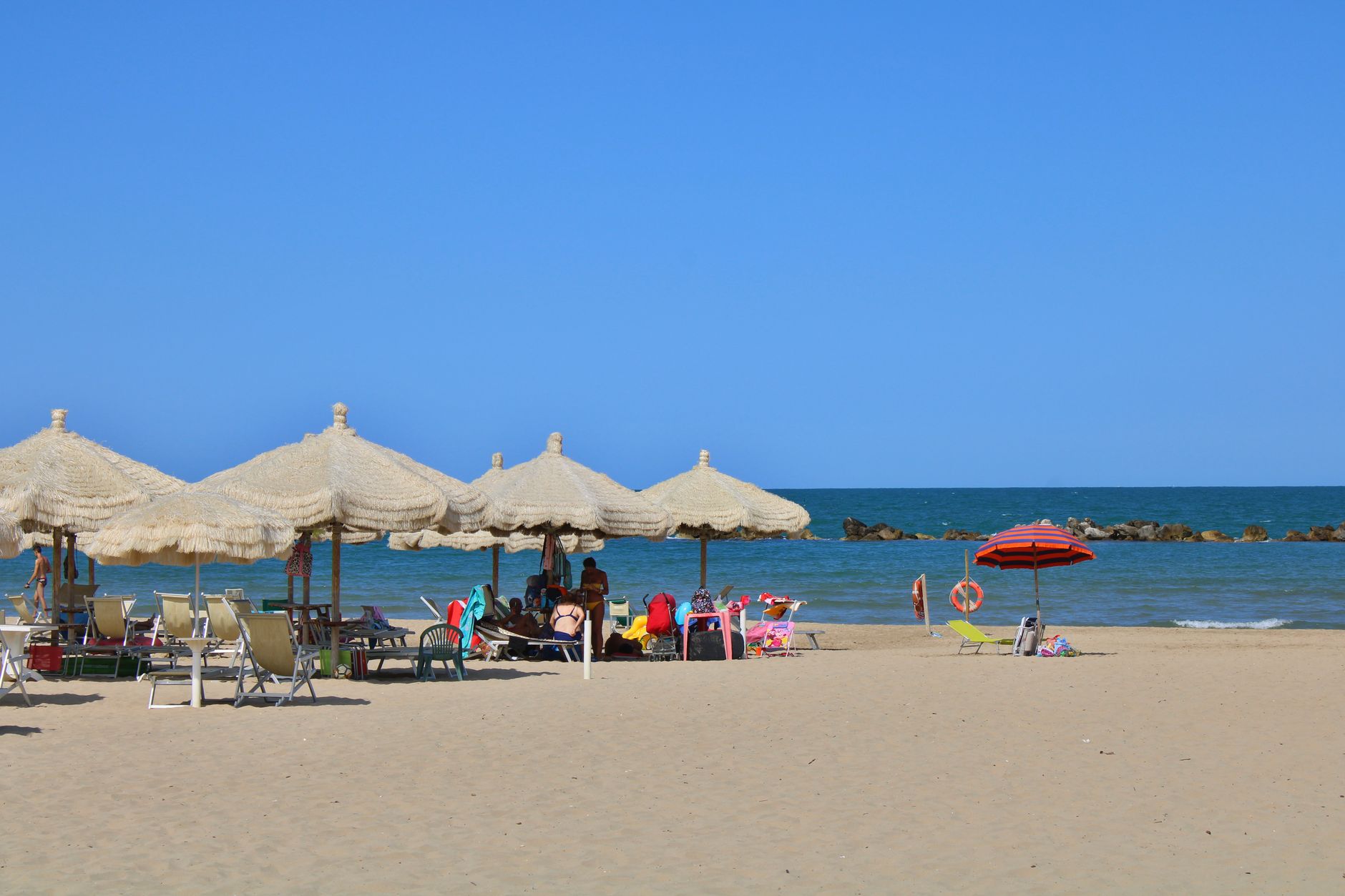
The beach is the main event, and Cattolica makes no apologies for that. But the town rewards the hour or two you give to its quieter corners: the 16th-century hospital turned museum, the summer arena that Pier Luigi Cervellati designed from scratch, the church that has stood since the 13th century.
💛 What travellers fall for
People who come back tend to arrive in May or September, when the beach umbrellas are still going up or just coming down. The old harbour square is the place for an evening drink — order whatever the bar is pouring locally and watch the boats. The aquarium building alone is worth the entrance fee just for the architecture.
Experiences you don't want to miss


Deals in Cattolica
Book directly at the provider


How Cattolica came to be
The town's recorded life begins on August 16, 1271, when inhabitants of several nearby castles — Fiorenzuola, Casteldimezzo, Gabicce, Granarola — drew up an agreement to build a fortified settlement as a defence against Pesaro. That document is treated as Cattolica's birth certificate. Archaeological evidence points to Bronze Age activity in the area, and Roman settlement is likely, though no founding date has been established with certainty.
For most of its existence Cattolica was a village within the municipality of San Giovanni, gaining its own autonomy only on December 5, 1895, under the Kingdom of Italy. The Bologna-Ancona railway arrived in 1861, and with it the first summer visitors, who began building homes along the shore. By 1933, the town was significant enough to be chosen for a marine colony for children of Italians living abroad — the complex that opened in 1934 in the presence of Mussolini, and that now houses the aquarium.
Who and what shaped it
People who shaped it
Landmark buildings
See Cattolica in motion
Plan your visit
On the map
When to go
June through September brings warm to hot days, with July and August regularly touching or exceeding 35°C and sea temperatures peaking around 26°C. April, May, and October are milder and noticeably quieter; winters are cool and grey, with January highs around 9°C.
Right now
Background & history adapted from Wikipedia (CC BY-SA) · specs from Wikidata (CC0) · weather from Open-Meteo · map data © OpenStreetMap contributors · photos from Wikimedia Commons / Unsplash with per-image credit. No third-party reviews or social posts reproduced.