
Cathédrale Sainte-Réparate de Nice
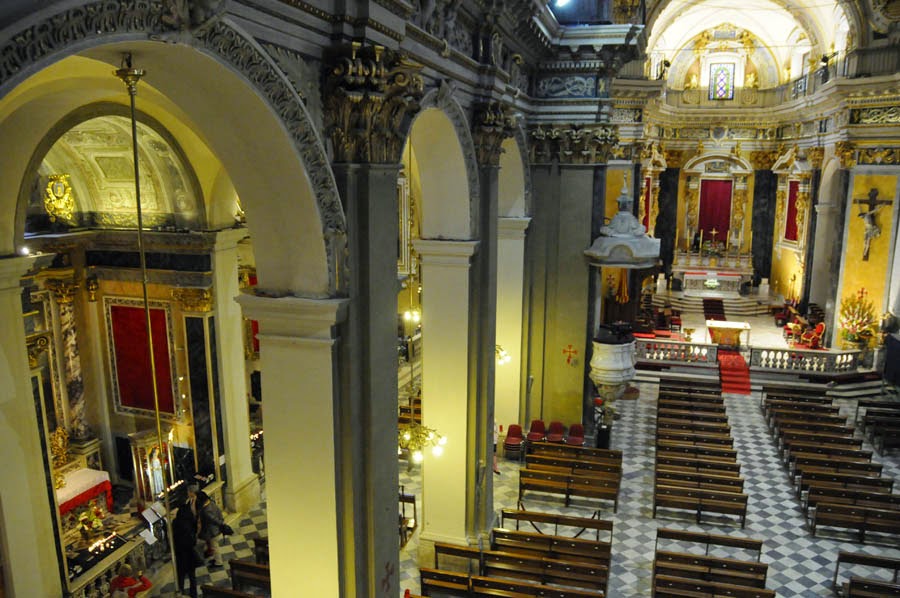
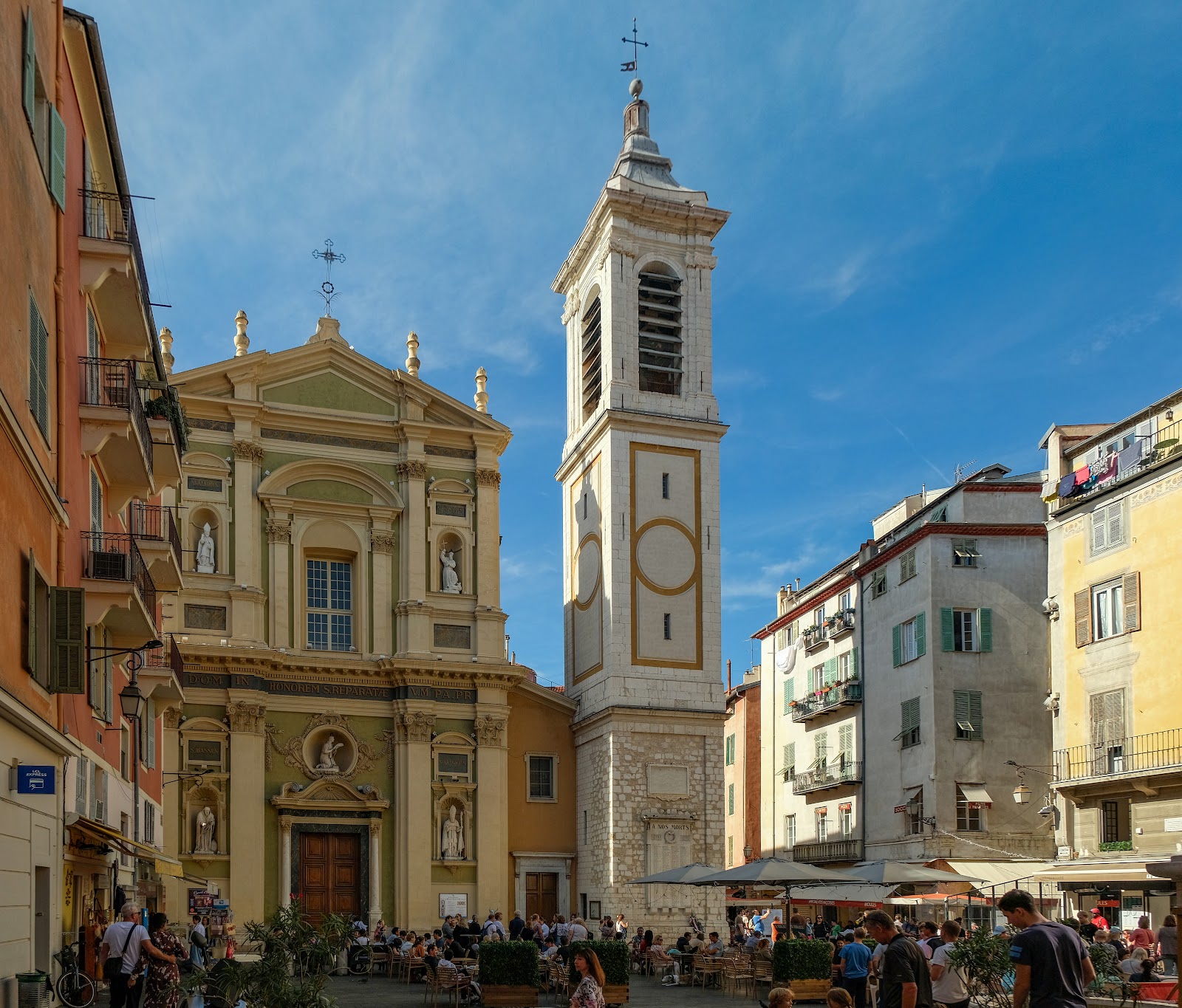
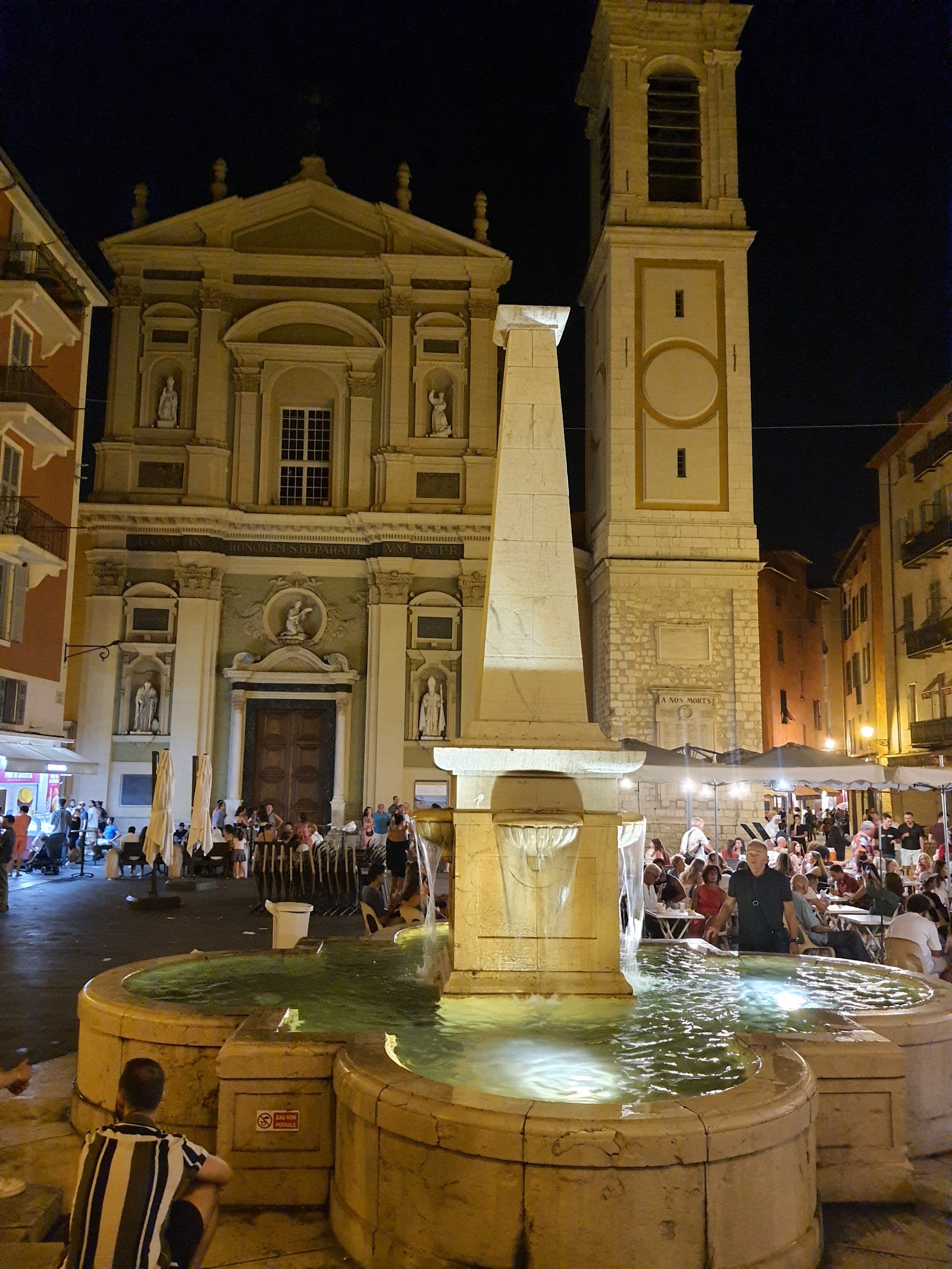
The dome gives it away before you reach Place Rossetti — a drum of polychrome glazed tiles, varnished in the Genoese fashion, rising 35 metres above the old town's rooftops. Step into the square and the full Baroque façade comes into view, its pale stone facing a terrace of ice-cream eaters and café chairs. This is the cathedral of Sainte-Réparate, dedicated to a third-century virgin martyr whose relics have rested at the high altar since 1690.
Inside, the Latin cross nave opens into ten chapels, each historically maintained by a wealthy family or guild. Three organs occupy different corners of the building — one above the entrance, one in the transept, one tucked into the choir rehearsal room — so on the right day, you may hear more than you expect.
💛 What travellers fall for
People who return tend to arrive just after 2 pm, when the lunch closure lifts and the interior is quieter than the square outside. The Chapel of Saint Reparata, where the relics are enshrined, rewards a slow look. The dome's tilework is best seen from the far end of the nave, where the crossing light falls differently in the afternoon.
The story behind Cathédrale Sainte-Réparate de Nice
The site's story begins in 1078, when a cleric named Raimbald Rostagni brought relics from Rome and established a small oratory at the foot of the castle. A church followed in the early 13th century on land belonging to the Abbey of Saint-Pons, and by 1246 it had become an official parish. Extensions in the 1450s and 1460s accommodated a growing population, and in 1590 the bishops of Nice transferred their seat here from Cimiez.
The current building took shape between 1650 and 1685, designed by the military engineer Jean-André Guiberto on the commission of Bishop Didier Palletis — who did not live to see it finished, dying from injuries sustained when the nave vault collapsed in September 1658. Marc-Antoine Grigho, an architect from Tessin, completed the work. The cathedral was consecrated in 1699, its campanile added between 1731 and 1757, and the present Baroque revival façade installed between 1825 and 1830. A fire destroyed the Chapel of Saints Alexander and Bartholomew in 1989; it has not been rebuilt.

Good to know
Tram Line T1 stops at Cathédrale – Vieille Ville. Entry is free; step-free access at the entrance. The building closes 12–2 pm daily, so plan around it. There are no toilets inside — the nearest public ones are a ten-minute walk.
Where is Cathédrale Sainte-Réparate de Nice?
More tickets & tours for Cathédrale Sainte-Réparate de Nice
Book directly at the provider
What travellers say about Cathédrale Sainte-Réparate de Nice
Very beautiful Cathedral in the old town, Vieux-Nice, the interior is quite amazing, baroue style, very calm, almost no tourists so it's possible to enjoy the beauty in peace.
Beautiful Baroque cathedral right in the heart of the Old Town (Vieux-Nice). Impressive interior and a peaceful atmosphere that contrasts nicely with the lively Place Rossetti outside. Definitely worth a stop to admire the architecture, the altar, and the beautiful dome. Free entry.
One of the first things to do after having icecreams at Fenocchio is to enter this Baroque cathedral in Place Rossetti. Established in 1699 and elevated to the status of Basilica in 1949, it houses the relics of St. Reparate, a woman martyred in Palestine, whose remains were brought to Nice in 1060. With 10 highly decorated chapels and an 11th one for baptism, this place of worship will easily take you 30-40 mins to admire if not more. Beware that churches here close at 6 PM, so try to enter atleast an hour earlier to beat the late afternoon crowds.
An absolute marvel of a Cathedral! The cathedral was built in a baroque style and is dedicated to Saint Reparata, patroness of Nice. Its exterior is just as grand as its interior. It is in the heart of Nice’s old town and for centuries has housed the Diocese of Nice.
Cathédrale Sainte-Réparate de Nice is average when it comes to aesthetics (compared to other similar buildings). Entrance is free and it is well kept. Ok to stopp in for a moment if you’re already in the area.
More of Nice
Discover where to stay, what to do and the best deals for your trip.
Explore Nice →More attractions in Nice
All of Nice →
Background adapted from Wikipedia (CC BY-SA) · map data © OpenStreetMap contributors · ratings & place photos via Google · other photos with per-image credit. Ticket links may earn us a commission at no extra cost to you.