
Cathédrale Saint-André de Bordeaux
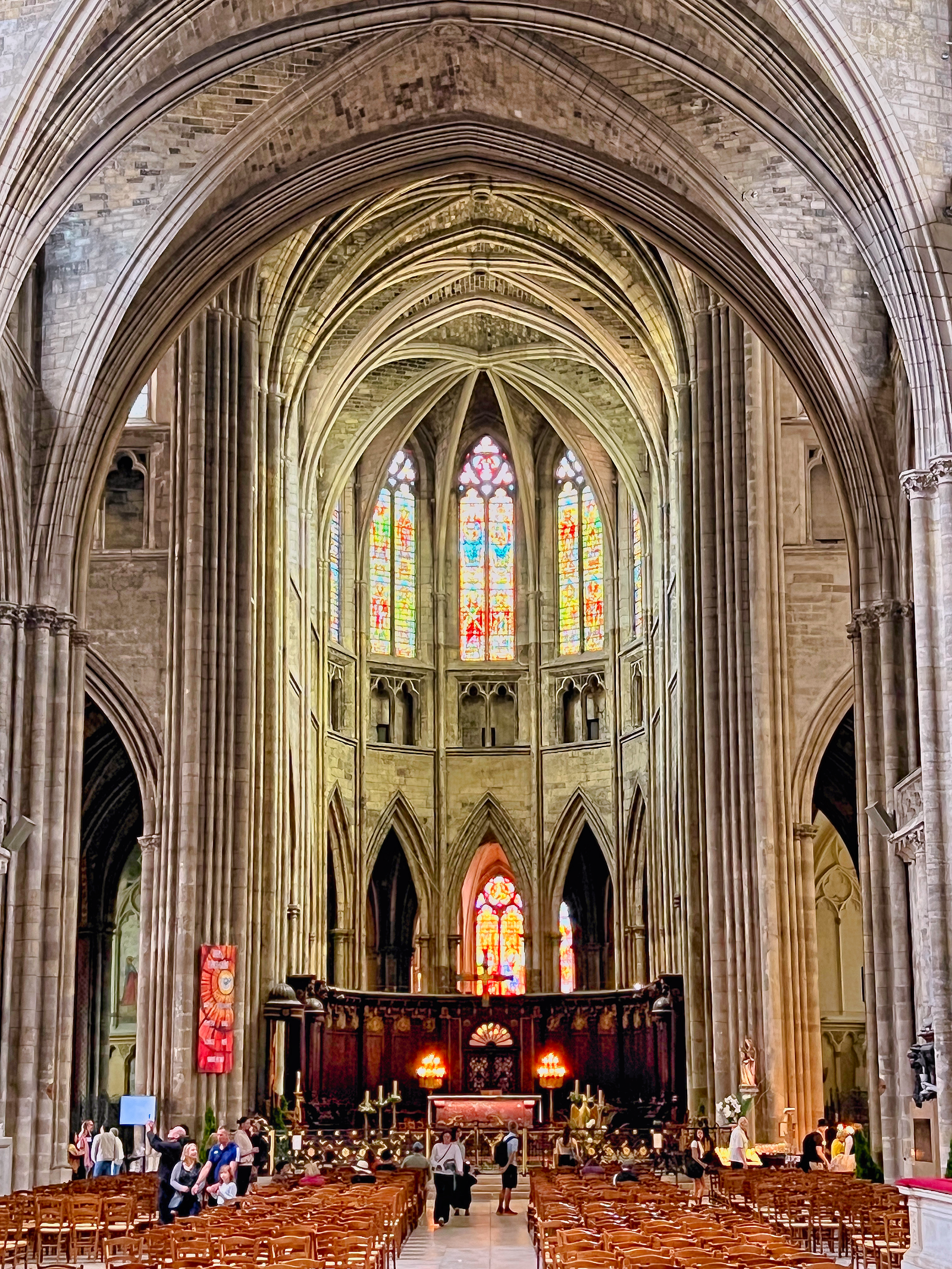
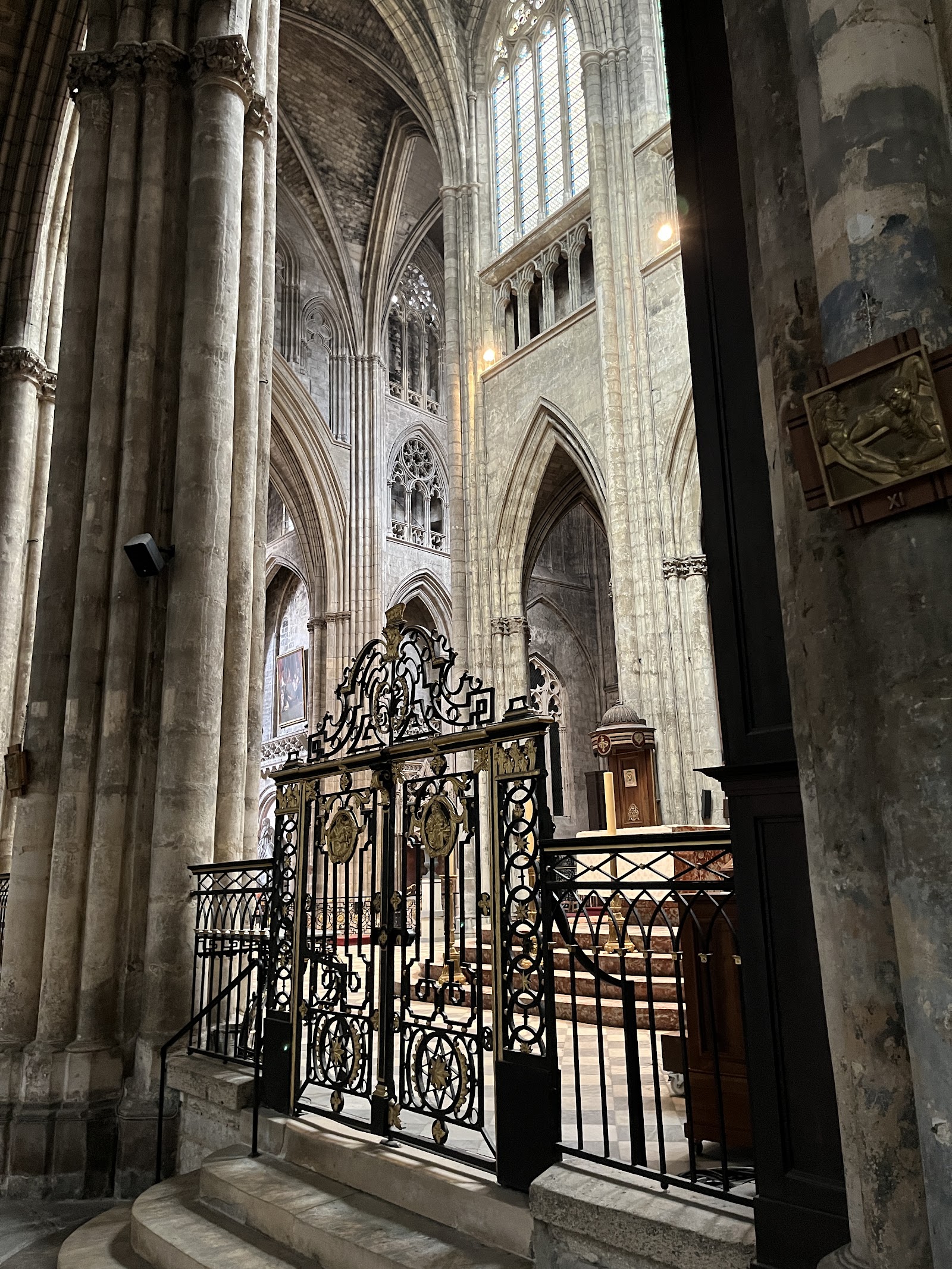
Two royal weddings have taken place on this spot — Eleanor of Aquitaine married Louis VII here in 1137, Louis XIII married Anne of Austria here in 1615 — and the cathedral carries that weight without making a fuss about it. The nave runs 124 metres and rises 29 metres, a scale that registers in the body before the eye has time to catalogue the details: the polychrome marble high altar, Jordaens's Crucifixion, the 18th-century ironwork grilles.
What sets Saint-André apart from the great Gothic cathedrals of northern France is the freestanding bell tower across the square. The Pey-Berland Tower was built separately in the 15th century because the ground beneath was too marshy to bear the weight of bells attached to the church itself. That gap between tower and cathedral — an engineering concession — gives the whole ensemble an unusual, open-air coherence.
💛 What travellers fall for
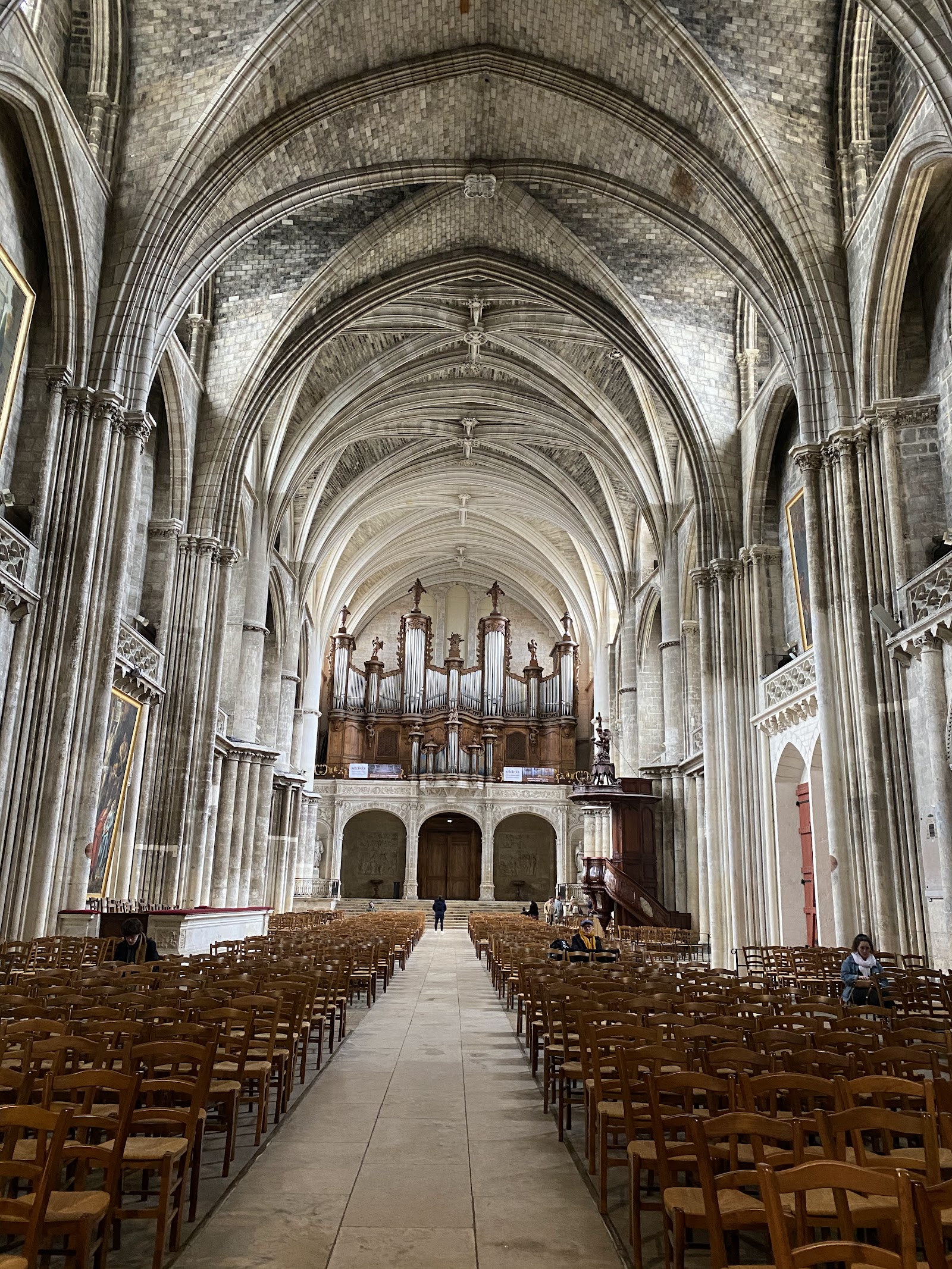
People who return tend to climb the Pey-Berland Tower on a second visit rather than a first — 233 steps, a clear view over the rooftops, and the three bells (Marie, Clémence, Marguerite) close enough to examine. The Treasury, open afternoons for €2, is easy to miss and worth not missing: a concentrated room of liturgical objects spanning four centuries.
The story behind Cathédrale Saint-André de Bordeaux
A church stood here as early as the 3rd century, though successive invasions — Visigoths, Saracens, Normans — left little of it standing. The cathedral as it exists today began to take shape after Pope Urban II consecrated it on 1 May 1096. Gothic reconstruction accelerated under the patronage of Archbishop Bertrand de Goth, later Pope Clement V, with master builder Bertrand Deschamps beginning work in 1320. The 15th-century Archbishop Pey-Berland added the freestanding tower that now bears his name.
The building has absorbed considerable damage over the centuries — an earthquake in 1427, a fire in 1787, lightning striking the spire in 1820. During the Revolution it was requisitioned for hay storage. Restoration began by imperial decree in 1808, with major reconstruction following in the 1860s. In 1998 it was designated a UNESCO World Heritage Site as part of the Routes of Santiago de Compostela.
Good to know
The nearest tram stop is Hôtel de Ville on Line A, a two-minute walk. Cathedral entry is free; the tower costs €9 for adults, free under 18. Hours vary by day and shift between summer and off-season, so check before arriving on a Monday morning.
Where is Cathédrale Saint-André de Bordeaux?
More tickets & tours for Cathédrale Saint-André de Bordeaux
Book directly at the provider
What travellers say about Cathédrale Saint-André de Bordeaux
This is a totally astonishing building. It’s Bill Tower is located separate to the cathedral in this massive square, one of the largest in Europe. The church itself is a massive space. It has the most glorious windows and wonderful atmosphere. It is free to visitand there is a ticketed illuminations presentation. This presentation also has the option of a live choir, providing the music.
Incredible cathedral and no crowds when I came on a weekday before lunchtime. Really enjoyed the stained glass, vaulted ceilings and reproduced paintings of the columns and walls in the small chapel.
An incredible building that is free to enter with only donations encouraged. I don't think I've visited a cathedral with such an immensely tall stature which almost results in sore neck muscles. When we visited on Sunday in late June, the organist was playing in the background which really added hugely to the ambience. Thoroughly recommended though would much prefer low season temperatures to really get an unfettered experience.
Beautiful gothic style cathedral with a lot of history. Not only was Eleanor of Aquitaine married here but the cathedral witnessed the wedding of Anne of Austria and Louis XIII in 1615. When we visited you can see that there are restoration work being carried out. Felt very peaceful and relaxing walking round. Admission is free
A significant historical cathedral that showcases its large interior is decorated with intricate stone carvings and features a notable organ used for regular recitals. The building has a rich history as the site of royal weddings and remains a central landmark within the city’s UNESCO World Heritage zone.
More of Bordeaux
Discover where to stay, what to do and the best deals for your trip.
Explore Bordeaux →More attractions in Bordeaux
All of Bordeaux →
Background adapted from Wikipedia (CC BY-SA) · map data © OpenStreetMap contributors · ratings & place photos via Google · other photos with per-image credit. Ticket links may earn us a commission at no extra cost to you.