
Cathédrale Notre-Dame de Strasbourg
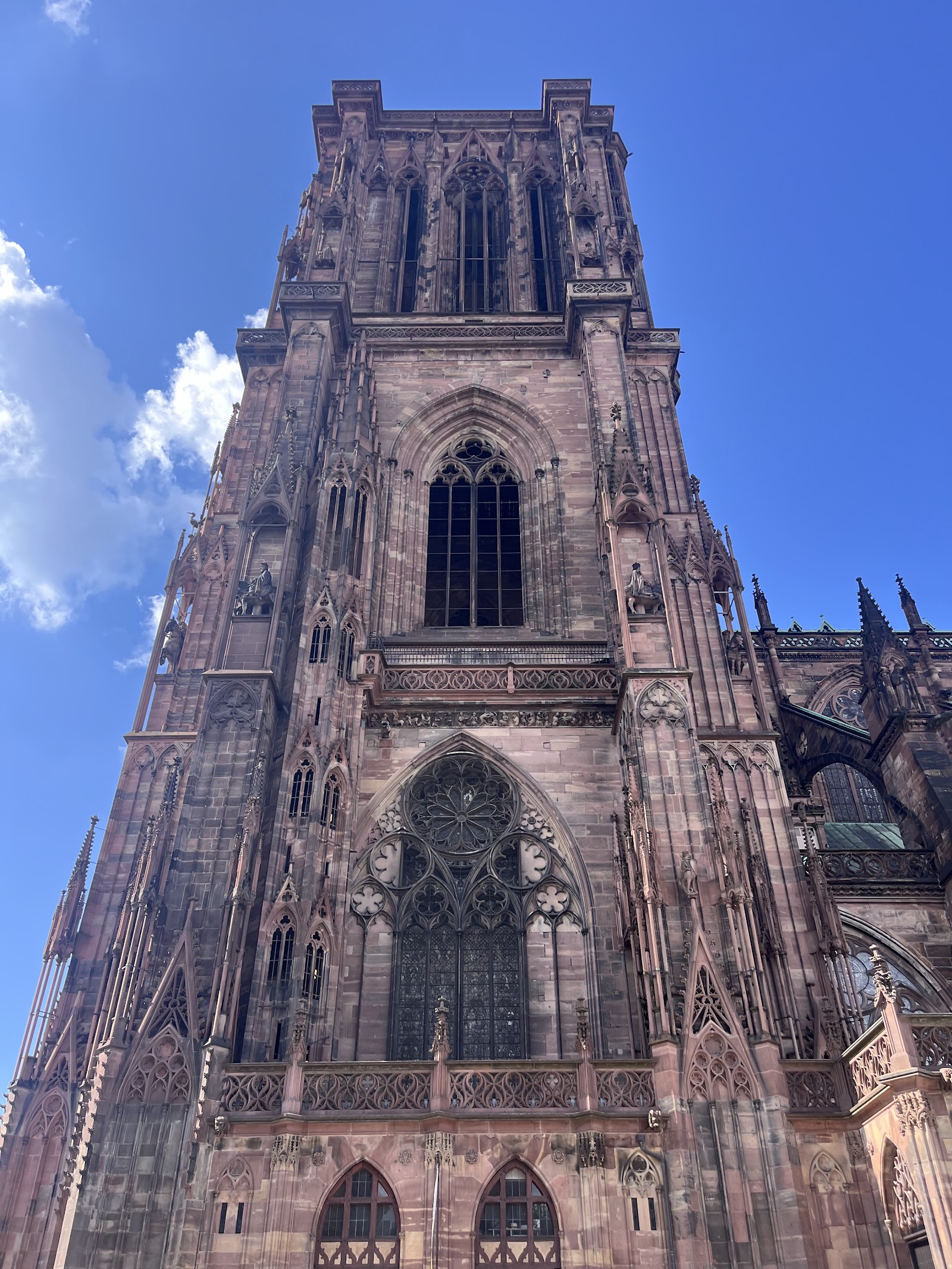
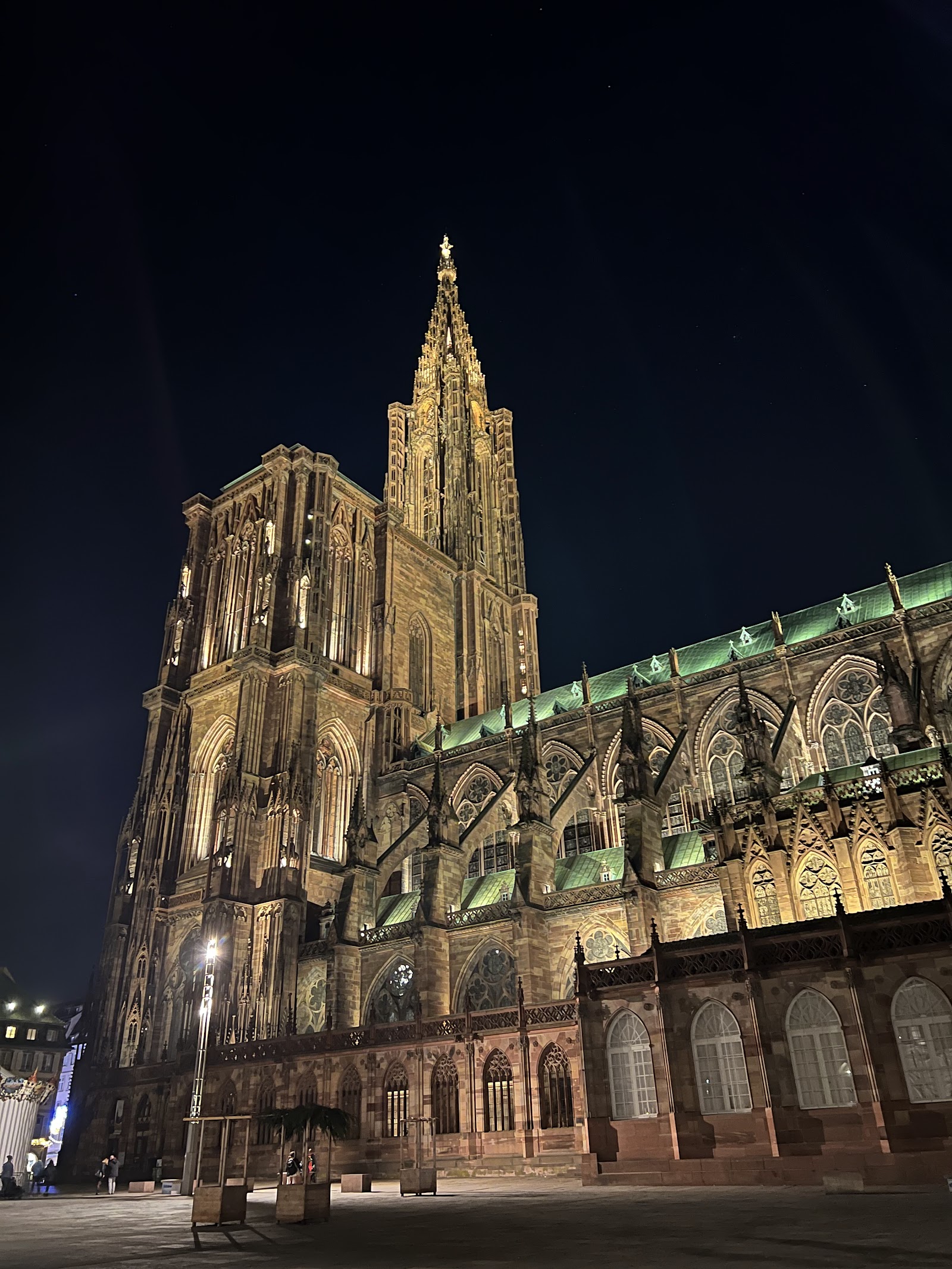
The reddish-brown sandstone of Notre-Dame de Strasbourg comes from the Vosges mountains, and on a low afternoon the whole facade seems to absorb and hold the light differently from anything around it. At 142 metres, the spire held the record as the world's tallest structure for 227 years — from 1647 to 1874 — and even now it remains the tallest thing standing that was built entirely in the Middle Ages.
Inside, the scale surprises you. The nave climbs 32 metres, and the stained glass running from the 12th to the 14th century turns the light inside amber and blue. Fourteen tapestries originally commissioned by Cardinal Richelieu for Notre-Dame Paris hang here instead, made between 1638 and 1657 by Pierre Damour.
💛 What travellers fall for
People who come back tend to time the astronomical clock's apostle parade at 12:30 p.m. — get there by noon to secure a clear sightline. The 332-step tower climb earns you a platform at 66 metres with the Alsatian plain spreading out flat to the east. The Musée de l'Œuvre Notre-Dame next door holds the original portal sculptures and building plans, and it almost always has breathing room.
The story behind Cathédrale Notre-Dame de Strasbourg
A Roman garrison town called Argentoratum occupied this ground from around 12 B.C. An 8th-century church preceded what stands today; the current cathedral was founded in 1015 by Bishop Werner of Habsburg and Emperor Henry II over the remains of a Carolingian structure. Construction of the Gothic building began in the late 1100s and ran for more than three centuries. The south transept portals with their paired figures of the Church and the Synagogue went up around 1225; the Rayonnant Gothic nave was complete by 1275.
Erwin von Steinbach shaped the cathedral's character from 1277 until his death in 1318, a project continued by his son Johannes and grandson Gerlach. Ulrich Ensingen began the octagonal tower in 1399; Johannes Hültz crowned it with the spire, finished in 1439. After Luther's theses circulated through Strasbourg from 1518 onward the cathedral became Protestant, until Louis XIV returned it to Catholic worship in 1681.
Good to know
Tram A or D to Langstross Grand'Rue is the cleanest approach. The nave is free; the tower costs €8, the clock show €3. Weekday mornings outside summer and the Christmas market season keep the crowds manageable. The tower closes for a midday break from 1:00 to 1:30 p.m.
Where is Cathédrale Notre-Dame de Strasbourg?
More tickets & tours for Cathédrale Notre-Dame de Strasbourg
Book directly at the provider
What travellers say about Cathédrale Notre-Dame de Strasbourg
Such a beautifully cathedral! Very much recommend to go up. The view is incredible. There are a lot of people, but it is still possible to go up in your tempo. On a specific time there is a show outside, very recommended to see it. Very magical! And also inside on the specific time you can see the show with the clocks. But we came 15 minutes earlier and it was already not possible to get inside so many people.
When visiting new cities as a tourist, I find the best thing to do is to visit the tallest building in the city centre. You get a great overview of the city and can pick out other places you may want to visit. Cathédrale Notre-Dame is no exception and it is really a great place to see as it is surrounded by buildings and so gives you a great sense of height and perspective
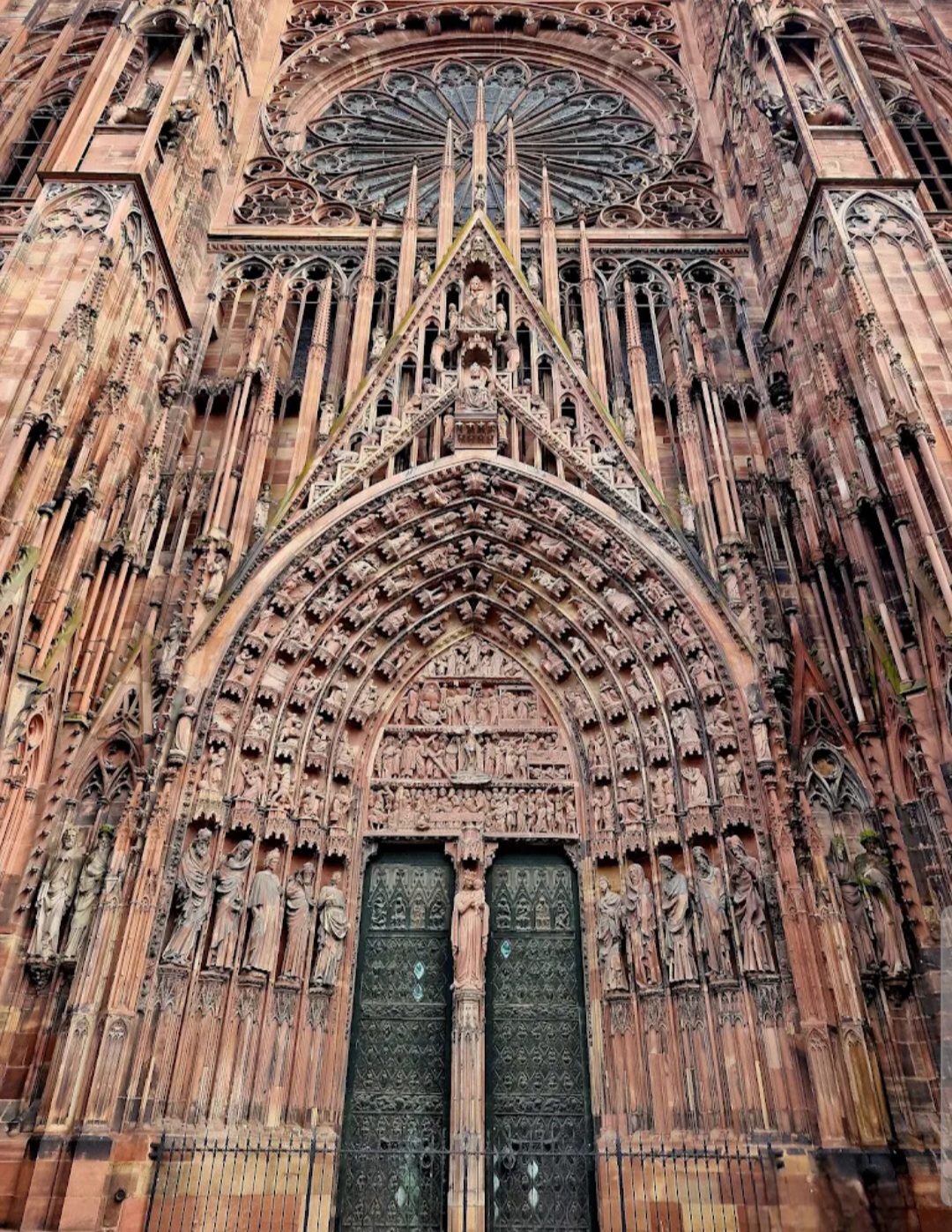
Strasbourg Cathedral took my breath away the moment I saw it. Standing in front of this magnificent Gothic masterpiece was an unforgettable experience. The countless small sculptures and incredibly intricate details make it a true work of art. I found myself trying to admire every single sculpture on its façade because each one is unique and beautifully crafted. As an art teacher, I was especially impressed by the extraordinary craftsmanship and artistic vision behind this monument. It is a true architectural jewel and one of the most breathtaking buildings I have ever visited. I highly recommend it to anyone visiting Strasbourg.
The Strasbourg Cathedral (Cathédrale Notre-Dame) is a breathtaking Gothic masterpiece located in the heart of Strasbourg, France. Famous for its pink Vosges sandstone and a massive 142-meter spire, it was the world's tallest building for over 200 years. Visitors consistently praise the intricate facade and interior artwork. offers a stunning view on the whole city
Amazing gothic cathedral. So impressive to see this cathedral and be privileged enough to go inside and climbing to the platform on top. *Cathedral* Inside is free to visit, but there are often queues outside. We found visiting early on a morning we didn't have to queue. Later in the afternoon it was much busier and they close about 11.15 for ticket holders only, paying to see the clock. *Astronomical Clock* Such an amazing clock, the engineering that has gone into this clock is just unbelievable. While visiting the cathedral we viewed rhe clock and on the hour/half hours etc there are plenty of bells and mechanisms to view. You can pay for the main show at midday but we didn't manage to do that. We were more than happy to enjoy the chimes on the hour. *The Platform* Separate tickets are needed to climb to the top. It's a steep ascent and lots of steps but again such a pleasure and so interesting. The building is so unique in design and the stairs to the top are unlike any I've seen before. There are many gaps in the masonry providing views across the city and the rooftop (even on a snowy day) still had fantastic views. A lot to see and do but sp worth it!
More of Strasbourg
Discover where to stay, what to do and the best deals for your trip.
Explore Strasbourg →More attractions in Strasbourg
All of Strasbourg →

Background adapted from Wikipedia (CC BY-SA) · map data © OpenStreetMap contributors · ratings & place photos via Google · other photos with per-image credit. Ticket links may earn us a commission at no extra cost to you.