
Catedral de Valencia
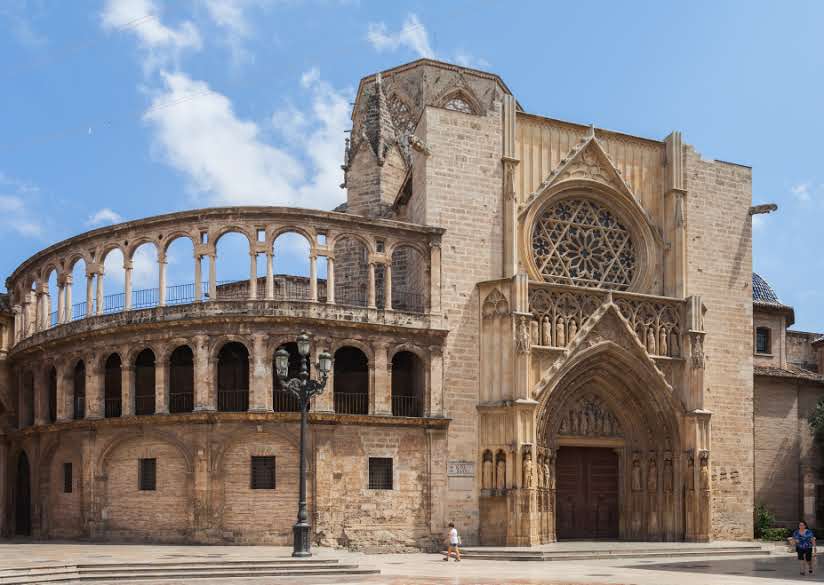
The Catedral de Valencia stands between two squares — Plaza de la Virgen and Plaza de la Reina — and that in-between position tells you something about it. This is a building that has never quite settled into one idea of itself. Romanesque, Gothic, Renaissance, Baroque, and Neoclassical layers sit alongside each other, the result of seven centuries of additions, fires, civil-war losses, and a 1972 restoration that stripped away neoclassical plaster to recover the Gothic bones underneath.
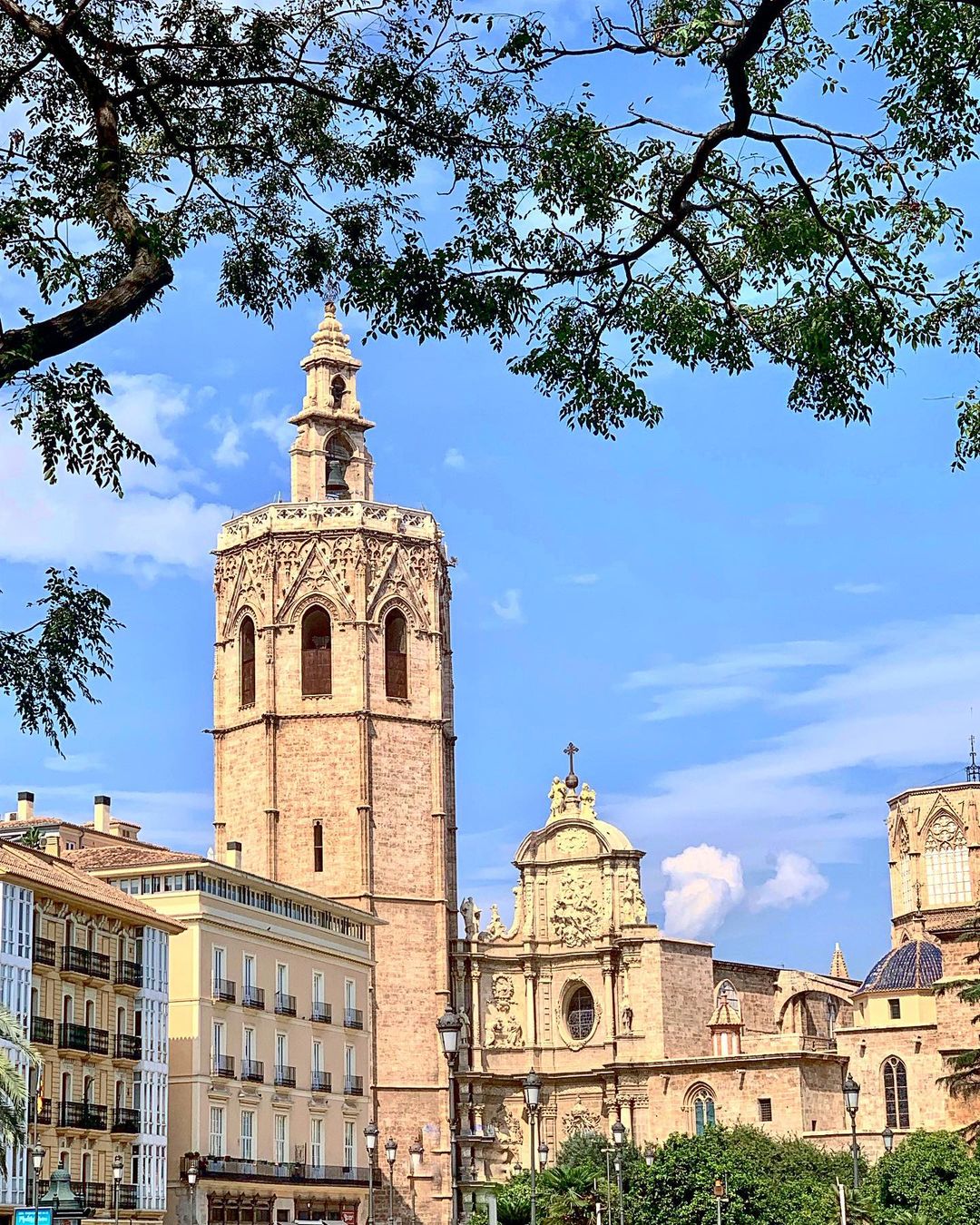
Climb the 207 steps of the 51-metre Miguelete tower and the rooftops of the old city spread out below you. Come back down and find, in the former chapter house, a chalice that some have claimed — since 1437, when King Alfonso V of Aragon delivered it — to be the Holy Grail.
💛 What travellers fall for
People who return tend to time a visit for Thursday at noon at the Apostles' Gate, where the Water Tribunal — eight elected farmers ruling on irrigation disputes from the Turia River, a tradition Jaume I formalized in the Middle Ages — convenes in the open air. It lasts minutes, conducted entirely in Valencian, and costs nothing to watch.
The story behind Catedral de Valencia
Before the cathedral, there was a Roman temple on this site, then a mosque during the centuries of Moorish rule. When James I of Aragon took Valencia in 1238, his first bishop, Pere d'Albalat, consecrated the space to Saint Mary. The first stone of the present building went down on June 22, 1262, to a design by architect Arnau Vidal, under the direction of bishop Andreu d'Albalat. Stone came from quarries at Burjassot and Godella, and from Benidorm and Xàbia by boat.
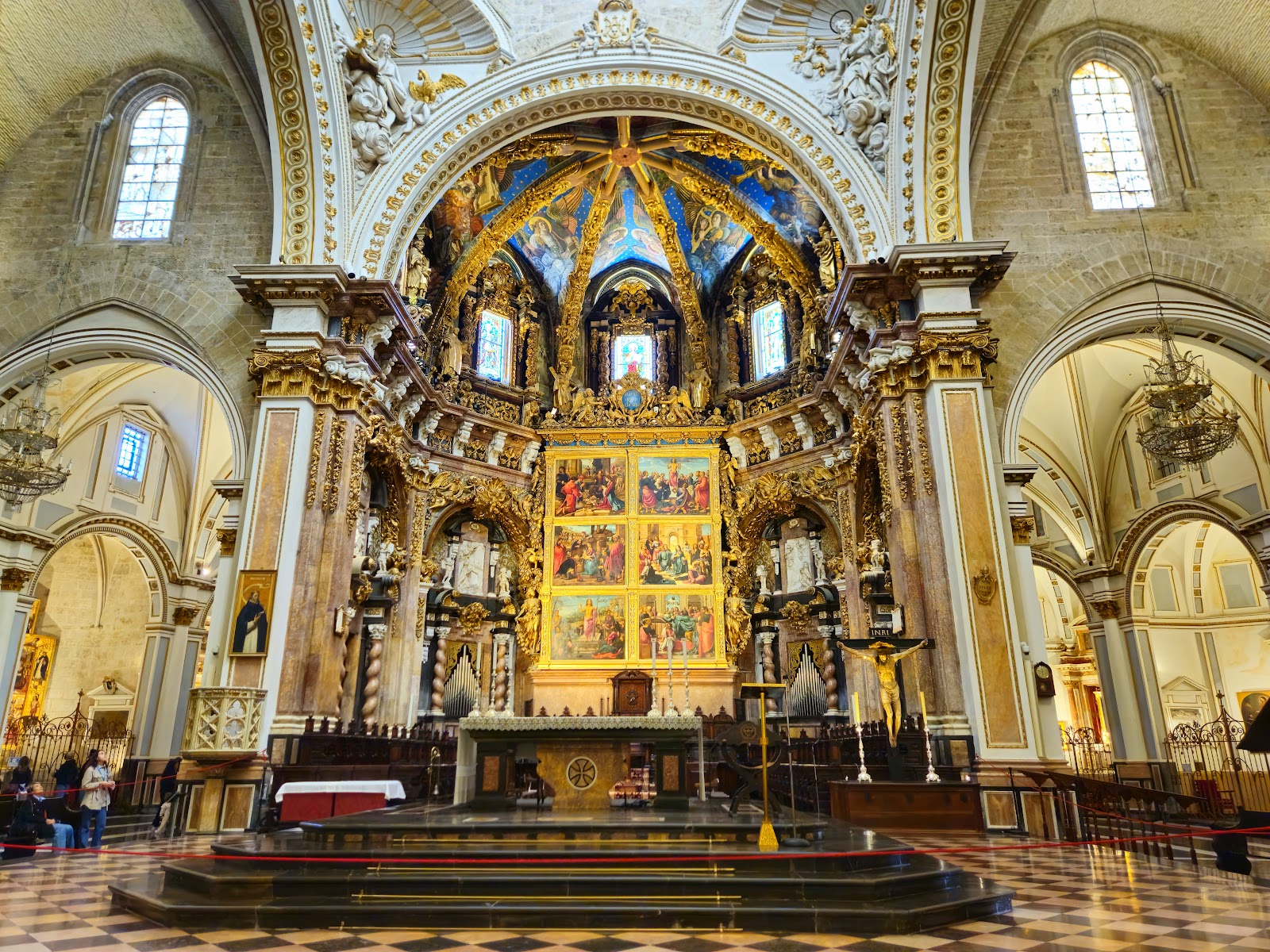
Construction stretched across the 13th to 15th centuries, with architects Francesc Baldomar and Pere Compte expanding the nave and transepts in 1459. The main door, the Iron Gate, came from Konrad Rudolf's hand in 1703. A fire during the Spanish Civil War destroyed the organs and much of the decorative fabric. During maintenance work in 2004, Renaissance frescoes behind the main altar's marble — ten angels with musical instruments — came back into light.
Good to know
Enter free on weekdays before 9:30 AM or after 6:30 PM for the cathedral itself. The paid €10 ticket covers the Holy Grail Chapel, museum, and audio guide (available in ten languages). The Miguelete tower is an extra €3 and has separate hours — check before you go. Metro lines 3 or 5 to Xàtiva get you close.
Where is Catedral de Valencia?
More tickets & tours for Catedral de Valencia
Book directly at the provider
What travellers say about Catedral de Valencia
Great for passing by 👏 Valencia Cathedral is one of those places where history feels layered. Standing in front of it, you know you’re on ground that’s been sacred for centuries: Roman temple, Visigothic cathedral, then the main mosque of Islamic Valencia, before becoming the Christian cathedral we see today. That place gives the whole site a quiet weight, even before you step inside. The building itself is beautiful in a slightly messy way: Gothic bones with Baroque and Neoclassical bits added over time. it shows how the city kept adapting and reusing its most important spaces. But for me, the real highlight is the plaza outside. The square in front of the cathedral (Plaza de la Almoina) is perfect for pictures: you get the cathedral façade, the Miguelete tower, and wide open sky It’s also genuinely relaxing there are benches, a bit of shade, and a slower pace than the main tourist streets. Location-wise, You’re steps away from the narrow, atmospheric old streets that make Valencia’s centre so walkable and photogenic. From the plaza, you can easily drift into the old neighbourhoods, grab a coffee, or continue exploring the historic core without feeling rushed.
Standing in the heart of the city, the Valencia Cathedral is a breathtaking tapestry of architectural history. Known formally as the Metropolitan Cathedral-Basilica of the Assumption of Our Lady of Valencia, it is most famous for housing what many believe to be the Holy Grail. Architectural Harmony The structure is a fascinating "history lesson in stone." Because construction spanned centuries, you can see a seamless blend of styles: Romanesque: The intricate Puerta del Palau. Gothic: The soaring nave and the iconic Miguelete bell tower. Baroque: The ornate main entrance (Puerta de los Hierros). The Experience Climbing the Miguelete is a must for any visitor. After 207 steps, you are rewarded with a 360-degree view of Valencia’s terracotta rooftops and the distant Mediterranean. Inside, the atmosphere is solemn and majestic, highlighted by the stunning Renaissance frescoes above the main altar. Whether you are a history buff, a religious pilgrim, or just an admirer of beautiful spaces, the Cathedral is the undisputed soul of Valencia. Don't forget to visit the museum to see works by Goya and the gold-leafed artifacts that define the city's rich heritage. It is more than a building; it is the living heart of the Plaza de la Reina.
Worth every penny! The cathedral is stunning, the audio guide expertly walks you through and the experience is exceptional. The walk up the tower is an extra 3 Euros and not for the claustrophobic! Lots and lots of stairs! The payoff is a panoramic view of the city and worth it from my perspective.
Valencia Cathedral (La Seu), dedicated to Mary in 1238, is a magnificent building that combines Romanesque, Gothic and Baroque styles. You can see the Holy Grail (the chalice from the Last Supper). The entrance ticket is 10 euro, the audio guide is included in preice, and for additional 2 euro you can climb the Miguelete Tower for views over the city.
There was a considerable wait time to enter and you generally stand outside in the sun - if there are big groups with reserved time slots in advance, you might wait 30-60mins. The cathedral itself is nice, big and calm. There is a sort of museum on one side. Climbing up the tower was the actually interesting part for me. There is no elevator and there are restrictions on how many ppl they let up at a time, but the views from the top are great and the stairwell itself is kind of fun, while steep and crammed if there are people in both directions.
More of Valencia
Discover where to stay, what to do and the best deals for your trip.
Explore Valencia →More attractions in Valencia
All of Valencia →
Background adapted from Wikipedia (CC BY-SA) · map data © OpenStreetMap contributors · ratings & place photos via Google · other photos with per-image credit. Ticket links may earn us a commission at no extra cost to you.