
Catedral de Mallorca (La Seu)

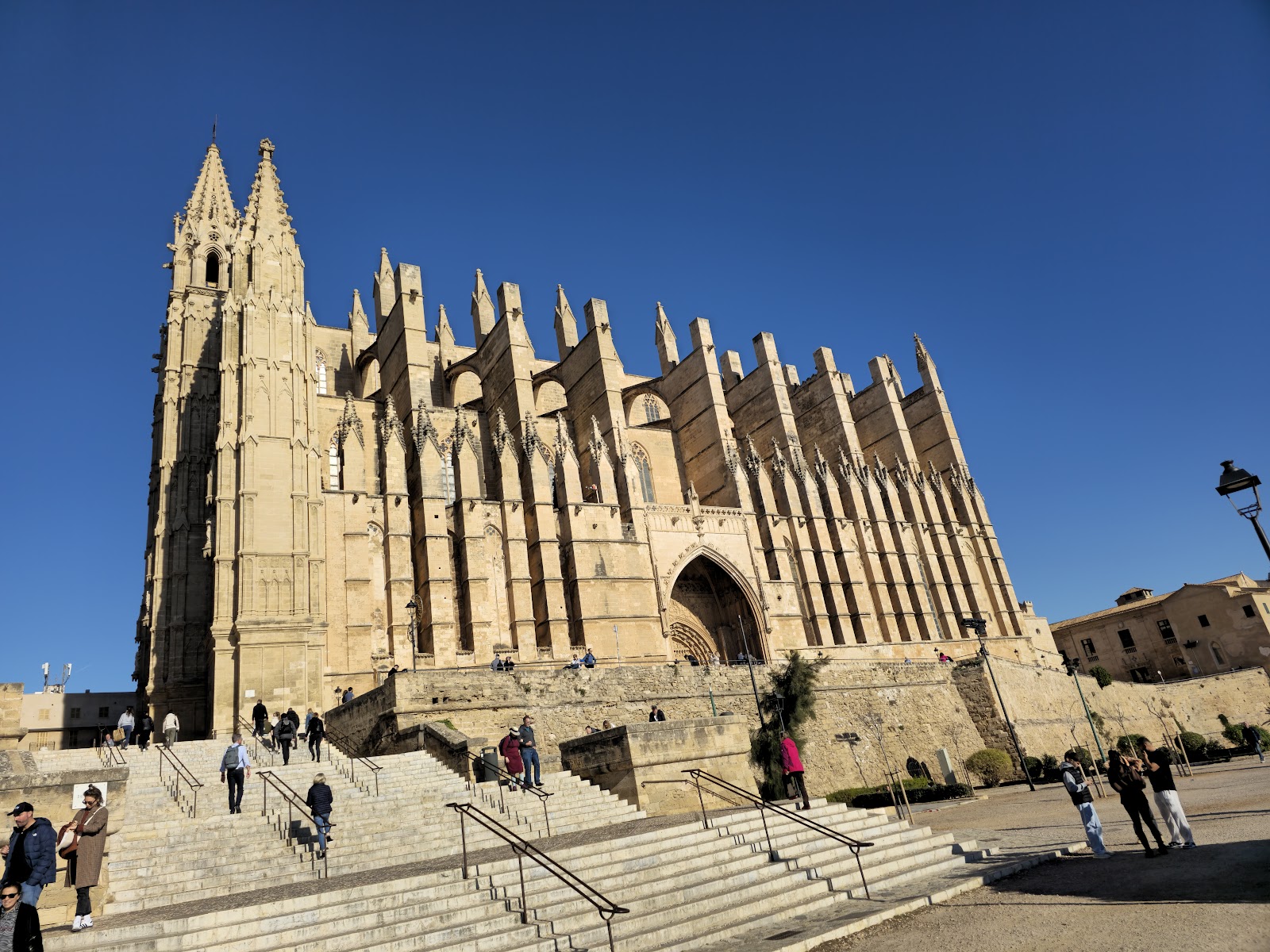
Stand on the waterfront below La Seu on a clear morning and the cathedral reads almost like a cliff face — pale golden limestone rising 44 metres at the nave, the whole structure pressing south toward the sea as if it grew from the same rock as the city wall. The Mirador portal faces the water, its Gothic tracery worn soft by centuries of salt air.
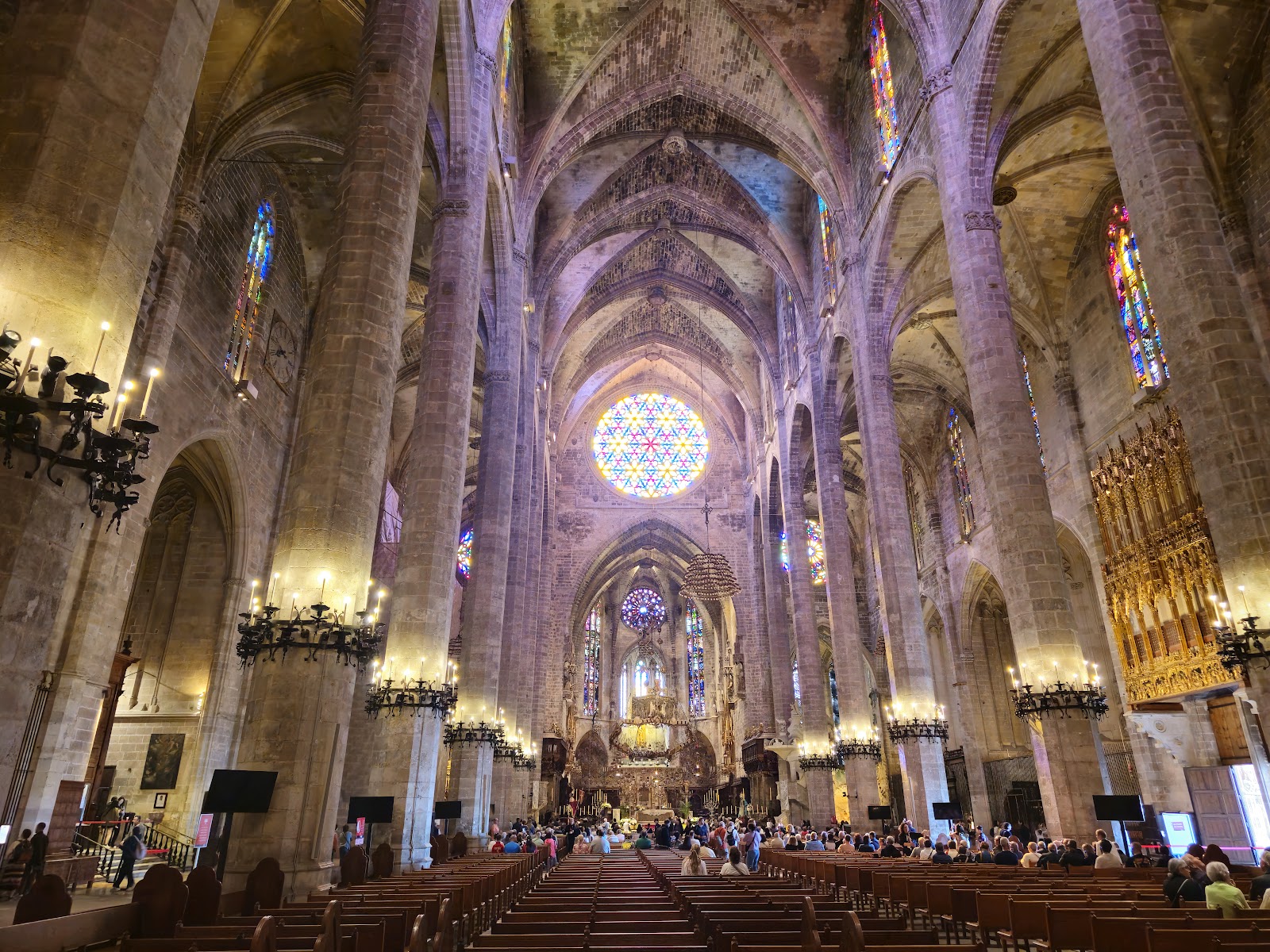
Inside, two things stop most people mid-stride: the rose window above the western door — 12.55 metres across, more than 1,200 pieces of coloured glass — and the canopy Antoni Gaudí designed above the altar, shaped like a crown of thorns and wired so it can be lit from within.
💛 What travellers fall for
People who come back tend to time a visit for February 2 or November 11, when winter sun catches the main rose window and projects its reflection across the nave to meet the opposite window — the two circles overlapping into a figure of eight on the floor. It only works in clear weather, and it only lasts a few minutes.
The story behind Catedral de Mallorca (La Seu)
The site had been a mosque before King Jaime I ordered its consecration to the Virgin Mary following the Christian conquest of 1229. Bishop Pere de Morella consecrated the ground the following year, but construction moved slowly across generations. The Chapel of the Holy Trinity — now the royal mausoleum, holding the remains of Jaume II and Jaume III — was finished by 1327. The cathedral took its current Gothic shape from 1386 onward, with the bell tower completed in 1498 and the main façade finished in 1601.
Two later interventions reshaped the interior. After an 1851 earthquake, Madrid architect Juan Bautista Peyronnet led a monumental restoration including a new main façade. Then, commissioned in 1902 by Bishop Pere Joan Campins, Antoni Gaudí moved the choir stalls from the centre of the nave and designed the crown-of-thorns canopy — work that continued until disputes with local authorities halted it in 1914. Between 2001 and 2006, Mallorcan artist Miquel Barceló covered the apse of the Chapel of Sant Pere in Italian ceramic and replaced the stained glass with grisaille panels.
Good to know
Bus lines 4, 7, and 25 stop nearby. Arrive before noon to beat tour groups. Shoulders and knees must be covered. The terrace climb — around 200 narrow steps — is not suitable for anyone with vertigo or cardiorespiratory conditions; book that ticket separately and well ahead in summer.
Where is Catedral de Mallorca (La Seu)?
Location
- In Palma de Mallorca
- 39.5675, 2.6483
- Open in Google Maps
Rating
4.7 ★ · 66,151 Google reviews
More tickets & tours for Catedral de Mallorca (La Seu)
Book directly at the provider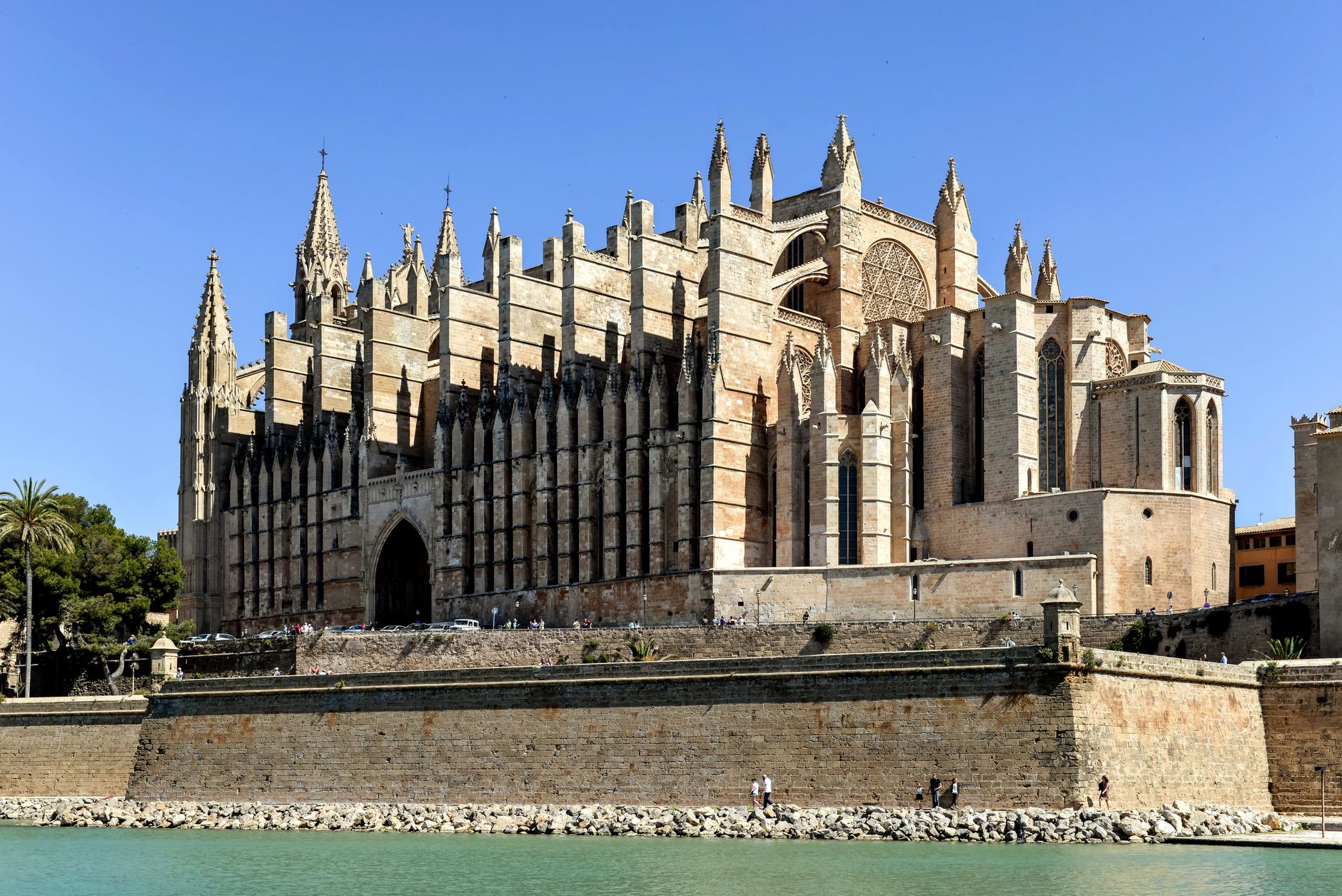
What travellers say about Catedral de Mallorca (La Seu)
Well worth a visit. It's so majestic. It's hard to describe, you have to visit it to experience the grandeur of the place. I visited at 10.00am & it wasn't too busy but it was at the end of May which wouldn't be the height of the tourist season I guess . You have to book your tickets online though. You can either do it ahead of time or there's a barcode on the outside of the building that you can scan. Palma itself is so beautiful & interesting .I would go back again.
Visiting the cathedral was one of the highlights of my trip to Mallorca. The architecture is absolutely breathtaking, and the atmosphere inside is peaceful and inspiring. Every detail of the building reflects its rich history and incredible craftsmanship. The staff were friendly, and the whole experience was well organized. I highly recommend visiting if you’re in Mallorca—it’s a truly unforgettable place.
Absolutely gorgeous Cathedral cannot recommend visiting enough if you go definitely get the terrace view tickets and see a sprawling view of the city. I would also recommend going early in the morning in order to catch the morning sunlight for the beautiful stained glass Cathedral windows.
This place is beautiful and a must see. The hike up the spiral staircase to the terrace level was well worth it. Views of the city are spectacular from up top. People should be aware that there's roughly 145 steps up in a pretty confined area so make sure you're in decent shape and not claustrophobic.
We somehow got lost heading to the Cathedral but it was well worth the extra 10 mins when we did arrive. It costs around £10 to visit and is well worth the cost- be advised that you need to book online and it’s far easier to do it indoors rather than trying to read a phone screen in the blaring sunshine. Also, if you are older, scroll down the price list for the old people entrance price and pay in local currency too. Once inside take your time looking around; it’s not a very big cathedral but it is steeped in history with something to appeal to everyone whether religious or not. There are toilets in a small courtyard and the exit is just beyond those, through the gift shop. It brings you out at the other side of the cathedral so be aware if you are meeting with others.
More of Palma de Mallorca
Discover where to stay, what to do and the best deals for your trip.
Explore Palma de Mallorca →More attractions in Palma de Mallorca
All of Palma de Mallorca →
Background adapted from Wikipedia (CC BY-SA) · map data © OpenStreetMap contributors · ratings & place photos via Google · other photos with per-image credit. Ticket links may earn us a commission at no extra cost to you.