
Castell de Bellver
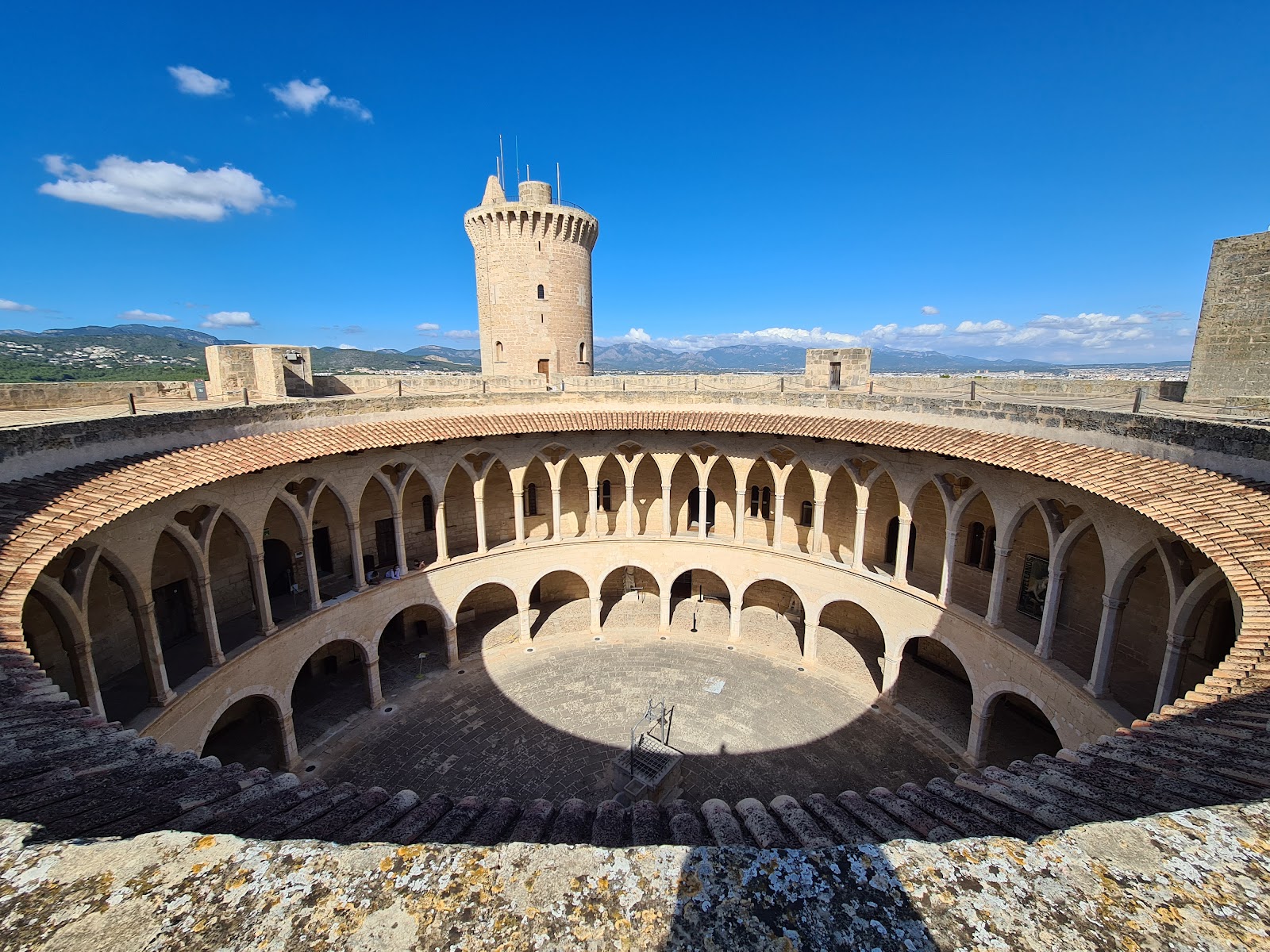
The name gives it away: Castell de Bellver means 'the castle with a lovely view', and the hill above Palma delivers exactly that — a panorama of pine woods, the old city, the Badia de Palma and open sea beyond. What the name doesn't prepare you for is the shape: circular, with a round courtyard at its heart, it is the only castle of its kind in Spain.
Built as a royal residence, it served that purpose for barely a generation before becoming, for two centuries, a prison. You can still read the graffiti prisoners scratched into the stone on the upper terrace — a quiet, unsettling detail that the views alone would never give you.
💛 What travellers fall for
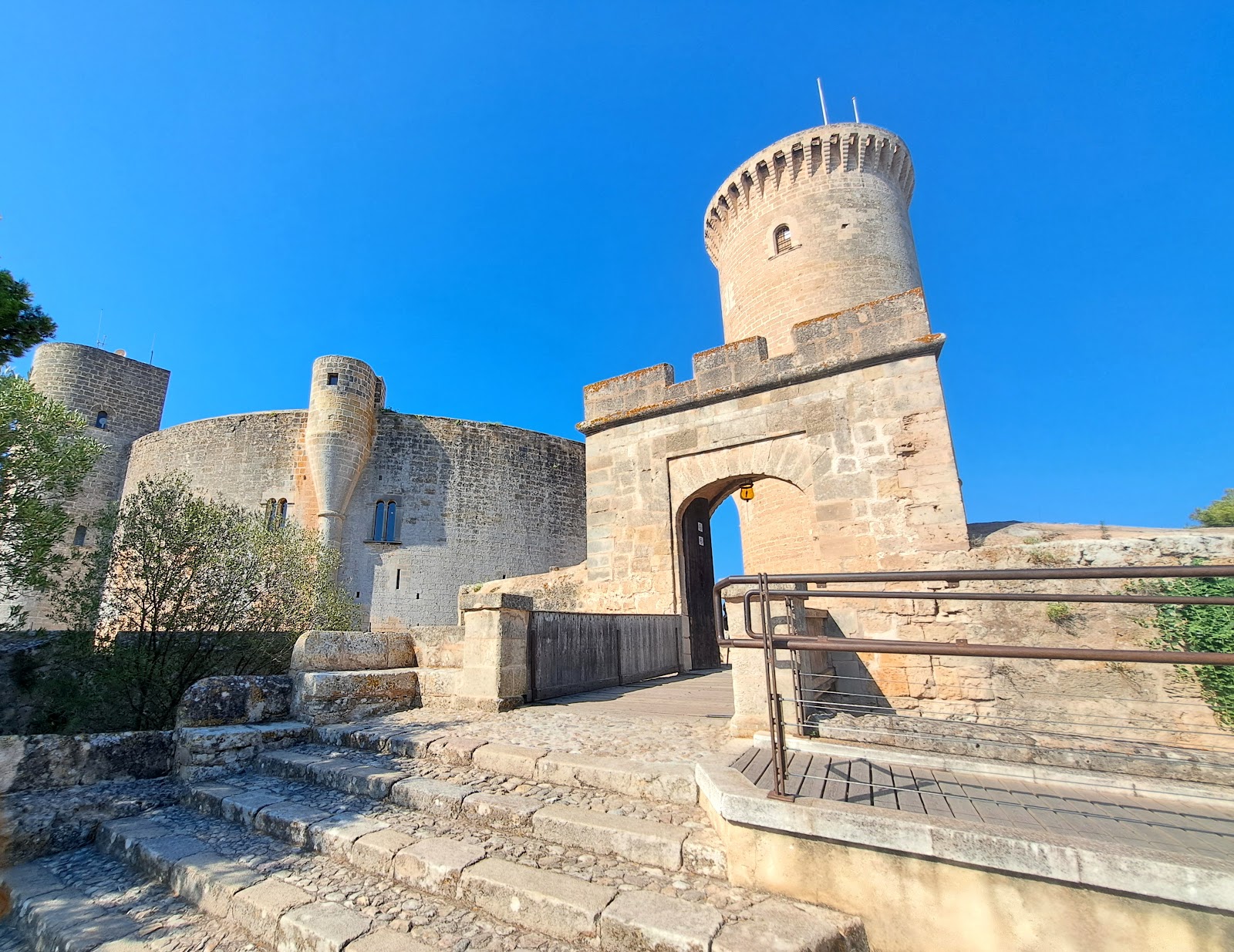
People who come back tend to time it for a weekday morning, when the courtyard is quieter. The Torre de l'Homenatge — the detached Homage Tower — is easy to overlook; don't. And the dungeon chamber known as 'the Pot' (Olla) makes the castle's long history as a prison feel very immediate, very fast.
The story behind Castell de Bellver
Construction began in 1300 on the orders of Jaume II, King of Majorca, and was largely complete by 1311. The architect Pere Salvà — who also worked on the Palau de l'Almudaina nearby — designed the castle's distinctive circular plan, a form almost without precedent in Spain. Despite its ambitions as a royal seat, only King Sanç in 1314 and Aragon's Joan I in 1395 ever lived here for any meaningful stretch.
From 1717 the lower levels became a prison, a function that persisted through the Wars of the Spanish Succession, the Napoleonic Wars and, finally, the Spanish Civil War, when 800 republicans were held here and forced to build the road that still connects Palma to the castle gates. The most celebrated prisoner was the Enlightenment writer Gaspar Melchor de Jovellanos, who spent six years here from 1802 and produced the first detailed description of the building. It became a museum in 1932, restored in 1976 to house the city's history collection.
Good to know
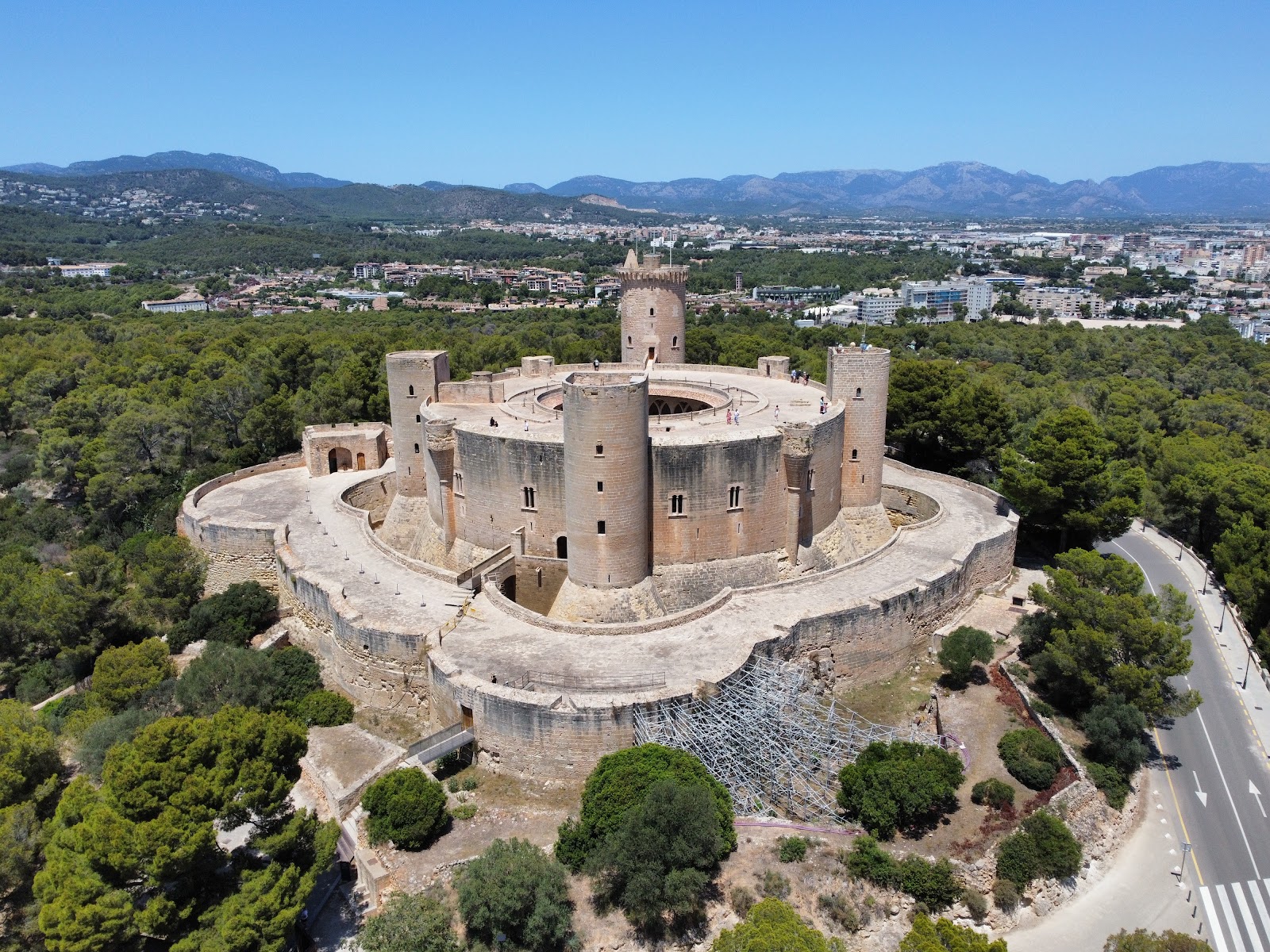
EMT Bus 50 from Plaça d'Espanya costs €2 and drops you near the access road; expect a ten-minute uphill walk through pines. Entry is €4, free on Sundays. Summer hours run to 7pm Tuesday–Saturday; winter to 6pm. Closed 1 January, 1 May, Easter Sunday and 25 December. Budget 60–90 minutes.
The hill is exposed and the walk up from the bus stop is open to the sun; in July and August that ten minutes can be genuinely hot, so go early or late in the day. Spring and autumn are the most comfortable seasons for the outdoor terraces and the moat walk.
Where is Castell de Bellver?
Location
- In Palma de Mallorca
- 39.5694, 2.6244
- Open in Google Maps
Rating
4.5 ★ · 26,372 Google reviews
More tickets & tours for Castell de Bellver
Book directly at the provider
What travellers say about Castell de Bellver
1. Perfectly Circular Design Bellver Castle is one of the very few circular castles in Europe. Most castles are square or rectangular, which makes Bellver instantly unique. 2. Built in the 14th Century It was constructed around 1300 for King James II of Mallorca. 3. Name Means “Beautiful View” “Bellver” comes from old Catalan words meaning beautiful view and the castle absolutely lives up to the name. 4. Overlooks Palma The castle sits on a hill about 3 km from the center of Palma, giving sweeping views of the city, harbor, and Mediterranean Sea. 5. Used as a Royal Residence Unlike many military castles, Bellver was originally designed as a comfortable royal home as well. 6. Later Became a Prison Over the centuries, the castle was used to imprison political prisoners and military figures. 7. Unique Central Courtyard Inside is a stunning two-level circular courtyard with Gothic arches that feels almost theatrical. 8. Built from Local Sandstone Much of the stone came from caves beneath the castle hill itself. 9. Now a Museum Today it houses the Museum of the History of Palma, telling the story of Mallorca’s past. 10. One of Mallorca’s Best Sunset Spots Many visitors go in the late afternoon because the sunset views over Palma Bay are spectacular. 🌅
Just gorgeous views and interesting historic site with a small museum. Uphill to get there can be hard in the heat so we took a cab up and then returned to our hotel doing the walk down. We were there on June 25. I recommend sunglasses, a parasol and fan. There is a small gift shop and outdoor café for refreshments after the visit. Just lovely!
Even if you don’t have the time to explore the museum, the entrance fee is already worth it for the stunning views one gets of Palma and the rest of Mallorca. There are interesting exhibits of marble statues, the island’s (and most specifically Palma’s) history and—as of writing—links to the composer Chopin and his works being inspired by the life on the island. Again, for the entrance fee, you can’t go wrong with seeing what’s to offer here. Accessibility: I’d find getting here and walking about in the castle ground kinda hard to recommend for people who don’t have a good basic level of fitness. Yes, there are wheelchair ramps and such, but to enjoy the best of the castle, one really needs to walk on foot and climb some stairs.
My favourite place in Palma. Unusual circular design overlooking the entire bay and city. The roof creates a 360 degree terrace with views on all sides. Sadly the tower isn't open to the public. Entrance was only 4 euro and you purchase them from the gift shop and restraunt structure to the left hand side as you are looking at the main entrance. The castle if filled with a few displays about the history of the palma area.
Great museum telling you lots about the history of Palma. Great to know about how it became so important and the different forms the city took over the years. Great views and temporary exhibits as well, overall a must see in Palma
More of Palma de Mallorca
Discover where to stay, what to do and the best deals for your trip.
Explore Palma de Mallorca →More attractions in Palma de Mallorca
All of Palma de Mallorca →

Background adapted from Wikipedia (CC BY-SA) · map data © OpenStreetMap contributors · ratings & place photos via Google · other photos with per-image credit. Ticket links may earn us a commission at no extra cost to you.