
Casco Viejo (Old Town)
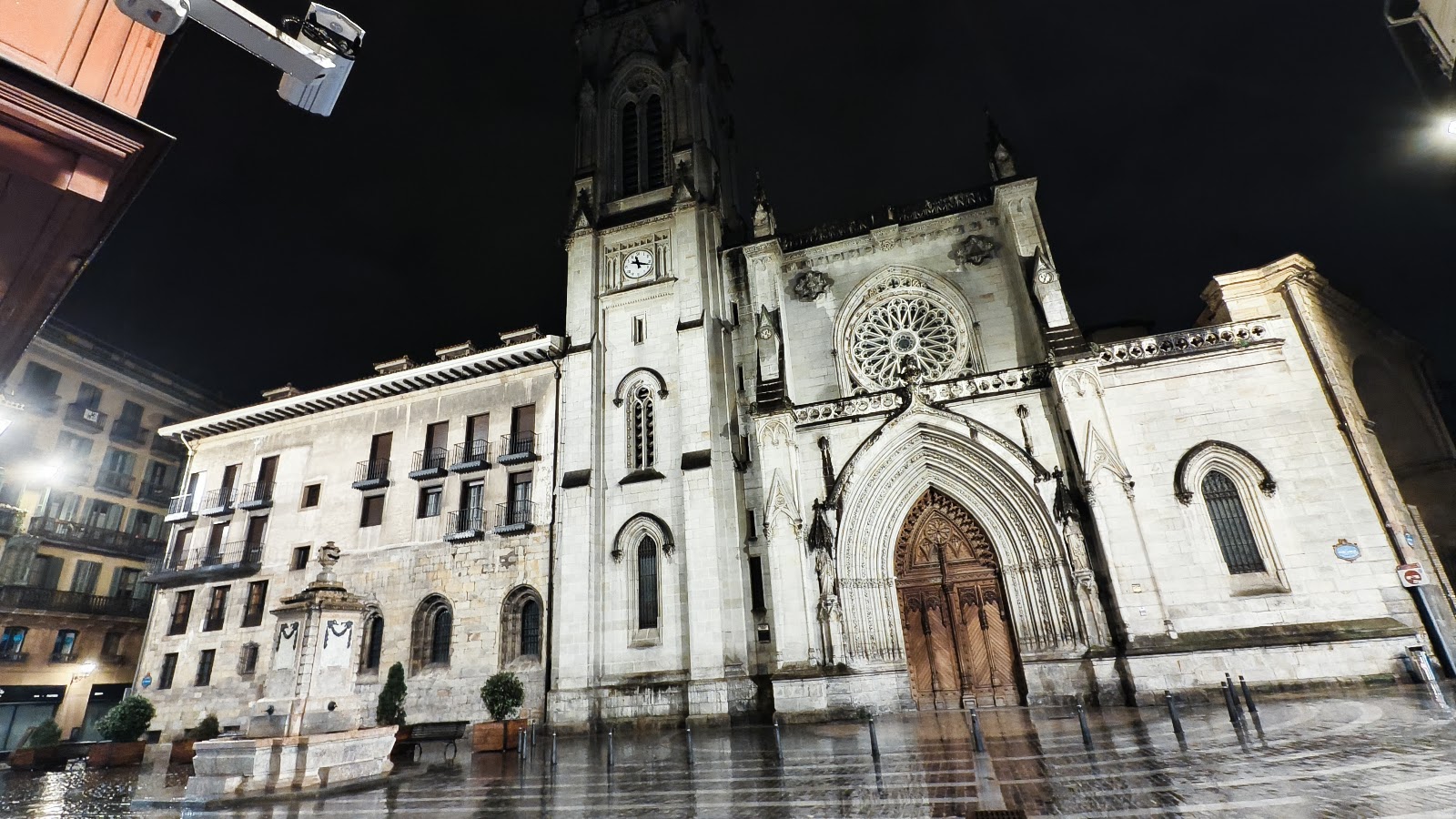
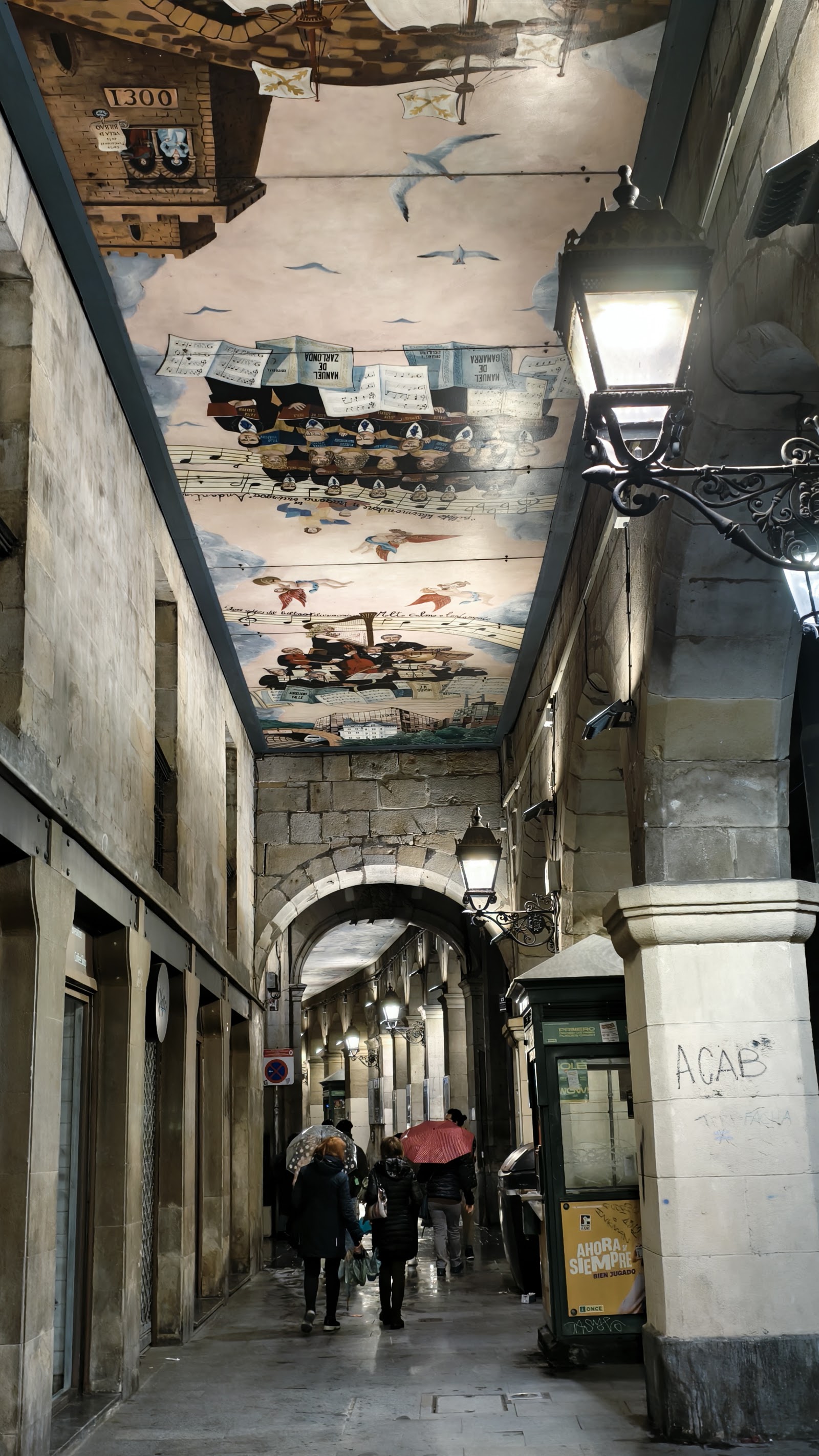
The seven medieval streets of Casco Viejo still carry the names of the trades that once filled them — Sombrerería for the hat-makers, Carnicería Vieja for the old butchers, Tendería for the shopkeepers. Walk them now and you're moving through a grid that has barely shifted since the mid-1400s, when four more streets were added to the original three to form the Siete Calles.
Santiago Cathedral anchors the northern end, its Gothic spire rising 64 metres and visible from most of the district. The streets around it are pedestrianized and uneven underfoot, lined with pintxos bars and the kind of txakoli poured from a height to aerate it. The whole district was declared a Historical and Artistic Heritage Site in 1972.
💛 What travellers fall for
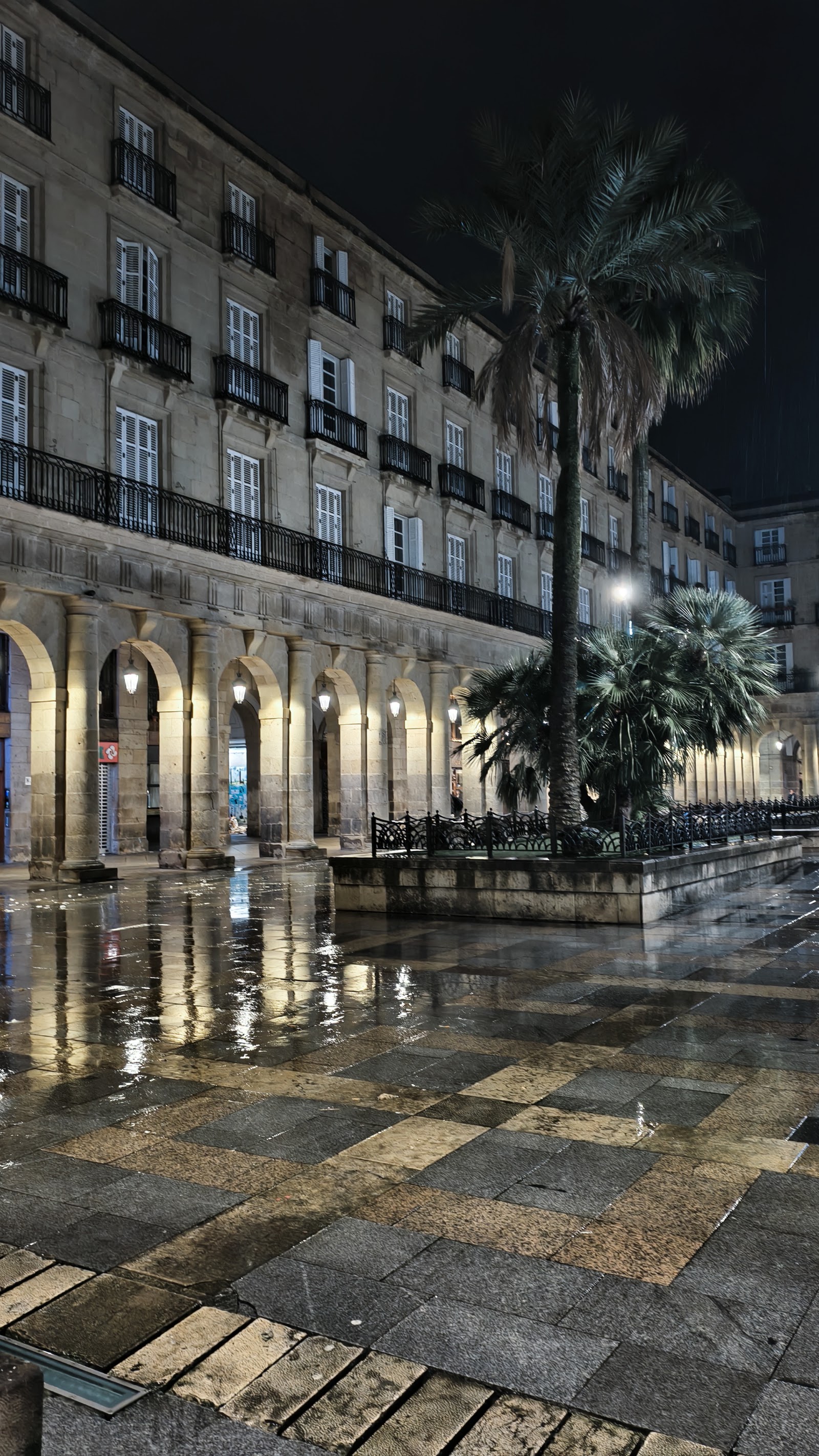
People who come back tend to time a weekday morning around the Siete Calles before the lunch crowd arrives — the streets feel genuinely old at that hour. They also note the three public elevators connecting the district uphill to Begoña and Solokoetxe, which most first-timers miss entirely. Worth knowing if your legs want a break.
The story behind Casco Viejo (Old Town)
On June 15, 1300, Don Diego López V de Haro, Lord of Biscay, granted Bilbao its founding charter. The settlement on the right bank of the Nervión — what is now Casco Viejo — grew as a merchant and port town, defined from the start by three parallel streets: Somera, Artecalle and Tendería. By the mid-15th century, four more streets had been added perpendicular to the originals, completing the Siete Calles layout that still shapes the district today.
The defensive walls that once enclosed it came down over time, opening the neighbourhood outward. Santiago Cathedral, begun in the late 14th century, was only formally declared a cathedral in 1950. The Church of San Antón rose on the foundations of an old fortress; San Nicolás followed in Baroque style in 1756. The district was pedestrianized in 1979, which is largely why the medieval street grid survived intact.
Good to know
Metro Bilbao's Casco Viejo station (Lines 1, 2 and 3) drops you directly into the district. A Barik card (€3) covers the metro, tram and buses. Most of the streets and churches are free to enter; allow a couple of hours minimum for the core grid.
Bilbao's oceanic climate means Casco Viejo is walkable year-round but genuinely wet in winter — November is the soggiest month, and February the coldest. June through mid-September brings the warmest, driest days, though the narrow streets hold heat by afternoon.
Where is Casco Viejo (Old Town)?
More tickets & tours for Casco Viejo (Old Town)
Book directly at the provider
What travellers say about Casco Viejo (Old Town)
It's a pleasant stroll through the narrow streets of Bilbao's historic center, where countless alleys wind past ancient, charming buildings and typical restaurants.
A visit to Bilbao is a must, and the 7 streets are an unforgettable experience...
Bilbao's Old Town is a melting pot of traditional businesses alongside more modern establishments. The restaurant sector stands out for its quality, service, and diverse menu. The pintxos are excellent. Life spills out onto the streets. This is a must-see, and you'll definitely want to come back.
Simply getting lost in its streets and savoring the oldest part of Bilbao is always a true pleasure.
This is great. Lots of places to eat and have pintxos.
More of Bilbao
Discover where to stay, what to do and the best deals for your trip.
Explore Bilbao →More attractions in Bilbao
All of Bilbao →

Background adapted from Wikipedia (CC BY-SA) · map data © OpenStreetMap contributors · ratings & place photos via Google · other photos with per-image credit. Ticket links may earn us a commission at no extra cost to you.