
Casa Milà (La Pedrera)
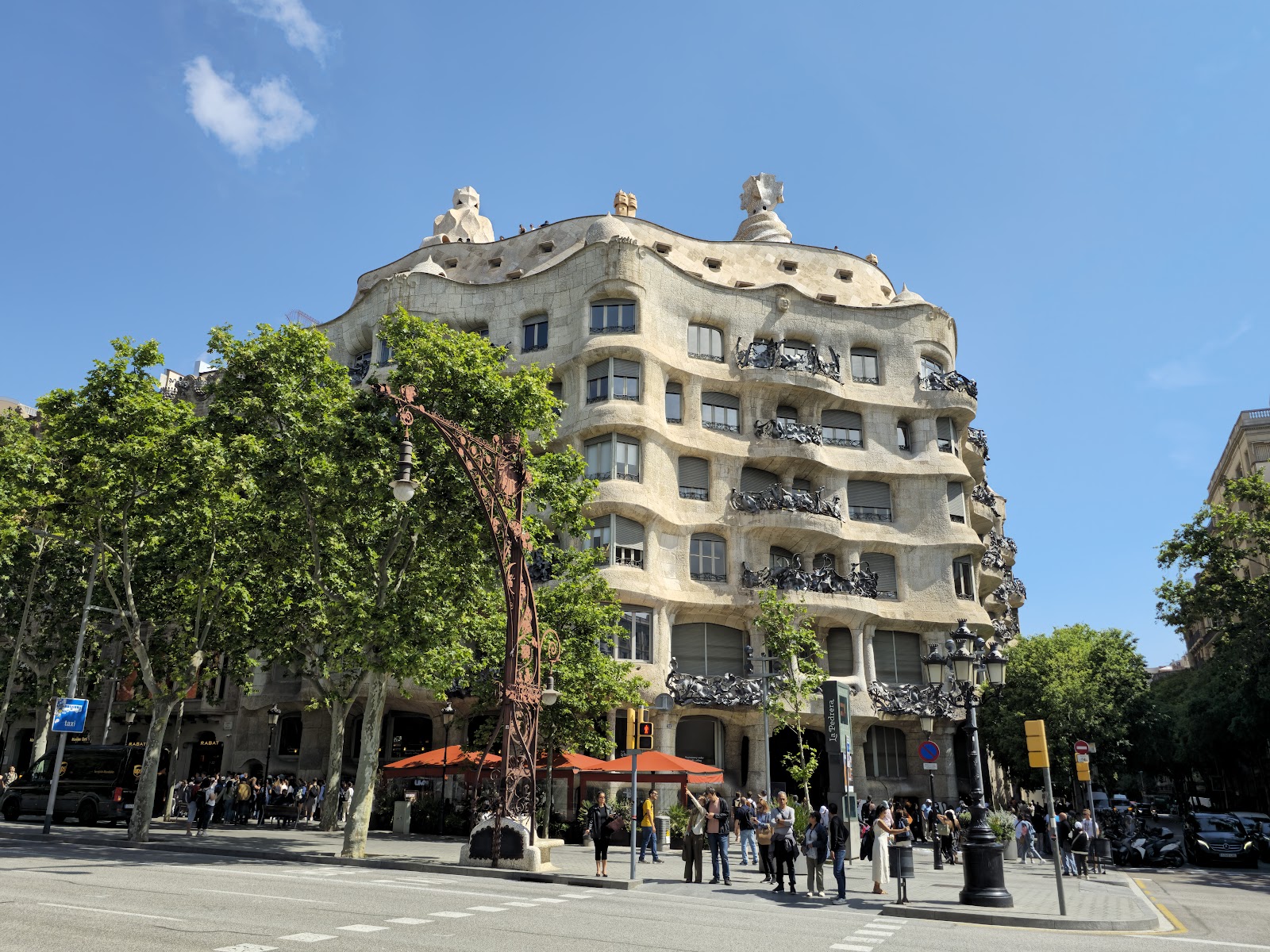
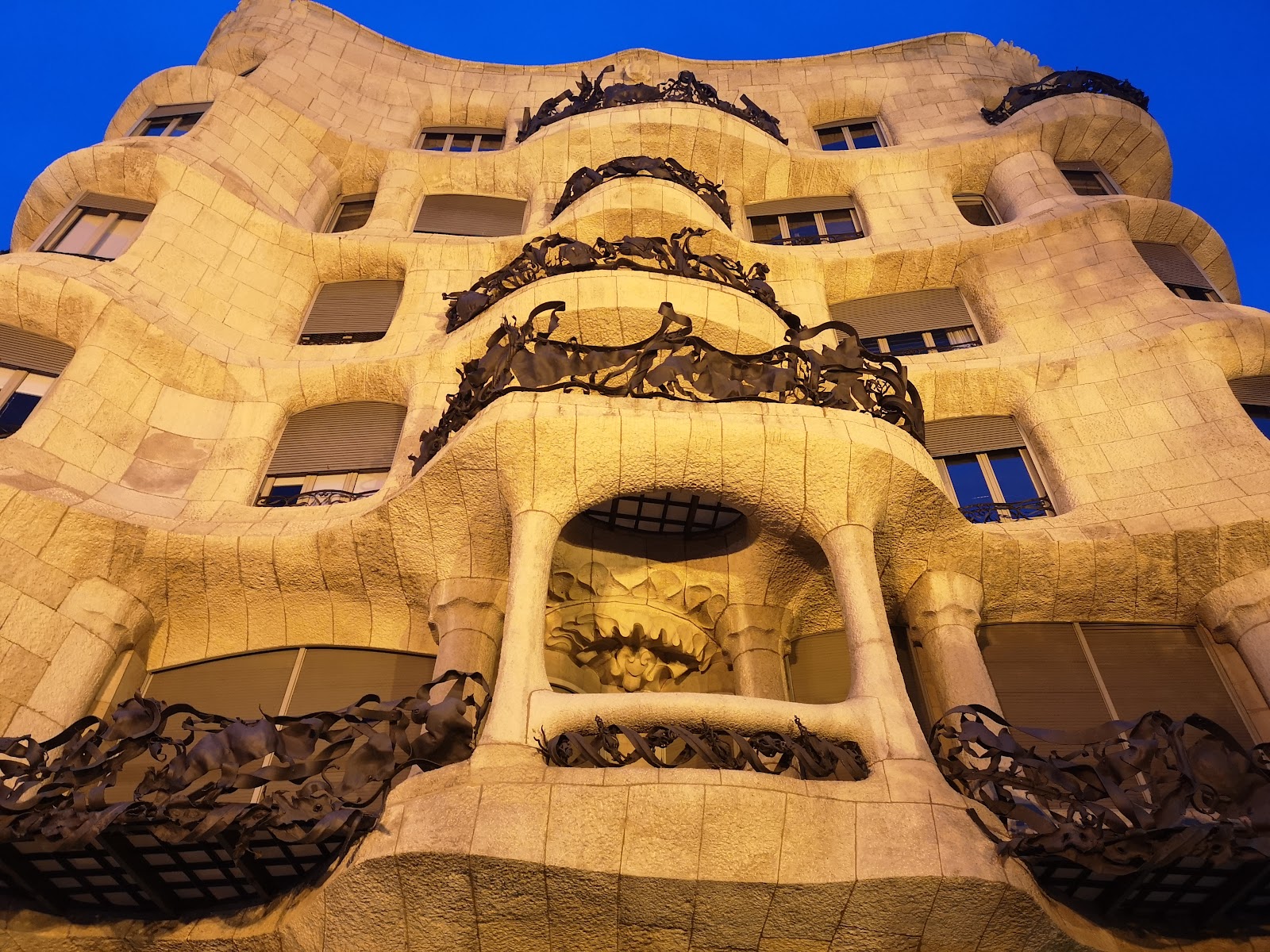
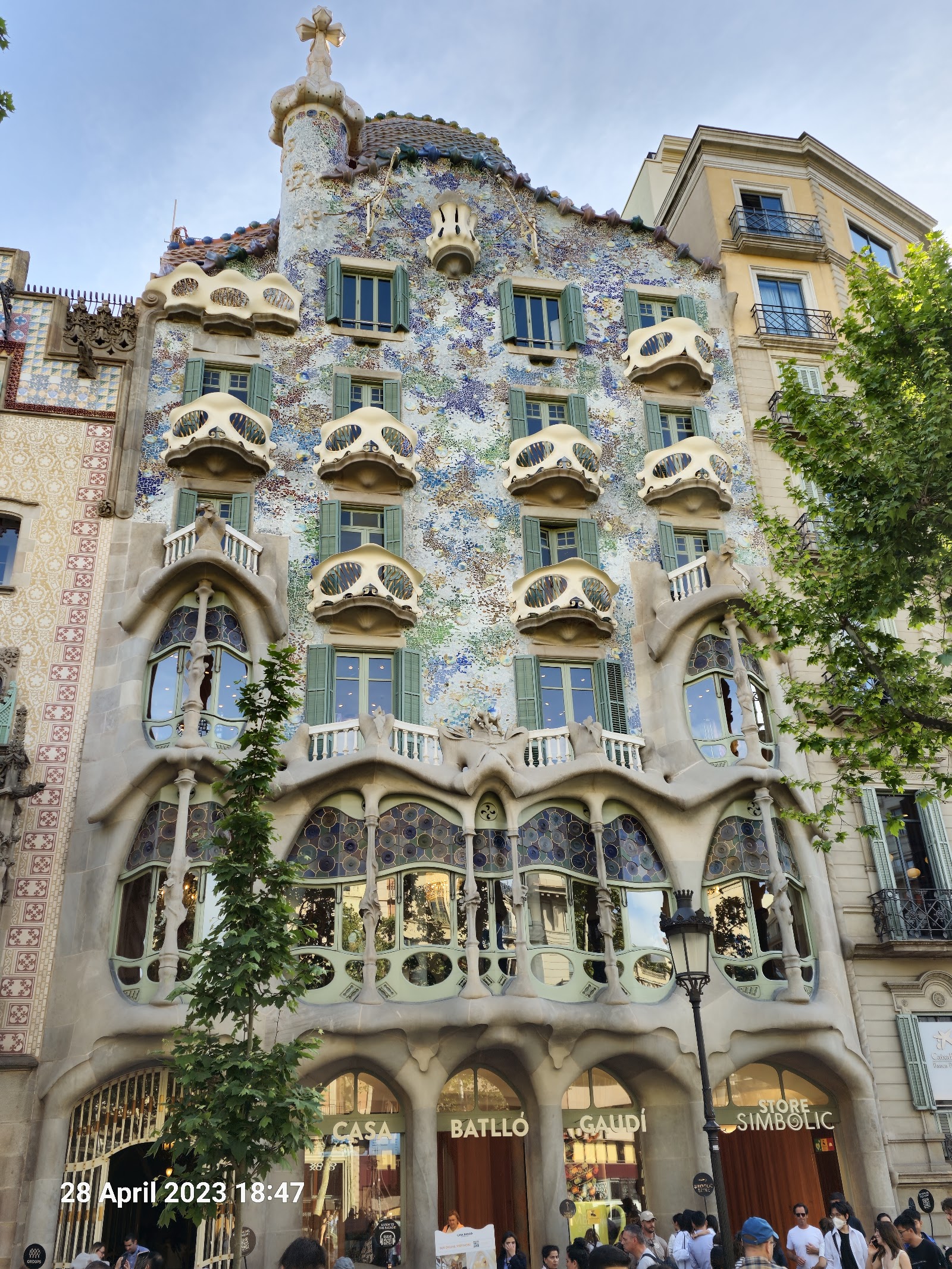
At the corner of Passeig de Gràcia and Carrer de Provença, the facade of Casa Milà moves the way stone isn't supposed to — in waves, without a straight line in sight. Antoni Gaudí completed it in 1912 for Pere Milà and his wife Roser Segimon, and the building has been unsettling its neighbours ever since.
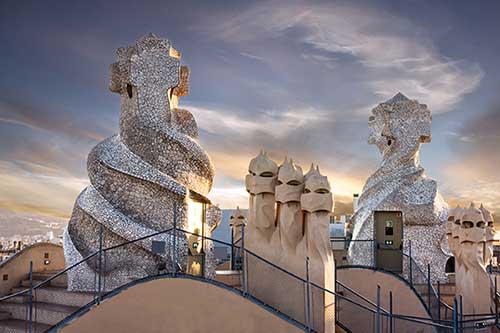
What you come for is the rooftop: 28 sculpted chimneys that look like hooded figures frozen mid-conversation, supported below by 270 catenary arches of bare brick. The attic holds the only permanent exhibition on Gaudí's life and work. The apartment floor shows you how Barcelona's upper crust actually lived inside one of the strangest addresses in Europe.
💛 What travellers fall for
People who've been before tend to book the first slot of the day — 9am — before the tour groups stack up. The audio guide earns its keep in the attic, where the logic of the arches suddenly clicks. The Night Experience, with projections across the rooftop and a glass of cava, divides opinion but draws return visits.
The story behind Casa Milà (La Pedrera)
Gaudí presented the plans to Barcelona City Council on 2 February 1906, and demolition of the existing building began the same year. Construction finished in December 1910; the City Council authorised occupancy of the main floor in October 1911, and Gaudí signed the completion certificate on 31 October 1912. The building was listed in Barcelona's Historical and Artistic Heritage Catalogue in 1962, declared a national monument of historic-artistic interest in 1969, and granted UNESCO World Heritage status in 1984.
For decades it functioned as a residential block — its tenants over the years included princes, diplomats, actors, journalists and, reportedly, spies. Caixa Catalunya purchased it in December 1986 and after a decade of restoration opened it to the public in June 1996. Since 2013 it has been the headquarters of Fundació Catalunya La Pedrera.
Good to know
Metro L3 or L5 to Diagonal, then a 200-metre walk. Book a timed ticket online — queues at the door are long and slots fill. Budget 90 minutes minimum; the audio guide alone runs that long. Roof access depends on weather. Closed 25 December.
Where is Casa Milà (La Pedrera)?
More tickets & tours for Casa Milà (La Pedrera)
Book directly at the provider
What travellers say about Casa Milà (La Pedrera)
I felt like stepping into another world by walking into Casa Milà. It’s designed by Antoni Gaudi and every room has its own character, from the flowing shapes and colorful details to the clever use of natural light. We took our time exploring the apartments, courtyards, and attic, and it was fascinating to see how far ahead of its time the design was. Even if you’re not an architecture enthusiast, it’s easy to appreciate the creativity behind every corner. My favourite part was the rooftop; the famous chimney sculptures and panoramic views over Barcelona were beautiful and there were plenty of photo opportunities. The audio guide was helpful and explained the history and design very carefully and clearly. If you’re planning to visit, booking your tickets in advance is a good idea since it gets quite busy, especially during the summer.
Another beautiful masterpiece by Gaudí. The architecture is incredibly unique, with its flowing stone façade and organic shapes that make the building stand out immediately. Walking around and inside the building really shows how creative and ahead of its time the design is. A must-visit spot in Barcelona, especially if you love architecture and Gaudí’s works.
Visiting Casa Milà was a highlight of my time in Barcelona. The building’s flowing stone façade and wave-like balconies are unlike anything else in the city, and you immediately understand why it’s considered one of Antoni Gaudí’s masterpieces. It feels alive rather than constructed, with curves, textures, and organic shapes that change as you move around it. Inside, the experience continues to surprise. The rooftop is the real standout—its surreal chimney sculptures look almost like a fantasy film set, and the views over Barcelona are incredible. The museum exhibits are also well done, giving context to Gaudí’s vision and the architectural innovations behind the building. It does get busy, but the flow is managed well enough that you can still enjoy each space. Overall, Casa Milà is not just a sightseeing stop—it’s an essential Barcelona experience that blends architecture, history, and creativity in a way that stays with you long after you leave.
Beautiful views from the terrace. An inside into Gaudi’s inspiration. Easy guided tour with headphones provided with the entrance. Not very crowded and about 1 - 1:45 hours, so it was good for my 7 year old. He loved it!
CASA MILA also known as La Pedrera, is a stunning architectural masterpiece in Barcelona that truly captivates visitors. The night tour inside the building offers a unique perspective on its intricate design and history, revealing details that are often missed during the day. The atmosphere during the evening is magical, with the soft lighting casting beautiful shadows on the unique stone facade. Walking through the building, you can appreciate Gaudí's innovative use of space and natural forms, which create a sense of harmony with the environment. The highlight of the tour is undoubtedly the rooftop, where the iconic chimneys resemble warriors standing guard over the city. The panoramic views of Barcelona against the night sky are breathtaking. Ending the experience with a glass of cava adds a delightful touch, allowing you to toast to the beauty of Gaudí’s work. It’s a perfect way to unwind after an enlightening tour. Overall, the night tour at Casa Milà is a must-do for anyone looking to immerse themselves in Barcelona's rich architectural heritage.
More of Barcelona
Discover where to stay, what to do and the best deals for your trip.
Explore Barcelona →More attractions in Barcelona
All of Barcelona →
Background adapted from Wikipedia (CC BY-SA) · map data © OpenStreetMap contributors · ratings & place photos via Google · other photos with per-image credit. Ticket links may earn us a commission at no extra cost to you.