
Casa de Pilatos
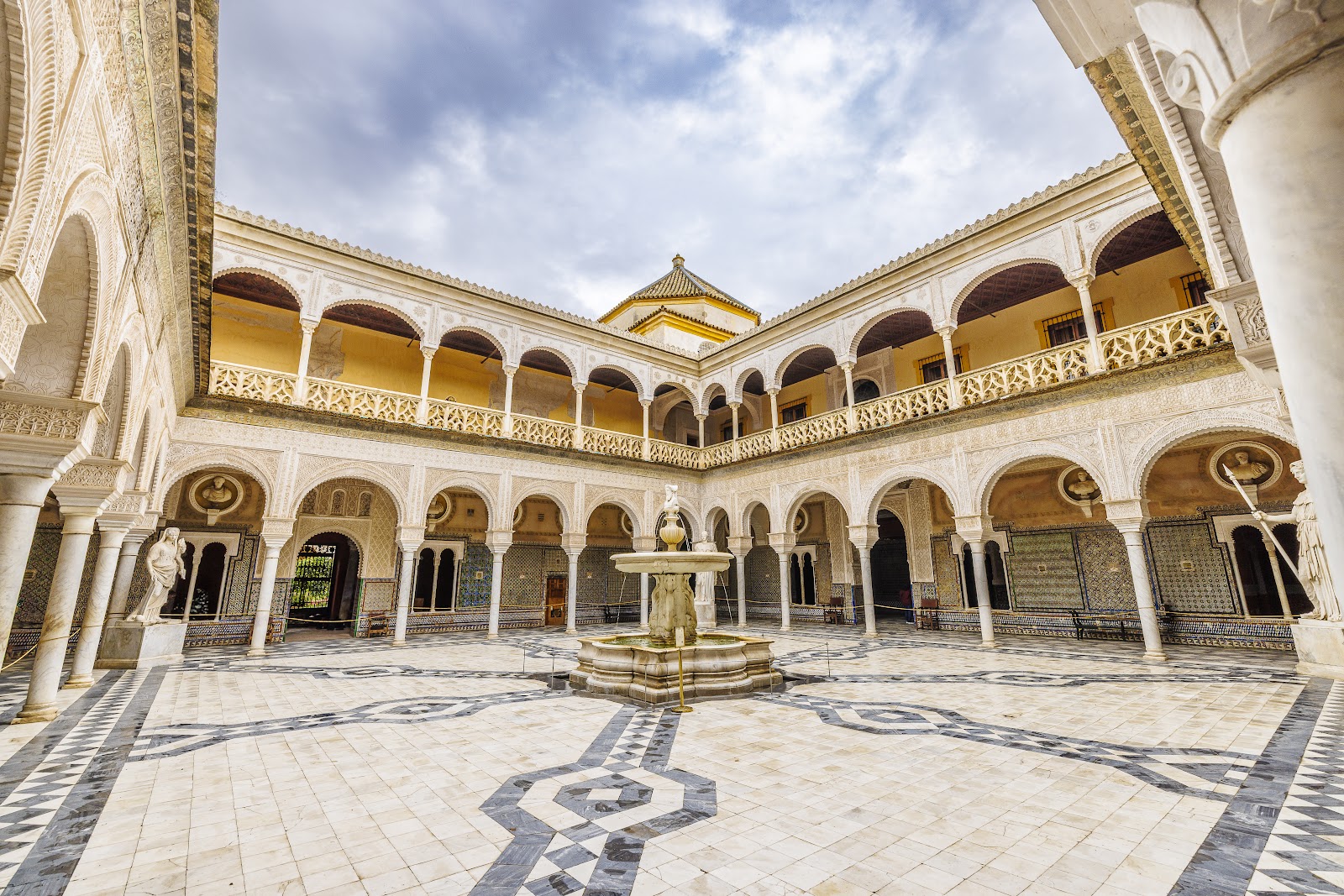
Walk through the marble gate on Plaza de Pilatos and you step into a courtyard ringed by twenty-four stone busts — Roman emperors, Spanish kings, faces worn smooth by five centuries of Seville air. Around them, azulejo tilework in some 150 distinct patterns climbs the lower walls, the work of brothers Diego and Juan Pulido in the 1530s, one of the largest early-modern tile collections anywhere.
Casa de Pilatos is still a private home. The Dukes of Medinaceli live here, which means the upper floor is accessible only by guided tour, and the whole place carries a weight that museums rarely manage — the sense that someone actually chose to stay.
💛 What travellers fall for
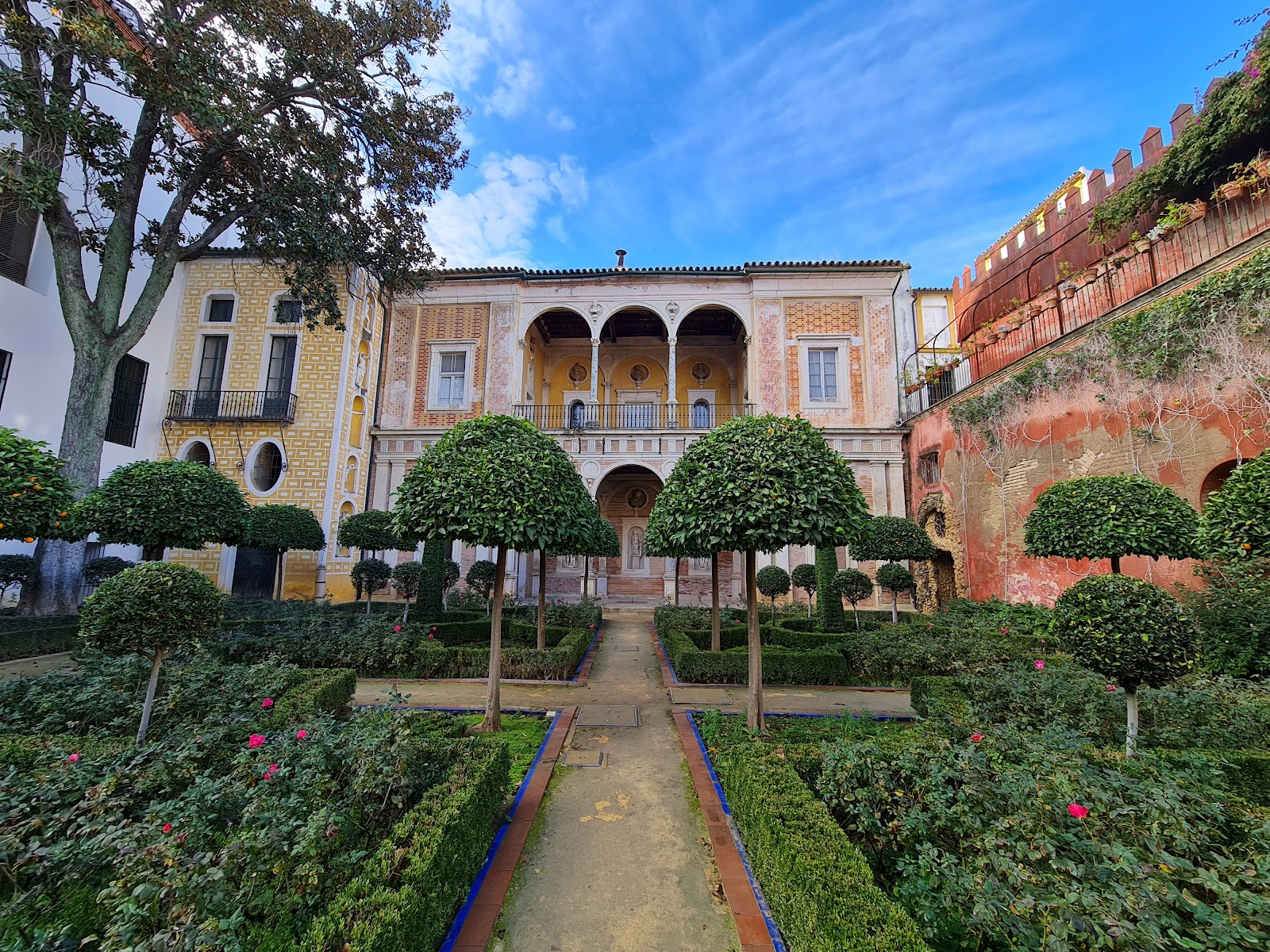
Repeat visitors tend to linger in the Jardín Grande rather than rush the upper rooms. The classical statues among the hedges get less foot traffic than the patio, and the light there in the late morning is worth the detour. Book the guided upper-floor tour in advance — it sells out, and Francisco Pacheco's 1603 Hercules frescoes are the reason to go.
The story behind Casa de Pilatos
Construction started in 1483 under Pedro Enríquez de Quiñones, Adelantado Mayor of Andalucía, and his wife Catalina de Rivera. Their son Fadrique Enríquez de Rivera, first Marquis of Tarifa, completed the palace and gave it its strange name: returning from a pilgrimage to Jerusalem in 1519, he inaugurated a Via Crucis procession through Seville in 1521, and local tradition linked his house to Pontius Pilate's praetorium. The oldest written record of the name dates to 1754.
Fadrique's nephew Per Afán, later Viceroy of Naples, brought Roman sculptures back from Italy in the 16th century — the collection remains one of the most significant private holdings of classical Roman work in Spain. Genoese architect Antonio Maria Aprile designed the Renaissance marble gate in 1529; Benvenuto Tortello oversaw broader rebuilding under Viceroy Per Afán. The palace was declared a National Monument in 1931.
Good to know
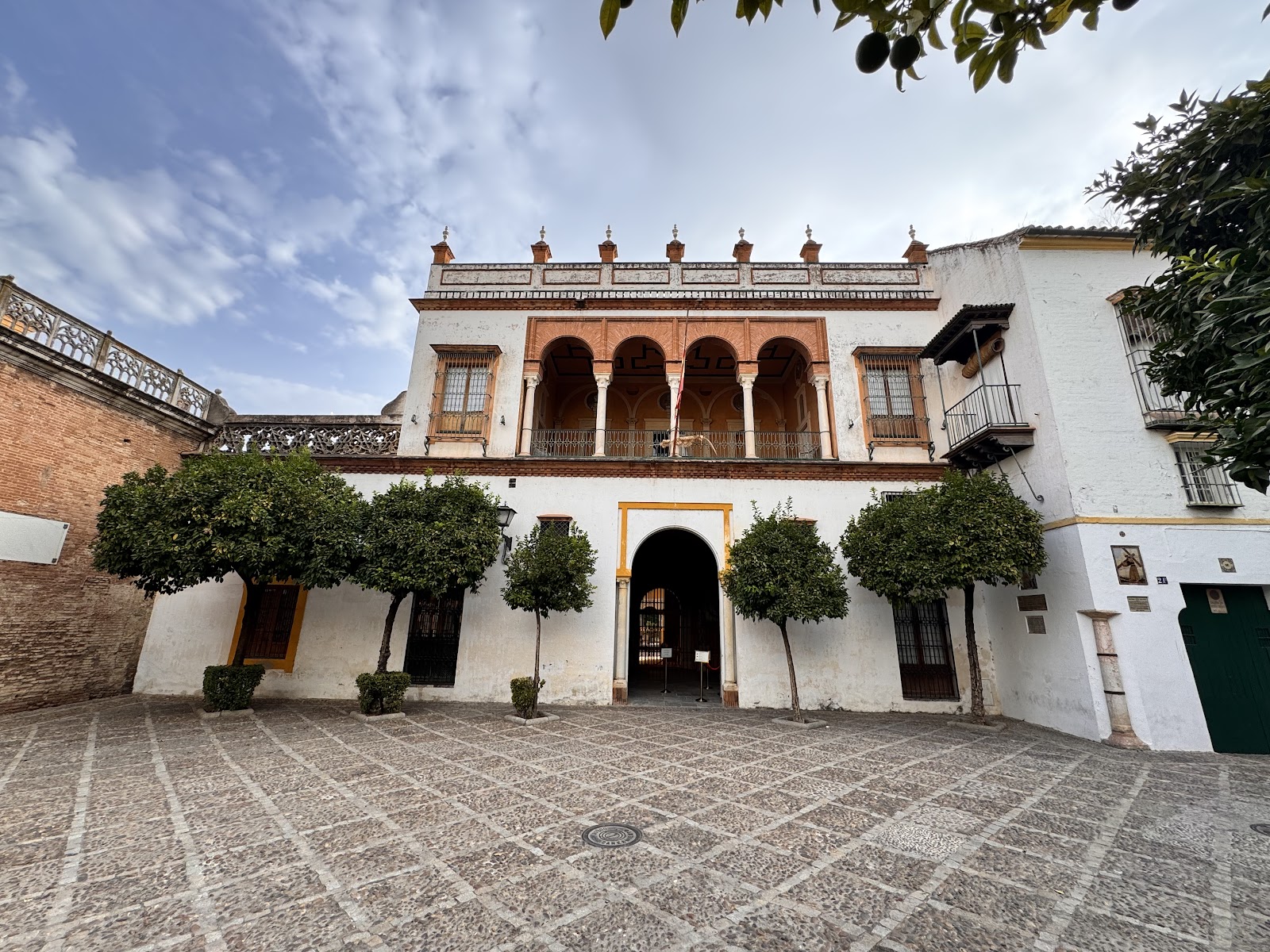
Bus lines 1, 21, 24 and C4 stop nearby; Metro line 1 also works. Ground floor is 12 €, children under 12 free. Summer hours run until 19:00. No café on site, so eat before you arrive. Cobblestones throughout — wear shoes with grip.
Where is Casa de Pilatos?
More tickets & tours for Casa de Pilatos
Book directly at the provider
What travellers say about Casa de Pilatos
If you have been unable to obtain tickets for the more famous palace this is an excellent alternative. It’s a beautiful building with a well kept courtyard garden. There is a QR code with online tickets that allow you to use your own headphones. This works really well. The history to the individual rooms is really interesting. Allow around 1/1-1/2 hrs and take a bottle of water on a hot day to sit and enjoy the inner courtyard.
This place is truly impressive and well worth the visit. The tile work and ceilings are incredible. The entry ticket includes the audio guide, but you must have a smart-phone to access it and you should bring headphones. The audio tour is comprehensive but very dry. I notices that many visitors were just looking around rather than using the audio tour. NOTE - the guided tour of the upper floor rooms was very helpful and interesting and our guide was much more interesting than the audio tour. The is a small charge for this add-on, but definitely well worth it.
I visited Casa de Pilatos during a recent trip to Seville, and it completely stole my heart. This 16th-century palace is an absolute masterpiece that beautifully blends Renaissance, Mudéjar, and Italian influences. From the moment you step through the entrance, you’re transported into another era. The central patio is breathtaking — with its elegant marble columns, intricate tile work (those azulejos are stunning!), and the soothing sound of the fountain. Every corner reveals new details: ornate ceilings, lush gardens, impressive staircases, and rooms filled with ancient sculptures and archaeological finds. The combination of architecture, art, and nature creates an incredibly peaceful and romantic atmosphere. What I loved most was how manageable and intimate the palace feels compared to larger sites. The audio guide was excellent and really helped bring the history to life without overwhelming you. The staff were also friendly and helpful. Whether you’re a history buff, architecture lover, or just looking for a beautiful escape from the busy streets of Seville, Casa de Pilatos is an absolute must-visit. It’s elegant, fascinating, and photogenic at every turn.
I have been to Seville multiple times but I don’t know why I haven’t been to Casa de Pilatus before. It is really a must see and it is out of the main tourist trail. It is impressive with courtyards, gardens and mosaic tiled walls. We are not just talking about 1 or 2 but many. There are also the huge collection Roman statues scattered around the courtyards. We went for just the ground floor ticket (12€ in 2026) that allows you to all the gardens, courtyards and ground floor rooms. We didn’t pay the extra 6€ for the upstairs tour. We spent more than 1 hour just on the ground level. We feel we got our money’s worth.
What a facinating spot with the rich history, the lovely gardens and architecture. The mix of the different styles and why they were chosen is interesting as is the history of how the building evolved and changed over time. It's worth booking the top floor for the guided tour. Our guide was fabulous and full of interesting information. It's incredible to think about how this was a home to generations of this family over such a long period of time.
More of Seville
Discover where to stay, what to do and the best deals for your trip.
Explore Seville →More attractions in Seville
All of Seville →
Background adapted from Wikipedia (CC BY-SA) · map data © OpenStreetMap contributors · ratings & place photos via Google · other photos with per-image credit. Ticket links may earn us a commission at no extra cost to you.