
Casa Batlló
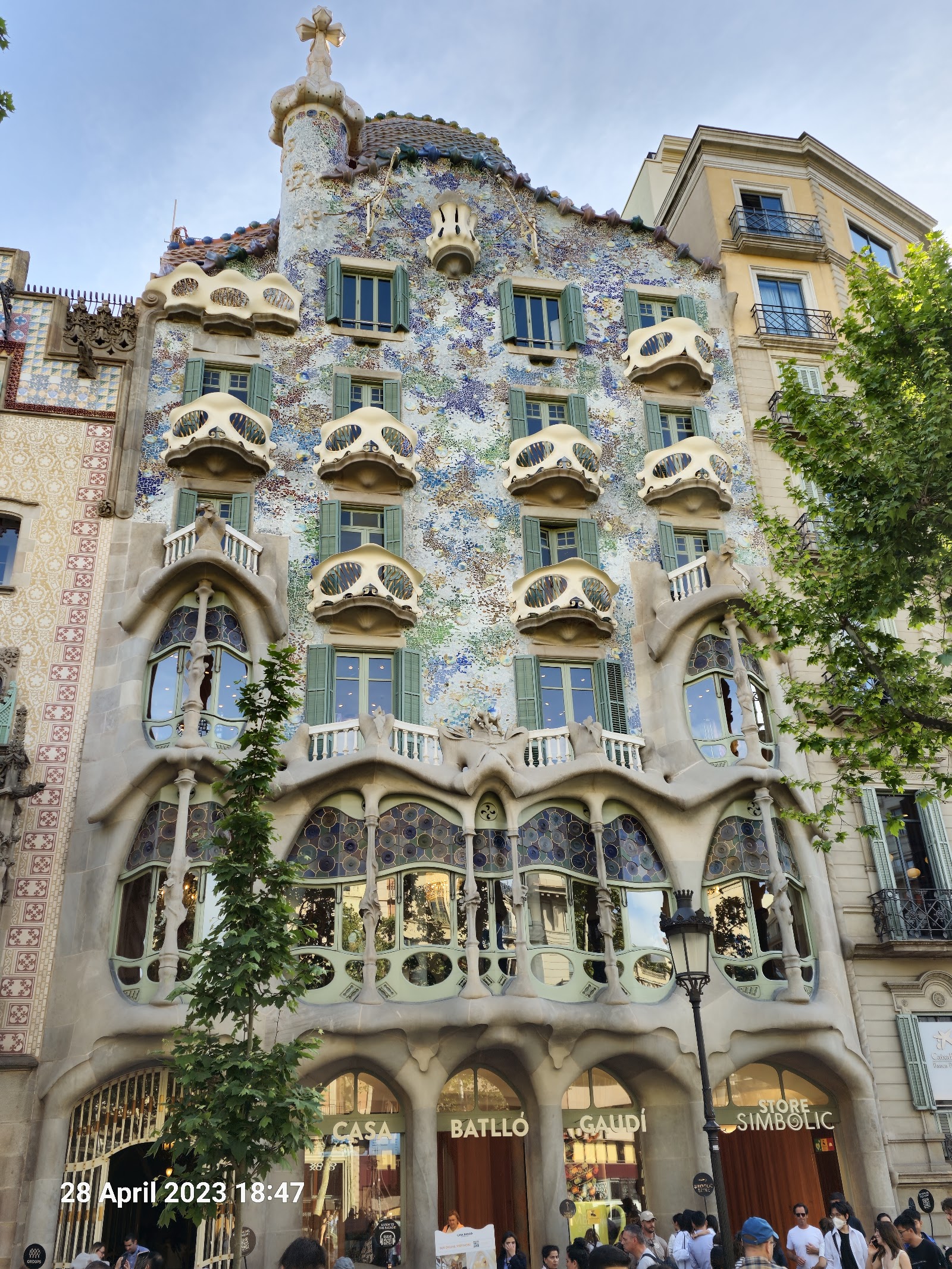
Stand on Passeig de Gràcia 43 and give your eyes a moment to settle. The facade moves — or seems to — its bone-shaped columns and skull-like balconies rippling beneath a roof that curves like a dragon's spine, every surface clad in shattered ceramic tile that catches the light differently depending on where you stand.
This is what a renovation looks like when the architect refuses the obvious answer. Antoni Gaudí didn't tear the 1877 building down. He turned it inside out, reshaping it into something that has no real precedent — organic, unsettling, and oddly alive.
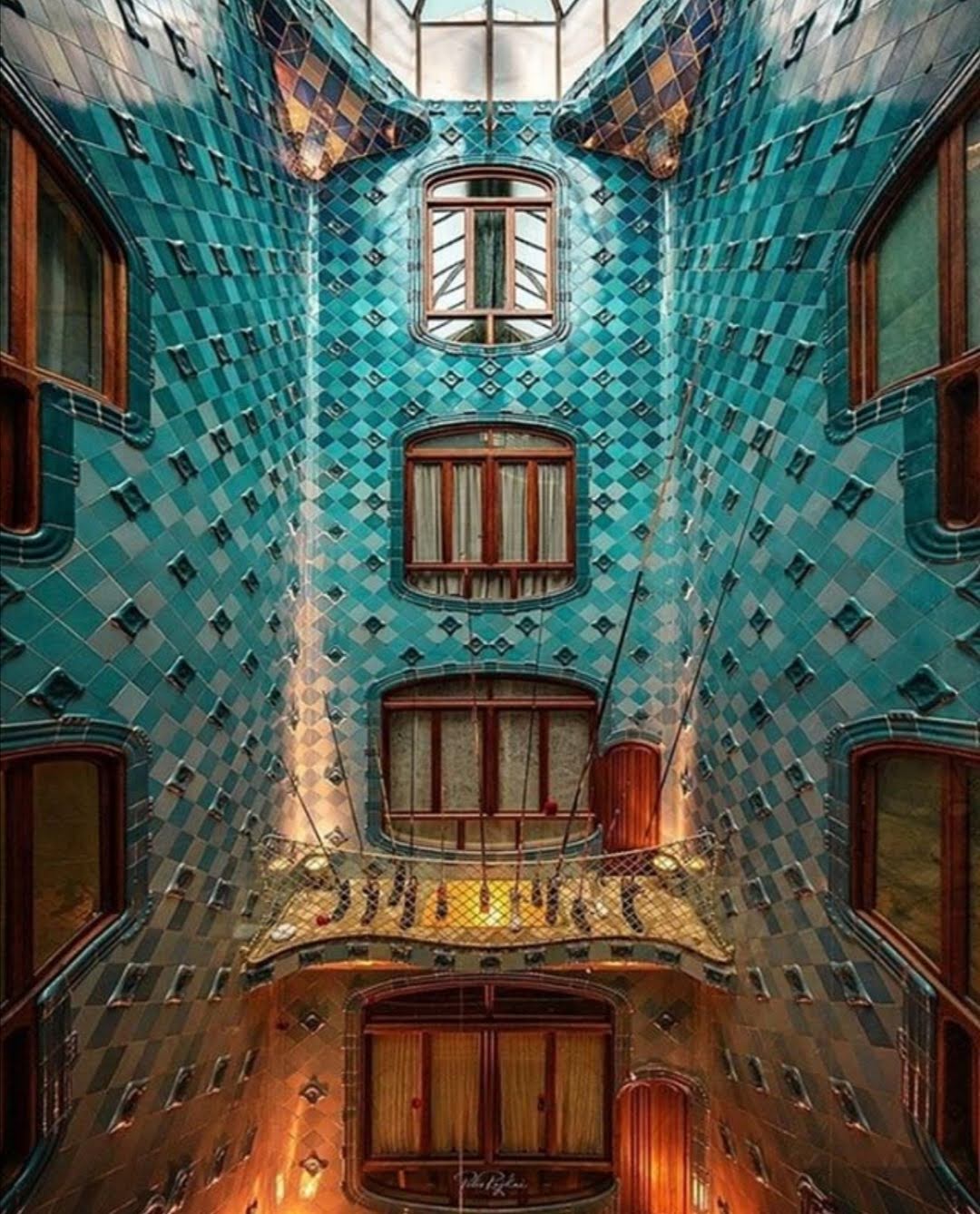
💛 What travellers fall for
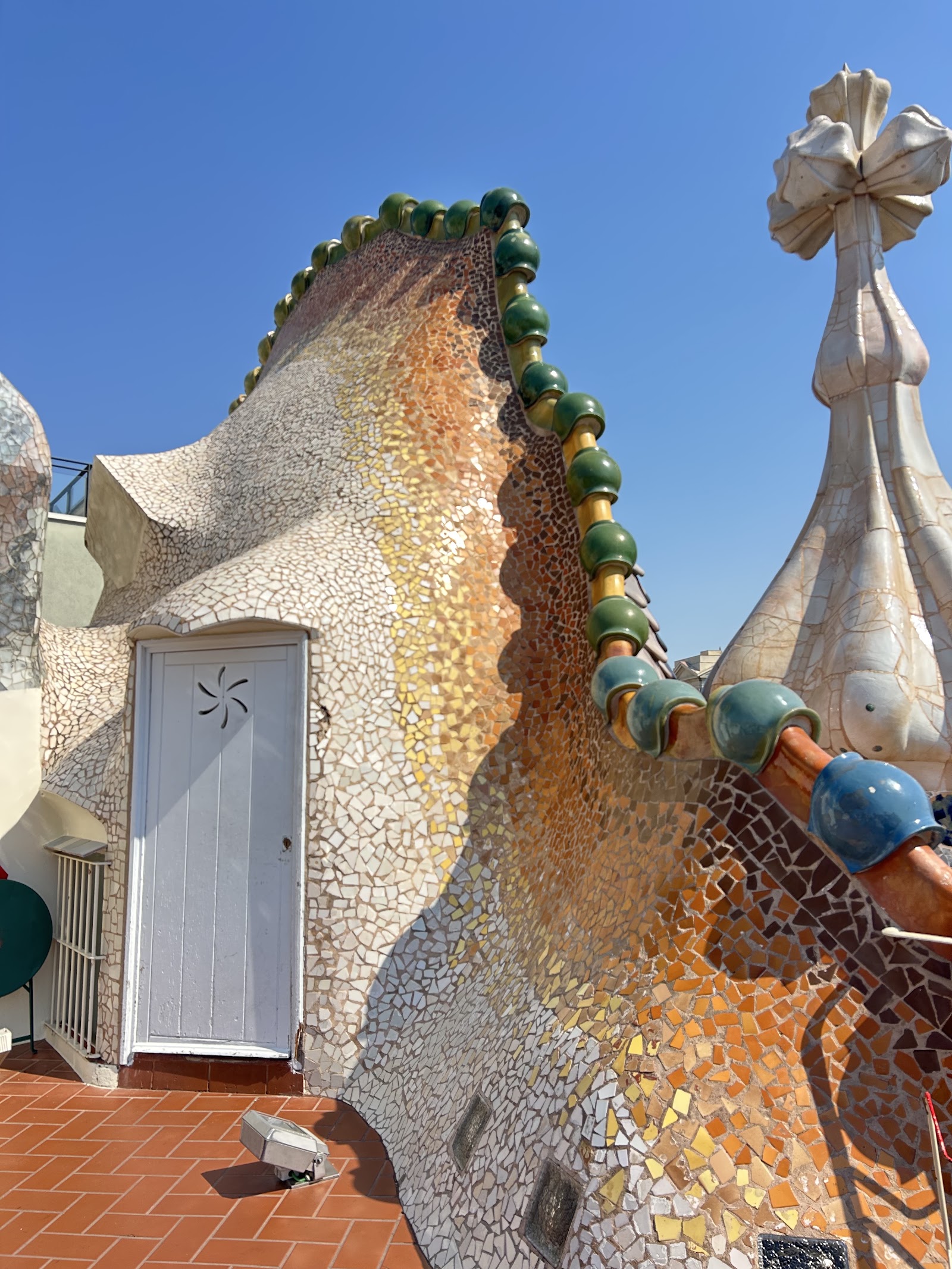
People who come back tend to time it for the rooftop at opening, before the tour groups arrive. The trencadís tilework up there reads completely differently in low morning light than at midday. Worth noting: the Planta Noble's grand window was designed to be seen from the street — look back down at the Passeig from it and you understand the whole logic of the room.
The story behind Casa Batlló
The building started life in 1877, designed by Emili Sala Cortés — who would later teach Gaudí at architecture school. It was a conventional residential block on what was becoming Barcelona's most prestigious address, the Passeig de Gràcia laid out under the Cerdà urban plan of 1860.
In 1903, textile industrialist Josep Batlló i Casanovas bought the property with demolition in mind. Gaudí, hired in 1904, talked him out of it. By 1906 the transformation was complete: new facade, restructured interior, every piece of furniture designed by Gaudí's hand. The Batlló family held it until the 1950s; since the 1990s it has been in the hands of the Bernat family, who opened it to the public in 1995. UNESCO listed it in 2005.
Good to know
Take the metro to Passeig de Gràcia (L2, L3 or L4) — it's a two-minute walk. Book online in advance; tickets start at €29 and you can save up to €15 per ticket versus the door price. Weekdays before 10am or after 4pm are noticeably quieter. Budget around an hour and fifteen minutes.
Where is Casa Batlló?
More tickets & tours for Casa Batlló
Book directly at the provider
What travellers say about Casa Batlló
The Casa Batlló is one of the most extraordinary buildings in Barcelona and a true masterpiece by Antoni Gaudí. Its colourful façade, organic shapes, and intricate details make it look more like a work of art than a traditional building. Inside, every room is uniquely designed with flowing lines, natural light, and creative architectural solutions inspired by nature. The rooftop, with its dragon-like design and distinctive chimneys, is one of the highlights and showcases Gaudí’s incredible imagination. Whether you’re interested in architecture or not, the building is fascinating to explore and unlike anything else in the city.
Absolutely stunning. Beyond the genius and beauty of Gaudi’s work, the museum offers an interactive, enriching experience with elements that helped us step into the mind and life of the architect himself. It is impeccably maintained, the instructions and path were easy to understand, and the Gold ticket offered AR elements and entry to the Gaudi Cube (created in collaboration with Refik Anadol) and Gaudi’s private apartment. Cannot recommend this enough!
I highly recommend taking a tour of Casa Batlló beforehand, but if you don't want a tour, you can walk right in. If you're a fan of Gaudi, this is the place to be. We went in the gift shop and this place truly has it all. It has everything you may need at a gift shop and more. You will find great gifts for all ages, and I was easily able to find the perfect souvenirs to bring back home for my two sons. These are great gifts to take home if you are traveling. Definitely worth a stop while exploring Barcelona!
Casa Batlló is, without any doubt, one of the most beautiful buildings in Barcelona and one of Gaudí’s greatest masterpieces. Even if you’ve seen hundreds of photos online, nothing compares to experiencing it in person. Every single room is full of incredible details, from the colorful stained-glass windows to the flowing shapes inspired by nature. You can spend hours simply admiring the architecture and discovering something new in every corner. I was lucky enough to visit during the Sant Jordi celebrations, which made the experience even more magical. The house was beautifully decorated for the occasion, creating a unique atmosphere that made the visit feel even more special. It was wonderful to see one of Barcelona’s most iconic landmarks celebrating one of Catalonia’s most beloved traditions. I also really enjoyed the immersive elements of the visit. The exhibitions, audiovisual installations and interactive experiences help you understand Gaudí’s vision in a much deeper way. It’s not just a museum—it’s an experience that brings the building to life. The rooftop is another highlight and offers beautiful views over Passeig de Gràcia, while the famous façade is simply breathtaking from every angle. I found myself stopping constantly just to admire all the details. The tickets aren’t cheap, but I genuinely think they’re worth it. If you’re visiting Barcelona for the first time, Casa Batlló is an absolute must-see and one of those places you’ll remember long after your trip is over. I would happily visit again, especially during Sant Jordi, because it gives this already extraordinary building an even more magical atmosphere. Highly recommended!
Thoroughly enjoyed this insight into Gaudi’s attention to detail when designing the house. A fascinating view, learned so much. We got the Gold package that included an AR experience on a tablet that showed the rooms with items no longer there, which was very cool. And the Gaudí Dreams experience is amazing…
More of Barcelona
Discover where to stay, what to do and the best deals for your trip.
Explore Barcelona →More attractions in Barcelona
All of Barcelona →
Background adapted from Wikipedia (CC BY-SA) · map data © OpenStreetMap contributors · ratings & place photos via Google · other photos with per-image credit. Ticket links may earn us a commission at no extra cost to you.