
Carvoeiro
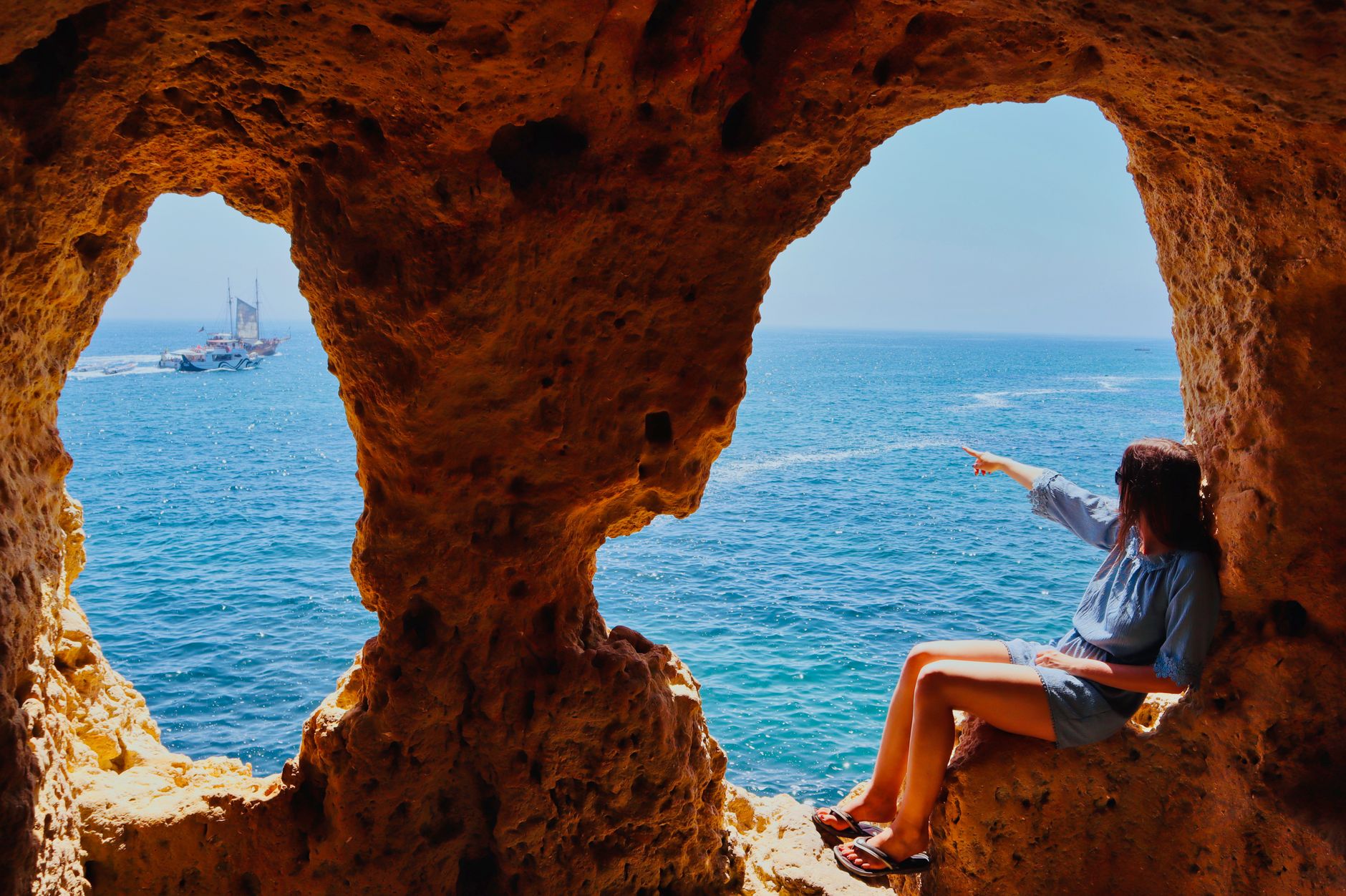
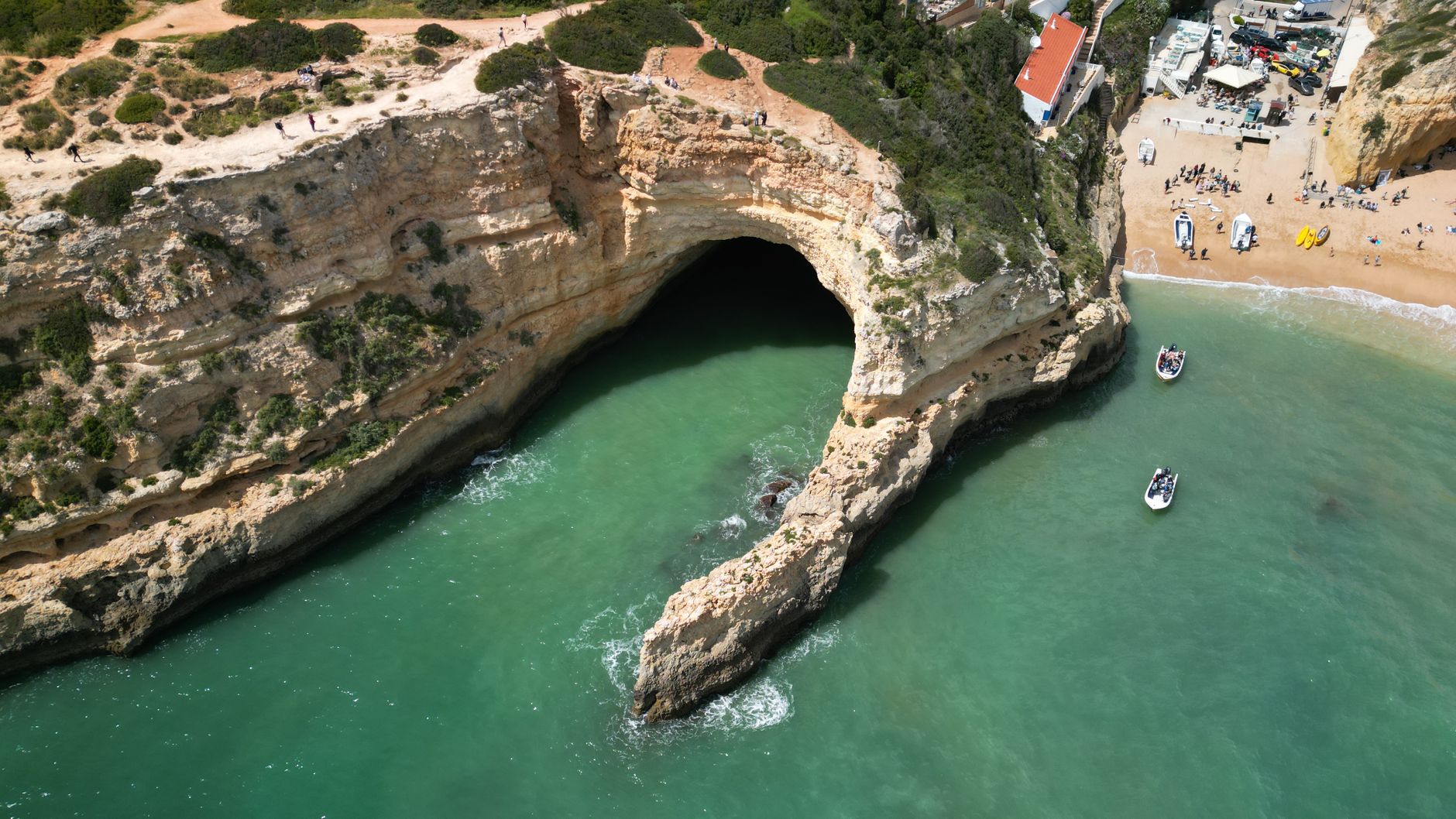
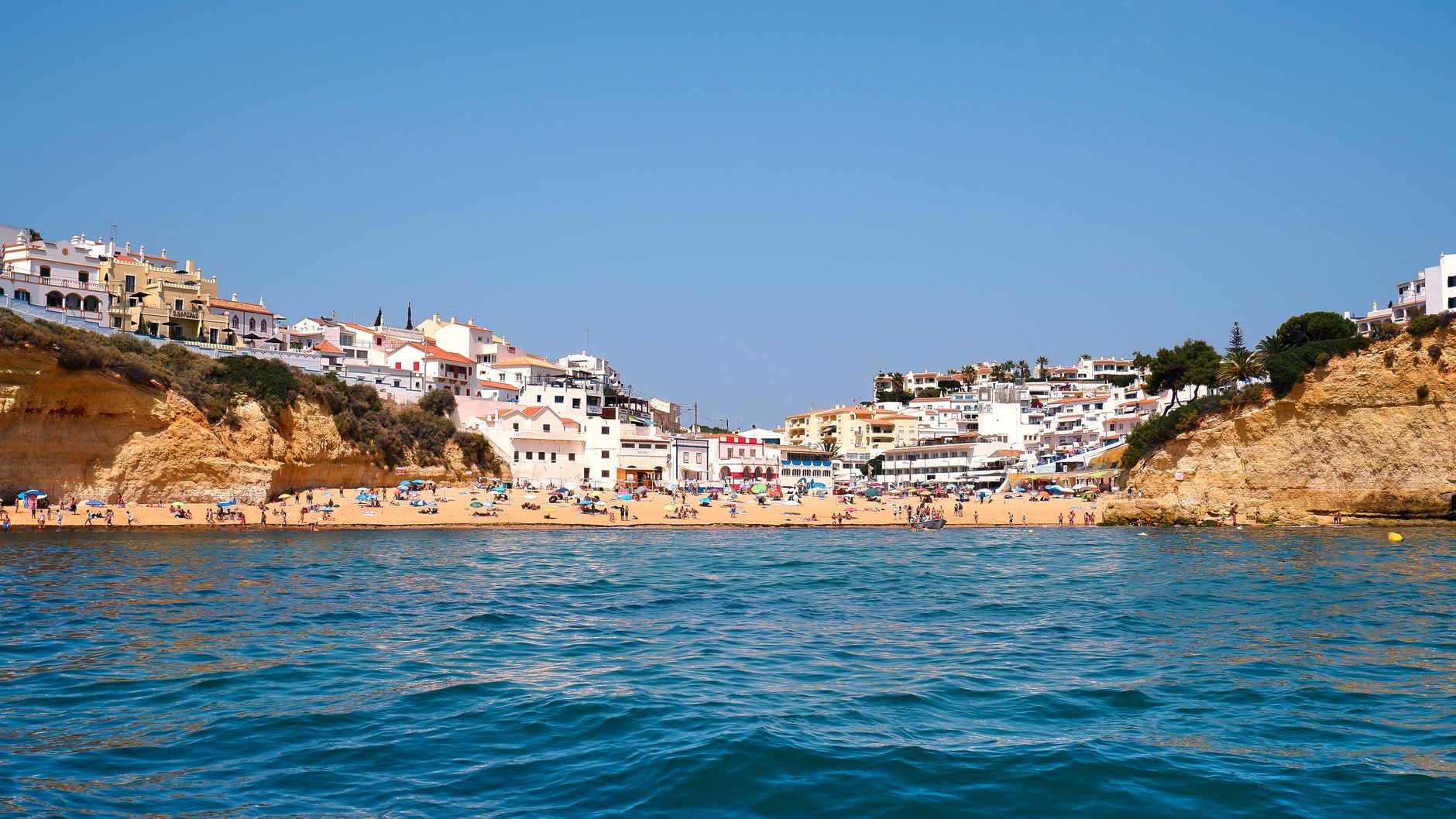
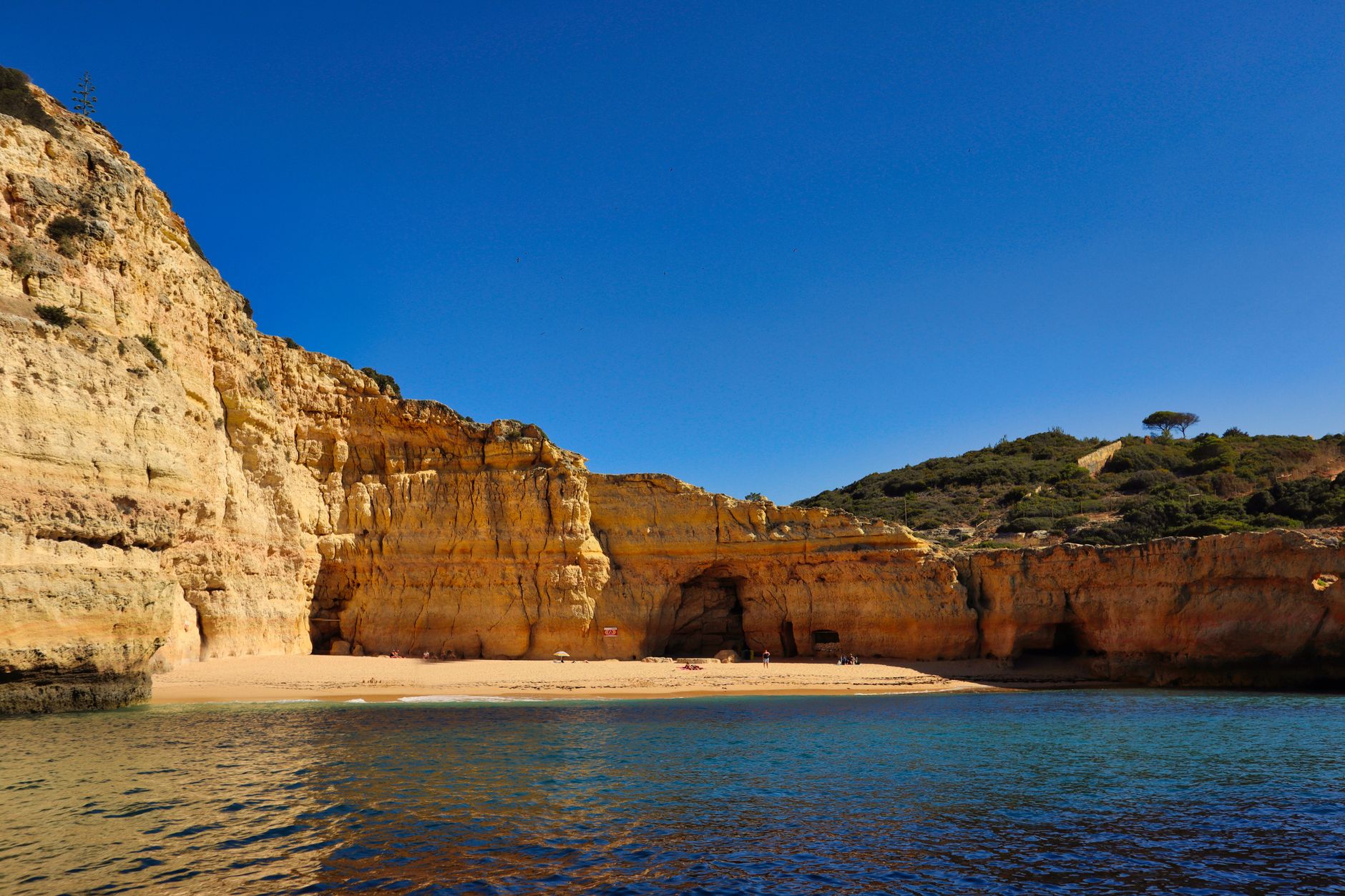
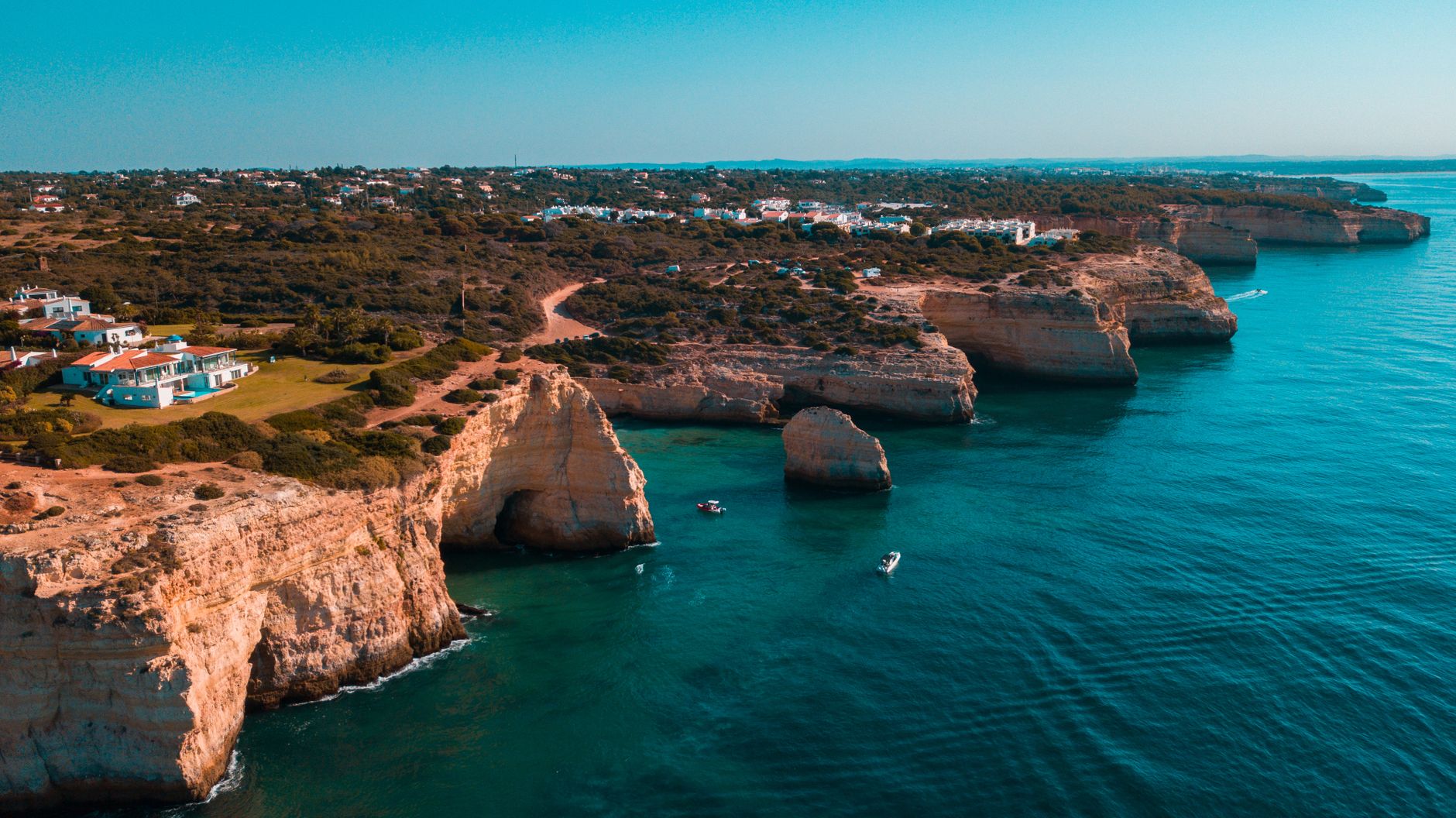
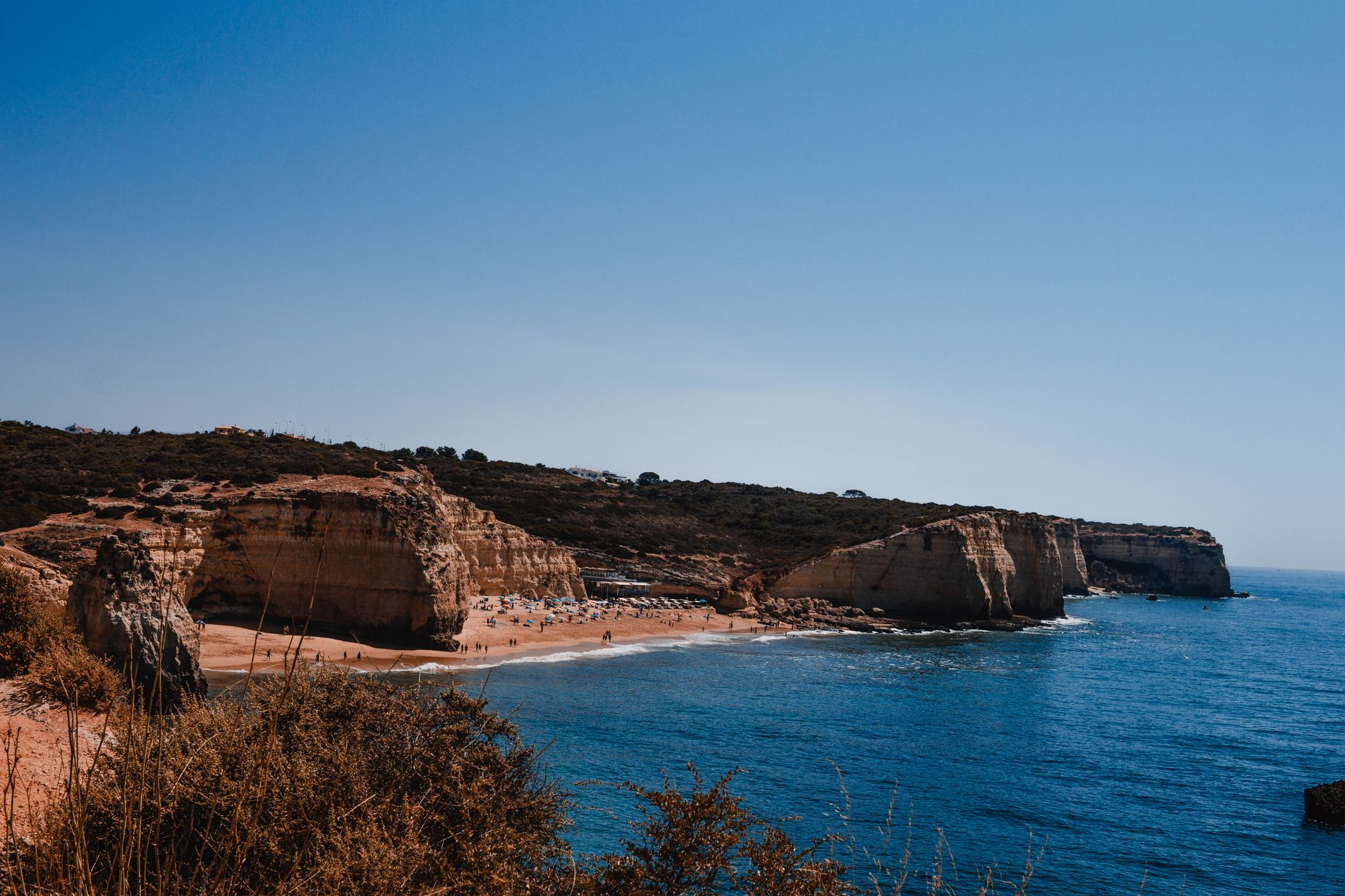
Carvoeiro is a small fishing village turned coastal town where the Atlantic has spent millennia pressing its case against orange limestone, carving the cliffs into grottoes, arches and sudden blowholes at Algar Seco. The main beach sits at the bottom of a steep valley, hemmed in by those same cliffs, and the square above it is where the old fishing economy and the newer tourist one quietly coexist.
It is compact enough to walk end to end in twenty minutes, which means you run out of excuses not to take the coastal path east toward Praia da Marinha, where the rock formations are the kind that make people stop mid-sentence.
💛 What travellers fall for
People who keep coming back tend to mention the same Wednesday ritual: the free afternoon tour of the Alfanzina Lighthouse, a square white-tiled tower built in 1920 on the cape to the west. It runs from 1:30pm and rarely draws a crowd. The Tuesday and Friday tourist train to Ferragudo, with a two-hour stop in the village, is worth knowing about too.
Deals in Carvoeiro
Book directly at the provider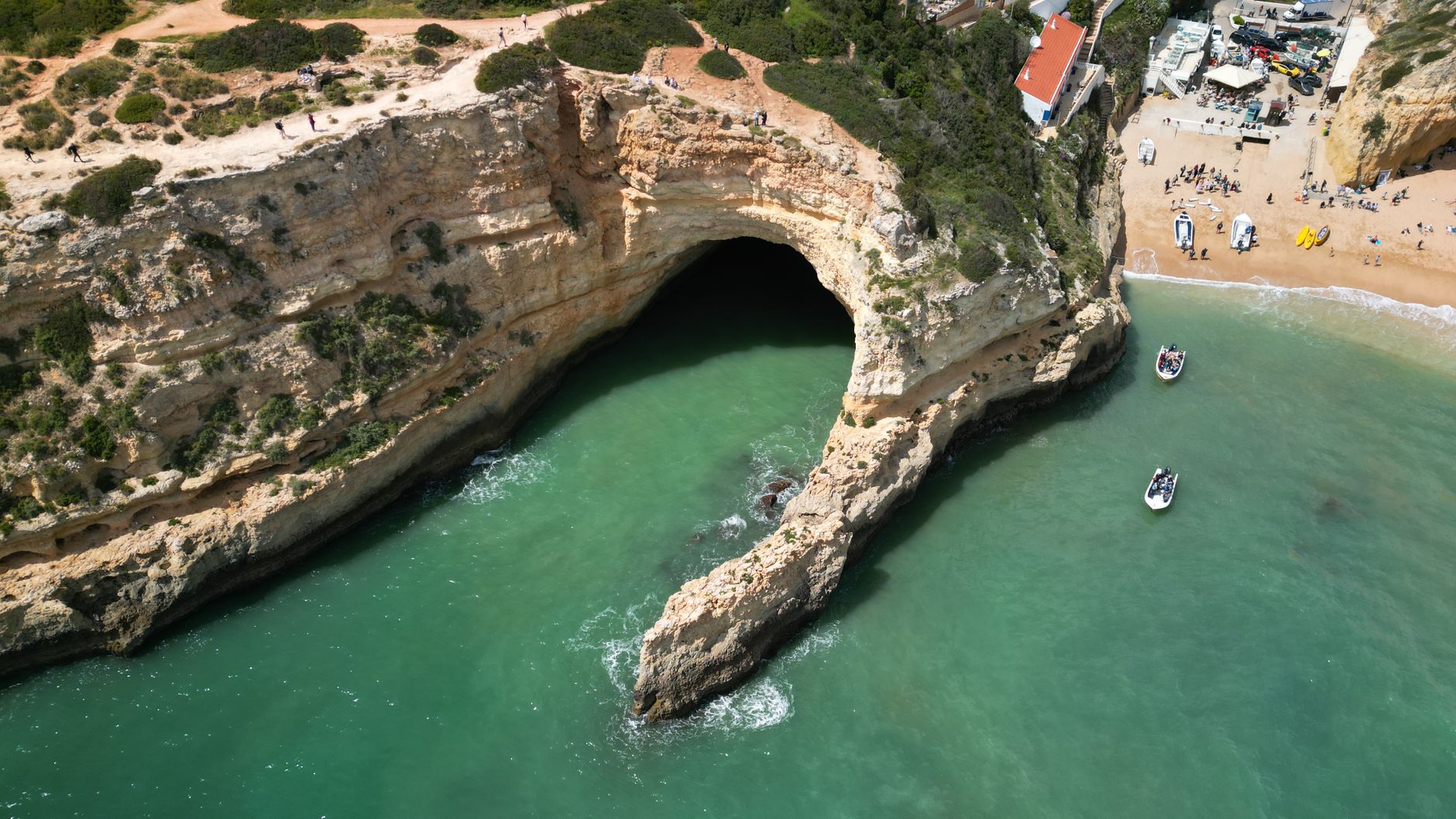


How Carvoeiro came to be
The settlement's oldest name, Caboiere, points to an Islamic-medieval hamlet of fishermen, though Roman traces suggest the coastline was in use long before that. The sea brought trouble as well as livelihood: in 1544 a Portuguese fleet fought off the Turkish pirate Xarramet in the waters here, and in 1587 Francis Drake launched an attack on the village.
The Fort of Our Lady of the Incarnation was raised in 1670 under the Governor of Algarve, D. Nuno de Mendonça, Count of Val dos Reis — though the chapel of Nossa Senhora da Encarnação that sits within its walls is said to predate it. By 1871 the fort had become a customs post, and today only the eastern wall survives. Carvoeiro remained a fishing community well into the twentieth century, became its own parish in 1985, and was granted town status on 19 April 2001.
Who and what shaped it
People who shaped it
Landmark buildings
See Carvoeiro in motion
Plan your visit
On the map
When to go
Summers are hot and dry, with August averaging around 28°C — the beach fills early and stays full. June and September are the more forgiving months. Winter brings mild temperatures around 15–16°C and enough rain and occasional storms to make the clifftop walks feel genuinely elemental.
Right now
Background & history adapted from Wikipedia (CC BY-SA) · specs from Wikidata (CC0) · weather from Open-Meteo · map data © OpenStreetMap contributors · photos from Wikimedia Commons / Unsplash with per-image credit. No third-party reviews or social posts reproduced.