
Carrbridge


The thing that stops you first in Carrbridge is a ruin. The old packhorse bridge — built in 1717 and half-collapsed since the floods of 1829 — still arches over the River Dulnain, its stone worn smooth and its parapet long gone, just wide enough that you can picture a coffin being carried across it to Duthil Church when the river ran too high for fording.
This is a small Highland village, five miles north of Aviemore, that grew in stages: a bridge, then a plan for 70 plots drawn up in 1808, then a railway line in 1898 that finally tipped it from hamlet to village. Skiing came later, in the 1950s, when an Austrian named Karl Fuchs set up a ski school here and organised the first runs in Scotland.
💛 What travellers fall for
People who come back tend to arrive by train — the station is a ten-minute walk from the bridge, and the approach through the pines sets the tone. The Landmark Forest Adventure Park draws families with young children, but the forest tower's 105 steps reward anyone who climbs them on a clear May morning, when the light lasts longest.
Deals in Carrbridge
Book directly at the provider
How Carrbridge came to be
Carrbridge exists because of a river crossing. In 1717, Brigadier-General Alexander Grant paid mason John Niccelsone £100 to build a bridge over the Dulnain — the oldest stone bridge now known to survive in the Highlands. It was built specifically to carry funeral processions to Duthil Church when the river flooded. The great spate of 1829 tore away its parapets, leaving the skeletal arch that stands today.
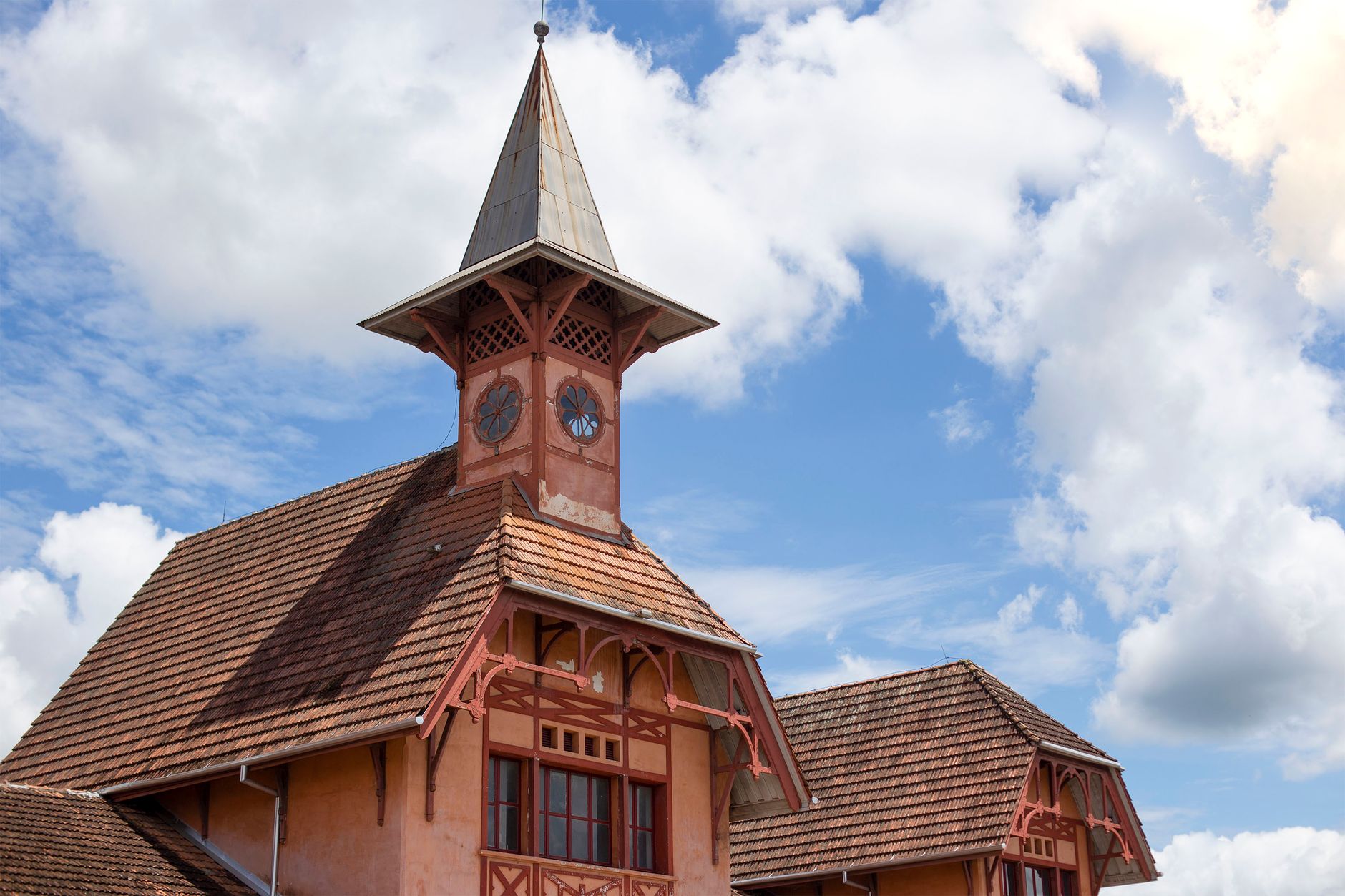
For most of its life the settlement remained a hamlet. A village plan was drawn up in 1808, but it was the Highland Railway's arrival on 8 July 1892, and the completion of the Aviemore–Inverness line on 1 November 1898, that brought enough traffic to sustain a proper community. The station building from that era, attributed to architect William Roberts, still stands.
Who and what shaped it
People who shaped it
Landmark buildings
See Carrbridge in motion
Plan your visit
On the map
When to go
Summers are mild rather than warm — July days reach around 18°C, and May delivers the most sunshine, peaking near six hours a day. Winter is genuinely cold, with February nights dipping to freezing and December offering less than an hour of sun on average; snow is possible from late autumn through early spring.
Right now
Background & history adapted from Wikipedia (CC BY-SA) · specs from Wikidata (CC0) · weather from Open-Meteo · map data © OpenStreetMap contributors · photos from Wikimedia Commons / Unsplash with per-image credit. No third-party reviews or social posts reproduced.