
Carcassonne
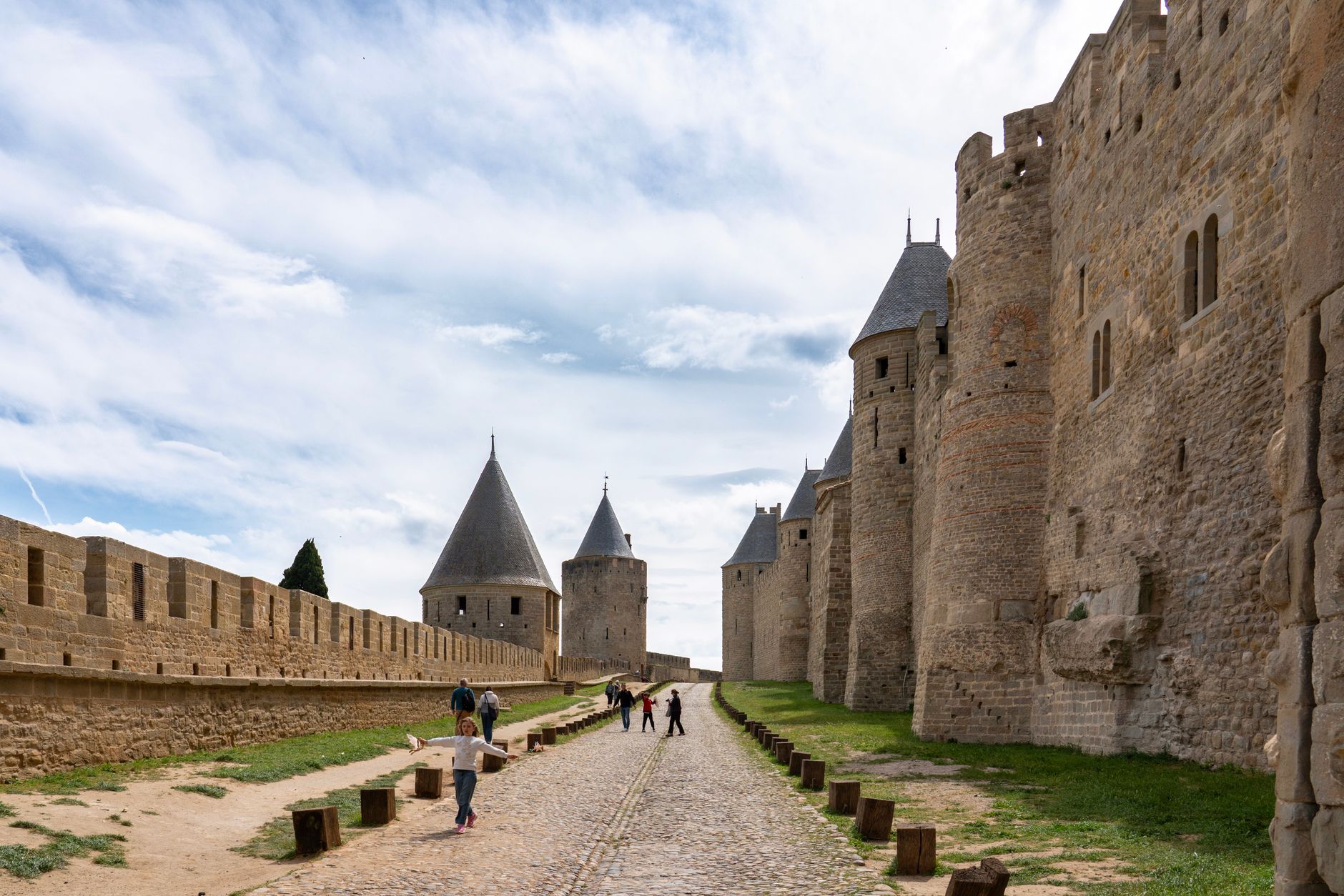
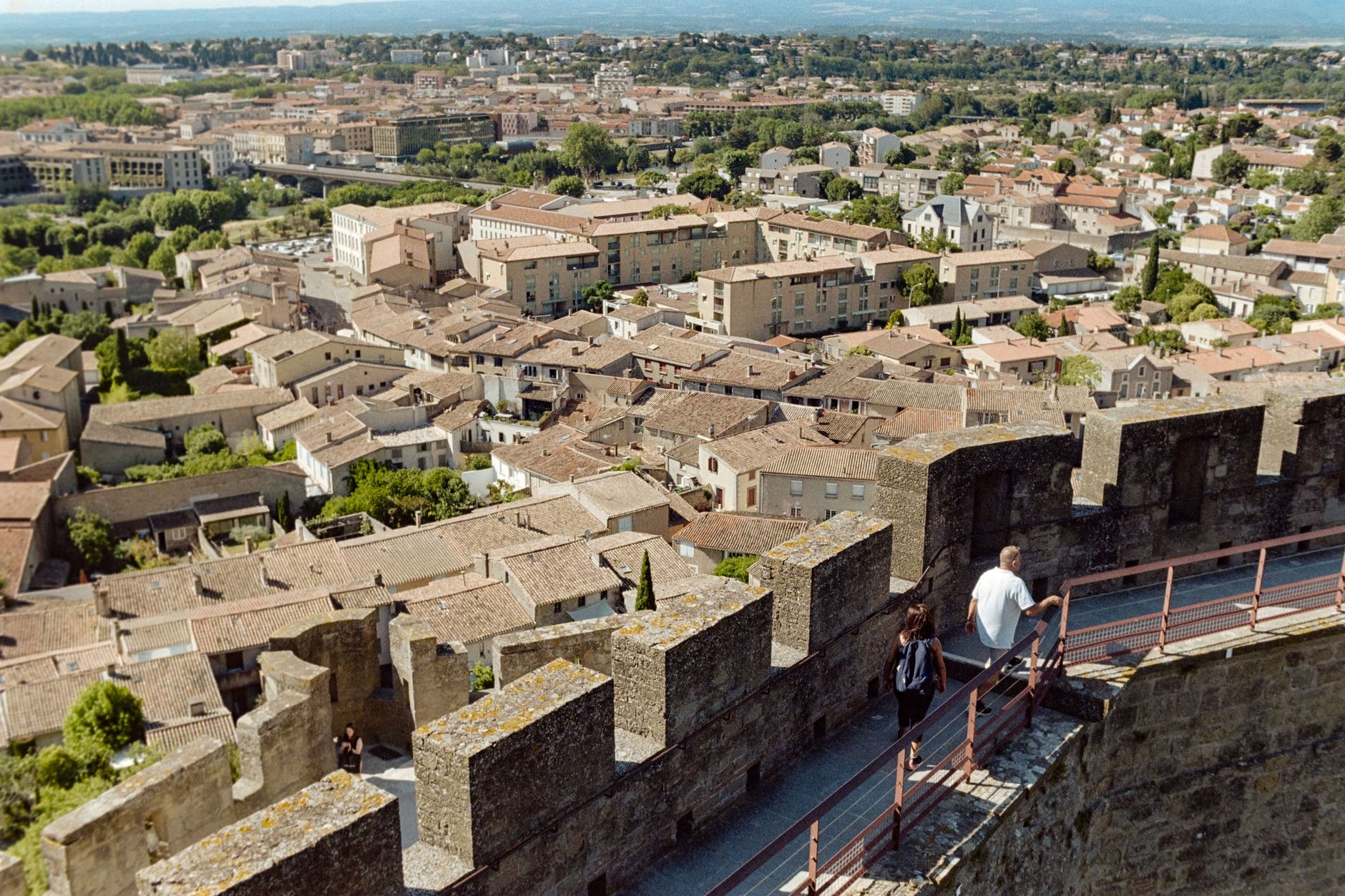
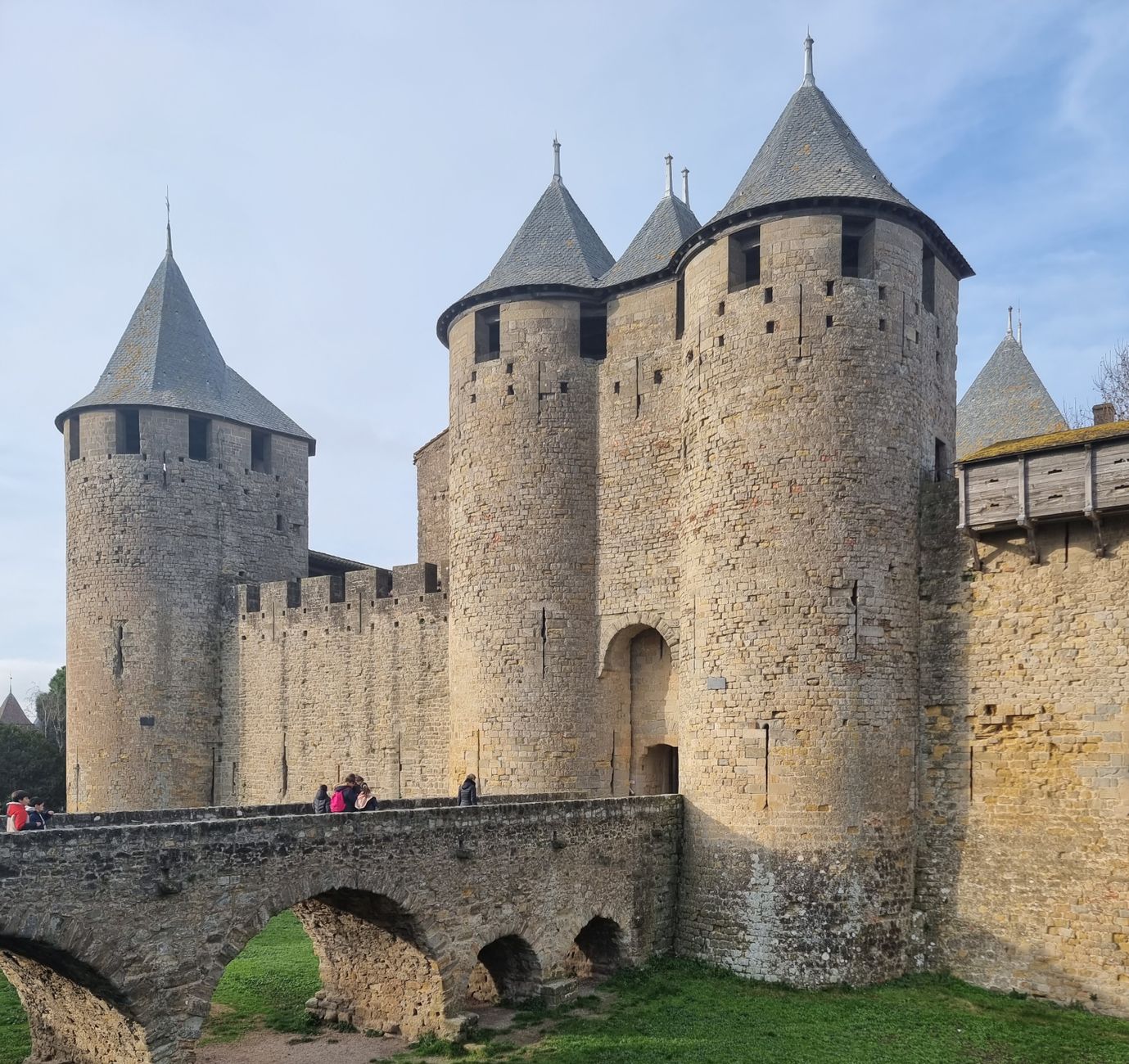
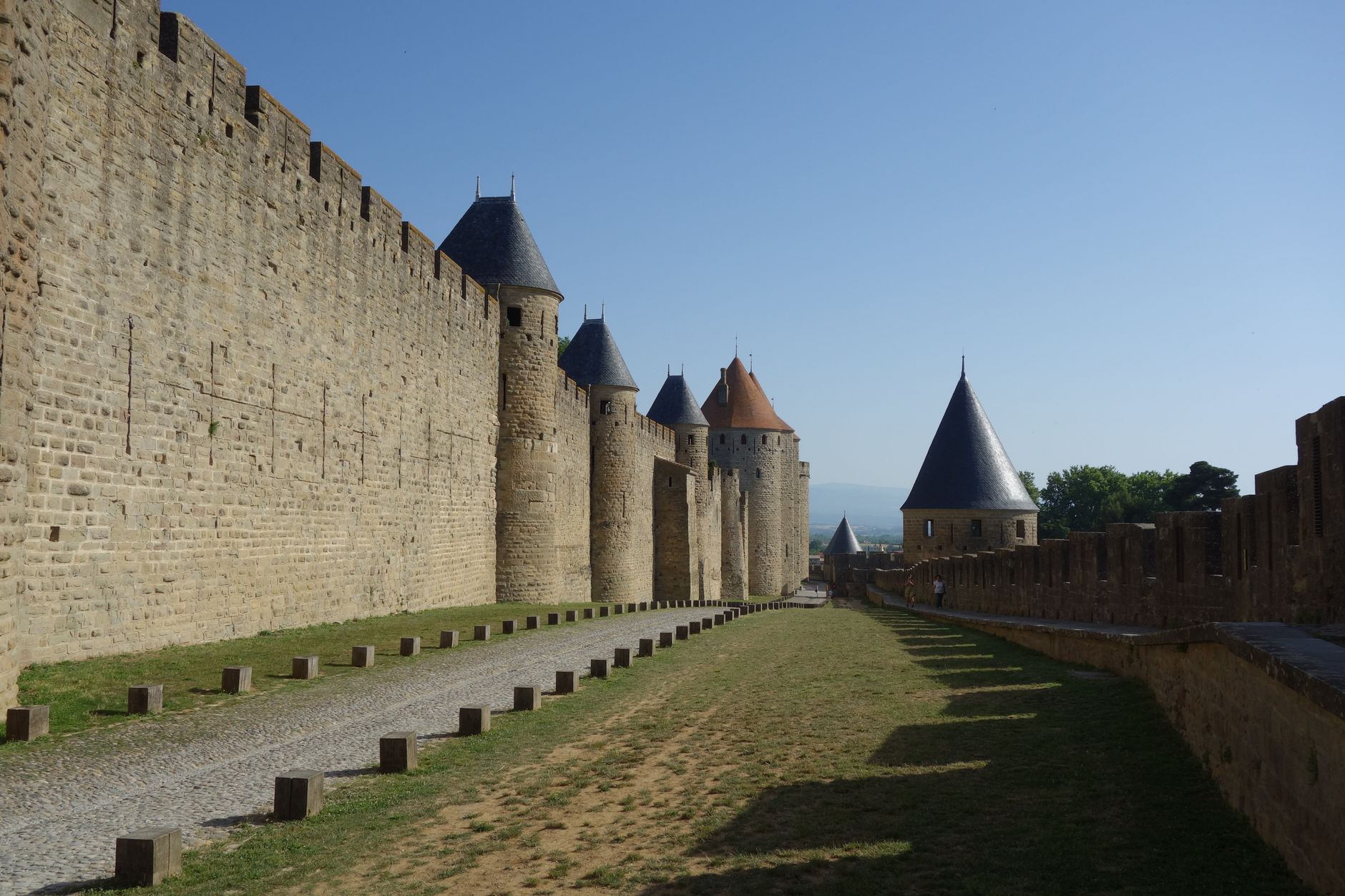
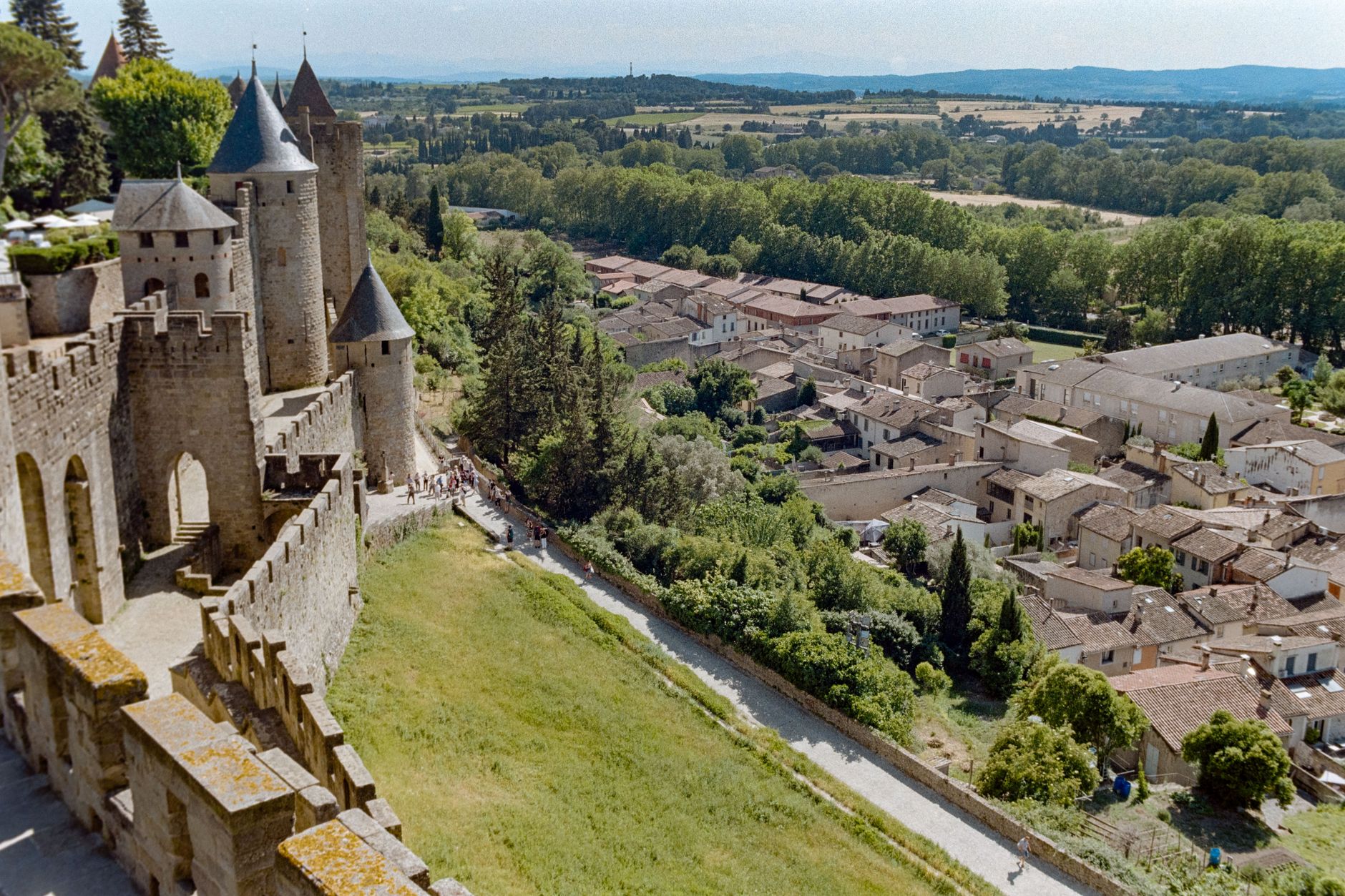
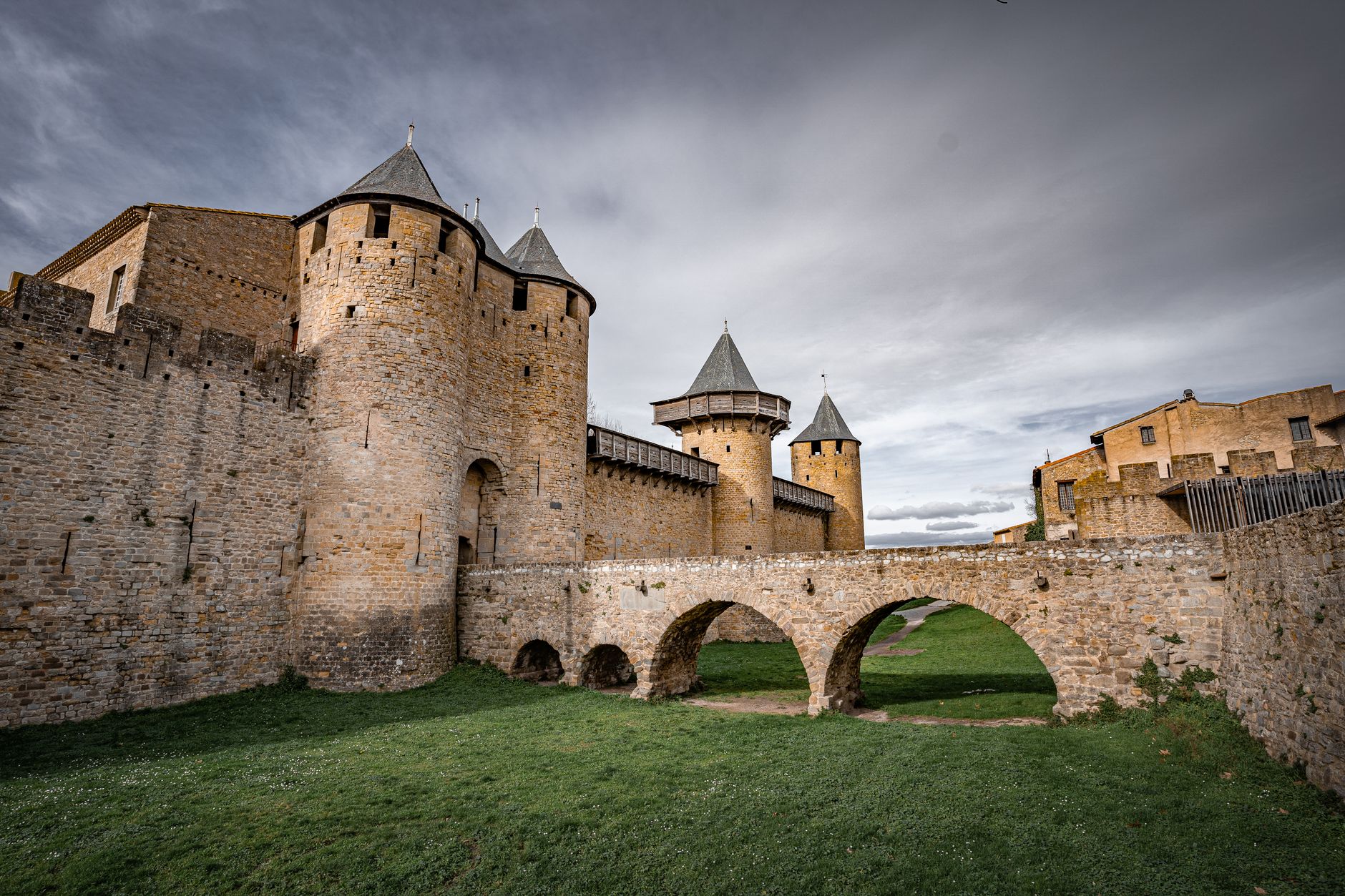
Stand at the Porte Narbonnaise at dusk and the double walls of Carcassonne do something strange: they make the present feel provisional. Three kilometres of ramparts, 52 towers, the whole citadel rising above the Aude plain in pale limestone — it is one of the largest surviving medieval fortified cities in Europe, and it has been here, in one form or another, since at least 800 BC.
The Cité sits high on its rocky spur; the lower town, the Bastide Saint-Louis, spreads across the river below. You can walk the medieval streets for free at any hour, but the Château Comtal and the wall walk between the two rings of ramparts require a ticket — and reward it.
💛 What travellers fall for
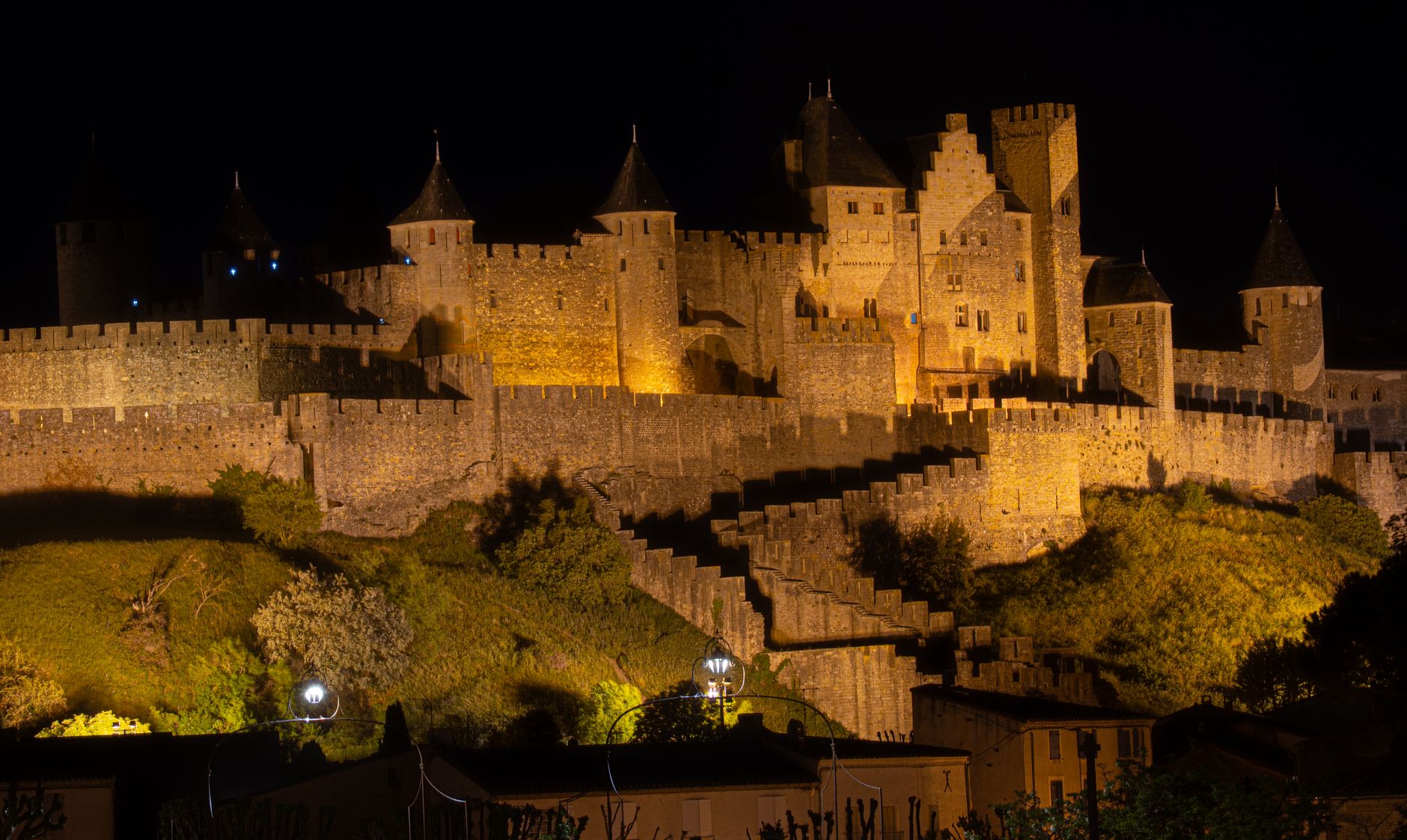
People who come back tend to arrive either very early or very late. The Cité empties after dinner and the stones change entirely under artificial light. The Basilique Saint-Nazaire — Romanesque nave, Gothic choir, stained glass running from the 13th to the 16th century — is quieter on weekday mornings than almost anywhere else in the fortifications.
Experiences you don't want to miss





Deals in Carcassonne
Book directly at the provider

How Carcassonne came to be
The hill was already fortified when Romans arrived in 122 BC, and the Visigoths made it a proper city in the fifth century. The Trencavel viscounts — who acquired it through marriage in 1067 — gave Carcassonne its two most enduring monuments: the Château Comtal and the Basilica of Saints Nazarius and Celsus, whose foundation stones were blessed by Pope Urban II in 1096. The city's darkest hour came in 1209, when the Crusade against the Cathars besieged it for fifteen days and ended with Viscount Raymond Roger Trencavel dead in his own dungeon at 24.
France absorbed the city in 1247, and the Treaty of Corbeil in 1258 made it a border fortress against Aragon. The Black Prince burned the lower town in 1355 but could not breach the walls. When the Treaty of the Pyrenees in 1659 pushed the frontier south, Carcassonne lost its strategic purpose and slowly decayed. Archaeologist Jean-Pierre Cros-Mayrevieille and inspector Prosper Mérimée pushed for preservation in 1849; architect Eugène Viollet-le-Duc began the restoration in 1853 and worked on it until his death in 1879. His pupil Paul Boeswillwald carried it forward, and the work was finally completed in 1911. UNESCO inscribed it in 1997.
Who and what shaped it
People who shaped it
Landmark buildings
See Carcassonne in motion
Plan your visit
On the map
When to go
Summers are hot and dry, with temperatures regularly above 30°C and the limestone walls radiating heat well into the evening. Spring and autumn bring mild days and manageable light — good conditions for walking the ramparts. Winters are cool and sometimes sharp, but the Cité is largely uncrowded and the low sun catches the towers well.
Right now
Background & history adapted from Wikipedia (CC BY-SA) · specs from Wikidata (CC0) · weather from Open-Meteo · map data © OpenStreetMap contributors · photos from Wikimedia Commons / Unsplash with per-image credit. No third-party reviews or social posts reproduced.